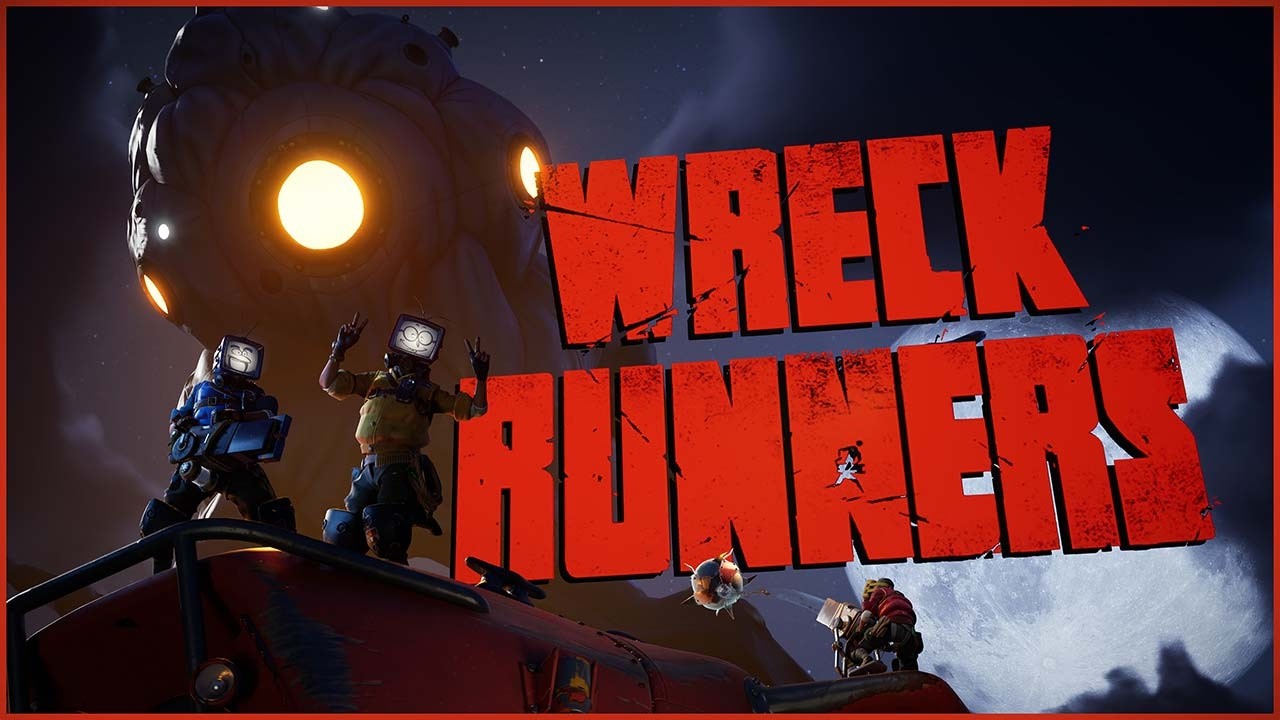
Wreck Runners Review – Physics-Based Co-Op Extraction Game
Explore Disruptive Games’ co-op extraction game featuring crews of 2-4 players, the fly-drive-dive ORCA, physics-based salvage, and the Bermuda Triangle
Wreck Runners sends crews of 2-4 players into a haunted Bermuda Triangle to recover salvage with the physics-based Scrapjack, upgrade the ORCA, and escape before the Fog overwhelms the expedition.
Ready to enter the Triangle, haul impossible salvage, and see what the Fog has waiting? Continue below.

Wreck Runners


The real challenge starts when the salvage is finally in reach Wreck Runners turns every recovery attempt into a test of teamwork, physics, and timing
Wreck Runners is a physics-based co-op extraction game developed and published by Disruptive Games for crews of 2-4 players. Set within a haunted and ever-changing Bermuda Triangle, the game places salvage recovery at the centre of an expedition structure built around cooperation, physical object handling, vehicle operation, risk, and progression. Its defining idea is straightforward but mechanically distinctive: crews enter the Triangle, recover valuable salvage, meet their quota, and attempt to escape before the Fog overwhelms the expedition.
The Wreck Runners gameplay loop is shaped by the relationship between the crew, the ORCA, the salvage itself, and the unpredictable conditions surrounding each run. Rather than treating loot as something that simply disappears into an inventory, the game makes recovery a physical process. Crews use the Scrapjack to haul salvage onto their vehicle, manage oversized objects with physics-based tools, and work together while threats and changing conditions complicate the attempt to get valuable cargo home.
That combination gives Wreck Runners a clear position within the modern co-op extraction genre. It is not defined solely by the act of finding loot or by the need to escape. The physical movement of cargo, the shared role of the ORCA, the pressure created by the Fog, and the progression that follows a successful expedition all contribute to the game's central structure.
The ORCA is less a vehicle than the crew's way home A craft that can fly, drive, and dive gives every expedition a shared centre of gravity
The ORCA is the most important structural feature in Wreck Runners. Described as a hybrid utility craft, it can fly, drive, and dive, allowing crews to move through the different environments encountered within the Bermuda Triangle. More importantly, the ORCA functions as the shared all-terrain mobile base for crews of 2-4 players.
This gives the vehicle a role that extends beyond conventional transportation. The crew depends on the ORCA as the operational centre of an expedition, using it to carry recovered salvage and maintain the momentum of the run. The vehicle is therefore closely connected to the game's cooperative structure. Moving through the Triangle, recovering cargo, handling oversized objects, and keeping the haul moving are shared concerns rather than isolated tasks.
The ORCA also forms part of the game's progression system. Salvage gathered during expeditions can be used to purchase better equipment, new upgrades, and fresh cosmetics, while the operation itself can continue to develop. The vehicle is consequently tied to both the immediate expedition and the longer-term development of the crew's operation.
For players searching for how to upgrade the ORCA in Wreck Runners, the confirmed progression structure is directly connected to salvage gathered between runs. The official description establishes that crews can use the rewards from expeditions to invest in better equipment and new upgrades, including improvements connected to the ORCA and the wider operation.
The real work begins when the cargo refuses to behave Wreck Runners Scrapjack physics mechanics make salvage recovery a physical part of the expedition
The Scrapjack is central to the Wreck Runners Scrapjack physics mechanics. It is used to haul salvage onto the ORCA, with the game's description specifically emphasising that grabbing, throwing, and securing objects are physics-driven actions. This makes the process of collecting valuable cargo an active mechanical task rather than a simple interaction with an abstract loot container.
The distinction matters because the physical state of an object becomes part of the recovery problem. A crew must not only locate valuable salvage but also move it onto the vehicle. The process can involve oversized objects and physics-based tools, creating a form of cooperative cargo handling that is central to the game's identity.
This physical approach gives the extraction loop a tangible quality. The crew is not simply searching for an item, pressing a button, and continuing toward the next objective. Salvage has to be hauled, secured, transported, and ultimately brought back as part of a successful expedition. The physical interaction between the Scrapjack, the cargo, the ORCA, and the surrounding environment creates the mechanical foundation of the game.
The system also reinforces the cooperative nature of Wreck Runners. Crews of 2-4 players must work around the same cargo, the same vehicle, and the same expedition conditions. When a recovery attempt becomes difficult, the challenge is connected to the shared state of the expedition rather than simply to an individual player's inventory.
Sometimes the smartest haul is the one you decide not to chase Salvage quotas and the Fog give every expedition a difficult point of no return
Wreck Runners builds its progression around a clear risk-and-reward structure. Crews enter the Triangle to gather salvage, meet their quota, and escape before the Fog overwhelms them. The central decision is therefore not simply whether more loot can be found, but whether continuing the expedition is worth the increasing danger.
This gives the extraction format a clear rhythm. An expedition begins with the search for valuable salvage, develops as the crew transports and secures its findings, and eventually reaches a point where the potential reward must be measured against the risk of remaining in the Triangle. The quota provides a concrete objective, while the Fog creates pressure around the decision to continue or extract.
The progression that follows a successful run gives these decisions a longer-term purpose. Salvage can be converted into better equipment, new upgrades, and fresh cosmetics. The operation therefore grows through repeated expeditions, with the rewards of one run helping to prepare the crew for future attempts.
This structure is particularly important to the identity of a cooperative multiplayer salvage game for PC. The crew is constantly balancing immediate opportunity against the broader value of returning safely with what has already been recovered. The game does not need to rely on a separate scoring system to create that tension. The quota, the Fog, the salvage, and the risk of continuing already provide the central decision-making framework.
The Triangle never needs to change completely to keep a crew guessing Changing run conditions, loot locations, hazards, and discoveries make each expedition a fresh problem
The Bermuda Triangle setting is presented as a haunted and ever-changing environment shaped by The Fog. Expeditions can take crews through haunted wrecks, abandoned facilities, ruins, and supernatural anomalies, while creatures and other threats create additional hazards within the region.
The important point is that variation between runs does not require the entire world to be fully procedurally generated. The official description instead focuses on changing expedition conditions. Every run can start differently, loot can appear in new places, and weather conditions, opportunities, hazards, and discoveries can vary between sessions.
This distinction matters when discussing Wreck Runners gameplay accurately. The game presents a world with defined environmental themes and locations, but the circumstances of an expedition can change. Crews must adapt to the conditions of the run rather than follow an identical sequence every time.
That approach gives the Bermuda Triangle a functional role in the game's design. The environment is not simply a backdrop for salvage operations. It creates uncertainty, introduces hazards, and forces the crew to reconsider its plans as an expedition develops.
Trustwell's idea of a safe mission has a very narrow definition Trustwell Corporation lore in Wreck Runners sends crews into a Triangle filled with salvage, mysteries, and threats
The narrative framework begins with Trustwell Corporation, which sends the runners into the Bermuda Triangle to recover valuable salvage. The corporation presents these missions as perfectly safe, but the environment encountered by the crews quickly establishes a different reality. The Fog, supernatural anomalies, creatures, ruins, and abandoned locations suggest that the salvage operation is connected to a deeper mystery within the Triangle.
The Trustwell Corporation lore in Wreck Runners is therefore closely tied to the game's central gameplay structure. The crew has a practical reason to enter the region and a clear objective to complete, but the setting provides more than a simple series of locations to search. The missions take place within an environment that contains unexplained elements and discoveries beyond the immediate recovery of valuable cargo.
Every run tells a story through the relationship between the expedition's objective and the conditions surrounding it. Crews enter to meet a quota and recover salvage, but the world around them creates the possibility of discovering more about the secrets hidden within the Triangle.
The narrative is consequently integrated into the expedition format rather than presented as a separate layer disconnected from the mechanics. Trustwell provides the mission structure, the Triangle provides the environment, and the Fog and its inhabitants create the uncertainty that makes each expedition more than a straightforward collection task.
The cargo is valuable, but getting it home is the actual game Wreck Runners connects physical salvage, cooperative extraction, and long-term progression
The progression system in Wreck Runners is built around the relationship between successful salvage recovery and the continued development of the operation. Crews gather valuable materials during expeditions and can use the rewards from those runs to purchase better equipment, new upgrades, and cosmetics.
This creates a straightforward progression loop without separating the game's economy from its core mechanics. The reason to take risks in the Triangle is not limited to completing a single expedition. The salvage recovered during a run can contribute to the crew's future capabilities, giving repeated expeditions a clear purpose.
The ORCA is part of this progression relationship. As the shared mobile base of the crew, it represents the practical centre of the operation. Upgrades and equipment improvements therefore connect the immediate task of recovering cargo with the longer-term process of becoming better prepared for future expeditions.
The inclusion of cosmetics adds another form of progression, but the central structure remains focused on the operation's development. The game presents salvage, equipment, upgrades, and cosmetics as rewards connected to the repeated process of entering the Triangle and returning with valuable resources.
A plan can survive the first five minutes and still fall apart completely Variation between expeditions gives Wreck Runners its strongest replayability structure
The replayability of Wreck Runners comes from the changing conditions of its expeditions. Runs can begin differently, loot can appear in new places, and the circumstances surrounding the crew can change through variations in weather, opportunities, hazards, and discoveries.
This creates a replayability structure based on adaptation rather than a single predetermined route. A crew may enter the Triangle with a plan, but changing conditions can require that plan to be revised. The need to recover enough salvage to meet the quota must be balanced against the need to escape before the Fog overwhelms the expedition.
The physics-based cargo system adds another source of variation. Salvage must be physically handled and transported, and oversized objects can create different recovery challenges depending on their position and the circumstances surrounding the attempt. The act of collecting loot is therefore connected to the physical state of the expedition.
The confirmed information about the game does not establish a traditional campaign structure, a competitive multiplayer mode, or a separate single-player mode. Those features should not be assumed. What is clear is that Wreck Runners is designed around repeated cooperative expeditions for crews of 2-4 players, with changing conditions and a progression system that gives each successful run value beyond its immediate objective.
Four people are not required, but everyone still has a job to do The 2-4 player crew structure makes cooperation central to salvage, transport, and extraction
Wreck Runners is designed for crews of 2-4 players, making its cooperative structure central to the experience. The crew shares the ORCA, works together to recover physical salvage, and must coordinate the movement of cargo while responding to the conditions of the expedition.
This is why descriptions such as Wreck Runners 4 player co-op can be misleading if they suggest that four players are the required operating format. The official specification is crews of 2-4 players. The cooperative design is therefore built to support a crew within that range rather than requiring a full four-player group.
The shared vehicle reinforces this structure. Because the ORCA serves as the crew's mobile base, salvage recovery and transportation are collective concerns. The physical nature of the Scrapjack system also gives cooperation a practical role, with players working around the same cargo and the same vehicle while attempting to complete the expedition.
The resulting structure is closer to a cooperative operation than a collection of separate individual tasks. Each crew member is part of the same extraction problem, and the success of the run depends on keeping the salvage moving, meeting the quota, and making it out before the Fog becomes overwhelming.
This is an extraction game where the loot has to be wrestled into the vehicle Wreck Runners builds its identity around physical cargo recovery rather than conventional collection alone
Within the wider extraction genre, Wreck Runners stands out through the emphasis placed on physical salvage. The central objective is not described solely as finding items and placing them into an inventory. The Scrapjack is used to haul salvage onto the ORCA, and the game specifically highlights grabbing, throwing, and securing objects as physics-driven actions.
This gives the game a different mechanical emphasis from a conventional extraction design. The physical process of recovering cargo becomes part of the challenge, while the shared vehicle provides a clear destination for the salvage. The crew must therefore manage not only where to search but also how to recover and transport what it finds.
The combination of these systems gives Wreck Runners a defined niche as a physics based co op extraction game. Its identity comes from the interaction between cooperative salvage, physical object handling, a shared vehicle that can fly, drive, and dive, and an expedition structure governed by risk and reward.
The Bermuda Triangle setting adds a supernatural dimension to that structure, while Trustwell Corporation provides the narrative reason for the missions. The result is a game whose mechanics and setting are closely connected rather than operating as separate concepts.
The PC requirements suggest a game built around more than simple scenery Wreck Runners system requirements place the focus on modern 64-bit hardware and dedicated graphics
The Wreck Runners system requirements establish a clear hardware baseline for the PC version. The minimum configuration requires a 64-bit processor and operating system, Windows 10 May 2019 64-bit, an Intel Core i5-12600K or AMD Ryzen 5 7600X processor, 16 GB of RAM, an Nvidia GeForce RTX 2060 with 8 GB of VRAM, DirectX 12, a broadband internet connection, and 30 GB of available storage.
The recommended configuration raises the requirements to Windows 10 or later 64-bit, an Intel Core i7-12700K or AMD Ryzen 5 9600X processor, 32 GB of RAM, and an Nvidia GeForce RTX 3070 with 12 GB of VRAM. A broadband internet connection and 30 GB of available storage are also listed.
From a hardware compatibility perspective, the Wreck Runners minimum specs system requirements place the game firmly within the expectations of a modern PC release. The listed processor, memory, and graphics requirements indicate that players should check their system carefully before attempting a Wreck Runners PC download.
The official specifications also identify Windows and SteamOS plus Linux as supported operating system categories in the store listing. The detailed minimum and recommended hardware specifications provided above are specifically stated for the Windows requirements. No additional performance claims should be made beyond the published specifications.
The game knows exactly what it wants its crews to worry about Wreck Runners combines a shared vehicle, physical salvage, changing hazards, and extraction pressure into one focused loop
The strongest aspect of Wreck Runners is the way its major systems reinforce one another. The ORCA gives the crew a shared operational centre. The Scrapjack makes salvage recovery physical. The quota gives the expedition a measurable objective. The Fog creates pressure around the decision to remain in the Triangle. Progression gives the rewards of a successful run value beyond the immediate expedition.
These systems create a clear chain of cause and effect. The crew enters the Bermuda Triangle because Trustwell Corporation has sent it to recover valuable salvage. The salvage must be physically recovered and transported. The crew must gather enough to meet its quota. The Fog and other hazards create pressure around how long the expedition can continue. The rewards from the run can then be used to develop the operation through better equipment, upgrades, and cosmetics.
That structure gives the Wreck Runners game a strong mechanical identity without requiring unsupported claims about additional modes or systems. The confirmed design is already distinctive enough: crews of 2-4 players, a hybrid utility craft that can fly, drive, and dive, physics-based Scrapjack salvage, changing expedition conditions, and a supernatural Bermuda Triangle setting.
The game also benefits from keeping its central idea easy to understand. The crew goes in, finds salvage, physically gets it onto the ORCA, decides how far to continue, and attempts to return before the Fog overwhelms the run. The deeper systems exist to complicate that basic structure, not to obscure it.
Final Verdict Wreck Runners review conclusion: a focused co-op extraction game built around physical salvage
Wreck Runners has a clearly defined mechanical identity. Developed and published by Disruptive Games, it is a physics-based co-op extraction game designed for crews of 2-4 players and set within a haunted and ever-changing Bermuda Triangle. Its central loop connects salvage recovery, physical object handling, cooperative vehicle operation, risk, extraction, and progression into a single expedition structure.
The ORCA is the game's most important structural feature. Its ability to fly, drive, and dive gives the crew a shared vehicle capable of supporting movement through the different environments of the Triangle, while its role as an all-terrain mobile base makes it central to both the immediate expedition and the wider progression of the operation. The Scrapjack provides the other defining mechanical element, turning the recovery of salvage into a physics-driven process involving grabbing, throwing, securing, and transporting physical objects.
The extraction structure is strengthened by the relationship between quota and risk. Crews must gather enough salvage to meet their objective, but they must also escape before the Fog overwhelms them. That creates the central decision at the heart of each run: whether the potential value of continuing is worth the danger of remaining in the Triangle.
The setting supports that mechanical design rather than merely decorating it. Haunted wrecks, abandoned facilities, ruins, supernatural anomalies, creatures, and the Fog create the conditions in which the expedition takes place. Trustwell Corporation provides the narrative framework for the missions, while the mysteries hidden within the Triangle give the repeated salvage operation a broader context.
Replayability is built around variation between expeditions. Runs can start differently, loot can appear in new places, and weather conditions, opportunities, hazards, and discoveries can change from one session to another. This does not establish that the entire world is fully procedurally generated; the confirmed design instead focuses on changing expedition conditions within the game's defined environments.
For anyone searching for a Wreck Runners review, Wreck Runners Steam information, Wreck Runners gameplay details, or a physics based co op extraction game built around cooperative salvage, the game's defining concept is clear. Wreck Runners is built around crews entering a dangerous environment, physically recovering valuable cargo, deciding how far to push the expedition, and returning with enough salvage to strengthen the operation.
Its strongest point of differentiation is the way its systems work together. The ORCA can fly, drive, and dive; the Scrapjack makes salvage recovery physical; the Fog creates pressure; the Bermuda Triangle provides the setting; Trustwell Corporation provides the mission framework; and progression gives successful expeditions lasting value. Those elements give Disruptive Games Wreck Runners a defined position within the co-op extraction landscape.
Ultimately, Wreck Runners is most accurately understood as a cooperative salvage extraction game built around physical interaction and shared expedition management. It does not need to rely on unverified features to establish its identity. The confirmed combination of crews of 2-4 players, a fly-drive-dive ORCA, Scrapjack physics mechanics, changing run conditions, salvage quotas, Fog-based pressure, upgrades, cosmetics, and the Trustwell Corporation narrative gives the game a coherent foundation. The central challenge is simple to describe but difficult to execute: recover the impossible, keep the haul moving, and know when the Triangle has given the crew enough reason to leave.
The VoxOdyssey Project Mission Statement for Feature games
I highlight what makes each game unique by examining gameplay mechanics, design choices, and storytelling. By analyzing systems, level design, and play styles, and referencing official media and assets, I aim to provide accurate, informative, and trustworthy insights. While I strive for accuracy, some details may change or be updated over time. Players can use this information to understand each title’s features and mechanics and make their own judgments.
Wreck Runners gameplay screenshots Physics-based salvage, the ORCA, Bermuda Triangle expeditions, and cooperative extraction


Wreck Runners video – When a simple salvage run goes completely off course
See Wreck Runners gameplay in motion as crews recover physics-driven salvage, pilot the ORCA, and face the dangers of the Bermuda Triangle. Keep reading below and watch the video to see the expedition unfold.