The Green Light Review – Psychological Horror and the Search for Freedom
Explore waleedzo's atmospheric first-person horror game about isolation, hallucinations, a mysterious radio voice, and a distant lighthouse
The Green Light follows Fred from a dead-end job into a disturbing journey of exploration, light puzzles, psychological horror, and a mysterious promise of freedom waiting beyond the darkness.
Ready to follow the green light and discover where Fred's search for freedom leads? Continue below.

The Green Light


The Green Light turns a dead-end job into a psychological horror story Fred wants to escape his life, but the voice offering him freedom may have its own reasons for calling
The Green Light is a first-person psychological horror game developed by waleedzo. It follows Fred, a man trapped in a dead-end job and a routine that has gradually stripped away any sense of satisfaction from his life. He dislikes his work, resents his boss, and has reached a point where the future appears to offer more of the same. The game uses that frustration as the starting point for a story about isolation, escape, and the risks of accepting an answer before understanding the question.
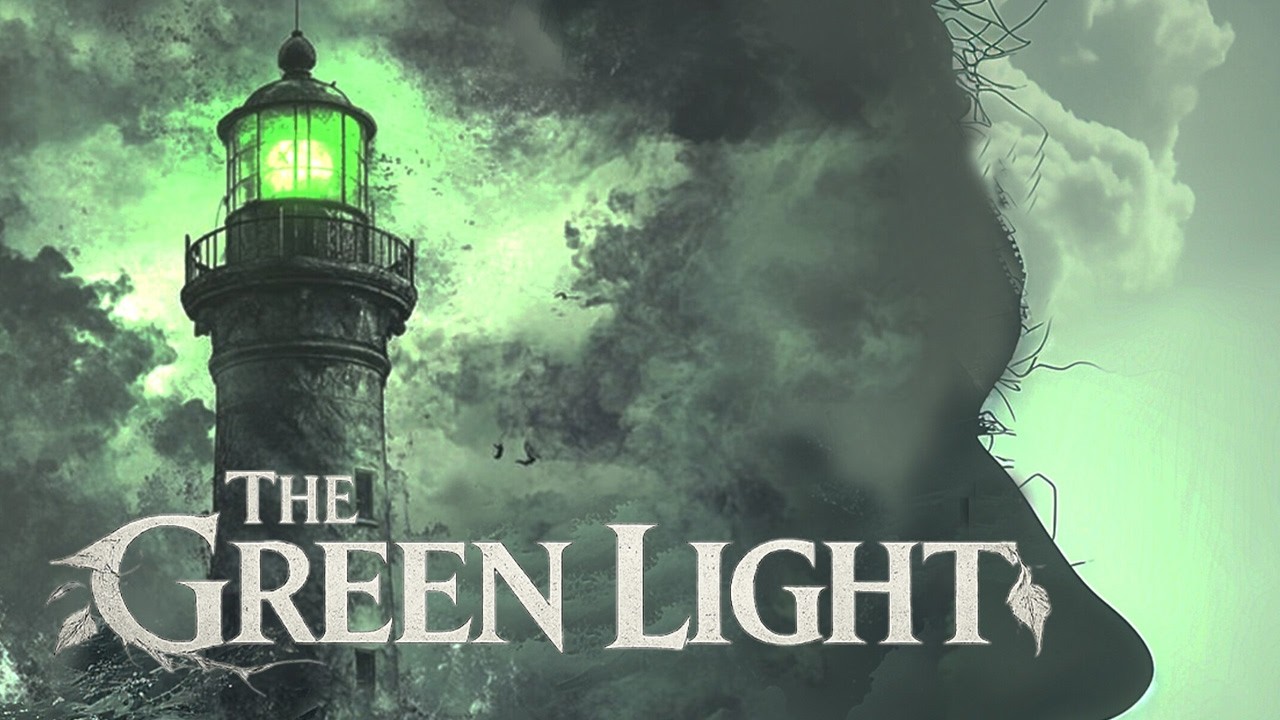
The situation changes during one late-night shift when a mysterious voice comes through the radio. It speaks of a green light and promises freedom. The message gives Fred something that his ordinary life no longer provides: a reason to move. The voice directs him toward a distant lighthouse, turning the journey away from work and into the central path through the game.
That premise gives The Green Light a clear identity within the atmospheric indie horror genre. This is not a combat-focused survival horror game built around weapons, enemy encounters, or long-term resource management. Its focus is the journey itself, the spaces Fred moves through, the information he discovers, and the increasingly uncertain relationship between what he experiences and what may actually be happening.
The result is a compact narrative-driven first-person indie horror game built around mood and interpretation. Exploration, environmental details, light puzzle mechanics, sound, and story all work toward the same purpose: moving Fred closer to the green light while making the meaning of that destination increasingly difficult to separate from his own state of mind.
The radio transmission gives The Green Light its central mystery A promise of freedom is enough to pull Fred away from the life he already wants to escape
The mysterious radio transmission is the event that changes the direction of Fred's life. Before it appears, he is defined by repetition. Work, dissatisfaction, and the feeling of being trapped have created a routine with no obvious way out. The voice interrupts that routine with a promise that is deliberately difficult to ignore.
The idea of freedom is important because Fred is already looking for an escape before the supernatural elements become central to the story. The radio does not need to convince him that his life is unsatisfying. That part has already been established. Instead, it offers a possible solution and gives him a destination: the lighthouse and the green light waiting somewhere beyond his familiar surroundings.
This gives the narrative a straightforward but effective foundation for psychological horror. Fred is not simply investigating a strange signal out of curiosity. He is responding to an offer that connects directly to what he wants most. That makes the voice more significant than a conventional horror mystery because its message is tied to Fred's personal dissatisfaction.
The central question is therefore not only what the green light is. The more important question is why Fred is willing to follow it. The game's psychological horror comes from the tension between the promise of freedom and the possibility that the desire to escape can make a person vulnerable to something they do not understand.
The journey to the lighthouse gives the horror a clear direction The distant beacon turns Fred's search for freedom into a physical journey through an increasingly uncertain world
The lighthouse is the defining destination in The Green Light. It gives the story a physical objective while also providing the game's central image. Fred is not wandering without purpose. He has been given somewhere to go, and the green light provides a visual and thematic point toward which the story continues to move.
That structure suits the first-person walking simulator horror format. The player moves through environments rather than progressing through a traditional combat campaign. The journey itself becomes the main form of progression, with new spaces, environmental details, story information, and unsettling moments gradually building toward the destination.
The lighthouse also gives the game a useful contrast between certainty and uncertainty. Fred knows where he is supposed to go, but knowing the destination does not necessarily explain what awaits him there. The green light is visible as an objective, yet its meaning remains connected to the game's wider questions about freedom, escape, and the cost of getting what a person wants.
For players searching for a psychological horror game about isolation and a lighthouse, this is the core of The Green Light's premise. The lighthouse is not simply a location placed at the end of a map. It is the point around which the game's narrative, atmosphere, and central idea are organised.
Exploration and light puzzles keep the horror moving The Green Light uses first-person exploration to make its environments part of the story
The main gameplay structure combines first-person exploration with light puzzle-solving. The player moves through unsettling spaces, interprets the environment, discovers fragments of information, and works through obstacles that support the wider narrative. The puzzles are not presented as a separate challenge system detached from the story. They help maintain the forward movement of the journey.
That balance is important for a short atmospheric horror game. Extensive puzzle systems could pull attention away from the narrative, while completely passive exploration could make the player feel like a spectator. Light puzzle mechanics provide a middle ground, giving the player something to interpret and act on without changing the game into a traditional puzzle adventure.
The environmental design also has an important role in this structure. Spaces are not simply corridors between story scenes. The player has to pay attention to surroundings, follow the direction of the journey, and understand enough of the environment to continue. That approach is common to the strongest first-person psychological horror games on PC, where the setting itself carries part of the narrative.
The Green Light's lack of traditional combat keeps the focus on observation and atmosphere. There is no indication that the game is built around weapon progression or conventional enemy encounters. Instead, tension comes from the uncertainty of the journey and from the way the world around Fred gradually becomes harder to interpret.
The Green Light builds tension without relying on traditional combat Its horror comes from isolation, uncertainty, and the question of whether Fred can trust what he encounters
The absence of traditional combat is one of the clearest ways The Green Light separates itself from action-oriented horror games. The player is not primarily asked to defeat enemies or manage an arsenal. The emphasis is instead placed on moving through the environment and dealing with the uncertainty created by the story.
That design places the game closer to atmospheric psychological horror and first-person walking simulator horror. The tension comes from not knowing what may happen next, what the radio voice truly represents, and whether the journey toward freedom is leading Fred toward an escape or toward another form of confinement.
This type of horror depends heavily on pacing. The game needs enough quiet space for the player to absorb the environment, while narrative developments and unsettling moments need to arrive at the right points to prevent the journey from becoming static. The Green Light's compact structure supports that approach by keeping the experience centred on one primary story.
The result is a horror experience where progress is measured less by equipment or character statistics and more by how much the player understands. New information changes the meaning of what came before, while the continuing journey toward the lighthouse gives the player a reason to keep moving forward.
The lighthouse gives The Green Light a destination and a deeper meaning The green light represents the freedom Fred wants, but reaching it may come at a cost
The central symbolism of The Green Light is built around the relationship between freedom and sacrifice. Fred is dissatisfied with his life before the radio transmission appears. He already feels trapped by his job, his routine, and the direction his life has taken. The promise of freedom therefore has genuine power over him.
The problem is that the promise comes from an unknown voice. Fred is asked to trust a message that he cannot fully verify, and the journey toward the lighthouse becomes an increasingly dangerous attempt to discover whether the offer is genuine. That creates the foundation for the game's psychological horror without requiring a complicated premise.
The green light can therefore be understood within the story as both a destination and an idea. Fred wants to reach it because he wants to escape, but the game also asks what someone may be willing to sacrifice for that escape. The narrative is concerned with the cost of freedom rather than treating freedom as an uncomplicated reward.
This gives the story a stronger thematic focus than a simple journey to a mysterious location. The lighthouse provides the physical endpoint, while Fred's dissatisfaction provides the emotional reason for continuing. The two elements work together to create a story about isolation, desperation, and the danger of believing that one dramatic change can solve everything.
The sound design supports a horror game built around isolation The radio voice becomes a source of direction while the surrounding silence makes the journey feel increasingly exposed
Sound is especially important in a first-person psychological horror game because the player often has limited information about what exists beyond the immediate view. The radio transmission provides a direct connection to the wider mystery, while environmental audio can make otherwise empty spaces feel active and uncertain.
The contrast between the radio and the surrounding environment is particularly useful to the game's premise. The voice offers information and direction, but it is also the source of the mystery. The same thing that helps Fred understand where to go may also be influencing his decisions.
This relationship between audio and movement is central to many narrative-driven first-person indie horror games. A sound can establish a location, create anticipation, or suggest that the player is not alone without requiring a direct visual explanation. In The Green Light, the radio is especially important because it connects the ordinary world of Fred's work to the strange journey that follows.
The game's atmospheric approach also benefits from restraint. Psychological horror does not always need constant activity to maintain tension. Quiet spaces, environmental sound, and the expectation that something may change can be enough to make exploration feel uncomfortable.
The Green Light system requirements make PC hardware an important part of the experience The minimum GTX 1060 specification has less VRAM headroom for Unreal Engine texture streaming
The Green Light system requirements list a 64-bit version of Windows 7 as the minimum operating system, with Windows 10 recommended. The minimum processor is an Intel Core i5-4400 or AMD Ryzen 5 1600, while the recommended specification lists an AMD Ryzen 7 3700X or Intel Core i7-7600K. Memory requirements increase from 4 GB RAM at minimum to 12 GB RAM for the recommended configuration.
The most significant graphics difference is the move from an Nvidia GTX 1060 with 3 GB of VRAM at minimum to an Nvidia GTX 1660 Super with 6 GB of VRAM as the recommended graphics card. The published requirements also note that minimum hardware may experience framedrops.
The 3 GB VRAM limit is important because the graphics card has to share its available video memory between rendered textures, geometry, frame buffers, and other graphics data. In an Unreal Engine title using texture streaming, the available texture pool can become a practical limitation when the game needs to move assets into and out of memory as the player moves between different environments.
That does not mean every framedrop is caused by VRAM alone. CPU workload, shader compilation, storage speed, scene complexity, and graphics settings can all affect performance. However, a 3 GB graphics card provides less room for texture streaming than a 6 GB configuration, which makes the minimum specification more sensitive to the way the game manages visual assets.
For players comparing The Green Light PC system requirements minimum and recommended specifications, the main practical difference is therefore graphics memory headroom. The recommended 6 GB configuration gives the game more room to manage higher-resolution assets without placing the same pressure on the available VRAM pool.
A few sensible PC settings can help keep the experience more consistent Frame-rate limits, resolution scaling, and fast storage are useful considerations on lower-VRAM systems
Players using hardware close to the minimum specification should approach performance settings with the available VRAM in mind. A 60 FPS cap is a sensible target for a short atmospheric horror game, while a 120 FPS cap may be appropriate for a system that can sustain higher performance without unnecessary GPU load. The correct choice depends on the hardware and display being used.
Internal resolution scaling can also provide another way to reduce graphics pressure. A setting around 90 percent may help a 3 GB VRAM GPU maintain a more consistent workload when the native resolution creates too much demand. The exact result will depend on the rest of the graphics configuration and the display resolution.
Installing the game on an SSD is another practical consideration for a modern Unreal Engine title. Faster storage can reduce the time required to load streamed assets compared with a mechanical hard drive, although storage speed cannot eliminate every source of performance instability.
The published minimum requirements should therefore be treated as a starting point rather than a guarantee of completely stable performance. The developer specifically notes that minimum hardware may experience framedrops, and the lower 3 GB VRAM capacity leaves less room for texture streaming than the recommended 6 GB configuration.
The Green Light continues waleedzo's interest in psychological horror The developer's earlier project, The Black Within, provides useful context for the themes explored here
The Green Light is part of a developing body of horror work from waleedzo. The developer's previous solo project, The Black Within, was released in May 2024. That earlier project provides context for The Green Light as a follow-up within the developer's broader interest in psychological horror and unsettling narrative experiences.
The two games should not be treated as identical, but the connection is relevant when considering the developer's catalogue. The Green Light continues to place psychological tension and story at the centre of the experience rather than making combat the primary attraction.
That gives the waleedzo game a clearer place within the modern indie horror landscape. Small-scale horror developers often use a focused premise and a limited runtime to concentrate attention on atmosphere and narrative. The Green Light follows that model through its combination of a mysterious voice, an isolated protagonist, and a journey toward a distant lighthouse.
The developer lineage is particularly relevant for players interested in short psychological horror games rather than large-scale survival horror productions. The Green Light is built around a contained idea and a specific emotional direction, with its mechanics supporting the story instead of competing with it.
Steam players have responded to The Green Light's atmospheric horror Its community profile reflects a focus on psychological horror, mystery, exploration, and story
The Green Light Steam listing places the game within a clearly defined group of genres and themes. The top community tags include Psychological Horror, Walking Simulator, Story Rich, Atmospheric, First-Person, and Mystery. Together, those tags accurately describe the game's structure: a first-person journey where exploration and narrative interpretation matter more than combat systems.
The available Steam review sample is listed as Mostly Positive, with approximately 79 percent positive feedback across 101 user reviews. That is a relatively small sample, so it should be treated as an early indication of player response rather than a definitive measurement of long-term reception.
The community response also fits the game's intended format. Players looking for a long survival horror campaign with extensive combat and progression systems are not necessarily looking for the same experience as players interested in short, story-rich atmospheric horror. The Green Light is positioned much more clearly toward the second group.
The combination of Steam tags and user reception also helps clarify the game's place within the wider first-person horror genre. It is best understood as a focused psychological horror experience built around exploration, mystery, atmosphere, and a central narrative rather than as a conventional action-horror title.
The short runtime keeps The Green Light focused on its central mystery A compact 45-to-90-minute structure puts the emphasis on story, atmosphere, and interpretation
The Green Light is designed as a compact horror experience, with an estimated single-session runtime of approximately 45 to 90 minutes. That length has a direct effect on the game's structure. Rather than building a long progression system with extensive upgrades, multiple campaigns, or a large number of unrelated objectives, the game can remain focused on Fred's journey and the mystery surrounding the green light.
A short runtime also changes how the game uses its environments. Each area needs to contribute to the overall atmosphere or narrative direction because there is less room for extended detours. Exploration therefore has a clear purpose: the player is moving through a story that is designed to reach a conclusion within a relatively contained period.
That structure is particularly suitable for players searching for story-rich horror games with light puzzle mechanics. The experience is not designed around repeated resource farming or a long-term character build. Its progression comes from moving forward, understanding more of the situation, and reaching the point where the game's central ideas can be brought together.
The trade-off is equally clear. Players who want a large amount of replayable content or a long campaign may find the experience limited by its compact design. The Green Light's appeal instead comes from the concentration of its premise and atmosphere into a single focused journey.
The Green Light is more interested in what freedom means than in simply reaching it Fred's journey turns an escape from ordinary life into a question about what he is prepared to sacrifice
The strongest thematic idea in The Green Light is the relationship between dissatisfaction and escape. Fred is not content with his job or his life before the story begins. The radio voice therefore arrives at a moment when he is already emotionally prepared to accept a dramatic change.
That makes the promise of freedom more complicated than a simple objective. Fred is willing to pursue it even when doing so may cost him his life. The game consequently frames freedom as something that can demand an extreme price, particularly when the person seeking it is already desperate to leave their existing life behind.
The lighthouse and the green light give those ideas a physical form. Fred can move toward them, but the journey also forces him to confront the consequences of his choices. The horror is therefore connected to his character rather than being entirely separate from it.
This is why The Green Light works best as a psychological horror game rather than simply a game about a strange location. The central threat is tied to perception, desire, and the possibility that an apparent escape may lead somewhere more dangerous than the life being left behind.
Final verdict The Green Light is a focused first-person psychological horror game about isolation, freedom, and the danger of following an unknown voice
The Green Light succeeds through focus. It takes a simple premise—a dissatisfied worker, a mysterious radio transmission, and a distant lighthouse—and builds a compact atmospheric horror experience around it. The game does not need a large combat system or a sprawling progression structure because its central interest lies in the journey and the questions surrounding Fred's decision to follow the voice.
The first-person format supports that approach by placing the player directly inside the environment. Exploration, environmental interpretation, light puzzle-solving, and sound all contribute to the same forward movement. The result is a first-person walking simulator horror experience where the player is encouraged to pay attention to the world rather than simply move from one action sequence to the next.
The narrative is also clearly defined. Fred begins in a life he considers unbearable, hears a voice promising freedom, and follows its direction toward a lighthouse. That journey gives the game its structure while allowing the story to explore isolation, desperation, and the cost of pursuing an escape without fully understanding what is being offered.
From a PC perspective, The Green Light system requirements deserve attention because the minimum 3 GB VRAM specification leaves less graphics memory headroom than the recommended 6 GB configuration. Players on lower-end hardware should pay attention to frame-rate limits, internal resolution, storage performance, and texture streaming behaviour when configuring the game.
The game's short 45-to-90-minute structure is both its defining strength and its clearest limitation. It allows the narrative and atmosphere to remain concentrated, but it also means the experience is designed around a single focused journey rather than extensive long-term progression.
For players searching for a The Green Light review, a psychological horror game about isolation and a lighthouse, or a first-person walking simulator horror experience built around mystery and atmosphere, the game's direction is clear. It is a compact, story-led title that prioritises mood, environmental exploration, and narrative uncertainty over combat depth or extensive progression systems.
Overall, The Green Light is a focused example of atmospheric indie horror. Its strongest elements are the relationship between Fred's dissatisfaction and the promise of freedom, the radio transmission that drives the story forward, and the lighthouse that gives the journey a clear destination. For players who prefer narrative-driven first-person indie horror games with light puzzle mechanics and a strong emphasis on atmosphere, The Green Light offers a deliberately contained experience built around one central question: how much is freedom worth when the person offering it cannot be trusted?
The VoxOdyssey Project Mission Statement for Feature games
I highlight what makes each game unique by examining gameplay mechanics, design choices, and storytelling. By analyzing systems, level design, and play styles, and referencing official media and assets, I aim to provide accurate, informative, and trustworthy insights. While I strive for accuracy, some details may change or be updated over time. Players can use this information to understand each title’s features and mechanics and make their own judgments.
The Green Light gameplay screenshots Atmospheric exploration, psychological horror, and the journey toward the mysterious lighthouse


The Green Light video – Follow the voice, find the lighthouse, and discover what waits beyond the green light
Watch The Green Light in motion as Fred follows a mysterious radio transmission through an unsettling first-person horror journey. Continue below, then watch the video to see the atmosphere, exploration, and mystery unfold.