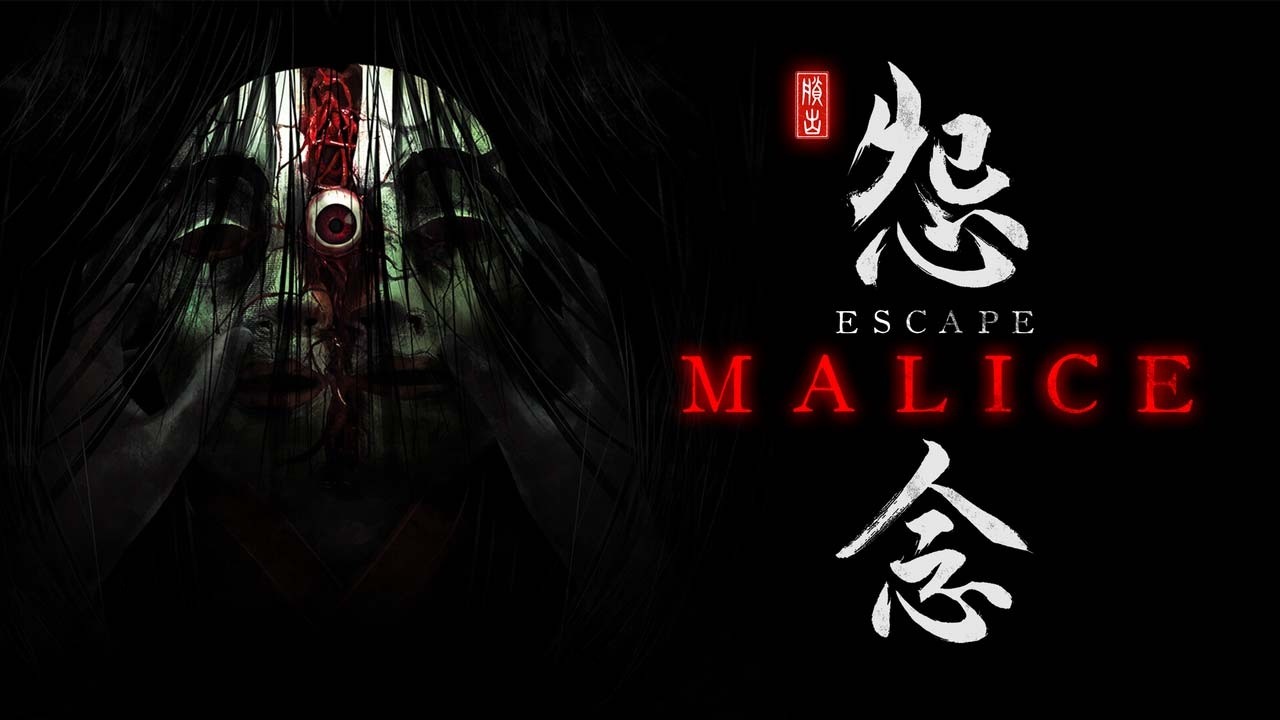
Escape: Malice Review – Two-Player Horror Puzzle Adventure
A two-player horror puzzle game set in a haunted Japanese mansion, built around co-op exploration and escape-room challenges.
Escape: Malice is a two-player co-op horror puzzle adventure where players investigate a mysterious Japanese mansion, solve interconnected puzzles, uncover its supernatural story, and work together to escape.
Grab a partner, step inside the mansion, and keep reading to see how Escape: Malice puts cooperation and puzzle solving to the test.

Escape: Malice


Escape: Malice Review – A Two-Player Horror Puzzle Adventure Built Around Cooperation Nimbus Games combines escape-room puzzles, Japanese supernatural horror, environmental investigation, and exactly two-player online co-op
Escape: Malice is a two-player-only co-op horror puzzle adventure that places cooperation at the center of its design. Two travellers visiting a mysterious temple in modern-day Japan are pulled underground after an earthquake creates a sinkhole, eventually arriving at a foreboding mansion surrounded by supernatural mystery. From there, the game combines environmental exploration, puzzle solving, character interactions, unsettling audio, and a story that moves across different eras and locations.
The important distinction is that Escape: Malice is not primarily a horror game with cooperative puzzles added around the edges. The puzzles are the main activity, while the horror atmosphere provides the setting and pressure surrounding them. Players examine their surroundings, compare clues, work through unfamiliar mechanisms, and communicate with one another to make progress. The result is closer to a two-player escape room wrapped in a Japanese supernatural horror story than a conventional survival horror game.
That focus explains both the strongest parts of Escape: Malice and some of its rougher moments. When a clue finally makes sense and both players understand how separate pieces of information fit together, the cooperative design works exactly as intended. When an interaction is unclear or information has to be repeatedly retrieved through the interface, the same puzzle-focused structure can become frustrating. Escape: Malice has a strong idea at its center, but its execution does not always stay out of the way of that idea.
Exactly Two Players Are Part of the Puzzle Design Escape: Malice requires two players and builds its investigation around communication, shared discovery, and solving problems together
Escape: Malice requires exactly two players. There is no solo option and no larger multiplayer group, and that restriction is important because the cooperative structure is built into how the puzzles are approached. One player may notice a detail while the other is examining something elsewhere, turning progression into a constant exchange of information rather than two people simply interacting with the same objects.
This worked particularly well during the playthrough because the game gives conversation a practical purpose. A clue found by one player can become useful only after another detail has been discovered. The solution is therefore not simply a matter of searching every object independently. Players need to remember what they have seen, explain it clearly, compare observations, and decide which pieces of information belong together.
The result is a cooperative horror game where communication is more important than mechanical complexity. The basic interactions are straightforward, but the reasoning required to connect clues can create genuine discussion between two players. That is where Escape: Malice feels most confident about its identity. It is designed around the idea that solving something with another person should feel different from solving it alone.
The Puzzles Are the Real Reason to Play Escape: Malice Logical, lateral, decryption, and maze-style challenges make investigation and problem solving the core of the two-player experience
The puzzle design is the strongest part of Escape: Malice. The game uses logical and lateral challenges alongside decryption puzzles and old-fashioned maze sections, creating a progression built around observation rather than combat. The mechanics themselves are not especially complicated. What makes them interesting is the need to understand what the environment is communicating and how different clues relate to one another.
The better puzzles have the satisfying quality expected from a good escape-room challenge. An object can initially appear unimportant before another discovery gives it context. A clue can seem incomplete until information found elsewhere fills in the missing piece. When the solution becomes obvious in hindsight, the satisfaction comes from having worked it out rather than simply having followed an objective marker.
Not every difficulty spike feels equally fair. Some puzzles become harder because their clues are ambiguous or because the intended interaction is not immediately obvious. That distinction matters. A difficult puzzle can be rewarding when the information needed to solve it is present and the reasoning is sound. A puzzle becomes considerably less satisfying when the main obstacle is determining what the game expects the player to interact with. Escape: Malice occasionally crosses that line.
Escape: Malice Does Not Hold Your Hand The game expects players to inspect clues, remember information, and solve problems without relying on constant hints or objective markers
Escape: Malice takes an old-fashioned approach to puzzle solving. It expects players to stop, look around, remember information, and try to understand the logic behind what they have discovered. There is less emphasis on constantly telling the player what to investigate next, which fits the escape-room structure considerably better than a system built around objective markers and automated hints.
That design choice is one of the game's strengths, but it also explains why the difficulty can divide players. Anyone expecting modern puzzle games to provide frequent hints may find Escape: Malice unusually demanding. The challenge is not always about performing a complicated action. Sometimes it is about understanding why a particular piece of information matters in the first place.
The distinction between deliberate difficulty and poor communication becomes important here. Escape: Malice is at its best when it gives the player enough information to reach a conclusion independently. It is weaker when the intended relationship between an object and a clue is too obscure. The game benefits from making players think, but there are moments when it could communicate the boundaries of the puzzle more clearly without giving away the answer.
The Japanese Horror Setting Gives the Game Its Identity A mysterious temple, an ancient mansion, historical settings, supernatural inhabitants, and an unsettling atmosphere shape the investigation
The setting is one of the most distinctive parts of Escape: Malice. The story begins in modern-day Japan before the earthquake and sinkhole lead the two travellers into an underground environment and eventually toward a mysterious mansion. From there, the narrative expands into different locations connected to an ancient Edo-era settlement and eventually reaches an unspeakable dimension.
That progression gives the game more personality than a generic haunted-house scenario. The Japanese setting is not simply background decoration. The environments, objects, historical references, rituals, and supernatural elements all contribute to the identity of the puzzles and the story. The result is a horror adventure that feels deliberately tied to its setting rather than using a conventional western haunted-house template.
The presentation combines realism with stylized and dreamlike elements. The environments can feel uncanny rather than simply dark, while music, ambient sounds, and other audio details contribute substantially to the atmosphere. The horror is therefore often created through uncertainty and environment rather than depending entirely on direct scares. That approach works particularly well when both players are concentrating on a puzzle and are already paying close attention to small details.
The Horror Works Best When You Are Busy Solving Something Escape: Malice uses unsettling environments and audio to create tension around its cooperative puzzle solving rather than replacing it with constant action
Escape: Malice does not need combat to maintain tension. Its main activities are examining, interpreting, communicating, and solving, which creates a different kind of vulnerability from a traditional action-oriented horror game. Players are usually concentrating on a clue or trying to understand a mechanism, making unexpected environmental changes and unsettling sounds more effective.
The atmosphere also benefits from the game's visual style. The graphics are not comparable with the production values of a major AAA horror release, and there are places where the presentation looks less polished than the game's strongest ideas deserve. At the same time, the visual direction has enough character to prevent the game from feeling like a completely generic horror puzzle title.
Music and ambient sound do much of the heavy lifting. The combination of environmental audio and visual uncertainty creates a persistent sense that something is wrong without requiring every room to become an obvious horror set piece. That is particularly effective in a game where the players' attention is already divided between exploration and puzzle solving.
Hand-Drawn Cutscenes Expand the Story Beyond the Mansion Character interactions and illustrated story scenes reveal more about the mansion, its inhabitants, and the wider supernatural mystery
The narrative structure extends beyond simply moving from one puzzle room to another. Escape: Malice uses hand-drawn cutscenes and character interactions to reveal information about the mansion and the people connected to it. The story spans three chapters and gradually moves beyond the initial setting as the players uncover more about the world beneath the surface.
The three-act structure gives the campaign a clear sense of progression. What begins as an escape from an unfamiliar and threatening location develops into a broader supernatural mystery involving different eras and locations. The changing environments help prevent the game from becoming visually repetitive, while the story gives the puzzles a reason to exist beyond simply opening the next door.
The narrative also saves an interesting development for later in the campaign. There is a twist toward the end that works better when experienced without being explained beforehand. It does not transform Escape: Malice into a story-first adventure, but it gives the final stages more purpose and helps the campaign feel like a connected journey rather than a collection of unrelated escape-room puzzles.
The Interface Can Make Good Puzzles More Cumbersome Switching between reference material and the journal adds unnecessary friction when players are already managing several clues at once
One of the clearest weaknesses is the way reference information is handled. Escape: Malice provides material that players need to consult while working through puzzles, but moving between the brochure or reference material and the journal can feel unnecessarily cumbersome.
That may sound like a small complaint, but interface friction matters more in a puzzle game than it does in many other genres. When two players are already discussing whether separate clues fit together, repeatedly navigating between information screens interrupts the reasoning process. The puzzle itself remains interesting; the act of retrieving the information becomes the distraction.
A quick-toggle or dedicated shortcut between the relevant reference screens would make the experience cleaner without reducing the difficulty of the puzzles. The goal should not be to make the game easier. It should be to make the information supplied by the game easier to access when players need to compare it. Escape: Malice generally benefits from asking players to think, but the interface occasionally asks them to navigate when they should be thinking.
Basic Hiragana Knowledge Can Help With Some Puzzles Japanese language familiarity may speed up certain challenges, while the game's guides provide the information needed by players who do not know Hiragana
Some puzzles make use of Japanese writing, meaning players with basic Hiragana knowledge can have an advantage when interpreting certain information. That does not make Japanese language knowledge a requirement for completing the game. The in-game guides provide the information needed to work through the relevant challenges.
This works well with the setting because the Japanese language elements feel connected to the world rather than appearing as an arbitrary barrier. A player who recognizes Hiragana may reach the intended interpretation more quickly, while another player can use the provided reference material and solve the same puzzle through investigation and communication.
It also reinforces the broader design philosophy. Escape: Malice expects players to make connections between information instead of presenting every solution in an immediately obvious form. The Japanese elements add another layer to that process without making language fluency a prerequisite for progression.
Malice 2.0 Changes the Game's Starting Point The 2026 overhaul rebuilt Act I while also introducing networking, performance, graphics, story, puzzle, and interface improvements
Escape: Malice is not simply the same game that originally launched in 2022. Nimbus Games substantially reworked the experience through the Malice 2.0 update, including a redesigned Act I and changes to networking, performance, graphics, story content, puzzles, and the user interface. The rebuilt opening places players in Hana's ruined home before the story moves deeper into the supernatural world.
The networking changes are particularly relevant because Escape: Malice depends entirely on two-player online cooperation. A cooperative puzzle game can tolerate some rough presentation more easily than it can tolerate unreliable multiplayer connections. The updated networking system therefore addresses an area that directly affects the game's central premise rather than adding a peripheral improvement.
The updated structure also provides a useful distinction between the game's current design and its original release. Act I has been rebuilt rather than merely receiving a cosmetic patch, while other changes affect performance, graphics, story material, puzzles, and the interface. The current version should therefore be understood as a substantially revised form of Escape: Malice rather than a completely unchanged release from 2022.
Technical Problems Still Exist, But They Were Recoverable The playthrough encountered a small number of bugs, including a stuck character and a puzzle issue that were resolved by restarting
The playthrough was not completely free of technical problems. There were two notable issues during the full run, including a situation where a player became stuck on an object and another puzzle that stopped behaving correctly and required a restart.
Neither issue resulted in a major loss of progress. Restarting resolved both problems, with only a few minutes lost. That makes them frustrating interruptions rather than failures that prevented the game from being completed. The distinction matters because technical reliability is especially important in a two-player online game, where a problem affecting one player can interrupt the experience for both.
The wider 2026 overhaul is relevant here because networking and performance were among the areas addressed by the updated version. Escape: Malice still has rough edges, but the current build is the result of substantial post-launch work rather than the untouched state of the original release.
The Campaign Is Short but Packed With Puzzle Progression A complete playthrough takes roughly four to five hours, giving the three-act horror puzzle adventure a compact structure
The complete campaign takes roughly four to five hours, depending on how quickly two players work through the puzzles. That length fits the escape-room structure reasonably well because much of the appeal comes from discovering solutions for the first time. Once the answers are known, the mystery and experimentation naturally lose some of their impact.
The shorter campaign does leave the setting feeling larger than the amount of content available. The story introduces multiple eras, different locations, a supernatural dimension, and a mansion with considerably more mystery surrounding it than can be explored over a long traditional adventure. The three chapters provide a clear progression, but the world could comfortably support more puzzles and additional chapters.
Even so, the compact length prevents Escape: Malice from overstaying its welcome. The game remains focused on its core activity instead of padding the campaign with unrelated progression systems. For players looking specifically for a two-player horror puzzle game rather than a lengthy survival horror campaign, that focus can be an advantage.
Escape: Malice Is Better Understood as an Escape Room With Horror Around It Its strongest identity comes from cooperative deduction, environmental investigation, Japanese supernatural atmosphere, and shared problem solving
The easiest way to understand Escape: Malice is to think of it as a cooperative escape-room game with a supernatural horror setting. The horror creates the atmosphere, the story provides the mystery, and the Japanese-inspired environments establish the visual identity, but the puzzles remain the reason the two-player structure works.
That also explains why the game can be enjoyable for one type of player and frustrating for another. Someone looking for a horror game with constant action, simple objectives, or frequent hints may not find the experience especially accommodating. Someone who enjoys discussing clues, testing theories, remembering information, and sitting with a difficult puzzle is much more likely to appreciate what Escape: Malice is trying to do.
The game is not perfect at communicating its own rules. Some interactions can be ambiguous, some clues require more interpretation than expected, and the interface can make information management more awkward than it needs to be. Those weaknesses should be separated from the puzzle design itself, because the underlying cooperative structure is considerably stronger than the game's rougher execution sometimes suggests.
Escape: Malice Has a Better Puzzle Foundation Than Its Reputation Suggests The two-player structure, atmospheric setting, clever challenges, and revised 2026 version make it a distinctive co-op horror puzzle experience
Escape: Malice has a very specific design target, and the game is strongest when it stays focused on that target. It wants two players sitting together online, examining a strange environment, exchanging information, solving puzzles, and gradually uncovering a supernatural story. The experience does not need a complex combat system or a long list of progression mechanics because its central appeal comes from solving problems as a pair.
The best moments come from that cooperation. A puzzle becomes satisfying when one player notices something and the other realizes why it matters. A previously confusing clue suddenly becomes useful. A solution that looked impossible becomes obvious once the correct pieces are placed together. Those moments are the reason Escape: Malice works as a co-op puzzle game.
The Japanese supernatural setting adds another layer of identity. The ancient mansion, historical locations, unsettling inhabitants, hand-drawn story scenes, atmospheric audio, and dreamlike presentation give the puzzles a distinct environment. The game is visually modest compared with large-budget horror releases, but its style and atmosphere are more important to its success than raw graphical fidelity.
The main weaknesses are execution issues rather than a lack of a clear concept. Interface friction can interrupt puzzle solving. Some interactions are not communicated as clearly as they should be. Bugs can still occur, although the issues encountered during the playthrough were recoverable. The campaign is also relatively short, leaving the setting feeling as though it could support more content.
The 2026 Malice 2.0 update changes the context surrounding those weaknesses. The rebuilt Act I, revised puzzles and story material, updated graphics and performance work, networking changes, and interface improvements show that Escape: Malice has received substantial attention after its original release. That does not erase every rough edge, but it means the current game deserves to be judged as the revised version rather than solely by its earliest form.
For anyone searching for a two-player horror game, co-op puzzle game, Japanese horror adventure, or online escape-room experience, Escape: Malice has a clear appeal. It demands exactly two players and expects them to communicate rather than simply follow instructions. The game can be difficult, occasionally unclear, and technically imperfect, but those problems exist alongside a puzzle structure that can produce genuinely satisfying moments of cooperative discovery.
Final Verdict Escape: Malice is a focused two-player horror puzzle adventure where cooperation, deduction, Japanese supernatural atmosphere, and escape-room design matter more than combat
Escape: Malice succeeds because it understands that two players can make a puzzle more interesting when the solution has to be discussed rather than simply discovered alone. Its logical, lateral, decryption, and maze-style challenges provide the foundation, while the Japanese supernatural setting gives those challenges an atmosphere that separates the game from a generic escape-room title.
The experience is strongest when the game trusts the players. Finding a clue, remembering it, comparing it with something discovered elsewhere, and eventually reaching the answer creates the kind of satisfaction that constant hints would undermine. The game is less successful when unclear interactions or interface friction create difficulty that has little to do with solving the actual puzzle.
The presentation has limitations, the campaign is relatively short at around four to five hours, and technical problems can still interrupt a session. However, the issues encountered during the playthrough were recoverable, and the substantial Malice 2.0 overhaul has changed important parts of the original experience, including Act I, networking, performance, graphics, puzzles, story content, and the interface.
Escape: Malice is therefore best approached on its own terms. It is not a conventional survival horror game, it is not designed for solo play, and it does not constantly explain what players should do next. It is a two-player online horror puzzle game built around communication and deduction, with a Japanese supernatural story wrapped around the escape-room structure.
For players who enjoy solving difficult puzzles with a partner, that focus is the game's biggest strength. For players who dislike puzzle-heavy games or expect frequent hints and straightforward interactions, the same design can become its biggest weakness. Escape: Malice sits somewhere between those two extremes: uneven in execution, occasionally frustrating, but capable of delivering exactly the kind of shared discovery its two-player design promises.
The VoxOdyssey Project Mission Statement for Feature games
I highlight what makes each game unique by examining gameplay mechanics, design choices, and storytelling. By analyzing systems, level design, and play styles, and referencing official media and assets, I aim to provide accurate, informative, and trustworthy insights. While I strive for accuracy, some details may change or be updated over time. Players can use this information to understand each title’s features and mechanics and make their own judgments.
Escape: Malice gameplay screenshots Two-player co-op horror, Japanese mansion exploration, puzzle solving, eerie environments, and supernatural mystery


Escape: Malice video – Two-player co-op horror, puzzle solving, Japanese mystery, and eerie mansion exploration
Step into the mansion, grab a partner, and see Escape: Malice in action. Watch the video below for a closer look at the puzzles, unsettling atmosphere, strange surroundings, and two-player co-op adventure waiting inside.