

Piano Trauma Stress Deluxe – Co-op Physics Transport Gameplay Breakdown
A closer look at piano transport mechanics, momentum-driven movement, and online cooperative physics systems in Piano Trauma
In Piano Trauma Stress Deluxe, progression revolves around physically moving a piano through unstable rooftop environments using shared control and momentum-based movement. During hands-on gameplay testing, most outcomes depend on coordination between two players rather than precise platforming alone, especially in sections built around gaps, slopes, and controlled acceleration.
It starts simple—then every jump turns into a coordination problem you can’t ignore

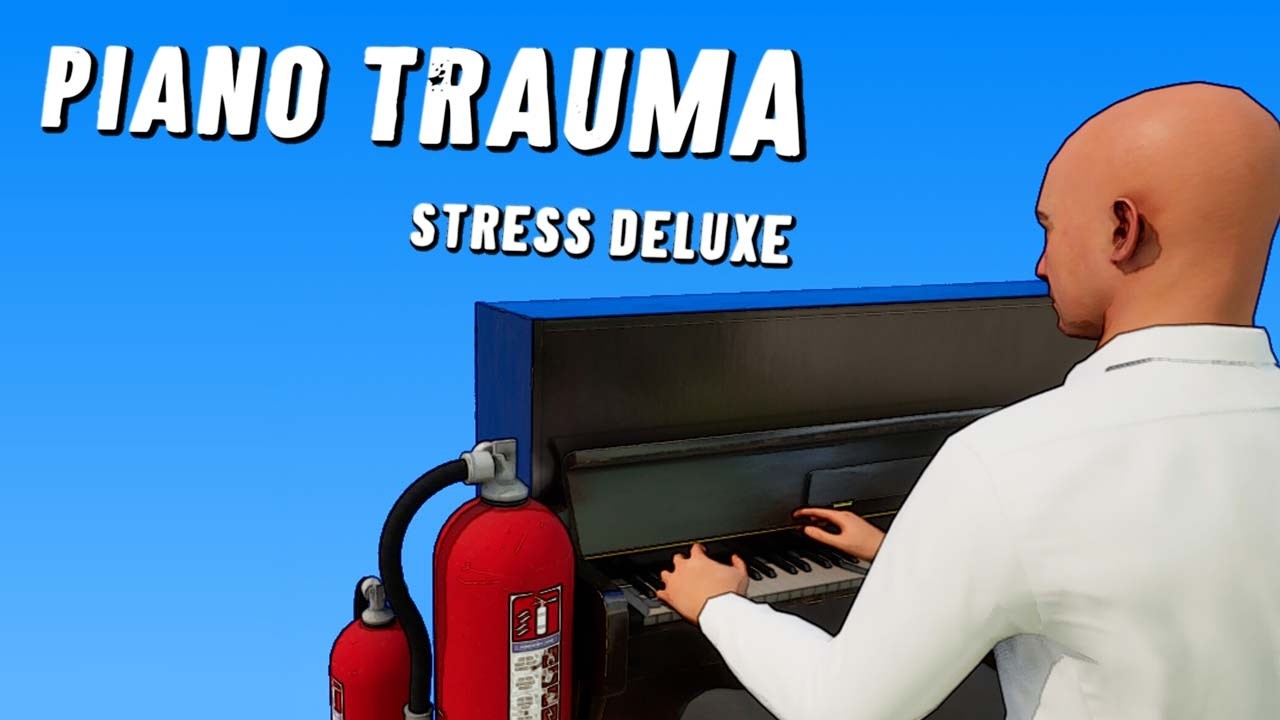
Piano Trauma - Stress Deluxe


A piano, two players, and a situation that rarely goes exactly to plan Piano Trauma Stress Deluxe co-op physics gameplay overview
Piano Trauma Stress Deluxe is built around a simple setup that quickly becomes more complicated in practice. Two players are given control of a piano and asked to move it through rooftops, gaps, and uneven environments using shared physics. In most Piano Trauma gameplay sessions, the challenge comes from coordination rather than individual control.
Early Piano Trauma Steam demo runs usually feel manageable at first. Movement is slow, positioning is clear, and the objective is easy to understand. That changes once momentum builds. The piano reacts to every adjustment, and both players end up influencing its movement whether they intend to or not.
It fits naturally into physics coop games where the core difficulty is not learning controls, but learning how two people affect the same object at the same time. The system itself is simple, but the results are not always predictable.
Speed, momentum, and the moment things start sliding out of control Piano Trauma gameplay, nitro mechanics, and movement physics
Movement in Piano Trauma Stress Deluxe is based on momentum. Once the piano starts moving, it carries that energy forward until something slows it down or redirects it. In actual Piano Trauma gameplay, this often becomes the main thing players are managing rather than the environment itself.
The nitro system increases speed and jump distance, but it also reduces precision. In physics platformers with nitro acceleration mechanics, this trade-off usually defines how risky each section feels, and Piano Trauma follows that pattern closely without adding extra layers on top.
When both players are aligned, movement feels controlled. When they are not, even small differences in input can create instability that takes time to correct. That balance sits at the centre of most runs.
Co-op play where communication matters more than precision Online co-op games about moving a piano and shared control systems
Online co-op is the main structure of Piano Trauma Stress Deluxe. Both players directly affect the same object, so every movement is shared. In Piano Trauma Steam demo sessions, progress tends to depend more on timing and communication than mechanical skill alone.
The game does not assign fixed roles, but players usually develop their own approach over time. One might focus on pushing forward while the other stabilizes movement, then switch depending on the situation. This flexibility is part of how the system works in practice.
This places it in the broader group of online co-op games about moving a piano or similar shared-object physics experiences, where coordination becomes the main skill being tested rather than execution speed.
Environments built around recovery, not perfection Piano Trauma gameplay levels and physics platform structure
The level design in Piano Trauma Stress Deluxe uses rooftops, gaps, and uneven geometry to create movement challenges that are tied directly to physics. In most Piano Trauma gameplay situations, players are not only thinking about the next jump but also what happens if it goes slightly wrong.
Recovery is part of the experience. A failed jump does not always reset everything immediately. Instead, players often need to reposition the piano, correct its angle, and continue forward from a less stable position than before.
This fits the structure of physics platformer coop design, where improvisation is often more important than perfect execution.
Sound that stays steady while everything else shifts Piano Trauma game classical music soundtrack and pacing
The Piano Trauma game classical music soundtrack runs continuously without reacting to gameplay. Whether a run is smooth or chaotic, the audio remains unchanged, which creates a consistent background layer across all sessions.
That contrast becomes noticeable over time. The physics system can shift quickly between control and chaos, while the music remains steady in the background. It does not attempt to match performance or failure states.
It also reinforces the premise in a simple way. The goal is to move a piano toward a concert setting, so the soundtrack functions more as context than feedback.
Final verdict on Piano Trauma Stress Deluxe as a co-op physics experience Where Piano Trauma sits within physics coop games and transport design
Piano Trauma Stress Deluxe is best understood as a focused cooperative physics experiment built around one central idea. Two players, one shared object, and movement that depends entirely on coordination under momentum.
In most Piano Trauma Steam demo playthroughs, the experience settles into a loop of movement, correction, and occasional recovery. It does not rely on complex systems or layered mechanics. Instead, the challenge comes from how consistently both players can stay aligned while the physics system reacts to every input.
As a physics platformer coop title, it remains tightly scoped. It does not expand beyond its core concept of shared-object movement, and that clarity is part of what defines it.
Within the wider category of physics coop games, it sits alongside other cooperative transport-style experiences where success depends more on communication than execution. The piano is not just an objective but the system everything else is built around.
Overall, Piano Trauma Stress Deluxe delivers a contained but consistent cooperative physics experience where momentum, timing, and shared control define every outcome. It stays committed to that structure from start to finish without overextending its scope.
The VoxOdyssey Project Mission Statement for Feature games
I highlight what makes each game unique by examining gameplay mechanics, design choices, and storytelling. By analyzing systems, level design, and play styles, and referencing official media and assets, I aim to provide accurate, informative, and trustworthy insights. While I strive for accuracy, some details may change or be updated over time. Players can use this information to understand each title’s features and mechanics and make their own judgments.
Piano Trauma Stress Deluxe gameplay screenshots Co-op piano transport, rooftop traversal, and physics-based movement systems


Piano Trauma Stress Deluxe trailer – co-op piano transport and physics-based chaos
Watch Piano Trauma Stress Deluxe gameplay as two players struggle to move a piano across rooftops, gaps, and unstable terrain using shared physics and momentum. The video below shows how coordination, timing, and movement control shape every run.

Stay connected with Piano Trauma - Stress Deluxe


