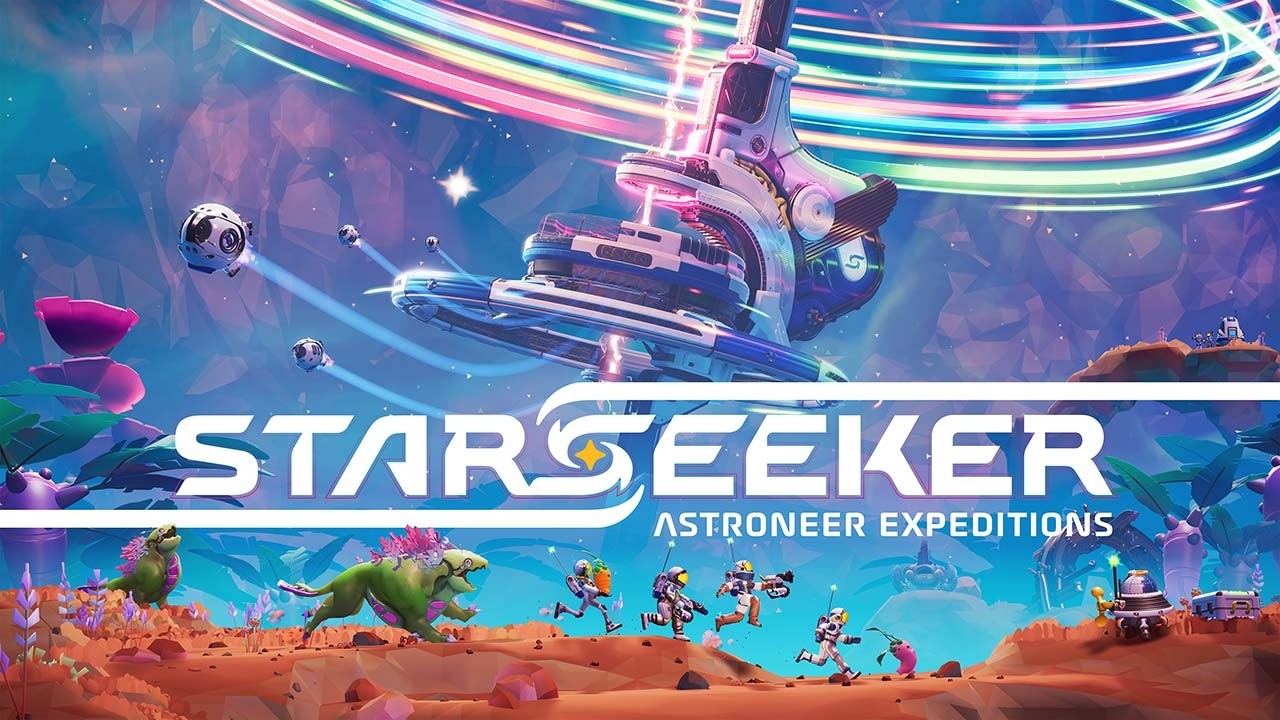
STARSEEKER: Astroneer Expeditions – Co-op Alien Expedition Review
Early Access cooperative space exploration with structured missions, alien worlds, and station-based progression systems
STARSEEKER: Astroneer Expeditions expands the Astroneer universe into a mission-driven cooperative experience set across hostile alien planets. Players operate from the ESS Starseeker, deploying on structured expeditions to gather resources, complete objectives, and upgrade their station while adapting to unpredictable environments and evolving progression systems.
Gear up, coordinate your crew, and push deeper into unknown worlds with every new expedition

STARSEEKER: Astroneer Expeditions


STARSEEKER: Astroneer Expeditions shifts Astroneer into structured cooperative expedition gameplay A mission-driven PvE space exploration system built around extraction, coordination, and progression
STARSEEKER: Astroneer Expeditions is an Early Access cooperative space exploration title developed by System Era Softworks and published by Devolver Digital. Rather than continuing the original Astroneer’s open-ended sandbox survival model, it restructures the experience into instanced, mission-based expeditions launched from the ESS Starseeker orbital hub, where players prepare loadouts, coordinate roles, and deploy into high-risk planetary runs focused on objective completion and extraction.
Launching into Steam Early Access on June 11, 2026, the game functions less like a traditional survival sandbox and more like a structured PvE extraction-style cooperative experience. Each run begins aboard the ESS Starseeker, where squads plan deployments, assign responsibilities, and prepare equipment before entering instanced alien environments where success depends on coordination, survival efficiency, and completing objectives under pressure.
From a systems perspective, STARSEEKER enforces a strict always-online requirement across all modes. Even solo expeditions require a persistent server connection, with no offline functionality available. While the installation size remains relatively compact at roughly 10 GB, the live-service infrastructure introduces notable constraints, particularly during launch conditions where server instability, extended loading sequences, and intermittent disconnects can interrupt expedition flow and risk mission progress loss.
These launch-period issues contributed to the game’s initial Mixed user review status on Steam, reflecting early infrastructure strain rather than core gameplay design. The reliance on cooperative networking means that performance consistency is closely tied to backend stability, making server reliability a defining factor in the current Early Access experience.
Planetary expeditions focus on structured teamwork under environmental pressure Handcrafted alien regions combine exploration, hazards, and resource-driven objectives
On the surface of Planet Tephra, STARSEEKER’s shift toward handcrafted environments becomes immediately apparent. Wetland systems, dense jungle zones, and unstable terrain segments surround the remnants of a failed EXO Dynamics expedition, creating a layered environment that blends traversal challenges with environmental storytelling. These sites are not purely decorative; they function as navigation anchors and risk zones that influence expedition routing and squad movement.
During active expeditions, squads must respond to shifting planetary conditions while managing specialized roles such as resource extraction, reconnaissance, and hazard mitigation. Tool loadouts directly affect performance under pressure, especially when navigating hostile wildlife encounters or environmental anomalies that disrupt movement and visibility. These systems create a dependency on coordination rather than individual optimization.
The Fronteer Force faction provides structured mission direction between runs, framing expeditions as part of a larger scientific and operational effort across multiple planetary systems. This narrative layer reinforces the sense that each deployment contributes to an ongoing extraction and exploration campaign rather than isolated gameplay sessions.
Progression, station systems, and technical constraints define long-term structure Advancement is tied to both expedition success and cooperative infrastructure stability
Progression is built around a dual structure of personal loadout development and ESS Starseeker station upgrades. Resources and research gathered during expeditions unlock new equipment options, expanded mission types, and improved operational capabilities, reinforcing a loop where repeated extraction runs directly influence future expedition potential.
Hardware requirements reflect the game’s reliance on modern rendering and networking systems, with minimum specifications targeting mid-to-high range CPUs such as Intel Core i5-10700K or AMD Ryzen 7 3800X. While the 10 GB installation footprint remains efficient, performance is shaped more heavily by network conditions than local storage or raw asset load.
Because all gameplay is server-dependent, expedition stability is influenced by both client performance and backend infrastructure. During periods of server strain, players may experience delayed loading into planetary instances or interrupted extraction sequences, which can affect progression continuity and overall session reliability.
Despite these constraints, the underlying structure maintains a consistent loop of preparation, deployment, execution, and extraction. The emphasis remains on cooperative coordination, where success is determined by how effectively squads adapt to environmental hazards, mission objectives, and system-level constraints during each run.
Final verdict A structured cooperative expedition system shaped by progression, coordination, and live-service constraints
STARSEEKER: Astroneer Expeditions represents a clear structural departure from Astroneer’s sandbox identity, replacing open-ended survival with instanced cooperative missions built around extraction-based progression. The ESS Starseeker acts as a central operational hub, connecting preparation, deployment, and long-term advancement into a unified gameplay loop.
Its strongest design contribution lies in how expedition structure, environmental design, and progression systems interlock. Handcrafted planetary regions such as Tephra introduce defined hazard zones and exploration landmarks, while role-based squad composition ensures that success depends on coordination rather than individual efficiency.
However, the experience is currently constrained by its Early Access infrastructure. Mandatory always-online connectivity, combined with launch-period server instability and occasional disconnects, directly affects session reliability and progression continuity. These issues are reflected in its initial Mixed reception on Steam and remain a central factor in evaluating the current state of the game.
Overall, STARSEEKER: Astroneer Expeditions delivers a structured cooperative framework built around extraction-based exploration and station-driven progression. While its core gameplay systems demonstrate clear design intent, the live-service dependency means that long-term quality is closely tied to ongoing technical stabilization and content expansion throughout Early Access.
The VoxOdyssey Project Mission Statement for Feature games
I highlight what makes each game unique by examining gameplay mechanics, design choices, and storytelling. By analyzing systems, level design, and play styles, and referencing official media and assets, I aim to provide accurate, informative, and trustworthy insights. While I strive for accuracy, some details may change or be updated over time. Players can use this information to understand each title’s features and mechanics and make their own judgments.
STARSEEKER: Astroneer Expeditions gameplay screenshots from cooperative alien expeditions Squad exploration, planetary hazards, and mission-based extraction gameplay


STARSEEKER: Astroneer Expeditions Trailer – Co-op Missions, Alien Worlds, and Orbital Station Gameplay
Watch STARSEEKER: Astroneer Expeditions in action as squads deploy from the ESS Starseeker into hostile alien environments. See cooperative mission planning, planetary exploration, and extraction gameplay unfold. The trailer below shows how each expedition shifts between preparation, deployment, and return.