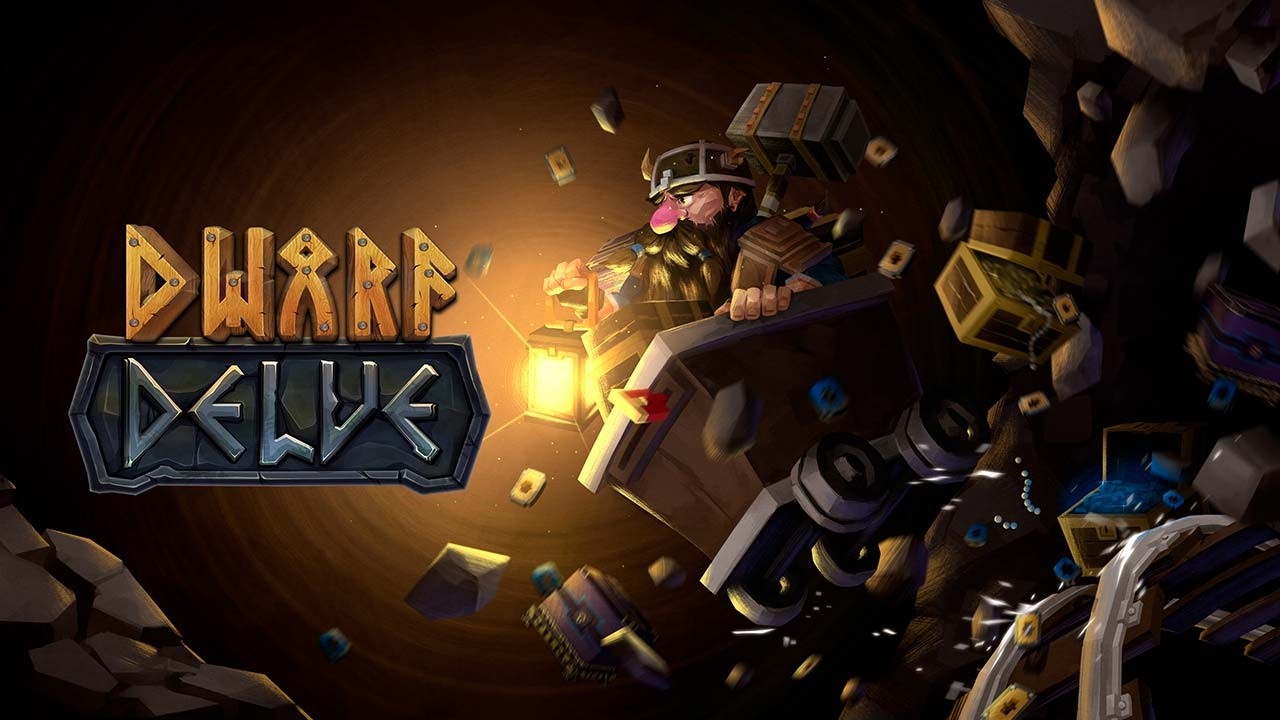
Dwarf Delve Review – Mining, Extraction and Underground Survival
Explore Gloom Box's first-person extraction roguelite about dangerous mines, valuable ore, minecart networks and high-risk expeditions
Dwarf Delve sends players into randomly generated mines to gather valuable resources, manage hazards, build transport networks and escape with enough loot to upgrade their next expedition.
Ready to take the Battlemallet underground and see how far your next delve can go? Continue below.

Dwarf Delve


Dwarf Delve turns underground mining into a high-risk extraction operation Every swing of the Battlemallet can lead to valuable ore, deeper hazards, and one more reason to question when it is time to leave
Dwarf Delve is a first-person extraction roguelite developed by Gloom Box and published by indie.io. Released for PC on 27 July 2026 through Steam, GOG and the Epic Games Store, the game sends players into randomly generated mines in search of valuable ores, treasures and legendary relics. The objective is not simply to find those resources. The real challenge is getting them back out.
Each expedition begins with a trip underground and develops around a familiar but increasingly complicated decision: how much further is it worth going? The deeper the player explores, the greater the opportunity to find valuable resources, but every additional section also increases exposure to traps, environmental dangers and the possibility of losing the haul already collected.
That structure gives Dwarf Delve a clear identity within the PC extraction roguelite genre. It combines first-person mining with procedural exploration, equipment upgrades, resource management and underground infrastructure. The result is not a conventional mining simulator in which materials are gathered and automatically converted into progress. Resources only matter once they have been successfully extracted.
The game is at its most distinctive when these systems begin to overlap. The Battlemallet handles the physical work of mining, lighting equipment opens up dark areas, construction helps manage the mine, and rail networks can move heavy ore through the underground environment. Back at the Dwarven quarters, the resources brought home can be refined and invested into the next expedition.
The Battlemallet gives Dwarf Delve its most direct gameplay interaction Mining starts with a simple tool, but upgrades and equipment management determine how much value a Delveling can bring home
The Battlemallet is the central tool in Dwarf Delve gameplay. It provides the direct physical interaction that allows the player to work through the mine and collect valuable materials. Its importance extends beyond the basic act of striking ore because the tool sits inside a wider equipment and progression system.
The Dwarf Delve Battlemallet equipment upgrades are designed around improving the Delveling's ability to operate underground. Better equipment can allow the player to strike harder, move faster and carry more loot, with each improvement affecting the practical conditions of an expedition rather than simply increasing an abstract character level.
That distinction matters in an extraction roguelite. A stronger tool can improve the efficiency of mining, but the value of that improvement depends on everything that happens afterwards. The ore still has to be carried, transported and recovered. A player who can gather resources quickly but cannot move them efficiently has not solved the entire problem.
Gear hooks add another practical layer to equipment management. Tools can be attached to the player's gear, helping free the hands for other actions while keeping useful equipment available. It is a small system, but it fits the game's broader emphasis on managing several problems at once rather than treating mining as a single isolated action.
Darkness is another problem to solve before the mine solves it for you Lanterns, flares, and portable floodlights turn visibility into a practical equipment decision rather than a purely visual effect
Lighting plays an important role in the Dwarf Delve extraction roguelite mining mechanics. Lanterns and flares provide portable illumination, while portable floodlights offer a stronger option for dealing with particularly dark sections of the mine. The different tools give the player several ways to approach underground visibility.
In a first-person mining environment, darkness affects more than presentation. It changes how the player reads the space ahead, identifies routes and approaches hazards. A lighting tool can therefore influence exploration and preparation at the same time.
The equipment system consequently encourages players to think about what they are taking underground before an expedition begins. A tool that seems unnecessary in a well-lit section may become considerably more useful when the mine becomes difficult to read. The challenge is not simply owning equipment, but deciding how it fits into the current expedition.
This gives the mine a practical sense of uncertainty. The player does not know exactly what the next section will require, and the value of equipment depends on the conditions encountered. Better preparation can make the expedition more manageable, but it also forms part of the wider decision about how much gear and resources can be taken into the mine.
The mine is dangerous enough to make preparation part of the Dwarf Delve gameplay loop Support beams, ladders, lighting, and careful movement help turn an unpredictable cavern into something that can be worked rather than merely survived
Dwarf Delve's mines contain traps and other hazards capable of disrupting an expedition. The danger matters because the player is not only risking health or progress. Valuable resources gathered during the run are also at stake, making hazard management directly connected to the extraction system.
Crafting provides several ways to respond to the physical challenges of the underground environment. Support beams can be constructed to help maintain the mine, ladders provide additional options for movement, and floodlights can improve visibility in dark areas. These tools give the player more control over the conditions of an expedition.
The result is a preparation-based approach to danger. The player is not simply expected to react after every hazard has already become a problem. Equipment and construction choices can influence how a particular section of the mine is approached and how much control the player has over the route.
That approach also supports the first-person perspective. The player deals with the mine directly, moving through its spaces, managing visibility and handling equipment at close range. The environment is therefore more than a backdrop for resource collection. It is the central space in which the game's systems meet.
Minecart rails turn a pile of ore into a logistical problem Dwarf Delve's rail networks give heavy resources a route home and make infrastructure part of the extraction strategy
The Dwarf Delve minecart rail network construction system is one of the game's clearest points of differentiation. Heavy ores can be transported and stored through constructed rail networks, giving the player an alternative to manually carrying every resource back through the mine.
That changes the standard mining loop. A valuable ore deposit is no longer judged only by the amount of material it contains. The player also has to consider how the material can be moved through the underground environment and how a practical route can be established between the resource and the eventual extraction point.
Rail placement therefore introduces a logistical layer that sits alongside the direct use of the Battlemallet. The player can create transport routes through the mine and use minecarts to shift heavy ores, making the process of extraction less dependent on carrying everything by hand.
The system gives the underground environment a more organised character. The player is not simply moving through a sequence of randomly generated spaces. Within an expedition, those spaces can become connected by infrastructure designed around the practical problem of moving resources.
This is where the Dwarf Delve procedural mining extraction game concept becomes particularly clear. Procedural generation creates a different immediate problem, while construction and equipment provide the tools used to solve it. The mine changes, but the player develops a more capable approach to working within it.
A good minecart route can matter as much as a good ore deposit The deeper the haul, the more important transport becomes to the difference between finding wealth and actually extracting it
The rail system is most interesting because it changes the meaning of distance. A resource located deep inside the mine is not necessarily valuable simply because it is rare. Its practical value is also affected by how difficult it is to move. Minecart networks give the player a way to address that problem through planning rather than relying entirely on increased carrying capacity.
That creates a useful relationship between personal progression and infrastructure. Carrying upgrades improve what the Delveling can handle directly, while rail construction can change how the mine itself handles heavy resources. The two approaches solve related problems in different ways.
The result is a system that rewards more than simply moving quickly from one ore deposit to another. The player can also think about how the expedition is organised. A minecart network can support the wider extraction process, while tools and upgrades can make the work of reaching and collecting resources more efficient.
For a first-person extraction roguelite, that focus on logistics gives Dwarf Delve a more defined mechanical identity. The game is concerned with the entire chain of extraction, from breaking into the earth to getting the material back to safety.
The Dwarven quarters give every successful expedition somewhere to go Refined ore becomes equipment, perks, skills, and a more personal home between trips underground
The post-run progression system begins when the player returns from the mine with resources that have survived the expedition. Ores can be refined in the Dwarven quarters and transformed into valuable assets that support future upgrades.
The Dwarf Delve home customization and ore refining systems give the quarters a practical role between expeditions. The player can process resources, improve the Delveling and purchase equipment while also customising the home with furnishings, carpets and wall art.
That combination separates the quarters from a simple inventory screen. The home acts as a preparation space for the next expedition and a visual record of progress made during previous ones. New decorative pieces can be discovered and placed within the quarters, allowing the environment to change alongside the player's progression.
Character progression focuses on practical advantages. Perks and skills can improve movement speed, striking power and carrying capacity, with each category affecting a different part of the underground experience. The upgrades are therefore connected to the same problems the player faces during an expedition.
The home is not just where the loot goes when the mine finally lets you leave Dwarf Delve uses ore refining, upgrades, and quarters customisation to turn each extraction into preparation for the next one
The progression loop works because the resources collected underground have several possible uses. They can contribute to improvements in equipment, support the purchase of perks and skills, or form part of the wider process of developing the player's quarters.
The Dwarf Delve dwarven quarters customization guide is therefore closely connected to the game's broader progression structure. The home is not an unrelated cosmetic feature placed beside the extraction mechanics. It is part of the rhythm that follows a successful expedition.
Movement speed can affect how efficiently the player travels through the mine. Carrying capacity can change how much value can be brought back in a single expedition. Strike power can improve the effectiveness of the primary mining tool. Each upgrade changes the practical relationship between the Delveling and the underground environment.
The loop consequently has a clear direction. The player enters the mine, searches for valuable resources, manages the risks of continuing, extracts what can be recovered, refines the results at home and invests in improvements before returning underground.
Procedural mines keep asking the same question in different ways The layout changes, but the problem remains familiar: find something valuable, make it worth the risk, and get it home
Replayability in Dwarf Delve comes from the interaction between procedural mine generation, extraction risk, equipment upgrades, character progression and infrastructure. No single system has to carry the entire experience because each expedition changes the relationship between the others.
A different mine layout changes the immediate problem. Equipment upgrades alter the player's ability to deal with that problem. Carrying capacity affects how much can be removed directly, while minecart rails provide another way to manage heavy resources.
Lighting also changes how the player approaches the environment. A dark area may require different equipment from a section that is easier to navigate, while construction can help make a dangerous route more manageable. The value of each tool depends on the situation in which it is used.
This creates a replay loop based on changing conditions rather than a simple sequence of identical runs. The mine may be randomly generated, but the player's increasing ability to interpret and manage its problems gives progression a practical effect.
The best extraction is not always the one with the biggest haul Dwarf Delve's central decision is knowing when another promising tunnel is worth more than the resources already secured
The extraction structure gives each expedition a natural decision point. The player can continue searching for additional ores, treasures and relics, or return with the resources already collected. The longer the expedition continues, the greater the opportunity for additional rewards and the greater the exposure to hazards.
That risk-and-reward relationship is central to the Dwarf Delve extraction roguelite mining mechanics. The value of a run is not determined only by what the player discovers. It depends on what can be recovered safely.
The decision becomes more complicated as the player invests in better equipment and infrastructure. A more capable Delveling may be able to stay underground longer, while a useful rail network may make a previously difficult resource easier to transport. Progression changes the calculation without removing the underlying risk.
This is a more interesting structure than a simple reward system because the player is constantly comparing potential gain with the cost of remaining underground. The mine does not need to force every decision through a scripted event. The value of continuing is created by the systems themselves.
Dwarf Delve PC system requirements point towards an older hardware target The published minimum and recommended specifications place the game within reach of a wide range of older gaming PCs
The published Dwarf Delve system requirements list Windows 7 64-bit as the minimum operating system and Windows 10 64-bit as the recommended operating system. Both configurations require a 64-bit processor and operating system, DirectX 11, 3 GB of available storage and a broadband internet connection.
The minimum hardware specification calls for a third-generation Intel i5 processor, 6 GB of RAM and either an NVIDIA GeForce GTX 660 or AMD Radeon HD 7870 graphics card. The recommended specification raises the processor requirement to a seventh-generation Intel i5, increases memory to 8 GB of RAM and recommends an NVIDIA GTX 970 or AMD Radeon 290 graphics card.
For players comparing the Dwarf Delve PC minimum and recommended specs, the published requirements indicate that the game does not target only contemporary high-end hardware. The minimum specification relies on older-generation components, while the recommended hardware belongs to a previous generation of PC gaming systems.
Actual performance will still depend on resolution, graphics settings, drivers and the condition of the wider system. The published requirements should therefore be treated as a baseline rather than a guarantee of a particular frame rate.
A strong PC makes the underground lighting work easier to appreciate Dwarf Delve's darker caverns can place more demand on a system when multiple dynamic light sources are active
Testing was conducted on Windows 11 using an Intel Core i7-12700K, an NVIDIA RTX 3080 and 32 GB of RAM at 1440p. Under standard gameplay conditions, Dwarf Delve averaged approximately 135 frames per second on that configuration.
Performance dropped to approximately 92 FPS during heavier dynamic lighting situations, particularly when multiple portable floodlights were deployed in dark caverns. That result highlights the way lighting can become a more demanding part of the rendering workload than ordinary mining and exploration.
The performance difference is relevant because lighting is not merely a visual feature in Dwarf Delve. Portable floodlights are part of the player's equipment and can be used to improve visibility in dark areas. The same system that helps make a cavern easier to read can also create a heavier rendering workload when several light sources are active.
The test system is considerably more powerful than the published minimum and recommended specifications, so these results should not be treated as representative of every PC configuration. They do, however, provide a useful indication of how the game responds to a modern high-end graphics card at 1440p.
The equipment loop works because every upgrade solves a real underground problem More power, more speed, more carrying capacity, and better lighting all change how the next expedition can be approached
The strongest part of Dwarf Delve's progression design is the relationship between upgrades and the problems found in the mine. Increased movement speed can improve travel efficiency, carrying capacity can allow more resources to be taken directly, and greater striking power can improve the effectiveness of the Battlemallet.
Those improvements do not remove the need for planning. A player can still encounter hazards, difficult terrain and the basic problem of getting resources out of the mine. The upgrades instead expand the range of approaches available during an expedition.
Gear hooks fit into the same design philosophy. Rather than simply increasing a numerical statistic, they change how equipment can be managed during play. Rail networks similarly alter the movement of resources instead of simply making the player stronger.
This gives the progression system a practical quality. The player is not only becoming more powerful. The player is becoming better equipped to solve the specific logistical problems that define the game.
Dwarf Delve's strongest idea is that mining is only half the job The ore has to be found, broken free, moved through the mine, protected from hazards, and extracted before the expedition ends
Many mining games place the emphasis on discovering resources and collecting them. Dwarf Delve gives equal importance to what happens afterwards. The player must deal with carrying limits, underground hazards, darkness and the practical problem of transporting heavy ore.
That emphasis on logistics is what gives the game its clearest identity. The Battlemallet provides the physical work, but rail construction can determine how efficiently the resulting resources move. Lighting can reveal the route, while support beams and ladders can help make the environment more manageable.
The systems therefore support one another. A valuable deposit may justify building infrastructure. A better tool may make an expedition more productive. Greater carrying capacity may make a shorter run more profitable. The player is constantly dealing with different versions of the same basic problem: how to bring more value out of a dangerous place.
That makes Dwarf Delve more specific than a generic procedural mining title. Its appeal comes from the complete extraction process rather than the act of mining in isolation.
The Dwarven quarters give the whole loop a satisfying sense of direction Every successful return underground can become a better tool, a stronger Delveling, a new perk, or another piece of the home
The progression structure gives Dwarf Delve a clear rhythm between expedition and preparation. The player goes underground to find resources, returns with whatever has survived the risks of the run, refines the results and invests them into future capability.
The customisation of the Dwarven quarters adds a separate visual layer to that progression. Furnishings, carpets and wall art allow the home to develop over time, while discovered items can be placed within the space.
The practical and cosmetic systems complement one another. Perks and equipment improve future expeditions, while home customisation gives the player a visible place to display progress. Neither system has to replace the other because they serve different purposes within the same post-run structure.
That connection is important for a game built around repeated expeditions. The player needs a reason to care about what comes back from the mine, and Dwarf Delve provides several ways for a successful extraction to matter before the next run begins.
The game works best when its mining, extraction, and logistics systems are considered together Dwarf Delve is less about one perfect tool than about building an expedition where every part of the operation supports the next
The most effective way to understand Dwarf Delve is as a connected system rather than a collection of separate features. Procedural generation creates variation, extraction creates consequences, equipment provides solutions and progression improves the player's ability to handle future expeditions.
The minecart system then adds another layer by allowing the player to think about resource movement. A player who focuses only on finding ore may still struggle to extract it efficiently, while a player who considers transport, equipment and route planning can potentially get more value from the same underground environment.
That relationship between systems is the reason the Dwarf Delve gameplay loop has more depth than a simple cycle of entering a mine and collecting materials. The player is making decisions about tools, routes, hazards, infrastructure and the point at which an expedition should end.
The result is a game that places the mining process inside a broader extraction framework. The Battlemallet starts the work, but successful mining depends on everything that follows.
Final verdict Dwarf Delve is a focused first-person extraction roguelite where mining, transport, risk, and progression all serve the same underground operation
Dwarf Delve has a clear mechanical identity because its major systems address the same underlying problem: how to enter a dangerous procedural mine, locate valuable resources and return with them before the expedition becomes too risky.
The Battlemallet provides the central mining interaction, while lanterns, flares and floodlights address visibility. Support beams and ladders help manage the physical challenges of the mine. Gear hooks improve equipment handling, and rail and minecart construction introduces a separate logistical solution for moving heavy ores.
The Dwarven quarters then extend the expedition beyond the mine. Ores can be refined, resources can be invested into equipment and perks, and the home can be customised with furnishings and decorative items. The progression loop gives each successful extraction a clear purpose without separating the underground and post-run systems from one another.
The most distinctive element is the relationship between mining and logistics. Dwarf Delve is not only concerned with finding valuable resources. It asks the player to consider how those resources can be reached, collected, transported and recovered. Carrying capacity, equipment upgrades, lighting and rail networks all contribute to that process.
The published Dwarf Delve system requirements also make the game accessible to a wide range of older PC hardware, although actual performance will depend on the system configuration and graphics settings. Testing on a modern 1440p system showed strong performance during standard gameplay, with dynamic lighting creating a more demanding workload when multiple portable floodlights were active.
For players searching for a Dwarf Delve review focused on mechanics rather than broad genre description, the game's defining strength is system synergy. Procedural mines create variation, extraction mechanics create risk, equipment upgrades improve capability, and rail networks introduce planning around heavy resource transport.
Overall, Dwarf Delve is a PC extraction roguelite with a clear mining focus and a progression structure built around increasingly effective expeditions. Its strongest idea is also its simplest: finding the ore is only the beginning. The real game starts when the player has to decide how to get it home.
The VoxOdyssey Project Mission Statement for Feature games
I highlight what makes each game unique by examining gameplay mechanics, design choices, and storytelling. By analyzing systems, level design, and play styles, and referencing official media and assets, I aim to provide accurate, informative, and trustworthy insights. While I strive for accuracy, some details may change or be updated over time. Players can use this information to understand each title’s features and mechanics and make their own judgments.
The Green Light gameplay screenshots Atmospheric exploration, psychological horror, and the journey toward the mysterious lighthouse


The Green Light video – Follow the voice, find the lighthouse, and discover what waits beyond the green light
Watch The Green Light in motion as Fred follows a mysterious radio transmission through an unsettling first-person horror journey. Continue below, then watch the video to see the atmosphere, exploration, and mystery unfold.