Mazebound – Survival Horror Maze Escape and Resource Challenge
Enter the maze, gather supplies, craft tools, and survive deadly creatures in Absam Studios’ cooperative horror adventure
Mazebound: Hunt, Gather, Run! combines maze exploration, survival crafting, monster encounters, and cooperative gameplay as players search for resources while facing an unpredictable hostile environment.
Ready to explore the maze, uncover survival strategies, and learn how crafting, creatures, and teamwork shape the Mazebound experience? Continue below.

MAZEBOUND


A maze designed to test every survival decision before the next threat appears Mazebound: Hunt, Gather, Run! combines crafting, exploration, and cooperative horror inside a hostile environment
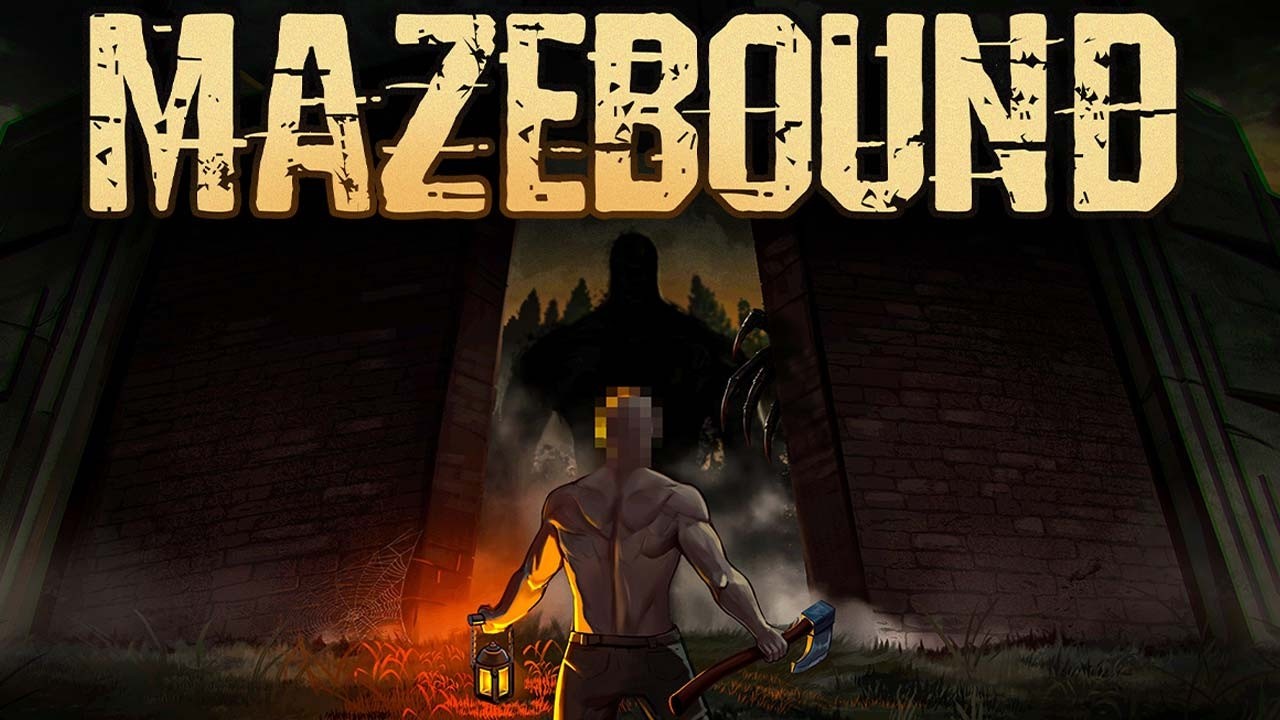
Developed and published by Absam Studios, Mazebound: Hunt, Gather, Run! is an indie survival horror game built around resource management, maze exploration, crafting, and cooperative endurance. Available through Steam, the Mazebound game places players in a dangerous environment where survival depends on gathering supplies, creating essential equipment, and understanding the threats hidden throughout the maze. With the sea behind the player and a towering gate ahead, the opening premise immediately establishes the game’s central design idea: progression comes from entering danger rather than avoiding it.
The Mazebound gameplay structure focuses on vulnerability and decision-making rather than traditional combat progression. Players begin with limited resources and must rely on the environment to create tools, gather food, build defensive options, and prepare for deeper exploration. Every branch collected, every crate searched, and every resource carried forward contributes to future survival opportunities.
For players searching for a Mazebound review or information about Mazebound Steam features, the defining aspect of Absam Studios’ survival horror approach is the connection between each system. Gathering supports crafting, crafting supports exploration, and exploration increases the risk of encountering the creatures that inhabit the maze. The result is a survival loop where careful planning becomes just as important as reacting to danger.
The maze rewards preparation before it rewards bravery Gather materials, manage supplies, and decide when the next step is worth the risk
The foundation of Mazebound gameplay is built around collecting resources and transforming them into useful survival equipment. The environment provides materials such as branches, crates, food sources, and crafting components that allow players to create torches, weapons, fires, and basic defensive structures. Unlike action-focused horror games that provide reliable equipment, Mazebound requires players to earn their survival tools through exploration.
The crafting system supports the game’s wider philosophy of scarcity. Materials are not simply collectibles waiting to be converted into upgrades; they represent decisions. A player choosing to spend resources on immediate protection may have fewer options later, while delaying equipment creation may create additional danger during exploration.
The physical item cart system adds another layer to resource management. Because gathering plays such an important role in progression, transporting collected materials becomes part of the survival process. Community feedback identified earlier physics issues where collisions or dropped objects could cause items to be displaced unexpectedly. Later technical improvements expanded fenced area collision behaviour and helped prevent the cart becoming stuck during resource runs.
These changes highlight the importance of technical reliability in a survival-focused game. When a title depends on gathering, carrying, and managing limited supplies, improvements to object physics directly support the intended challenge. The danger should come from the maze and its creatures rather than unpredictable inventory problems.
The maze itself becomes the largest enemy to overcome Navigation, memory, and patience determine how far each survival attempt can progress
Mazebound indie survival horror maze exploration is built around uncertainty. The maze is not presented as a simple obstacle between objectives; it functions as an active survival system where players must learn routes, recognise valuable areas, and understand when exploration has become too dangerous.
The environmental design creates tension through isolation. The combination of open sea surroundings, imposing structures, and enclosed pathways establishes a setting where safety is never guaranteed. Players are encouraged to investigate, but every decision to move deeper into the maze carries the possibility of losing valuable progress.
Unlike linear horror experiences built around controlled sequences, Mazebound relies on emergent situations created by the interaction between systems. Resource shortages, enemy encounters, environmental risks, and navigation choices combine to create different outcomes across play sessions.
The creatures are not just obstacles, they change how players survive The microphone mechanic adds another layer of danger where sound becomes a risk
One of the most recognisable features of the game is the Mazebound microphone mechanic monsters hear you system. The game recommends microphone support because monsters can react to player sounds, making audio awareness part of the survival experience. This mechanic extends the horror design beyond visual exploration by introducing another factor players must manage.
Sound awareness changes the way players approach movement and exploration. Actions that might normally be harmless in another survival game can create additional danger when enemies are capable of detecting player activity. The mechanic supports Mazebound’s wider focus on caution, positioning, and preparation.
The creatures encountered throughout the maze are designed around unpredictability. Some threats rely on movement, some rely on waiting, and others create pressure through their ability to disrupt player plans. Rather than encouraging constant combat, the game places importance on deciding whether an encounter should be confronted, avoided, or delayed until better equipment is available.
Surviving with friends changes the entire rhythm of the maze Mazebound coop turns resource management into a shared survival challenge
Mazebound coop expands the survival experience by allowing players to enter the maze together. Cooperative play introduces additional strategic decisions because every action affects the wider group. Resources must be shared, exploration routes must be discussed, and dangerous encounters must be handled with coordination.
Effective Mazebound coop survival tips with friends focus on organisation and communication. Teams benefit from assigning responsibilities, managing supplies carefully, and avoiding situations where multiple players become vulnerable at the same time. Cooperation does not remove the challenge of the game; it changes how that challenge must be approached.
Quality of Life Update #7 improved multiplayer reliability by introducing the Downed Player Revive System. This feature allows teammates to revive fallen players, but recovered players return with reduced health, hunger, and willpower. The update also addressed client-side inventory saving problems, improving consistency during longer cooperative sessions.
Hardcore Mode transforms survival into a true endurance test Permanent failure, limited resources, and locked pathways create a harsher challenge
The June 19, 2026 Hardcore Mode update expanded Mazebound’s challenge structure by introducing a dedicated high-difficulty survival mode. Hardcore Mode changes the experience through strict permadeath, meaning failed attempts cannot simply continue after defeat.
The mode also increases survival pressure through faster hunger depletion and fewer Waystones available throughout the maze. Nighttime exploration becomes significantly more dangerous because all maze doors automatically close and lock tightly, reducing escape options and forcing players to plan their movement carefully.
For players searching for a Mazebound Hunt Gather Run Hardcore Mode guide, these changes represent the biggest differences between standard survival and the advanced challenge mode. Completing Hardcore Mode unlocks a special reward axe and provides access to a dedicated leaderboard, creating a competitive objective beyond normal completion.
The toughest creatures demand strategy instead of simple aggression Boss encounters test preparation, timing, and understanding of enemy behaviour
Players searching for Mazebound how to beat Skarn Hog boss strategies will find that the encounter reflects the game’s broader survival philosophy. Developer balance updates increased Skarn Hog’s aggro duration, making standard combat approaches and fixed trap setups more difficult to execute.
Community discussion has highlighted that the creature’s speed creates pressure when attempting to reload the ballista trap. The timing window can become extremely limited, encouraging players to rely on more mobile tactics instead of depending only on stationary defensive options.
The Spider boss presents another challenge for players researching Mazebound how to kill the spider solo. Community strategies generally focus on preparation, trap placement, and careful resource use because standard crafting equipment is not designed for a straightforward melee approach.
Small balance changes have a major impact on survival Enemy adjustments and technical updates continue refining the experience
Jeff, the item thief enemy, became a notable part of community discussion following the June 1, 2026 “About Jeff...” balance update. Previously, Jeff could create severe inventory problems by stealing important items, including cart wheels, which could disrupt progression.
The update changed Jeff’s behaviour so that defeating him now causes the enemy to split into four lower-health, slower mini-Jeffs. This adjustment reduces the possibility of severe inventory soft-lock situations while preserving the disruptive role of the encounter.
A PC survival horror experience built around connected systems The technical requirements support exploration, physics, and cooperative gameplay
Mazebound PC is designed for Windows systems requiring a 64-bit processor and operating system. The official minimum specifications include Windows 10 64-bit, Intel i5-4590 or AMD FX-8350 processor, 4 GB RAM, NVIDIA GTX 960 or AMD R9 380 graphics hardware, DirectX 11, and 6 GB of available storage space.
For players researching Mazebound Hunt Gather Run system requirements PC compatibility, the listed hardware requirements reflect a game focused on environmental interaction, creature behaviour, physics systems, and multiplayer functionality rather than large-scale open-world technology.
Final Verdict Mazebound turns survival decisions into the heart of its horror experience
Mazebound: Hunt, Gather, Run! builds its identity around a simple but effective survival concept: enter the maze, gather what is needed, and survive long enough to escape. Absam Studios combines crafting, exploration, enemy encounters, and cooperative systems to create a game where preparation directly influences success.
The strongest aspect of the Mazebound game is how its systems depend on each other. Gathering affects crafting, crafting affects exploration, and exploration creates the risks that define the horror experience. Updates such as Hardcore Mode, cooperative improvements, and technical fixes show continued attention toward refining those interconnected mechanics.
For players interested in indie survival horror, maze exploration, cooperative survival, and challenge-based progression, Mazebound: Hunt, Gather, Run! offers a focused experience built around adaptation. Its achievements, difficulty modes, and evolving systems provide reasons to continue exploring the maze long after the first encounter.
The VoxOdyssey Project Mission Statement for Feature games
I highlight what makes each game unique by examining gameplay mechanics, design choices, and storytelling. By analyzing systems, level design, and play styles, and referencing official media and assets, I aim to provide accurate, informative, and trustworthy insights. While I strive for accuracy, some details may change or be updated over time. Players can use this information to understand each title’s features and mechanics and make their own judgments.
Mazebound gameplay screenshots Maze exploration, survival crafting, creatures, and cooperative endurance in a hostile world


Mazebound video – Enter the maze, survive the threats, and uncover the challenge ahead
See Mazebound: Hunt, Gather, Run! in action as exploration, crafting, survival, and creature encounters collide. Watch the video below to discover how the maze, resources, and teamwork shape every dangerous journey.