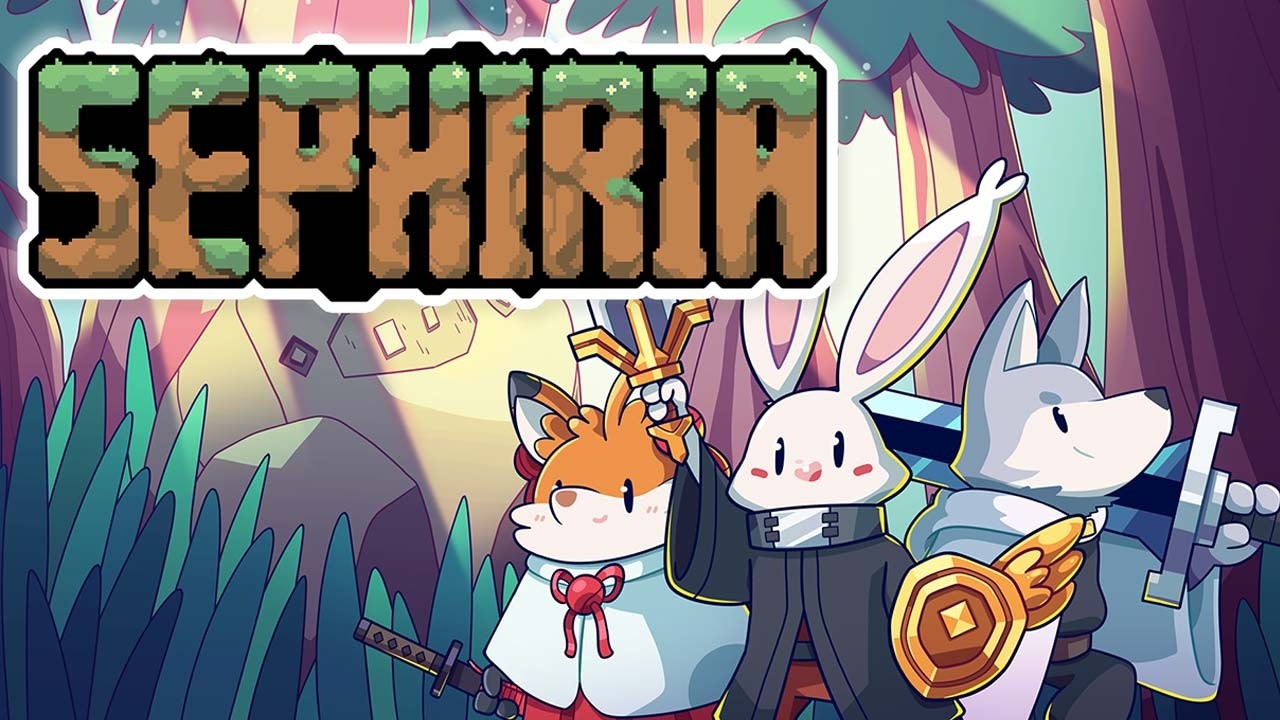
Sephiria Review: TEAM HORAY's Strategic Action Roguelite RPG
Explore Sephiria's combat, Artifacts, weapon builds, co-op gameplay, progression systems, and PC performance
Sephiria is a top-down action roguelite RPG by TEAM HORAY where players defend Bunnyville through strategic combat, Artifact management, weapon upgrades, and four-player online co-op while climbing a demon-filled tower across six challenging chapters.
Ready to climb the tower? Discover the builds, bosses, and strategies waiting below.

Sephiria


Sephiria turns the fate of Bunnyville into a tactical action roguelite RPG built around constant adaptation TEAM HORAY blends tower exploration, weapon evolution, inventory strategy, and cooperative survival into a connected progression system
Sephiria is an action roguelite RPG developed and published by TEAM HORAY, the studio known for Dungreed. Set in the endangered village of Bunnyville, the game follows a brave bunny attempting to prevent a foretold disaster as demons threaten to destroy the settlement. Rather than presenting a traditional linear RPG structure, Sephiria builds its experience around repeated journeys into a dangerous tower where every run creates new opportunities for combat improvement, equipment decisions, and strategic experimentation.
The core of Sephiria gameplay is based on the relationship between immediate combat decisions and long-term progression. Each expedition introduces new enemies, stronger challenges, and different opportunities to develop a character build. The roguelite structure means that failure is not simply an ending point, but part of the process of learning which weapons, Artifacts, Tablets, and Talents work effectively together.
What separates Sephiria from more straightforward action RPG designs is the importance placed on preparation. Progression is not only determined by defeating enemies or collecting stronger equipment. Players must understand how different systems interact, how inventory choices influence combat potential, and how each run can be shaped around a different approach. This creates a system-driven experience where knowledge becomes as important as reaction speed.
The design philosophy continues themes explored by TEAM HORAY in Dungreed while expanding the structure through deeper equipment management and online cooperative features. The Sephiria TEAM HORAY new game vs Dungreed comparison highlights a shift toward a more interconnected progression model, where inventory organisation, build planning, and team coordination play a larger role in determining success.
Sephiria gameplay focuses on weapon variety, upgrade choices, and creating builds that change with every run Six weapons and more than 50 upgrades for each weapon category create a flexible combat system based on experimentation
Combat is the foundation of Sephiria, with players fighting through large groups of enemies while exploring the depths of the tower. The game features six distinct weapons, each supported by more than 50 unique upgrades that can alter their effectiveness and role during a run. This structure gives players the ability to create different combat approaches rather than following one fixed progression path.
The Sephiria best weapon upgrades and builds system is designed around combining individual improvements into a complete strategy. A weapon choice affects which upgrades become valuable, while later decisions can encourage players to adjust their approach depending on the challenges they encounter. This creates a progression loop where experimentation is encouraged instead of relying on a single permanent solution.
Unlike traditional RPG systems where stronger equipment usually replaces weaker equipment in a straightforward sequence, Sephiria places more emphasis on how different choices support each other. A successful build comes from understanding the relationship between weapons, inventory choices, and character progression rather than simply collecting the highest available statistics.
This approach supports the replay-focused nature of the roguelite format. Every run provides another opportunity to test different combinations, discover more effective strategies, and develop a better understanding of the systems that influence survival inside the tower.
Sephiria strategic inventory management makes Artifacts and Tablets central to long-term build planning The inventory system transforms equipment organisation into an important part of surviving increasingly difficult tower encounters
One of Sephiria’s defining mechanics is its strategic inventory management system. Players collect Artifacts and use Tablets to empower them, creating another layer of decision-making beyond direct combat. Instead of treating equipment as simple upgrades, the game encourages players to consider how each item fits into the wider structure of their current build.
The Sephiria artifacts and tablets synergy combinations system adds depth because individual items gain value through their relationship with other choices. A useful Artifact depends on the player’s current weapon setup, available upgrades, and preferred combat style. This makes inventory organisation an active part of gameplay rather than a menu-based preparation step.
The system rewards players who are willing to experiment. A new item can represent a direct improvement, but it can also create an opportunity to change direction and develop a completely different strategy. This design approach places Sephiria alongside roguelites that use equipment decisions as a major part of their challenge structure.
Across repeated runs, understanding inventory relationships becomes one of the primary ways players improve. The challenge is not only surviving enemy encounters, but learning how different systems combine to create a stronger and more reliable build.
The tower journey combines enemy variety, boss encounters, and progression choices across six chapters TEAM HORAY builds increasing pressure through changing threats, powerful opponents, and evolving combat requirements
Sephiria expands its roguelite structure through a progression path that covers six chapters, with each stage introducing new challenges. The game features more than 60 different enemies and over 10 unique bosses, creating a wide range of encounters designed to test different approaches to combat and preparation.
The Sephiria chapter 6 boss fights and enemy list represents the broader escalation built into the tower structure, where later challenges require players to make better use of their available systems. As enemies become more demanding, the importance of selecting appropriate weapons, managing inventory space, and adapting builds becomes increasingly clear.
The tower environment supports the central roguelite concept by making every expedition a learning process. Players gradually develop a stronger understanding of enemy patterns, build possibilities, and the different ways available systems can be combined to overcome difficult encounters.
Sephiria expands TEAM HORAY’s roguelite design through cooperative play and deeper progression systems The tower becomes a shared challenge where four players can combine strategies, manage resources, and fight together
One of the major additions that separates Sephiria from earlier TEAM HORAY projects is its online cooperative structure. The game supports Sephiria 4 player online co-op features, allowing up to four players to explore the tower together, trade items, revive defeated companions, and coordinate their approaches against increasingly difficult encounters.
The inclusion of cooperative multiplayer changes how players interact with the game's progression systems. A build that may be effective in a solo run can take on a different role when combined with other players. Team composition, item decisions, and combat approaches become part of a larger strategy where individual choices contribute to the success of the group.
The cooperative design also strengthens the replay-focused structure of Sephiria. Rather than simply repeating the same tower journey, players can experience different combinations of weapons, upgrades, and character approaches depending on the group they play with. This creates additional variation within a system already designed around experimentation.
TEAM HORAY’s decision to include online co-op places Sephiria within a growing category of action roguelites that expand beyond individual progression. The result is a game that maintains the fast combat foundation of the genre while adding a social layer built around teamwork and shared problem solving.
Sephiria progression systems reward understanding rather than simple character improvement Talents, weapons, Artifacts, and Tablets work together to create different paths through the tower
The Sephiria talent tree progression mechanics are designed around the wider philosophy of adapting each run rather than following a fixed character path. Unlocking new Talents provides additional options for shaping future attempts, allowing players to gradually develop strategies that match their preferred combat style.
The game's progression structure avoids separating individual systems into isolated upgrades. Weapon improvements influence combat, Artifacts affect equipment choices, Tablets modify how items are used, and Talents provide additional development options. Together, these mechanics create a network of decisions where each improvement has a wider impact on the player's overall approach.
For players searching for a Sephiria build guide, the important consideration is understanding how these systems interact rather than focusing on one specific upgrade path. The game is designed around discovering combinations that suit different situations, encouraging players to adjust their strategies instead of relying on a single permanent solution.
This structure gives Sephiria long-term replay value because improvement comes from both mechanical skill and system knowledge. Learning which combinations work effectively becomes part of the progression experience, allowing each run to provide new information even when the outcome is unsuccessful.
Sephiria Steam release presents a compact action RPG experience built around replayable tower exploration A focused PC design combines accessible hardware requirements with a detailed network of combat and progression mechanics
The Sephiria Steam release positions the game within the modern action roguelite market by focusing on repeatable encounters, strategic decision-making, and build experimentation rather than a traditional large-scale RPG structure. The game’s design is centred around creating meaningful choices during each expedition, where every upgrade and equipment decision influences future encounters.
The strongest aspect of Sephiria’s design is the way its systems connect together. Weapons determine combat options, Artifacts and Tablets influence inventory decisions, Talents affect progression choices, and enemy encounters test whether those decisions were effective. This interconnected structure gives each run a clear sense of development and experimentation.
Compared with other action roguelites, Sephiria places additional importance on preparation. Combat remains the immediate focus, but success depends heavily on understanding how different systems support each other. The game rewards players who analyse their choices and adapt their builds rather than relying only on fast reactions.
The Sephiria roguelite RPG approach reflects TEAM HORAY’s focus on creating replayable combat systems. Instead of expanding through traditional quest progression, the game builds depth through repeated tower runs where new discoveries and improved decision-making gradually shape the player's ability to overcome challenges.
Sephiria PC performance requirements support a lightweight release across Windows and macOS systems The technical specification reflects a compact RPG experience designed for accessible PC hardware
The Sephiria PC specs show a release designed around efficient hardware requirements. According to the official Steam specifications, the minimum requirements include Windows 10 64-bit, a Ryzen 5 1400 processor or better, 8 GB of RAM, DirectX 11 support, and a GeForce GTS 750 graphics card or better. Recommended specifications increase to a Ryzen 5 1700X processor paired with a GeForce GTX 760 graphics card.
The Sephiria PC performance GTS 750 GTX 760 requirements place the game within a relatively accessible range compared with many modern RPG releases. The 2 GB storage requirement also reflects the focused scale of the project, allowing the game to maintain a compact installation footprint.
Sephiria also supports macOS systems, including compatibility with Apple Silicon M1 hardware. The Sephiria on Mac Apple Silicon M1 version expands the available platforms while retaining the same core gameplay systems, progression structure, and cooperative features found in the PC release.
The game includes interface and subtitle localisation across 12 languages. Sephiria does not include full audio voiceovers, with localisation focused on written interface elements and subtitles. This approach provides international accessibility while maintaining the original presentation style of the game.
Sephiria represents TEAM HORAY’s continued refinement of action-focused roguelite design after Dungreed The game builds on familiar foundations while introducing stronger inventory systems, cooperative play, and wider progression choices
The relationship between Sephiria and Dungreed provides important context for understanding TEAM HORAY’s development approach. Both games are built around action combat and replayable progression, but Sephiria expands the formula through more extensive inventory management, Artifact systems, Tablet enhancements, and online cooperative features.
Rather than simply increasing the amount of content, Sephiria focuses on making individual decisions more meaningful. Equipment choices, upgrade paths, and Talents all contribute to how a run develops, creating a structure where players are encouraged to understand the relationship between different mechanics.
The game sits comfortably within the action roguelite genre while maintaining a clear identity through its tower structure and equipment-focused progression. Its strongest design decisions come from connecting multiple systems together instead of relying on one central mechanic.
For players interested in build-focused RPG experiences, Sephiria offers a progression model based on experimentation and adaptation. Its challenge comes from learning how to combine available tools effectively, making each successful run the result of improved understanding as much as improved equipment.
Final verdict Sephiria is a system-driven action roguelite RPG where combat, inventory strategy, and cooperative progression define the complete experience
Sephiria succeeds by creating a tightly connected gameplay structure where every major system supports the others. Developed by TEAM HORAY, the game combines tower exploration, weapon upgrades, Artifact management, Tablet enhancements, Talent progression, enemy variety, boss encounters, and cooperative multiplayer into a unified roguelite framework.
The combat provides the immediate foundation, with six weapons and more than 50 upgrades available for each weapon creating a wide range of possible approaches. However, the deeper appeal comes from understanding how those choices interact with the rest of the progression system. Inventory organisation, equipment decisions, and Talents all influence whether a build can survive the increasingly difficult challenges found throughout the tower.
The addition of online co-op multiplayer gives Sephiria another layer of strategic depth. Supporting up to four players, the cooperative system allows teams to trade items, revive fallen companions, and combine different builds while maintaining the fast action-focused identity of the game.
From a technical perspective, Sephiria provides an accessible PC and macOS release with modest system requirements, a 2 GB storage footprint, Windows support, Apple Silicon M1 compatibility, and interface and subtitle localisation across 12 languages. The absence of full audio voiceovers keeps the focus on the game's mechanics while allowing the written presentation to reach a wider audience.
As a Sephiria roguelite RPG, the game represents an evolution of TEAM HORAY’s approach following Dungreed. Its identity comes from combining fast combat with deeper planning systems, giving players more control over how each run develops. The result is a focused experience built around experimentation, adaptation, and mastering interconnected mechanics.
Overall, Sephiria is best understood as a carefully structured action roguelite that rewards both skill and understanding. Its strongest qualities come from the relationship between combat, inventory management, progression systems, and cooperative play. For players seeking a build-focused RPG experience where every decision affects survival, Sephiria delivers a design centred on strategy, replayability, and continuous improvement.
The VoxOdyssey Project Mission Statement for Feature games
I highlight what makes each game unique by examining gameplay mechanics, design choices, and storytelling. By analyzing systems, level design, and play styles, and referencing official media and assets, I aim to provide accurate, informative, and trustworthy insights. While I strive for accuracy, some details may change or be updated over time. Players can use this information to understand each title’s features and mechanics and make their own judgments.
Sephiria screenshots reveal tower combat, bunny heroes, and action roguelite progression systems Weapon battles, Artifact management, enemy encounters, and cooperative tower exploration


Sephiria Gameplay – Tower Battles, Weapon Builds, and Bunny Village Survival Against Demons
Watch Sephiria gameplay as a brave bunny fights through the tower, upgrades weapons, manages Artifacts, and faces dangerous enemies. The video below highlights the action roguelite combat, progression systems, and cooperative adventures waiting inside Bunnyville’s fight for survival.