The Skin Stapler Review – PSX-Style Grindhouse Horror in Carrion City
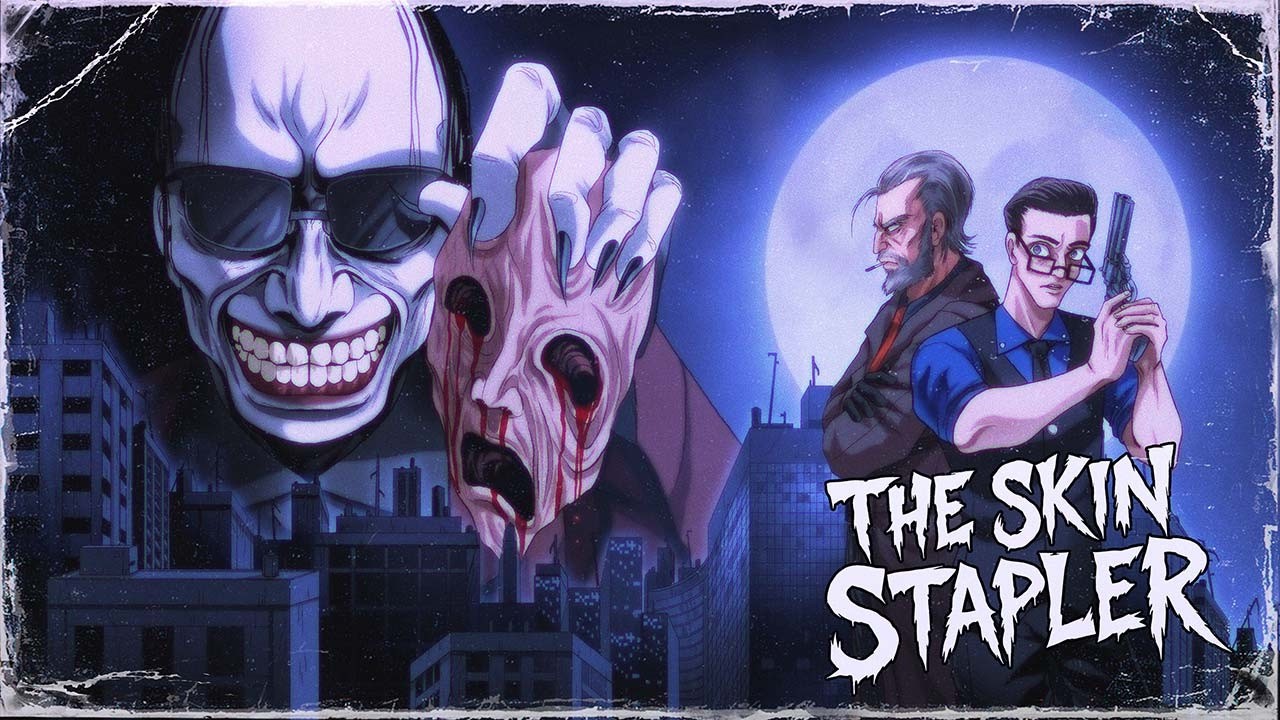
The Skin Stapler follows detective Dick Slater and rookie Robbie Knox through a grisly serial-killer investigation in decaying Carrion City.
The Skin Stapler combines PSX-inspired horror, detective investigation, multi-character survival, fully voiced characters, VHS exploitation aesthetics, graphic violence, and dark humor.
Ready to follow the killer's trail? Keep reading to uncover what makes Carrion City's case so disturbing.

The Skin Stapler


The Skin Stapler Review – A PSX-Style Grindhouse Horror Investigation Tainted Pact combines detective work, stalking, graphic violence, dark humour, and VHS-era horror in Carrion City
The Skin Stapler knows exactly what sort of horror story it wants to tell. Carrion City is a rotting, crime-soaked urban sprawl where a serial killer leaves skinned victims with their flesh stapled to nearby walls. Detective Dick Slater is put on the case alongside his rookie partner Robbie Knox, but this is not simply a police investigation dressed up as a horror game. The story moves between detectives investigating grisly murders and other characters being stalked through homes, workplaces, and dark streets. That change in perspective gives the game its central rhythm and keeps the killer's presence close to both sides of the story.
Developed by Tainted Pact and published by Assemble Entertainment, The Skin Stapler sits firmly within the modern PC horror scene while drawing heavily from older visual and cinematic traditions. Its PSX-inspired presentation recalls the low-fi look associated with early 3D horror, while the game's neon-lit decay, stylised violence, and grimy environments take their cues from 1980s VHS horror and exploitation cinema. The result is less concerned with realism than with creating a particular kind of dirty, exaggerated horror atmosphere.
That distinction gives The Skin Stapler a more specific identity than a generic retro horror game. The detective premise provides a reason to investigate what has happened, the serial killer gives the story its immediate threat, and the stalking sequences shift the player into a much more vulnerable position. The game can move from examining a murder scene to putting another character directly in danger without abandoning the same central mystery.
The tone is equally deliberate. Blood, gore, frightening scenes, violence, zombified humans, and monsters place the game firmly in adult horror territory, but the presentation is not entirely straight-faced. Dark humour runs alongside the violence, creating the grindhouse quality that separates The Skin Stapler from a conventional detective thriller. It is grimy by design, occasionally absurd by design, and visually tied to an era of horror where excessive violence and black comedy could occupy the same frame.
Detective Dick Slater and Robbie Knox Put the Murder Investigation at the Centre The burned-out detective and his rookie partner provide a grounded way into Carrion City's increasingly strange case
Detective Dick Slater is the game's primary investigative figure, accompanied by rookie partner Robbie Knox. Slater is presented as a jaded detective, while Knox brings the contrasting energy of an eager newcomer. Their partnership gives the story a recognisable crime-fiction starting point before the horror begins pushing the investigation somewhere considerably darker.
The Skin Stapler gameplay built around Slater includes crime-scene investigation and grisly puzzles. Those activities give the player a reason to examine the aftermath of the murders rather than simply encountering the killer as an abstract threat. The investigation is tied directly to the environment, with the city's homes, workplaces, and streets becoming locations that can contain evidence, danger, or both.
The serial killer also has a voice within the investigation through distorted audio tapes. These recordings taunt the police and point towards something darker beneath Carrion City. They give the case another layer beyond the physical crime scenes, turning the investigation into a search for meaning as well as a pursuit of the murderer.
Slater and Knox are therefore more than names attached to the premise. Their police perspective establishes the investigative side of the game, while the rest of the playable cast allows the story to show what happens when the investigation gives way to direct danger. That structure helps The Skin Stapler avoid becoming a simple sequence of detective scenes followed by unrelated horror encounters.
Carrion City Gives The Skin Stapler Its Distinctive Horror Setting Neon decay, dark streets, homes, and workplaces turn an already troubled city into the centre of the nightmare
Carrion City is one of the strongest elements of the game's identity. It is described as a rotting, crime-soaked sprawl, and that description carries through the visual direction. Rather than placing the story in an isolated haunted building, The Skin Stapler spreads its horror across an urban environment that already feels worn down before the killer's arrival.
The setting also serves the game's changing perspectives. A home can be part of a stalking sequence, a workplace can become a place of danger, and a dark city street can function as part of the wider investigation. The locations are therefore closely tied to what the player is doing at any given moment. Carrion City is not simply scenery surrounding the story; it provides the spaces in which the story's investigation and violence take place.
The neon-lit decay is particularly suited to the game's 1980s VHS exploitation aesthetic. Bright artificial lighting sits against dirty streets and deteriorating surroundings, creating the visual contrast associated with grindhouse horror. It gives the city a heightened quality without requiring it to become a supernatural setting in itself.
The references to secrets beneath Carrion City also give the environment a narrative dimension. The killer's recordings suggest that the murders are connected to something larger and more disturbing beneath the surface. That keeps the setting tied to the central mystery rather than treating the city as a disposable backdrop for a series of killings.
PSX Horror Style Meets 1980s VHS Exploitation Cinema The Skin Stapler uses deliberately retro visuals to support a grimy, violent, and darkly comic horror style
The Skin Stapler belongs to the modern wave of PSX horror games that use early 3D aesthetics as a creative language. The important distinction is that this is a contemporary Windows release rather than a historical PlayStation title. Its PSX identity comes from its visual presentation, not from the hardware on which it was originally designed.
The low-fi approach works alongside the game's 1980s VHS exploitation influences. Tainted Pact's horror design is built around stylised violence, neon decay, frightening imagery, and an intentionally rough aesthetic. The visual style therefore has a purpose beyond making the game look old. It supports the exaggerated crime-horror tone and helps place the story somewhere between a serial-killer thriller and a grindhouse film.
That combination makes The Skin Stapler particularly relevant to searches for PSX style retro horror detective games. Detective fiction is not simply an extra layer placed over retro visuals. It provides the game's narrative framework, while the VHS influence shapes the way violence, decay, and humour are presented.
The game's retro appearance should also be separated from its technical requirements. It is built for modern Windows PCs and uses contemporary PC hardware targets despite its deliberately old-fashioned visual identity. That contrast is increasingly common within indie horror, where developers can reproduce a low-resolution or low-poly visual character without being constrained by the hardware limitations of the original period.
The Horror Changes When the Player Stops Hunting the Killer and Starts Being Hunted Multiple playable characters give the Skin Stapler case a different edge beyond Detective Slater's investigation
The most important structural choice in The Skin Stapler is the ability to take control of characters other than Slater. These characters are stalked through homes, workplaces, and dark city streets, creating a direct contrast with the detective's role. Slater is looking for the killer; these characters are trying to survive the consequences of the killer's actions.
That change gives the game a two-sided horror structure. Investigation asks the player to examine what has already happened, while stalking places the player closer to what might happen next. Both sides remain connected through the same killer and the same city, which prevents the multiple-character approach from feeling like a collection of unrelated episodes.
The mature content is substantial. The game contains heavy depictions of blood, gore, frightening scenes, and violence, while action sequences involve zombified humans and monsters. The Skin Stapler is therefore not merely borrowing the appearance of grindhouse horror. Its content embraces the graphic side of the genre as part of its overall presentation.
Yet the game's humour keeps the tone from becoming entirely bleak. The horror is accompanied by dark comedy, creating an intentionally uncomfortable contrast between gruesome subject matter and moments of irreverence. That balance is important to the game's identity because the humour is part of the grindhouse influence rather than a separate comic layer added to an otherwise serious detective story.
Distorted Audio Tapes and Full Voice Acting Push the Story Beyond Its Visual Style The killer's recordings, police dialogue, victims, and wider cast all contribute to Carrion City's uneasy atmosphere
Audio plays an unusually direct role in the Skin Stapler investigation. The killer's distorted tapes are designed to taunt the police and point towards the darker mystery beneath Carrion City. They therefore function as part of the narrative rather than simply filling the background with unsettling noise.
Every character is fully voiced, including killers, victims, and police officers. That is particularly relevant to a game with several playable perspectives because the story is not carried solely by Slater and Knox. The wider cast has an active presence in the world, helping the different sides of the case feel connected.
The combination of full voice acting and PSX-inspired visuals is also a useful example of how modern retro horror differs from the games it references. The Skin Stapler can borrow the visual language of an older generation while using production features that would not necessarily have been practical or common in the same form on the original hardware.
The distorted tapes also reinforce the VHS-era influence without requiring the game to reproduce analogue video technology literally. The important connection is stylistic and thematic: the killer's recordings, the grimy city, the exaggerated violence, and the exploitation-film aesthetic all contribute to the same deliberately abrasive presentation.
The Skin Stapler Keeps Its Progression Focused on Investigation, Puzzles, and Changing Perspectives Its structure is built around the horror case itself rather than a visible collection of conventional upgrade systems
The game's progression is closely tied to its horror structure. Detective Slater investigates murders and solves grisly puzzles, while other characters become part of the killer's pursuit. The movement between these roles provides the main variation in how the story is experienced, with the investigation gradually revealing more of the nightmare surrounding Carrion City.
That makes The Skin Stapler different from horror games built primarily around character statistics, equipment upgrades, or score chasing. Its defining systems are narrative and situational rather than presented as a traditional progression ladder. The emphasis stays on investigation, atmosphere, puzzles, stalking, and the consequences of the serial-killer case.
The handcrafted nature of the project is important here. The game is designed around a specific horror experience rather than an endlessly changing set of cases. The phrase “XXL horror feature night” captures the intended shape of the experience: a substantial horror presentation with story and atmosphere given as much importance as the individual mechanics.
That approach also keeps the game distinct from procedural detective games. The Skin Stapler is concerned with one named killer, one heavily defined city, and a connected cast of characters. Its interest comes from how those pieces fit together rather than from generating an endless supply of unrelated crimes.
Tainted Pact's Horror Catalogue Gives The Skin Stapler a Clear Development Context Suffer the Night, Terror at Oakheart, Massacre at the Mirage, and Flesh Made Fear sit alongside its latest grindhouse horror project
The Skin Stapler comes from Tainted Pact, a developer with several horror projects already associated with its name. Its catalogue includes Suffer the Night, Terror at Oakheart, Massacre at the Mirage, and Flesh Made Fear. The Skin Stapler continues that horror-focused body of work while taking a particularly strong interest in serial-killer fiction, exploitation cinema, and retro-styled presentation.
The connection to those earlier Tainted Pact horror games is most useful as development context. The Skin Stapler belongs to a developer already working within horror rather than representing a sudden move into the genre. Its specific subject matter is different, however, with Detective Slater, Robbie Knox, Carrion City, and the Skin Stapler killer providing its own distinct identity.
Assemble Entertainment is credited as publisher, placing the game within the contemporary independent PC market. Together, the developer and publisher credits situate The Skin Stapler within the modern indie horror ecosystem, where compact teams can build highly specific genre projects around visual styles and influences that sit outside mainstream production trends.
Among indie horror games PC, The Skin Stapler stands out less because it simply uses retro graphics and more because of the combination of influences. It takes the visual language of PSX horror, the crime structure of detective fiction, the violence of grindhouse cinema, the atmosphere of 1980s VHS exploitation, and the perspective changes of a multi-character narrative, then places them in the same urban setting.
The Skin Stapler System Requirements PC Specifications Put the Retro Look on Modern Hardware A Core 2 Duo and GTX 760 form the minimum target, while the recommended configuration rises to a GTX 1070 and 16 GB of RAM
The Skin Stapler system requirements PC specifications reinforce the difference between its retro appearance and its modern platform. The minimum requirement is Windows 10 with a 64-bit processor and operating system. The processor target is an Intel Core 2 Duo 1.8GHz or AMD Athlon X2 64 2.4GHz, accompanied by 4 GB of RAM and an Nvidia GeForce GTX 760 or higher. The game requires 2 GB of available storage.
The recommended configuration calls for an Intel Core i5-9600K at 3.70GHz or equivalent, 16 GB of RAM, and an Nvidia GeForce GTX 1070 or higher. Storage remains at 2 GB. The gap between the minimum and recommended memory and graphics requirements reflects a modern PC release despite the deliberately low-fi visual presentation.
These specifications are useful for establishing the hardware range of the game, but they should not be confused with measured performance. A minimum graphics card does not by itself establish a particular frame rate, resolution, graphics preset, or frame-time result. Those figures depend on actual testing and are separate from the published system requirements.
The 2 GB storage requirement is comparatively small by modern PC standards, making the installation footprint straightforward for players considering The Skin Stapler Steam release. More importantly, the hardware requirements demonstrate the technical position of the game clearly: its visual identity may point backwards, but the software itself belongs to contemporary Windows PC gaming.
The Skin Stapler Finds Its Place Between Detective Horror and Grindhouse Slasher Cinema Its genre identity comes from the combination of investigation, stalking, graphic horror, retro visuals, and dark comedy
Calling The Skin Stapler a grindhouse horror game is accurate, but it does not tell the whole story. The serial-killer investigation gives it a detective framework, while the ability to play as characters being stalked introduces a survival-horror element. The PSX-inspired presentation supplies the retro visual identity, and the VHS exploitation influence explains much of the game's deliberately abrasive tone.
That combination is what makes the game relevant to players searching for PSX style retro horror detective games. The investigation is not an afterthought attached to a slasher premise. Dick Slater and Robbie Knox are actively pursuing the case, crime scenes and puzzles are part of the gameplay, and the killer's tapes provide another thread through the mystery.
At the same time, the game does not remain safely behind the detective's perspective. The shift to characters being stalked changes the mood and the player's relationship with the environment. Carrion City's homes, workplaces, and streets become places where the investigation can happen and places where the consequences of the investigation can arrive.
The dark comedy element completes that tonal mixture. The Skin Stapler takes its violence seriously enough to make gore and frightening scenes central to the experience, but its grindhouse influence allows those elements to coexist with humour. It is a deliberately heightened style rather than an attempt to reproduce the tone of a realistic police procedural.
Final Verdict The Skin Stapler turns a serial-killer investigation into a grimy PSX-style horror experience built around shifting perspectives
The Skin Stapler has a strong central idea and, more importantly, keeps its major design choices tied to that idea. Detective Dick Slater and rookie Robbie Knox provide the investigative foundation, while the Skin Stapler killer gives the story its grisly focus. From there, the game expands beyond conventional detective work by placing other characters in the path of the killer and allowing the player to experience Carrion City from their side of the nightmare.
The game's visual identity is just as clearly defined. PSX-inspired horror provides the low-fi foundation, while 1980s VHS exploitation cinema supplies the neon decay, stylised violence, and grimy grindhouse character. Full voice acting and distorted killer recordings add a more contemporary layer to the presentation, allowing the game to reference older horror traditions without simply reproducing them.
Its strongest structural feature is the movement between investigation and stalking. Crime scenes and grisly puzzles give Slater a reason to explore the case, while the playable victims and other characters show what happens away from the detective's control. The result is a multi-character horror adventure in which the same city can feel like a crime scene in one moment and a trap in the next.
The technical side is straightforward. The Skin Stapler is a modern Windows PC game with a minimum requirement of Windows 10, a 64-bit system, an Intel Core 2 Duo 1.8GHz or AMD Athlon X2 64 2.4GHz processor, 4 GB of RAM, an Nvidia GeForce GTX 760 or higher, and 2 GB of storage. The recommended configuration rises to an Intel Core i5-9600K at 3.70GHz or equivalent, 16 GB of RAM, and an Nvidia GeForce GTX 1070 or higher.
Tainted Pact's previous horror work, including Suffer the Night, Terror at Oakheart, Massacre at the Mirage, and Flesh Made Fear, provides useful context for The Skin Stapler's place within modern indie horror. Assemble Entertainment's publishing role places the title within the contemporary PC market, while the game's own combination of detective fiction, serial-killer horror, PSX-style presentation, and exploitation cinema gives it a separate identity.
For players looking for The Skin Stapler Steam, PSX horror games, Tainted Pact horror games, indie horror games PC, or a dark humour grindhouse horror game, its appeal is found in that combination rather than in any single feature. It is a horror adventure about a particular murder case, a particular city, and a cast of characters who experience the same threat from very different positions. The Skin Stapler's defining quality is the way detective investigation and being hunted are brought into the same grimy, neon-lit world.
The VoxOdyssey Project Mission Statement for Feature games
I highlight what makes each game unique by examining gameplay mechanics, design choices, and storytelling. By analyzing systems, level design, and play styles, and referencing official media and assets, I aim to provide accurate, informative, and trustworthy insights. While I strive for accuracy, some details may change or be updated over time. Players can use this information to understand each title’s features and mechanics and make their own judgments.
The Skin Stapler gameplay screenshots PSX-style horror, detective investigations, Carrion City, stalking sequences, and grimy environments


The Skin Stapler video – Detective work, stalking, and grindhouse horror in Carrion City
Follow the trail into Carrion City as Detective Dick Slater investigates grisly murders and other characters face the killer. Keep scrolling to see the PSX-style horror, dark humor, and VHS-inspired atmosphere unfold below.