The Scroll of Taiwu: Beyond The Dome – Generational Wuxia RPG Review
Explore a Chinese mythology wuxia RPG built around inheritance, clan legacy, and multi-generation progression systems
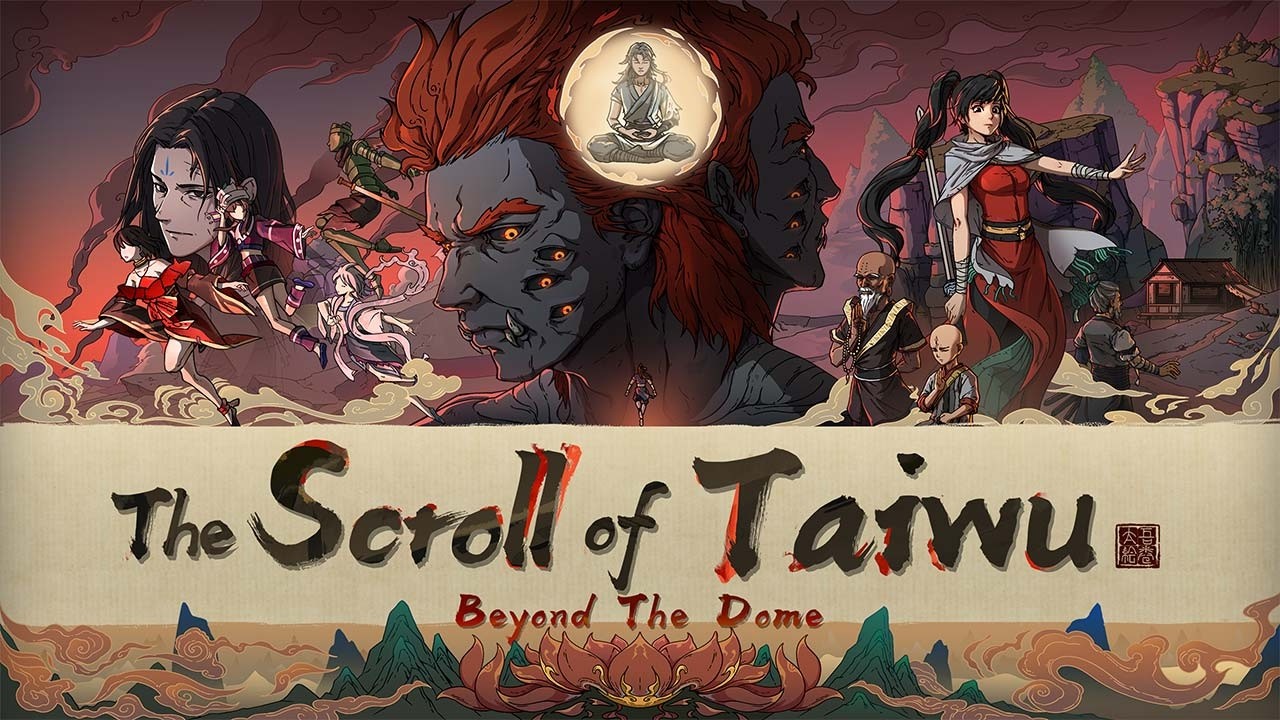
The Scroll of Taiwu: Beyond The Dome is a ConchShip Games wuxia RPG set in a mythological ancient China where players guide the Taiwu clan across generations, shaping an ongoing struggle against a hereditary enemy through legacy-driven progression.
Step into a legacy where every generation writes the next chapter of survival and fate

The Scroll of Taiwu: Beyond The Dome


Generational inheritance defines progression in The Scroll of Taiwu Lineage structure replaces single-character RPG design
The Scroll of Taiwu: Beyond The Dome from ConchShip Games is a wuxia RPG structured around a full generational system. Instead of focusing on one protagonist, the experience follows a continuing family line of Taiwu heirs shaped by Chinese mythology and sect-based conflict.
The 1.0 release emphasizes continuity, where each completed run becomes the foundation for the next generation rather than a reset point.
World state persists across every heir Sect politics, traits, and conflicts evolve over time
Each Taiwu heir inherits a world shaped by prior actions, including dynamic traits, ongoing blood feuds, and reputation shifts across 15 martial arts sects.
NPCs behave as a living system, aging, marrying, falling ill, and dying, which creates a continuously changing social structure that directly impacts each new generation.
Chinese mythology and wuxia systems define the setting Fifteen sects structure combat, politics, and world interaction
The setting blends Chinese mythology with wuxia tradition, forming an alternate ancient China where martial philosophy and sect rivalry shape most interactions.
Fifteen distinct martial arts sects operate as both political and combat systems, each contributing different doctrines and rivalries that influence progression paths.
Progression depends on inheritance across multiple lifetimes Every decision affects future Taiwu heirs
Progression in The Scroll of Taiwu is built around inherited consequences. Each generation carries forward traits, relationships, and sect standings shaped by earlier decisions.
This creates a long-form structure where outcomes develop over time, and success is measured across multiple heirs rather than a single character arc.
Combat, crafting, and village systems operate as one loop Exploration connects martial combat with settlement development
Exploration is directly tied to survival systems, where combat encounters, sect interactions, and resource gathering feed into long-term clan development.
Village management includes construction, resource gathering, industrial expansion, and crafting systems for medicine, armor, and martial equipment, all of which support progression across generations.
The game also includes insect fighting mechanics, where captured insects are trained for structured competition systems that operate alongside main progression loops.
The interface is dense and system-heavy, requiring players to navigate multiple overlapping management layers including combat, sect politics, crafting, and lineage tracking.
System-heavy design replaces linear quest structure Multiple mechanics connect through a single lineage framework
The Scroll of Taiwu 1.0 release uses a non-linear structure where combat, crafting, sect politics, and world simulation all connect through the Taiwu family line.
Instead of following a fixed quest path, each generation develops differently depending on inherited conditions and world state changes.
System requirements reflect simulation-first design Moderate hardware demands with platform-level OS constraints
The Scroll of Taiwu system requirements include a minimum of a 64-bit operating system (Windows 7, Windows 8, or Windows 10), a 2.50 GHz processor, 8 GB RAM, Intel HD4400 graphics, DirectX 11, and 25 GB of storage.
Recommended specifications include a 3.50 GHz CPU, 16 GB RAM, Nvidia GeForce GT520, DirectX 11 support, and 25 GB storage. Although older Windows versions are listed, Steam client policy requires Windows 10 or newer for current compatibility.
Replayability comes from inherited variation rather than randomness Each lineage develops unique long-term constraints
Each playthrough differs based on how traits, sect relationships, and world conditions evolve across generations.
Replay value emerges from structural variation, where inherited states create new strategic challenges rather than relying on procedural randomness.
Final verdict A generational wuxia RPG defined by inheritance systems and long-term simulation
The Scroll of Taiwu: Beyond The Dome is a wuxia RPG built around lineage progression rather than single-character storytelling. Each Taiwu heir contributes to a persistent world shaped by Chinese mythology and sect-based conflict.
Its core strength lies in how consistently its systems interact. NPC aging, sect politics, crafting, and village development all persist across generations, creating a continuous simulation rather than isolated play sessions.
The experience suits players who prefer structured, system-driven RPGs where long-term planning matters more than immediate outcomes. Progress is measured across lineage evolution rather than individual completion.
The VoxOdyssey Project Mission Statement for Feature games
I highlight what makes each game unique by examining gameplay mechanics, design choices, and storytelling. By analyzing systems, level design, and play styles, and referencing official media and assets, I aim to provide accurate, informative, and trustworthy insights. While I strive for accuracy, some details may change or be updated over time. Players can use this information to understand each title’s features and mechanics and make their own judgments.
The Scroll of Taiwu gameplay screenshots Generational wuxia RPG systems, sect conflict, and lineage progression scenes


The Scroll of Taiwu trailer – generational wuxia RPG with lineage progression and sect warfare
Watch The Scroll of Taiwu: Beyond The Dome in action as Taiwu heirs carry forward a living legacy shaped by sect rivalries, martial training, and inherited consequences. The video below highlights core systems across generations and evolving world states.

Stay connected with The Scroll of Taiwu: Beyond The Dome