Biomechanical Toy (QUByte Classics) – 1995 Arcade Run-and-Gun PC Review
Zeus Software’s arcade shooter returns on PC with run-and-gun action, boss battles, and modern preservation tools
Biomechanical Toy (QUByte Classics) brings the 1995 Zeus Software arcade run-and-gun back to modern PC systems. Gameplay focuses on fast side-scrolling shooting, platforming, and pattern-based boss encounters across a toy-themed biomechanical world. My playthrough highlights tight movement, strict aiming rules, and classic arcade difficulty pacing.
A toy kingdom where every step forward turns into a fight for survival

Biomechanical Toy (QUByte Classics)


A preserved 1995 arcade run-and-gun built on movement and pressure Biomechanical Toy (QUByte Classics) gameplay overview and PC performance experience
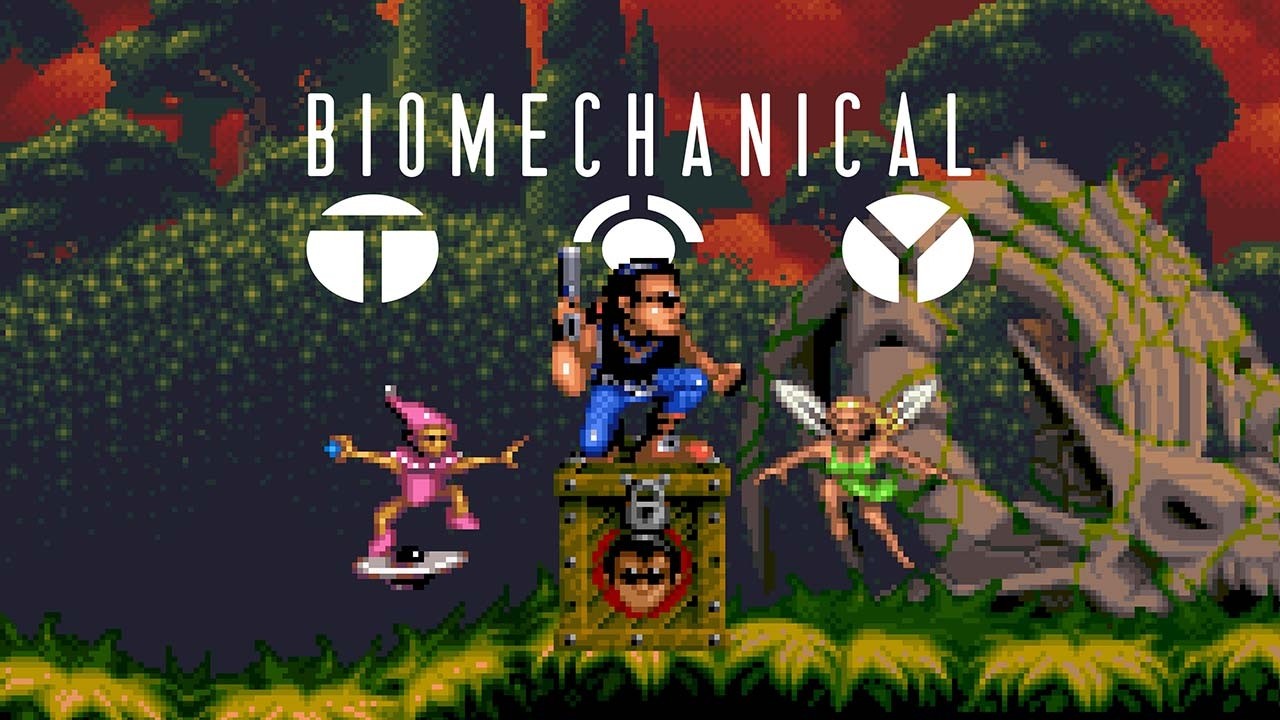
Biomechanical Toy (QUByte Classics) is a preservation-focused release of a 1995 arcade run-and-gun built around constant movement, fixed enemy patterns, and survival pressure. On modern PC systems, it retains its original arcade structure without reinterpretation, preserving a design approach centred on repetition and pattern recognition rather than layered systems or modern progression mechanics.
In my experience playing it, Inguz controls precisely but with clear structural limits. Movement is responsive, yet every jump locks into a fixed arc with no mid-air adjustment. That constraint shapes every encounter, especially when enemies appear across multiple vertical layers and timing becomes more important than correction.
The result is a direct arcade restoration where success depends on learning through repetition, reading enemy behaviour, and maintaining forward momentum under pressure.
Movement, shooting, and how control actually feels Arcade run-and-gun mechanics, aiming constraints, and combat flow
Movement is fast but deliberately rigid. Once a jump begins, the trajectory cannot be altered, which makes positioning decisions more important than recovery. In practice, this encourages forward movement rather than hesitation.
Shooting is immediate and responsive, but the absence of diagonal downward aiming creates a consistent limitation. During one clockwork forest section in my playthrough, I had to abandon an elevated position because enemies below could not be engaged from above. That restriction directly affects how space is controlled in combat.
This structure aligns closely with traditional arcade run-and-gun design, where simplicity of input contrasts with demanding spatial awareness.
Scrubby, the Magic Pendulum, and a toy world under collapse Story framing and stage progression structure
The narrative remains minimal and functions primarily as a framework for action. Scrubby steals the Magic Pendulum, causing a toy kingdom to become a biomechanical hostile environment. Inguz progresses through this world to restore order.
In gameplay terms, the story is delivered through environmental design, enemy types, and stage progression rather than dialogue or cutscenes. In my experience, occasional rescued toy allies appear briefly to assist before disappearing, reinforcing progression without interrupting flow.
This approach keeps attention focused on gameplay, consistent with arcade-era design priorities.
Weapons, damage loss, and escalating difficulty pressure Combat structure, power-ups, and survival pacing
Weapons function as temporary upgrades layered over a basic shooting system. Spread shots, faster firing, and explosive attacks significantly alter combat pacing, but they are quickly lost after taking damage.
In my playthrough, losing a weapon upgrade consistently caused an immediate difficulty spike in the following section. There is no smoothing effect, so adaptation depends entirely on player adjustment.
Bombs act as emergency tools rather than strategic systems. They are typically reserved for dense enemy waves or boss transitions where survival space becomes restricted.
Boss encounters built on learning patterns through repetition Arcade boss design and structured difficulty pacing
Boss fights are structured around repeated attack sequences rather than endurance-based damage checks. Each encounter requires learning through observation and repetition.
In one boss encounter during my playthrough, overlapping projectile patterns forced multiple attempts before safe zones within the arena became clear. Progress came from understanding timing and positioning rather than reaction speed alone.
These encounters serve as pacing breaks between stages while reinforcing the arcade structure.
Pixel art clarity and stage variation under pressure Visual readability, environments, and enemy design
The pixel art prioritises clarity and readability. Even during dense combat sequences, enemies remain visually distinct from backgrounds, supporting fast decision-making under pressure.
Stages transition across toy-themed environments, mechanical forests, industrial zones, and a Wild West-style train sequence. These changes provide variety while maintaining consistent gameplay rules.
This ensures readability remains stable even as enemy density increases in later stages.
Modern enhancements focused on accessibility, not redesign QUByte Classics rewind, save states, and CRT presentation options
The QUByte Classics release includes rewind, save states, CRT filters, and gallery content. These features improve accessibility but do not alter the original arcade structure.
In my experience, rewind is most useful during boss encounters where overlapping attack patterns create unavoidable damage on first attempts. It reduces frustration without changing intended design.
CRT filters add a retro presentation layer, though I found them less suitable during precision-heavy sections where maximum input clarity is preferred.
Final Verdict Biomechanical Toy (QUByte Classics) preservation-focused arcade run-and-gun assessment
Biomechanical Toy (QUByte Classics) is a faithful arcade preservation release that retains its original 1995 structure without reinterpretation. It remains focused on movement, pattern recognition, and survival under pressure, consistent with mid-1990s arcade run-and-gun design principles.
In my experience, its defining quality is consistency of execution. It does not expand or modernise systems, instead preserving the original constraints that shape how the game plays from start to finish.
Within arcade preservation catalogues, it functions as a straightforward restoration of a lesser-known title, maintaining mechanical integrity while making it accessible on modern PC hardware.
The VoxOdyssey Project Mission Statement for Feature games
I highlight what makes each game unique by examining gameplay mechanics, design choices, and storytelling. By analyzing systems, level design, and play styles, and referencing official media and assets, I aim to provide accurate, informative, and trustworthy insights. While I strive for accuracy, some details may change or be updated over time. Players can use this information to understand each title’s features and mechanics and make their own judgments.
Biomechanical Toy (QUByte Classics) gameplay screenshots Arcade run-and-gun action, toy world stages, and boss combat encounters


Biomechanical Toy (QUByte Classics) trailer – arcade run-and-gun action and boss battles
Watch Biomechanical Toy (QUByte Classics) gameplay in action, featuring fast arcade shooting, toy-themed stages, and intense boss fights. The video below shows how movement, timing, and enemy patterns shape every run through this 1995 arcade experience.




Stay connected with Biomechanical Toy (QUByte Classics)