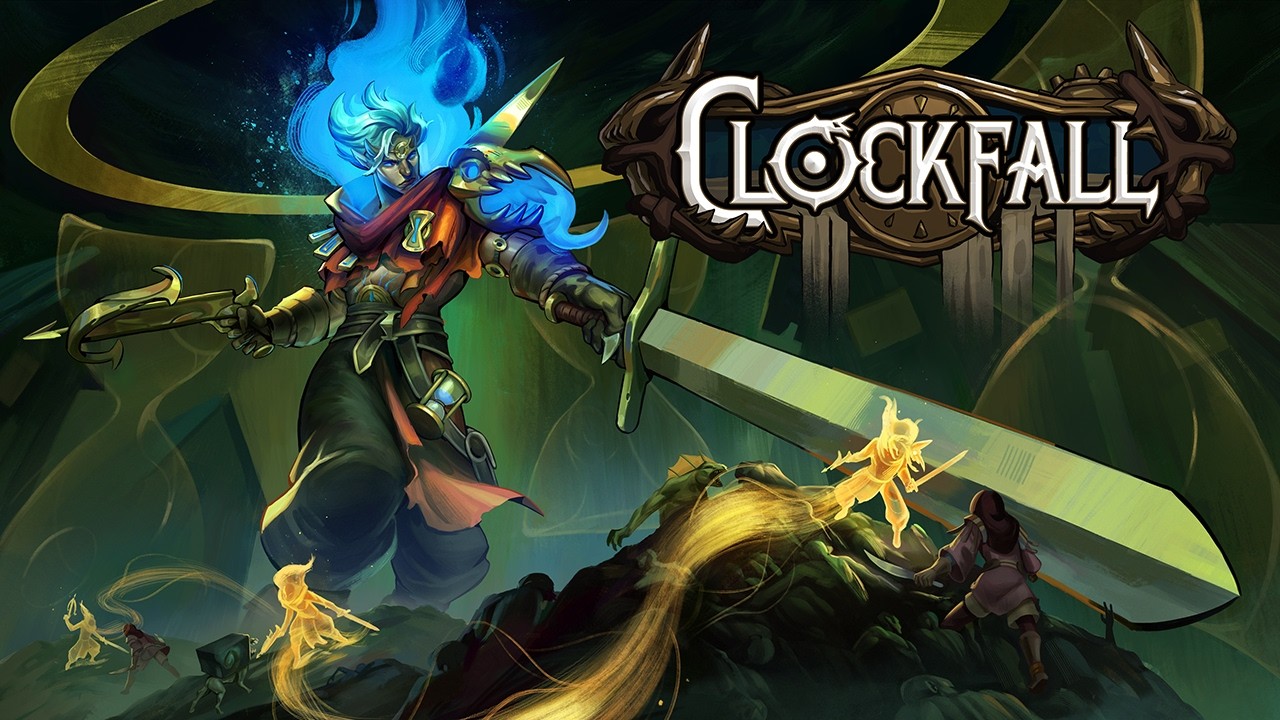
Clockfall – Hybrid Dungeon Crawler and Village Defense Action RPG Review
Steam Early Access roguelite blending time-based dungeon runs, village defense phases, and permanent progression systems
Clockfall is a hybrid action RPG where dungeon crawling and village defense are tied together through a strict time system. Each run pushes players through enemy-filled dungeons, resource gathering, and settlement defense, with progression carrying forward across repeated loops that shape both combat strength and village survival.
Master the clock, survive the loop, and rebuild what was lost one run at a time

Clockfall


Clockfall reshapes dungeon crawling into a tense loop where every second has weight A hybrid action RPG that forces constant trade-offs between speed, survival, and long-term growth
Clockfall is an Early Access action RPG developed and published by Rever Games GmbH with support from Radical Theory, built in Unreal Engine 5 and released on Steam in June 2026 at a $9.99 price point. Instead of presenting a straightforward dungeon crawler, it pushes players into repeated time loops where every run becomes a test of how efficiently you can survive, gather resources, and still make it back to defend what remains of a ruined village.
From the opening minutes, Clockfall sets a strict rhythm where every action is measured against a limited time budget. Dungeon runs are built around constant choices between pushing deeper for stronger rewards or extracting early before the run collapses under rising enemy pressure. That balance between risk and return defines how every session plays out.
The actual Clockfall gameplay loop begins in a broken village hub, and this is where the first real decisions hit. Before even stepping into a dungeon, players are already juggling upgrades, equipment choices, and time extensions. Once inside, Destiny faction enemies begin scaling in pressure quickly, and what starts as manageable encounters can turn into a race against the clock if you overextend even slightly.
Clockfall time management mechanics are where the game becomes more demanding than it first appears. Time is not just a limit sitting in the corner of the screen—it is the currency everything else depends on. Every fight, every detour, every attempt to explore a side path eats into that budget. In practice, this means players are constantly balancing greed against survival, especially when rare rewards are just one more risky room away.
The Clockfall permanent progression system is where that tension carries forward between runs. It does not hand out simple stat increases in a straight line. Instead, it forces a split that shapes your entire approach: do you invest in longer time windows so future runs feel safer, or do you push combat power so you can clear faster and take bigger risks? Neither choice is clearly safe, and that uncertainty is intentional.
Village defense is where all that dungeon pressure comes back to bite or reward you. After each run, you return to the settlement and immediately have to deal with incoming enemy waves. If you played well, the village holds its ground with stronger tools and better defenses. If you rushed or failed to secure enough upgrades, you feel that weakness immediately when the waves start breaking through your setup.
The Destiny faction enemies are not just background threats—they are designed to keep increasing pressure the longer you stay in a run. Early encounters feel readable and controlled, but that changes quickly as enemy groups become faster and more aggressive. The result is a steady escalation where hesitation is punished and overconfidence usually ends a run early.
Progression in Clockfall is less about leveling up and more about learning how much risk you can handle Every loop forces you to decide between safer runs or stronger long-term power
The Clockfall permanent progression system splits your growth in a way that constantly tests your judgment. One path gives you more time to work with, which makes runs feel more forgiving. The other increases combat strength, letting you clear faster but tempting you into riskier routes. Neither path removes pressure—they just shift where that pressure lands.
Replayability in Clockfall Steam Early Access comes directly from this loop structure. Each run resets the dungeon layouts and enemy placement, but you never start from zero. What carries over matters, and that creates a rhythm where every attempt feels like part of a larger push rather than an isolated run. Over time, you start reading maps faster, recognizing danger earlier, and making quicker decisions under pressure.
Clockfall PC gameplay rewards efficiency more than exploration. Taking unnecessary fights or wandering too far off the optimal route usually costs more than it gives back. That creates a subtle but constant tension where you are always asking whether the next room is worth the time it will cost you, especially when your remaining seconds are already tight.
What ties the whole experience together is how tightly the dungeon and village systems feed into each other. Strong dungeon runs make village defense easier, but weak defense outcomes can make the next set of runs noticeably harder. It creates a loop where your mistakes do not just disappear—they echo forward into what comes next.
Clockfall’s structure only works because everything depends on time pressure and repetition System balance, hardware demands, and long-term updates shape how stable that loop feels
Clockfall system requirements PC remain relatively accessible for an Unreal Engine 5 title. Minimum specs include an Intel i5-760 or AMD Phenom II X4 965, paired with a GTX 580 or Radeon HD 7870, along with 2 GB of RAM and Windows 10 64-bit support. On paper, the game is not demanding, but in practice SSD performance helps smooth out repeated loading between dungeon runs and village defense phases.
The Clockfall minimum graphics card requirement reflects a focus on scalability rather than visual excess. The real strain comes less from graphics and more from how often the game transitions between systems. Each loop demands consistent loading of environments, enemy sets, and progression states, which makes stability more important than raw graphical power.
Clockfall Early Access development is still actively shaping how fast players progress and how punishing each loop becomes. Because everything is tied to time, even small adjustments to rewards or enemy scaling can completely change the rhythm of the game. That makes balance updates especially important during this phase.
Clockfall console release date 2027 is planned for PlayStation 5 and Xbox Series X|S. While the core structure is expected to remain the same, the console version will likely focus on smoother performance and more consistent controls for controller-based play.
Final verdict A tightly controlled roguelite action RPG where every decision is measured in time and consequence
Clockfall Steam Early Access builds its identity around one clear idea: time is always running out, and everything you do feeds into that pressure. It is not trying to be a relaxed dungeon crawler or a loose survival sandbox. Instead, it forces structure through repetition, where each run teaches you how to waste less time and make sharper choices.
What stands out most is how consistently the systems connect. Dungeon crawling, village defense, and progression are not separate modes—they are parts of the same loop. When one weakens, the others feel it immediately. That connection gives the game a clear structure that stays readable even as difficulty increases.
The experience is strongest when the balance is stable and the loop flows cleanly. Because everything depends on timing and scaling, any imbalance in rewards or enemy pressure is immediately noticeable. That makes Early Access an important phase for this project, since the entire design lives or dies on consistency.
Final verdict: Clockfall PC Early Access is a focused hybrid dungeon crawler and action RPG built around repetition, pressure, and long-term progression. It succeeds when its time system feels tight and fair, and its future depends on how well that balance holds as content expands.
The VoxOdyssey Project Mission Statement for Feature games
I highlight what makes each game unique by examining gameplay mechanics, design choices, and storytelling. By analyzing systems, level design, and play styles, and referencing official media and assets, I aim to provide accurate, informative, and trustworthy insights. While I strive for accuracy, some details may change or be updated over time. Players can use this information to understand each title’s features and mechanics and make their own judgments.
Clockfall gameplay screenshots from dungeon runs and village defense cycles Time-limited exploration, combat encounters, and settlement defense phases


Clockfall Trailer – Time-Driven Dungeon Runs, Village Defense, and Action RPG Combat
Watch Clockfall in action as each run pushes players through timed dungeon exploration, fast combat encounters, and tense returns to a village under threat. The trailer below shows how every second matters, from entering dungeons to defending what you bring back.