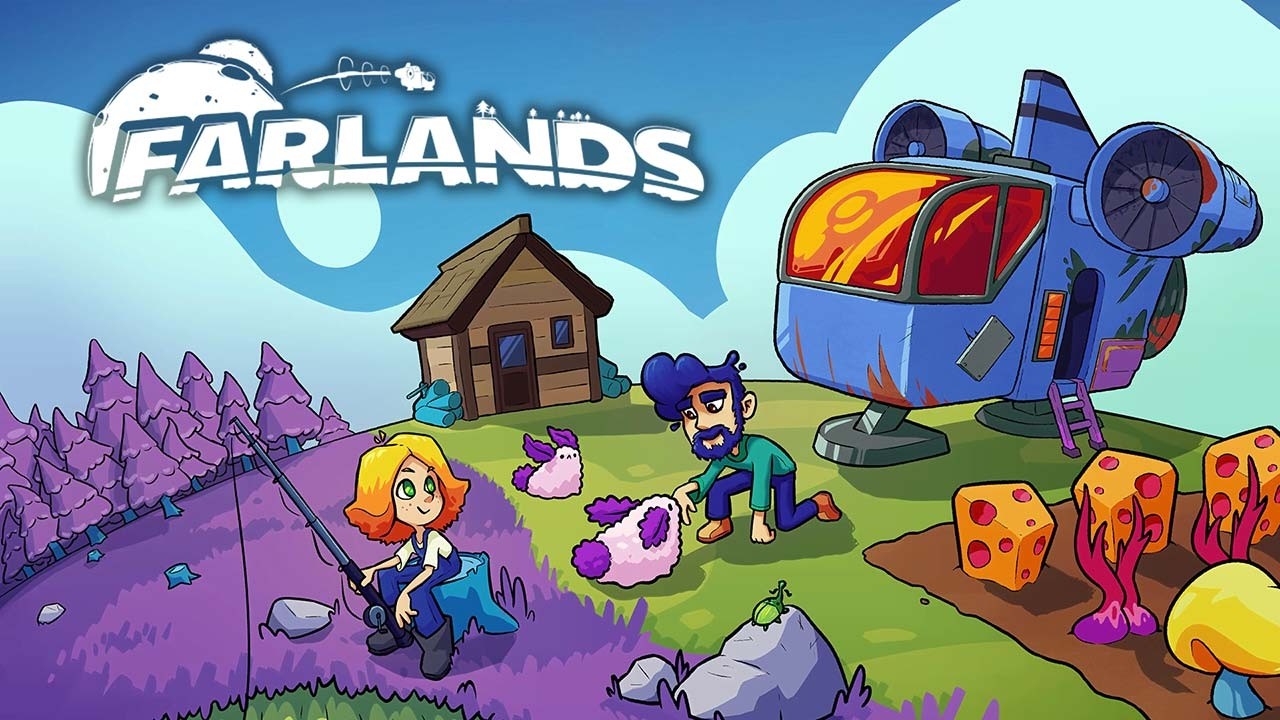
Farlands Preview – Sci-Fi Farming Adventure Across Forgotten Planets
Restore an abandoned world, explore distant planets, and build a new colony in JanduSoft’s space farming simulation
Farlands combines farming, crafting, exploration, relationships, and planetary restoration as players rebuild a lost world and uncover the secrets of a remote solar system.
Ready to discover the farming systems, planets, characters, and exploration mechanics that make Farlands a unique journey beyond the stars? Continue below.

Farlands


A quiet planet with a much bigger story waiting to unfold Farlands blends farming, exploration, and colony building across a forgotten solar system
Developed by Eric Rodríguez and published by JanduSoft alongside Anotherindie, Farlands is a science fiction farming simulation that moves beyond the familiar countryside setting and into a remote solar system. Instead of inheriting a small farm, players purchase an abandoned agricultural planet that has fallen into years of neglect. The task ahead is straightforward in concept but rewarding in execution: restore the land, rebuild the settlement, and uncover why an entire world was left behind. Since launching into Steam Early Access on July 24, 2024, Farlands has steadily expanded its systems while maintaining a clear focus on long-term progression through exploration and restoration.
The game immediately establishes a different atmosphere from many farming simulations. Your first view is not of thriving fields or welcoming neighbours but of overgrown paths, damaged buildings, and farmland that has been reclaimed by nature. Every improvement feels meaningful because the environment visibly changes as work progresses. Rather than chasing rapid expansion, Farlands encourages players to develop their planet at a comfortable pace while gradually opening access to new systems and destinations.
Although farming remains the foundation, exploration is woven into almost every aspect of progression. Resources collected on distant planets improve equipment back home, while better equipment allows access to new locations, materials, and story developments. That constant connection between farming and discovery gives Farlands its own identity within the growing science fiction simulation genre.
Restoration comes before expansion Every improvement transforms the planet and unlocks new opportunities
Farlands is built around rebuilding rather than simply producing crops. The early game revolves around clearing weeds, repairing pathways, restoring farmland, and making abandoned areas productive again. Instead of presenting these jobs as repetitive chores, the game ties each improvement directly into overall progression. Expanding the farm opens space for new crops, repaired structures unlock additional activities, and better organisation makes future tasks more efficient.
This gradual approach creates a satisfying rhythm. Daily farming tasks naturally lead into gathering materials, improving equipment, and preparing for the next stage of development. Every completed project contributes towards a settlement that feels increasingly alive, giving visible feedback for the time invested.
Rather than overwhelming players with every mechanic immediately, Farlands introduces new systems steadily. Farming, crafting, exploration, relationships, and home improvements all become available through natural progression, allowing each mechanic to support the next instead of competing for attention.
A farming simulator that rewards curiosity Exploring the solar system is just as important as growing crops
Planetary exploration is the feature that separates Farlands from more traditional farming simulations. Although the player's spacecraft begins in poor condition, it remains capable of travelling between several planets, each offering resources and opportunities unavailable on the starting world. Exploration never feels disconnected from farming because everything collected away from home contributes directly to improving the settlement.
New minerals, crafting materials, insects, fish, and other discoveries gradually expand the range of available upgrades. Travelling beyond the home planet is therefore not a distraction from farming but an essential part of the overall gameplay loop. The result is a progression system where agriculture, exploration, and crafting constantly reinforce one another.
This wider structure gives the game a stronger sense of scale than many farming simulators. The farm becomes the centre of operations, but the surrounding solar system continually encourages players to look beyond its borders in search of new opportunities.
Crafting grows alongside the colony Memory chips expand construction and technology over time
Crafting progression is managed through the game's memory chip system. Rather than unlocking every blueprint from the beginning, Farlands gradually introduces additional recipes by allowing players to expand their available knowledge through collectible memory chips. This creates a steady sense of progression without flooding players with dozens of crafting options during the opening hours.
The system works well because it complements exploration. New planets provide resources, those resources support upgrades, and expanding technology unlocks further construction opportunities. Furniture, equipment, and additional crafting options all become part of the wider restoration process instead of existing as isolated mechanics.
Tool upgrades reinforce this progression. Better equipment reduces the effort required for everyday tasks while making it possible to manage larger areas of farmland and recover more of the abandoned settlement. Progress feels earned because every improvement directly affects how efficiently future work can be completed.
Every planet tells a different story Distinct environments keep exploration fresh throughout the journey
As development has continued through Early Access, the roadmap has outlined several planets that expand the game's environmental variety. One of the most distinctive is Vanadian, a desert world designed around unusually long periods of daylight and darkness. Depending on when players arrive, the landscape can appear dramatically different, giving exploration its own atmosphere while introducing new resources, wildlife, and trading opportunities.
Darmstad takes a very different approach. Planned as a more hazardous destination, its mining areas introduce oxygen management, forcing players to move carefully between glowing mushroom safe zones to avoid passing out while searching for valuable resources. Rather than simply presenting another location to explore, Darmstad demonstrates how Farlands intends each planet to introduce its own gameplay considerations.
These expanding locations ensure that exploration remains meaningful throughout the experience. Each new destination supports the wider restoration project while adding fresh environments and progression opportunities that continue to build on the game's central ideas.
A small community makes the galaxy feel lived in Relationships and settlement growth develop alongside farming and exploration
While restoring the planet forms the core of Farlands, the people living throughout the solar system give the experience its personality. Each resident has chosen to remain despite the decline of the surrounding colonies, and regular conversations gradually reveal more about their stories and the events that shaped the region. These interactions help transform the isolated setting into a place that feels connected rather than empty.
Progression is supported by meaningful relationships rather than simple checklists. As friendships grow, additional conversations and story events become available, encouraging players to spend time with their neighbours alongside the daily farming routine. The social systems complement the slower pace of the game by rewarding consistency instead of rushing players towards the next objective.
One character who plays an important role is Grubert, the settlement carpenter. Home improvements are tied directly to his services, allowing players to expand their house and prepare for additional furniture and decoration options introduced through continued development. These upgrades give practical value to community interactions while making the settlement feel increasingly personal.
The mystery grows with every new destination Exploration slowly uncovers the truth behind the abandoned solar system
Farlands tells its story through exploration rather than lengthy cinematic sequences. The simple question of why an entire planet was sold for so little becomes the thread that connects the wider narrative. As players travel between planets, restore damaged locations, and speak with the remaining residents, more pieces of the solar system's history begin to emerge.
Environmental storytelling plays an important role throughout the experience. Forgotten buildings, neglected farmland, and abandoned infrastructure communicate years of decline without relying on constant exposition. The world itself becomes part of the storytelling, allowing players to uncover its history naturally while progressing through everyday activities.
This approach suits the simulation genre well because narrative progression develops alongside the restoration of the player's farm. Every repaired structure, newly cultivated field, and successful expedition contributes to both gameplay progression and the wider understanding of the setting.
Early Access continues to shape the experience Planned updates expand Farlands without changing its core identity
Since entering Steam Early Access on July 24, 2024, Farlands has followed a public development roadmap that outlines the systems planned before version 1.0. The roadmap introduces additional farming features, seasonal mechanics, weather, expanded crafting, larger homes, furniture, social events, new planets, creature care, romance systems, marriage, and the conclusion of the main storyline.
The developers have consistently presented these features as planned milestones rather than guaranteed release dates, reflecting the flexible nature of Early Access development. Community feedback continues to influence priorities, meaning the order and scope of updates may change as development progresses.
Version 1.0 is scheduled to launch globally on July 16, 2026, bringing the completed storyline alongside console releases. Even with that milestone, the developers have indicated that further content and refinements are expected after the initial full release, allowing the game to continue evolving beyond its official launch.
Accessible system requirements keep the focus on gameplay Modest hardware requirements make Farlands approachable on a wide range of PCs
Farlands has relatively lightweight hardware requirements compared with many modern simulation games. Both the published minimum and recommended specifications require Windows 10, a 2 GHz processor, 2 GB of RAM, graphics hardware supporting Shader Model 3.0 with 256 MB of video memory, and approximately 500 MB of available storage space. Matching minimum and recommended specifications suggest the focus remains firmly on gameplay systems and world simulation rather than hardware-intensive visual effects.
The modest technical requirements also make Farlands accessible to players using older hardware without significantly limiting the scope of its farming, crafting, and exploration mechanics. The emphasis remains on progression, environmental interaction, and long-term colony development rather than demanding graphical performance.
Farlands finds its own place within the farming genre Science fiction exploration gives familiar mechanics a different purpose
Modern farming simulations often share familiar foundations, including crop management, crafting, relationships, and home customisation. Farlands builds on those ideas by extending progression beyond a single location and making exploration a permanent part of everyday play. Instead of travelling purely for optional rewards, every journey contributes to improving the home settlement through new resources, technology, and opportunities.
The game's strongest quality is the way its individual systems support one another. Farming creates resources, exploration expands possibilities, crafting improves efficiency, and community development unlocks further progression. Nothing feels disconnected because each activity naturally feeds back into the wider goal of rebuilding the colony.
Players looking for a farming simulation with a broader sense of scale will find Farlands offers a different rhythm from traditional rural life simulators. Rather than replacing familiar mechanics, it expands them into a setting where rebuilding a farm also means restoring an entire solar system.
Final Verdict A thoughtful farming simulation that grows well beyond its starting planet
Farlands successfully combines farming, exploration, crafting, and community building into a cohesive science fiction setting without losing sight of what makes the genre enjoyable. Every major system supports the central theme of restoration, creating steady progression that rewards patience instead of speed. Whether clearing neglected farmland, improving equipment, discovering distant planets, or helping rebuild a forgotten colony, every activity contributes towards a larger objective.
The game's expanding Early Access roadmap demonstrates an ambition to develop those foundations further through additional planets, deeper social systems, and broader colony management while remaining faithful to the slower pace established at launch. Planned additions such as Vanadian, Darmstad, expanded relationships, creature care, and the conclusion of the main storyline aim to build upon the existing gameplay rather than replace it.
Farlands stands apart by connecting farming with meaningful exploration instead of treating travel as optional content. The relationship between agriculture, crafting, discovery, and restoration creates a progression loop that remains consistent from beginning to end, giving every improvement visible value across the wider solar system.
For players interested in science fiction farming simulations, Farlands delivers a distinctive blend of colony building and planetary exploration while retaining the approachable structure that defines the genre. It is a game built around steady development, thoughtful progression, and the simple satisfaction of bringing forgotten worlds back to life.
The VoxOdyssey Project Mission Statement for Feature games
I highlight what makes each game unique by examining gameplay mechanics, design choices, and storytelling. By analyzing systems, level design, and play styles, and referencing official media and assets, I aim to provide accurate, informative, and trustworthy insights. While I strive for accuracy, some details may change or be updated over time. Players can use this information to understand each title’s features and mechanics and make their own judgments.
Farlands gameplay screenshots Farming, exploration, crafting, and colony building across a distant solar system


Farlands video – Explore farming, space travel, and life across a forgotten solar system
See Farlands in motion as farming, exploration, crafting, and colony restoration come together. Watch the video below to discover how each planet expands the adventure and shapes your journey across the solar system.