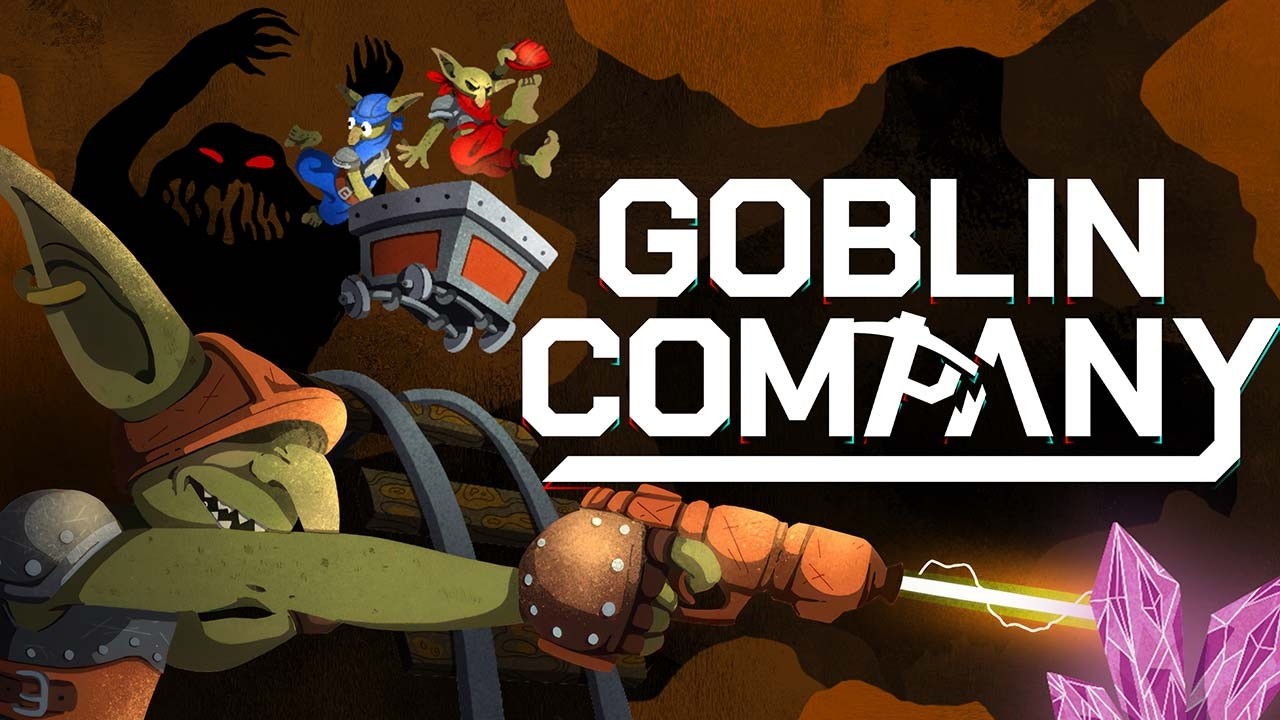
Goblin Company – Co-op Mining Survival Game with Destructible Worlds
Explore underground mining, rail building systems, and survival pressure in 4-player co-op
Goblin Company by BitBorne Studio is a PC co-op mining survival game set under WHAAG MINING INC operations. Players dig through destructible caves to reach the Giant Crystal or Giant Nugget while managing tools, darkness, and escalating underground threats in solo or 4-player co-op.
Dig deeper, build smarter, and see how far the mine really goes

Goblin Company


Goblin Company blends co-op mining survival with destructible underground systems A PC sandbox built around digging, logistics, and survival pressure
Goblin Company is a PC co-op mining survival game developed and published by BitBorne Studio. The player operates as a Goblin worker under WHAAG MINING INC, sent deep underground to extract resources while searching for a central objective referred to as both the Giant Crystal and the Giant Nugget. Both terms describe the same core target within the mining operation, and both are used across the game’s framing to reinforce the industrial extraction goal rather than a narrative twist or separate objective.
The structure of the game is built around repeated mining expeditions into increasingly unstable underground layers. Each run pushes deeper into cave systems that are shaped entirely by player action. Darkness, limited visibility, and hostile creatures become more present as depth increases, creating a steady shift in how each expedition must be approached. The loop remains consistent: dig, extract, return, and expand the mining operation for the next descent.
Rather than using fixed levels or scripted progression, Goblin Company relies on systems that evolve through player interaction. Terrain is not a backdrop but a structure that changes continuously through excavation. Every tunnel, shortcut, or failed route becomes part of the map’s history, and this directly influences how future movement and resource transport are handled.
The WHAAG MINING INC setting frames this structure as industrial work rather than exploration. Goblins are treated as replaceable units in a larger system focused on output. This framing supports the repetition of mining runs without relying on narrative sequences or story-driven transitions. The result is a loop where progression is measured through efficiency and reach rather than character development or plot advancement.
Destructible terrain and rail systems define how movement and logistics work Digging and transport are connected systems, not separate mechanics
The most defining feature of Goblin Company is its fully destructible underground environment. Players use laser drills to break through terrain in any direction, which means navigation is created rather than followed. This changes how space is understood because every decision to dig alters both immediate movement and long-term routing possibilities.
This system has direct consequences for planning. Digging forward without structure can create long return paths, while careful tunneling can shorten travel time and improve resource extraction efficiency. The environment constantly shifts between opportunity and risk depending on how it is shaped during play.
Rail construction sits alongside excavation as a second core system. Players can build rail networks to move mining carts between key points underground. These rails function as both transport and infrastructure, reducing the need to manually carry resources through long or dangerous tunnels.
Because rail systems are built by players, they become part of the overall mine layout. Poor placement increases travel time and exposure to hazards, while efficient networks improve extraction flow. This creates a logistics layer that runs parallel to digging, where both systems must be considered together rather than separately.
In practice, the combination of destructible terrain and rail construction turns the underground space into a player-shaped system. Movement, transport, and resource flow are all controlled by how the environment is modified over time.
Survival pressure comes from darkness, depth, and limited visibility Lighting and torch use shape how far players can safely explore
Survival in Goblin Company is closely tied to visibility. The underground environment is designed around darkness as a constant limitation rather than a visual effect. Players rely on torches and placed light sources to move through unknown areas and maintain safe paths during exploration.
Torches can be carried, placed in tunnels, or thrown ahead to reveal new sections of the mine. This creates a system where lighting is both a navigation tool and a survival requirement. Without controlled lighting, exploration becomes risky and harder to manage, especially during deeper runs where return paths are longer and more complex.
As players move deeper underground, visibility alone is not the only pressure factor. Hostile creatures appear more frequently in deeper biomes, adding additional risk to exploration. These encounters are not structured as separate combat systems but are integrated into the environment as hazards that must be worked around during mining and transport.
This combination of darkness, enemy presence, and distance from the surface creates a layered survival structure. Players must balance speed of progression with safety, since pushing too far without proper lighting or infrastructure can result in resource loss or failed extraction runs.
Progression is built around upgrades, biomes, and expanding mining capability Each expedition strengthens tools and unlocks deeper access
Progression in Goblin Company is not based on levels or skill trees. Instead, it is built around tool upgrades and operational expansion. The main progression tool is the laser drill, which determines how quickly and how deeply players can excavate underground terrain.
As upgrades improve, players gain access to deeper sections of the mine and more resistant terrain types. This creates a direct link between progression and exploration depth. The further players go, the more resources they can collect, which then feeds back into further upgrades.
The underground structure is divided into three biomes. Each biome changes the layout of tunnels, the density of resources, and the level of environmental risk. These shifts are not abrupt but gradual, creating a sense of descent rather than stage transitions.
Over time, players expand not only their tools but also their mining infrastructure. Rail systems, excavation paths, and return routes all evolve as part of progression. This makes advancement feel tied to the physical structure of the mine rather than abstract numbers or menus.
Co-op structure changes how systems interact in practice Up to four players can divide mining, transport, and survival roles
Goblin Company supports both solo play and online co-op for up to four players. The underlying systems remain the same, but the way they are used changes significantly in multiplayer sessions.
In co-op, players naturally divide responsibilities. One player may focus on digging tunnels, another may extend rail infrastructure, while others manage lighting or resource transport. This division improves efficiency and allows deeper exploration during each mining run.
In singleplayer, all systems must be handled by one player. This changes pacing and increases the importance of planning. Every decision carries more weight because there is no support structure to divide tasks across multiple roles.
The interaction between players and systems creates different outcomes depending on group size. Cooperative play emphasizes efficiency and coordination, while solo play emphasizes control and careful expansion.
Final verdict A systems-driven mining survival game built on player-shaped environments
Goblin Company is structured around a consistent loop of digging, surviving, and expanding mining capability through upgrades and infrastructure. The presence of both the Giant Crystal and Giant Nugget as central objectives reinforces the industrial framing of WHAAG MINING INC while maintaining a single unified goal across all play sessions.
The strongest aspect of the game is how its systems interact. Destructible terrain defines movement, rail networks define transport, lighting defines survival boundaries, and upgrades define progression speed. Each system affects the others, creating a loop where planning matters as much as execution.
Performance remains stable during standard exploration, with heavier load appearing during large-scale terrain deformation and multiplayer synchronization. These moments are most noticeable in deep mining sessions where multiple systems operate at once, including digging, rail construction, lighting updates, and enemy activity.
Overall, Goblin Company presents a structured survival experience built around cooperative mining, environmental manipulation, and logistics-driven progression. It focuses on how players shape and manage an underground system over time rather than relying on scripted content or narrative progression.
The VoxOdyssey Project Mission Statement for Feature games
I highlight what makes each game unique by examining gameplay mechanics, design choices, and storytelling. By analyzing systems, level design, and play styles, and referencing official media and assets, I aim to provide accurate, informative, and trustworthy insights. While I strive for accuracy, some details may change or be updated over time. Players can use this information to understand each title’s features and mechanics and make their own judgments.
Goblin Company gameplay screenshots showing underground mining and survival systems Destructible terrain, rail building, and co-op mining in deep cave environments


GwenBlade: Halloween Trailer – Roguelike Action, DreamWorld Combat, and 31-Day Survival
Watch GwenBlade: Halloween in action as university life transitions into DreamWorld combat each night. See fast melee fights, character builds, and the 31-day structure that drives progression. The video below shows how both systems connect during gameplay.