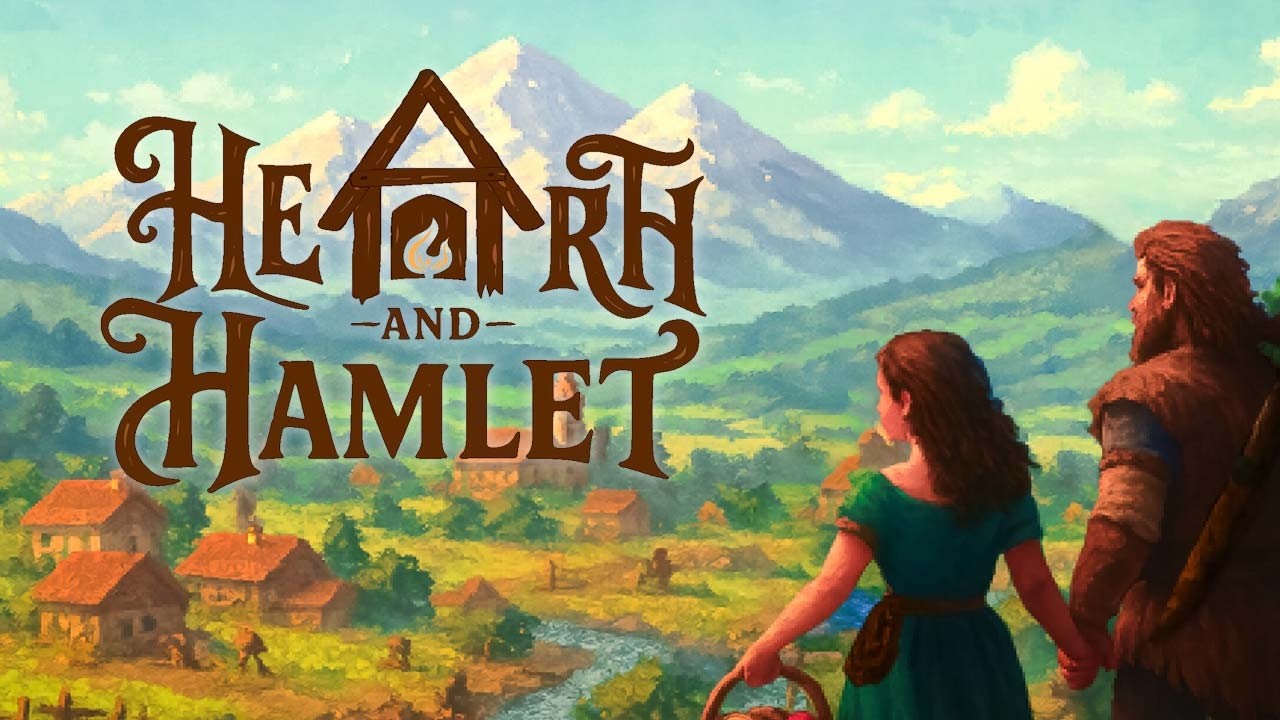
Hearth and Hamlet Preview – Medieval Kingdom Building and Idle Progression
A medieval pixel art city builder combining resource management, research trees, kingdom policies, trade routes, and magic.
Developed by Phorust Studios and published by Runic Forge and Gamersky Games, Hearth and Hamlet combines incremental city building, worker management, research, trade, governance, and fantasy progression.
Start with a campfire, grow the settlement, and keep reading to see how research, trade, magic, and kingdom management shape Hearth and Hamlet.

Hearth and Hamlet


Hearth and Hamlet Review – A Medieval City Builder Built Around Incremental Kingdom Growth Phorust Studios combines resource management, worker assignment, research, laws, trade, magic, and idle progression in a medieval pixel art kingdom builder
Hearth and Hamlet is built around a straightforward premise: begin with a campfire and gradually turn a small frontier settlement into a functioning medieval kingdom. Developed by Phorust Studios and co-published by Runic Forge and Gamersky Games, the game combines city building with incremental and idle mechanics rather than treating settlement construction as its only system. Resources, workers, buildings, research, policies, trade, defense, and magic all contribute to the progression of the kingdom.
The game's structure places it within a specific corner of the city builder genre. Hearth and Hamlet is not presented as a conventional historical settlement simulation, nor is it described as a traditional strategy game built around constant pressure. Its stated focus is relaxed progression, with players gathering food, wood, stone, and gold, assigning workers, constructing new buildings, researching technologies, and gradually expanding the capabilities of their settlement.
Steam lists Hearth and Hamlet for release on August 19, 2026. This review therefore treats the game as a pre-release title and relies on the developer's published description and specifications. Details concerning interface efficiency, combat balance, technical stability, and the practical feel of the minute-to-minute systems require hands-on verification after launch and are not treated as established facts here.
From Campfire to Kingdom The settlement begins with basic resources and infrastructure before research and construction open the path toward a larger medieval kingdom
The defining progression in Hearth and Hamlet is the movement from a small frontier camp toward a developed kingdom. The starting point is deliberately modest, with a campfire and limited settlement infrastructure establishing the foundation for everything that follows. Players gather resources, assign workers, construct buildings, and use research to unlock further options as the civilization advances.
That progression gives the building system a clear sense of scale. The published feature list moves from simple tents through structures such as taverns and castles before reaching specialized fantasy buildings including magical academies. Defensive fortifications also form part of the construction system, connecting the physical growth of the settlement with the need to protect what has been established.
The result is a city builder in which construction is tied directly to incremental development. Each stage provides access to additional systems rather than simply increasing the visual size of the settlement. The kingdom becomes more capable as new buildings, technologies, policies, magical systems, and economic opportunities are introduced.
Resource Management Drives the Settlement's Expansion Food, wood, stone, and gold form the basic economic resources behind construction and the wider kingdom-building progression
Resource management is one of the central systems described for Hearth and Hamlet. Workers can be assigned to gather food, wood, stone, and gold, establishing the basic resource loop that supports the settlement's development. These resources are connected to the broader construction and research structure, making population management part of the kingdom's economic foundation.
The incremental design changes the expected rhythm of this resource loop. The developer describes Hearth and Hamlet as an idle kingdom builder designed around patience and planning. Progress is therefore intended to accumulate over time rather than requiring every development decision to produce an immediate result.
Worker assignment also provides a direct connection between population and production. As the settlement grows, managing workers becomes part of the wider task of maintaining the economy. The available description does not provide detailed figures for production rates, population limits, or resource costs, so those elements remain matters for the full release rather than assumptions that can be drawn from the storefront information.
The Research Tree Connects Medieval Development With Magic Permanent technological unlocks introduce new buildings, policies, upgrades, alchemy, and increasingly advanced magical systems
Research provides the main technological progression system in Hearth and Hamlet. The developer describes a research tree that permanently unlocks new technologies, including buildings, policies, upgrades, and stronger magical capabilities. This creates a long-term progression layer alongside the immediate management of resources and workers.
The permanent nature of these research unlocks is significant for the game's incremental structure. Rather than treating every improvement as a temporary adjustment, research advances the civilization's overall technological position. New options become available as the settlement develops, allowing later stages of kingdom building to move beyond the capabilities of the initial frontier camp.
Magic is integrated into this technological progression rather than being presented as a completely separate feature. The game specifically identifies stronger magic, alchemical labs, and magical academies as developments that become available as the city advances. The research tree therefore connects conventional medieval construction with the fantasy systems that eventually become part of the kingdom.
Laws and Policies Turn the Settlement Into a Managed Kingdom Taxation, worker rules, morale, city guard drafts, and civic decisions add governance to the resource and construction systems
Hearth and Hamlet extends beyond conventional building and resource management through its laws and policies. Players can make decisions concerning taxation, worker rules, city guard drafts, and other civic matters. These systems give the settlement a form of macro-governance that operates alongside construction and economic development.
Taxation rules are described as a way to increase income, while worker policies can affect morale. City guard drafts introduce a defensive element to governance, and broader civic decisions are intended to influence the character of the kingdom. The available information does not provide a complete list of laws or quantify their effects, but it establishes governance as a meaningful part of the game's stated design.
This is an important distinction within the medieval city builder category. The player is not only responsible for placing buildings and collecting resources. The published design also gives the kingdom institutional decisions to make, creating another layer of management as the settlement moves beyond its initial stage.
Trade Opens the Kingdom Beyond Its Local Resources Trade routes with neighbouring kingdoms and faraway lands extend the economy beyond what the immediate settlement can provide
Local resource gathering is not intended to remain the sole basis of economic development. Hearth and Hamlet includes trade with faraway lands and neighbouring kingdoms, allowing the player to establish trade routes as the settlement grows.
This creates a logical expansion of the game's economic structure. The initial camp depends on its immediate environment for basic resources, while a larger kingdom can establish connections beyond its own territory. Trade consequently represents another stage in the settlement's progression from isolated frontier camp toward a more developed economy.
The storefront description does not specify the exact goods exchanged, individual trading partners, prices, or route management procedures. What can be established is that trade is intended to supplement local resources and support the growth of the kingdom as its economic needs expand.
Magic Gives the Medieval Setting a Fantasy Direction Alchemy, magical academies, and stronger magical technologies expand the settlement beyond conventional medieval infrastructure
The fantasy setting becomes increasingly important as Hearth and Hamlet progresses. The game describes a magic-filled medieval pixel art world and specifically includes magical systems within its research and building progression. Alchemical labs and magical academies are examples of the structures that become available as the city advances.
This combination gives the game's medieval setting a clearly defined fantasy direction. The settlement can contain familiar structures such as tents, taverns, castles, and defensive fortifications while also developing technologies associated with alchemy and magic.
The relationship between research and magic is particularly relevant to the game's progression model. Magic is not described as an independent mode or separate campaign. Instead, it becomes part of the same technological development that governs new buildings, policies, and upgrades.
Defense Is Part of Kingdom Growth Recruitable soldiers and defensive fortifications introduce protection as another responsibility of an expanding medieval settlement
Expansion also brings a defensive component to Hearth and Hamlet. The developer states that players can recruit soldiers as their realm expands and use defensive fortifications to protect what has been built. This places military preparation alongside the game's economic, civic, and construction systems.
The available description is deliberately limited when it comes to combat. It does not provide detailed battle mechanics, enemy statistics, army calculations, combat controls, or balancing information. As a result, the military system can be identified as part of the game's kingdom-management structure, but its depth and practical execution cannot be evaluated accurately from the published description alone.
That distinction matters for a pre-release analysis. It would be misleading to assign specific combat characteristics to Hearth and Hamlet that the developer has not documented. The confirmed information establishes recruitment and defensive fortifications; the quality and complexity of the resulting combat system remain subjects for hands-on evaluation after launch.
Pixel Art Establishes the Game's Medieval Fantasy Setting Lakes, rivers, magical swamps, faraway lands, and expanding settlements form the visual environment for the kingdom-building systems
Hearth and Hamlet uses a medieval pixel art presentation for its world. The listed environments include lakes, rivers, magical swamps, and faraway lands, giving the settlement a wider setting than a single isolated construction area.
The visual progression follows the game's broader development structure. Players begin with simple infrastructure and can eventually construct taverns, castles, magical academies, and defensive fortifications. The buildings therefore reflect both the medieval setting and the fantasy technologies introduced through research.
The developer also places the visual presentation alongside the game's relaxed design philosophy. The stated objective is to create a cozy experience in which players can build and grow at their own pace. The published material does not provide technical information about the rendering technology or visual performance, so the pixel art description remains the appropriate basis for assessing its presentation before release.
Idle Progression Gives the City Builder a Different Pace Hearth and Hamlet combines active settlement decisions with an incremental structure designed around steady development rather than constant pressure
The incremental and idle elements are central to how Hearth and Hamlet is positioned. The developer describes the gameplay loop as one that rewards patience and planning, with the kingdom growing steadily as resources are gathered and new systems are unlocked.
That structure separates the game from city builders where rapid expansion is the dominant objective. Hearth and Hamlet instead places emphasis on watching the settlement develop over time. Construction, research, worker management, policies, trade, and magical progression all contribute to that longer development cycle.
The term incremental is also useful because progression is not confined to the construction of individual buildings. Permanent research unlocks continue to expand what the civilization can do, while new systems such as trade, governance, magic, and defense become relevant as the kingdom develops.
Hearth and Hamlet Sits Between City Builder and Incremental Strategy Its identity comes from combining settlement construction with idle progression, research, governance, trade, and medieval fantasy systems
Hearth and Hamlet occupies a clear crossover position within the simulation and strategy market. Its foundation is a medieval city builder, but the incremental and idle structure changes the expected rhythm of development. Resource accumulation, permanent research, and gradual expansion are as important to its identity as the physical construction of the settlement.
The game also differs from a purely economic city builder through its governance and fantasy systems. Laws and policies allow the player to influence taxation, workers, morale, civic decisions, and security. Research eventually introduces alchemy and magic, while trade routes connect the growing kingdom with neighbouring kingdoms and faraway lands.
These systems are connected by the game's central progression concept. The settlement starts with limited resources and infrastructure, then develops into a kingdom with increasingly sophisticated economic, technological, civic, magical, and defensive capabilities. The published design therefore presents Hearth and Hamlet as a single progression loop rather than a collection of unrelated activities.
System Requirements Keep the Technical Entry Point Modest The Steam listing supports Windows 10 and later with 8 GB RAM and a low-end dedicated graphics baseline, alongside SteamOS and Linux support
The published system requirements list Windows 10 64-bit as the minimum Windows operating system, with Windows 11 listed for the recommended configuration. The minimum specification calls for an Intel Core i3 at 3.2 GHz or AMD equivalent, 8 GB of RAM, and graphics hardware such as a GeForce GTX 650 with 2 GB of VRAM or Radeon HD 7770. DirectX 11 and 1 GB of available storage are also listed.
The recommended specification increases the processor requirement to an Intel Core i5-2400 at 3.1 GHz or AMD equivalent and lists a GeForce GTX 750 Ti or Radeon R7 260X with 2 GB of VRAM. Windows 11 64-bit is specified for the recommended configuration.
The Steam listing also identifies SteamOS and Linux support. These specifications establish the published hardware and operating-system requirements, but they should not be treated as evidence of a particular frame rate or performance result across every compatible configuration. Actual performance requires testing against the released build.
Final Verdict Hearth and Hamlet is a medieval incremental city builder built around steady kingdom growth, permanent research, governance, trade, defense, and magic
Hearth and Hamlet has a clearly defined design proposition. It starts with the smallest possible version of a kingdom-building scenario, a campfire and frontier settlement, and builds outward through resource management, worker assignments, construction, research, policies, trade, defense, and magic. The incremental structure gives those systems a slower rhythm, with the developer explicitly emphasizing patience, planning, and relaxed growth.
Its strongest point on paper is the way several progression systems connect. Resources support construction and development. Workers maintain the resource economy. Research permanently unlocks technologies, buildings, policies, and magical capabilities. Governance introduces decisions around taxation, workers, morale, and security. Trade expands the economic structure beyond local resources, while soldiers and defensive fortifications address the protection of the growing realm.
The fantasy component gives the medieval city builder a broader progression path. Alchemical labs and magical academies sit alongside castles, taverns, tents, and defensive structures, allowing the settlement to develop from a basic frontier camp into the magical kingdom described by the developer. The pixel art presentation reinforces that medieval fantasy setting through environments including lakes, rivers, magical swamps, and distant lands.
There are also important limits to what can be established before release. The Steam description does not provide enough information to judge interface efficiency, detailed combat mechanics, balance, bug stability, long-term replayability, or the practical pacing of individual systems. Those areas should not be filled with assumptions simply because they are common points of comparison for city builders and incremental games.
For players researching Hearth and Hamlet as a medieval city builder, incremental kingdom builder, or idle strategy game, the published feature set provides a consistent picture of its intended structure. The game is designed around gradual settlement growth rather than a narrowly focused construction system, with research, policy decisions, trade routes, magic, resource management, and defense all contributing to the development of the kingdom.
The final assessment therefore rests on what Phorust Studios has actually disclosed rather than on features that have not yet been demonstrated. Hearth and Hamlet's defining idea is the progression from campfire to kingdom, and its published systems support that idea across economic management, technological advancement, civic governance, fantasy development, trade, and defense. Whether those systems deliver the intended balance and usability will require assessment of the full release, but the underlying design direction is already clear.
The VoxOdyssey Project Mission Statement for Feature games
I highlight what makes each game unique by examining gameplay mechanics, design choices, and storytelling. By analyzing systems, level design, and play styles, and referencing official media and assets, I aim to provide accurate, informative, and trustworthy insights. While I strive for accuracy, some details may change or be updated over time. Players can use this information to understand each title’s features and mechanics and make their own judgments.
Utopia Must Fall gameplay screenshots City defense, alien attack waves, automated weapons, upgrades, nuclear strikes, and vector-inspired visuals


Hearth and Hamlet video – Medieval city building, resource management, research, magic, and kingdom growth
Start with a campfire and build a kingdom as workers gather resources, new buildings unlock, research advances, and magic enters the medieval world. View the video below for a closer look at Hearth and Hamlet.