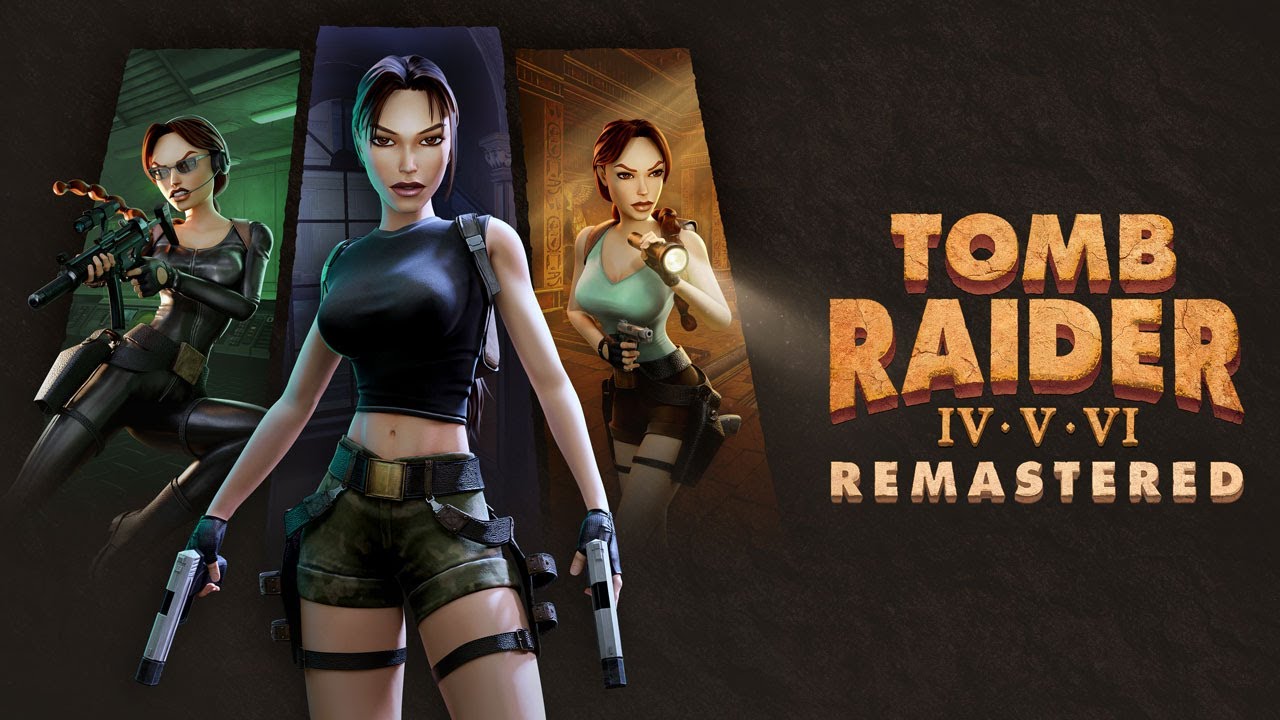
Tomb Raider IV–VI Remastered Review – Classic Lara Croft Trilogy Collection
Explore The Last Revelation, Chronicles, and Angel of Darkness in a remastered classic Tomb Raider trilogy experience
Tomb Raider IV–VI Remastered brings together three defining Lara Croft adventures in one collection, blending tomb exploration, episodic storytelling, and urban investigation across Egypt, Europe, and beyond. Featuring updated visuals, classic controls, and modern accessibility options.
Think you remember Tomb Raider? These three games play very differently today

Tomb Raider IV-VI Remastered


Tomb Raider IV–VI Remastered brings three Lara Croft eras into one connected experience A shift from pure tomb exploration to experimental action adventure design
Tomb Raider IV–VI Remastered is a bundled collection featuring The Last Revelation, Tomb Raider Chronicles, and The Angel of Darkness, grouped under the Darkness Trilogy label used across official storefront listings. Developed by Aspyr in collaboration with Crystal Dynamics, with co-development support from Saber Interactive, the package focuses on preserving original gameplay while making these entries accessible on modern platforms without altering their core design identity.
Instead of reimagining the series, this collection maintains the original structure of each game. What changes is how easily they can be played today, with updated controls, visual options, and stability improvements layered on top of the original mechanics. The result is a version of classic Tomb Raider that still feels structurally familiar but significantly more approachable in practice.
Across all three titles, the defining trait remains movement discipline. These games are still built around spacing, timing, and environmental reading. Even with modern enhancements, success depends on understanding how Lara Croft interacts with geometry, ledges, and puzzle spaces rather than relying on fast reflex systems or modern action pacing.
One of the most important modern additions is the Tomb Raider IV–VI Remastered graphics toggle. This feature allows instant switching between original and remastered presentation during gameplay. In practice, it becomes a tool for reading environments more clearly in The Last Revelation while also preserving the original lighting behavior for players who prefer the classic visual tone. The change is immediate and seamless, reinforcing how different presentation styles can alter perception without changing mechanics.
Three games, three identities, one shared legacy of experimentation From structured tomb design to urban investigation systems
The Last Revelation represents the most cohesive design in the collection. Set primarily in Egypt, it focuses on interconnected tomb environments built around long-form puzzle logic. Progression is heavily dependent on observation and memory, with items often gaining importance hours after they are first collected. The Tomb Raider The Last Revelation Set story centers on the accidental release of the god Set, framing exploration within a steadily escalating archaeological narrative.
Tomb Raider Chronicles takes a different approach through episodic gameplay in Tomb Raider Chronicles. Instead of a single continuous journey, the game is structured as a series of memory-driven chapters following Lara Croft’s presumed death. Each segment plays differently, shifting between traditional tomb exploration, stealth-oriented sequences, and more experimental mission layouts that break from the core formula of earlier entries.
The Angel of Darkness represents the most dramatic shift, introducing Tomb Raider urban environments Angel of Darkness that replace isolated ruins with cities such as Paris and Prague. The focus moves toward investigation, dialogue systems, stealth, and narrative-driven progression. While traversal and puzzle solving remain present, they are now embedded within a more grounded, urban structure that changes the rhythm of exploration significantly.
Across all three games, this variation in structure highlights a franchise in transition. Rather than following a single design direction, these entries explore different interpretations of what Tomb Raider could become during a period of experimentation and hardware transition.
Controls, visuals, and modern refinements reshape how these classics are experienced today Familiar structure, improved readability, unchanged core challenge
The difference between Tomb Raider original and remastered controls remains one of the most noticeable aspects of the collection. Classic tank controls preserve the original grid-based movement system, requiring precise orientation before movement and jumps. Modern analog controls introduce smoother directional input and camera freedom, making navigation more intuitive without changing the underlying level design or collision structure.
Post-launch updates refine how these systems behave in practice. Camera behavior in tight spaces has been adjusted to reduce disorientation, while input responsiveness has been improved for modern controllers. In The Angel of Darkness, stability improvements address previously inconsistent progression triggers and interaction timing, resulting in a more stable experience overall without altering the original level layouts.
Visual presentation also plays a major role in how the collection is experienced. The remastered layer improves lighting clarity, environmental contrast, and object readability, while the original visuals preserve the atmospheric limitations and tonal density of the original releases. Because both versions share identical geometry, switching between them highlights how presentation alone can shift interpretation of space.
A notable inclusion within the package is additional bonus material such as The Times Exclusive standalone level, expanding the historical scope of the collection beyond the base trilogy structure. This reinforces the archival nature of the release rather than treating it as a simple visual upgrade.
Final verdict A preservation-focused collection that keeps classic Lara Croft gameplay intact
Tomb Raider IV–VI Remastered functions as a preservation-driven release that maintains the original gameplay systems of three structurally different entries while improving accessibility on modern hardware. It does not attempt to modernize the core design philosophy, instead focusing on ensuring these games remain playable in their intended form.
The Last Revelation stands out for its interconnected tomb design and methodical puzzle progression. Tomb Raider Chronicles delivers episodic gameplay in Tomb Raider Chronicles with varied mission structures and experimental pacing. The Angel of Darkness introduces Tomb Raider urban environments Angel of Darkness, shifting the series into a more narrative-driven and investigative direction.
Taken together, the collection preserves a transitional phase in the Tomb Raider series where design identity was actively evolving. The result is a package defined less by uniformity and more by contrast, showing how the franchise experimented with structure, tone, and gameplay systems during a critical period in its history.
The VoxOdyssey Project Mission Statement for Feature games
I highlight what makes each game unique by examining gameplay mechanics, design choices, and storytelling. By analyzing systems, level design, and play styles, and referencing official media and assets, I aim to provide accurate, informative, and trustworthy insights. While I strive for accuracy, some details may change or be updated over time. Players can use this information to understand each title’s features and mechanics and make their own judgments.
Tomb Raider IV–VI Remastered screenshots show classic Lara Croft exploration and puzzle traversal Tomb exploration, urban stealth, and episodic missions across three remastered games


Tomb Raider IV–VI Remastered Trailer – Lara Croft Across Tombs, Cities, and Lost Secrets
Watch Tomb Raider IV–VI Remastered in motion as Lara Croft moves through ancient tombs, episodic missions, and urban environments across The Last Revelation, Chronicles, and The Angel of Darkness. See how exploration, puzzles, and movement feel across all three games, then view the full trailer below.