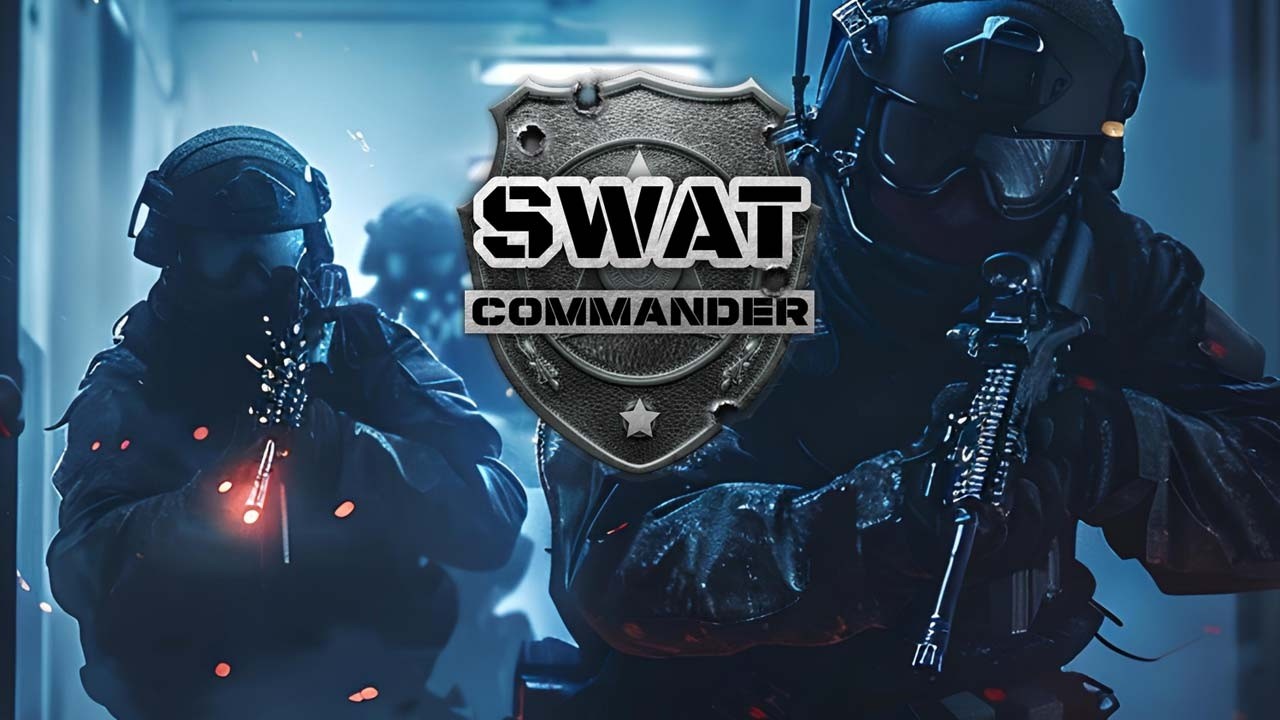
SWAT Commander – Tactical FPS with AI Squad Command and Co-op Operations
Lead a SWAT unit through realistic police shooter missions with dynamic room clearing, AI coordination, and co-op tactical gameplay
SWAT Commander is a tactical FPS 2025 release focused on structured police operations, AI squad command mechanics, and co-op SWAT gameplay across dynamic missions with procedural environments and customizable loadouts in an early access simulation framework.
Plan the breach, control the chaos, and secure every room one operation at a time

SWAT Commander


SWAT Commander Focuses on Tactical FPS Structure and AI Squad Coordination A realistic police shooter built around co-op operations, procedural missions, and controlled room clearing systems
SWAT Commander is a tactical FPS 2025 release developed by Red Mountain Games and published by Ritual Interactive, positioned within the realistic police shooter and squad-based action games category. The design emphasizes structured operations rather than fast-paced combat, focusing on AI squad command mechanics, co-op SWAT gameplay, and procedural mission execution across varied environments. As an early access tactical simulation, it builds its identity around system-driven engagement loops where planning and coordination define mission outcomes rather than scripted progression.
AI Squad Command Brings More Control to Tactical Execution and Room Clearing Observational AI behavior prioritizes controlled entry, angle holding, and coordinated breach sequences
The AI squad command system in SWAT Commander is designed around police squad command AI mechanics that regulate both solo and cooperative play. In singleplayer SWAT missions with AI squad support, operatives respond to structured commands such as breach, secure, and clear, maintaining formation discipline during entry phases. Observations from Early Access builds indicate that AI behavior remains most consistent during confined room clearing tactical simulation scenarios, particularly in residential and industrial layouts where multiple entry points must be managed simultaneously. Community testing patterns highlight that AI units prioritize line-of-sight control and staged advancement, reinforcing the game’s focus on realistic police shooter systems rather than abstract action behavior.
Procedural Missions and Unscripted Scenarios Shape Each Tactical FPS 2025 Operation No scripted encounters, only evolving operational conditions across multiple mission modes
Mission design in SWAT Commander follows a hardcore military shooter missions with no scripts structure, where each deployment alters suspect placement, lighting conditions, and civilian distribution. This creates a tactical FPS 2025 experience defined by variability rather than memorization. Industrial facilities, rural compounds, residential complexes, and commercial interiors all function as layered environments requiring adaptive movement and controlled entry strategy. Each mission supports multiple modes that modify objectives and threat behavior, reinforcing replayability through systemic variation rather than narrative branching.
Gun Customization and Loadout Choices That Shape Tactical Decision-Making in the Field Weapon handling, attachments, and utility choices directly influence engagement outcomes
The tactical shooter with deep gun customization system in SWAT Commander extends beyond visual modification into mechanical trade-offs that affect operational performance. Loadouts balance weapon handling, recoil control, and mobility, particularly when transitioning between open exterior environments and confined interior corridors. Tactical utilities further influence entry strategies, allowing for controlled breaches and safer room clearance procedures. This structure aligns with modern simulation-focused FPS design, where equipment selection is directly tied to tactical execution rather than cosmetic progression systems.
Co-op SWAT Gameplay and Real-Time Tactics Built Around Team Coordination and Shared Control Multiplayer coordination emphasizes timing, communication, and synchronized tactical execution
SWAT Commander supports co-op SWAT game functionality alongside AI-driven singleplayer structures, creating a hybrid tactical framework. In cooperative play, command responsibility is distributed between players, requiring coordinated real time tactics during breach sequences and multi-room clearance operations. Communication becomes central to maintaining squad cohesion, particularly in high-risk scenarios where simultaneous entry points must be managed. This cooperative layer reinforces the game’s identity as a squad-based action game where operational success depends on timing and structured execution.
Environmental Design and Tactical FPS Systems Shape How You Move and Engage Interior layouts and lighting conditions directly affect visibility and movement strategy
Environmental design in SWAT Commander is built around realistic police shooter principles, where spatial structure dictates engagement pacing. Industrial complexes, residential estates, and rural properties are constructed with multiple entry vectors and layered interior layouts that support room clearing tactical simulation systems. Lighting shifts, weather variation, and visibility constraints introduce additional complexity to movement and engagement decisions. These elements ensure that each operation requires adaptive planning rather than static route execution.
Early Access Tactical FPS Focused on Ongoing Updates and Replayability Mission variability and AI behavior systems support long-term structural depth
As a SWAT Commander Early Access Steam title, the game follows an iterative development structure where missions, AI systems, and environmental variables are expanded over time. Replayability is driven by procedural mission variation, shifting threat patterns, and loadout experimentation rather than linear campaign progression. Each deployment presents altered conditions that affect tactical decision-making, reinforcing long-term engagement through system depth. This positions SWAT Commander within the tactical FPS 2025 category focused on simulation-driven replayability and structured operational design.
Final Verdict A tactical FPS built around AI command, procedural missions, and co-op SWAT gameplay
SWAT Commander establishes itself as a realistic police shooter centered on structured tactical execution rather than scripted action design. Its core identity is defined by AI squad command mechanics, procedural room clearing systems, and co-op SWAT gameplay that prioritizes coordination and discipline. Across its Early Access framework, the game emphasizes evolving mission conditions, equipment-based decision-making, and environmental variability. Positioned within the tactical FPS 2025 landscape, it represents a simulation-focused approach to squad-based action games where success depends on planning, execution timing, and adaptive response systems rather than linear progression or narrative-driven structure.
The VoxOdyssey Project Mission Statement for Feature games
I highlight what makes each game unique by examining gameplay mechanics, design choices, and storytelling. By analyzing systems, level design, and play styles, and referencing official media and assets, I aim to provide accurate, informative, and trustworthy insights. While I strive for accuracy, some details may change or be updated over time. Players can use this information to understand each title’s features and mechanics and make their own judgments.
SWAT Commander Screenshots Show Tactical FPS Room Clearing and Squad Coordination AI squad command, co-op breaches, and realistic police shooter environments in gameplay scenes


SWAT Commander Trailer – Tactical FPS Breaches, AI Squad Command, and Co-op Operations
Step into structured SWAT operations where every breach, command, and room clearing sequence matters. Watch the trailer below to see tactical planning and co-op execution in action, then explore the full gameplay systems.