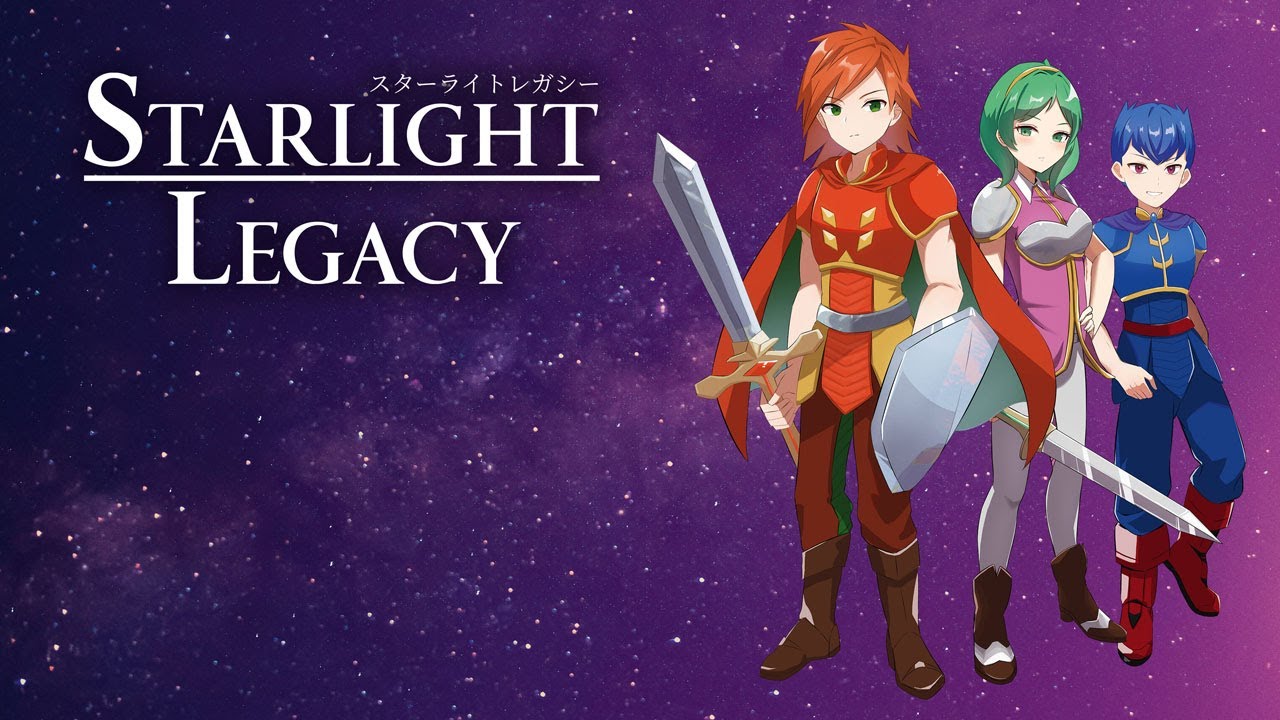
Starlight Legacy Review – Non-Linear 16-Bit JRPG Adventure on PC
Explore the Evaria Kingdom through turn-based battles, seamless exploration, and flexible province progression in Starlight Legacy
Starlight Legacy is a retro-inspired 16-bit JRPG that combines non-linear exploration, strategic turn-based combat, and seamless world design across the four provinces of the Evaria Kingdom as players restore the legendary Eternity Tree.
Ready to discover what makes this retro-inspired JRPG stand apart? Continue below.

Starlight Legacy


A retro-style JRPG built around exploration and steady progression Starlight Legacy gameplay and PC Steam review overview
Starlight Legacy is a 2025 role-playing game developed by Decafesoft and published jointly by Decafesoft and Eastasiasoft Limited. It is structured as a modern 16-bit inspired JRPG built around non-linear exploration, turn-based combat, and a four-region world design set within the Evaria Kingdom. The PC Steam release focuses on mechanical clarity, structured progression, and traditional role-playing systems rather than cinematic storytelling or open-world complexity.
The overall design prioritises predictable systems over narrative branching. Progression is not defined by multiple story outcomes but by the order in which regions are completed. This creates a flexible structure where pacing changes depending on player choice, while the overall narrative destination remains fixed.
The story is centred on the Evaria Kingdom and the Eternity Tree, a stabilising force that maintains environmental balance across the world. The narrative begins when a devastating attack causes the Eternity Tree to wither shortly after Ignus and Teryl begin their journey. This event shifts the structure from a focused mission into a wider restoration objective spanning the entire kingdom.
Four regions and open exploration Forest, mountain, desert, and sky progression structure
The world is divided into four main regions consisting of forest, mountain, desert, and sky environments. These areas form the foundation of the 16-bit JRPG four provinces exploration structure, where each region can be completed in any order. This non-linear structure allows players to choose their path while maintaining a consistent overarching progression system.
Each region contains towns, dungeons, and environmental challenges that contribute to a shared objective. The relic progression system ensures that every area provides a key item required to restore the Eternity Tree. This design allows freedom of exploration while preserving a fixed completion framework.
Enemy encounters are governed by a dynamic scaling system that adjusts difficulty based on overall progression rather than region-specific levels. This retro JRPG with dynamic enemy scaling approach ensures consistent challenge regardless of the order in which regions are completed, reducing the need for grinding while maintaining structured difficulty pacing.
Combat and progression systems Turn-based battles and structured character growth
Combat follows a traditional turn-based JRPG format built around menu-driven commands, stat-based progression, and predictable enemy behaviour patterns. The system prioritises clarity and timing over complexity, reflecting established genre conventions.
Progression is tied to relic acquisition, with each region offering a key relic required to advance the main narrative structure. This Starlight Legacy relic progression structure ensures that all regions contribute meaningfully to the overall objective while allowing flexible completion order.
Character growth is based on experience gained through battles, with steady stat increases that support long-term progression. The system is intentionally stable, maintaining consistent pacing across all regions regardless of exploration order.
Exploration and world structure Seamless travel and overworld flight systems
The PC system architecture supports seamless map transitions without loading screens, connecting towns, fields, and dungeons into a continuous world space. This removes traditional segmentation and creates uninterrupted exploration across the entire kingdom.
Overworld 3D flight sequences provide macro-level travel between regions. These segments function as a higher navigation layer separate from ground exploration, allowing faster traversal across the kingdom while maintaining consistent visual identity.
The visual presentation uses 2D pixel art inspired by 16-bit design, supported by modern engine systems that enable continuous movement between environments. This combination preserves retro aesthetics while improving technical fluidity.
Position in modern JRPG releases Starlight Legacy Steam release context
Within the turn-based JRPG 2025 landscape, Starlight Legacy sits in the category of structurally traditional role-playing games that prioritise system clarity over narrative experimentation. It focuses on controlled progression, predictable mechanics, and consistent exploration flow.
As a 16-bit retro JRPG, it aligns with modern releases that revisit classic design frameworks using contemporary technology. It does not aim to expand genre boundaries but instead refines established systems into a more accessible and technically stable format.
Its identity is defined by non-linear region selection, dynamic scaling combat, seamless exploration, and relic-based progression. These systems combine into a structured experience that remains consistent across different playthrough orders.
Final Verdict Starlight Legacy review conclusion
Starlight Legacy is a structurally consistent 16-bit inspired JRPG that focuses on traditional systems rather than narrative complexity. Its core strength lies in its stable design framework, where non-linear exploration is supported by controlled progression systems and dynamic difficulty scaling that maintains consistent challenge across all regions.
The game does not attempt to reinvent genre conventions but instead refines established turn-based RPG mechanics into a modern format that prioritises clarity, pacing, and accessibility. This results in a mechanically coherent experience that remains faithful to classic JRPG design principles.
The VoxOdyssey Project Mission Statement for Feature games
I highlight what makes each game unique by examining gameplay mechanics, design choices, and storytelling. By analyzing systems, level design, and play styles, and referencing official media and assets, I aim to provide accurate, informative, and trustworthy insights. While I strive for accuracy, some details may change or be updated over time. Players can use this information to understand each title’s features and mechanics and make their own judgments.
Starlight Legacy gameplay screenshots 16-bit JRPG exploration, turn-based battles, and Evaria Kingdom environments


Starlight Legacy trailer – 16-bit JRPG exploration, battles, and world journey
Watch Starlight Legacy gameplay in motion, showing turn-based battles, exploration across the Evaria Kingdom, and travel between four regions. The video below highlights how progression and combat flow across this retro-inspired JRPG experience.