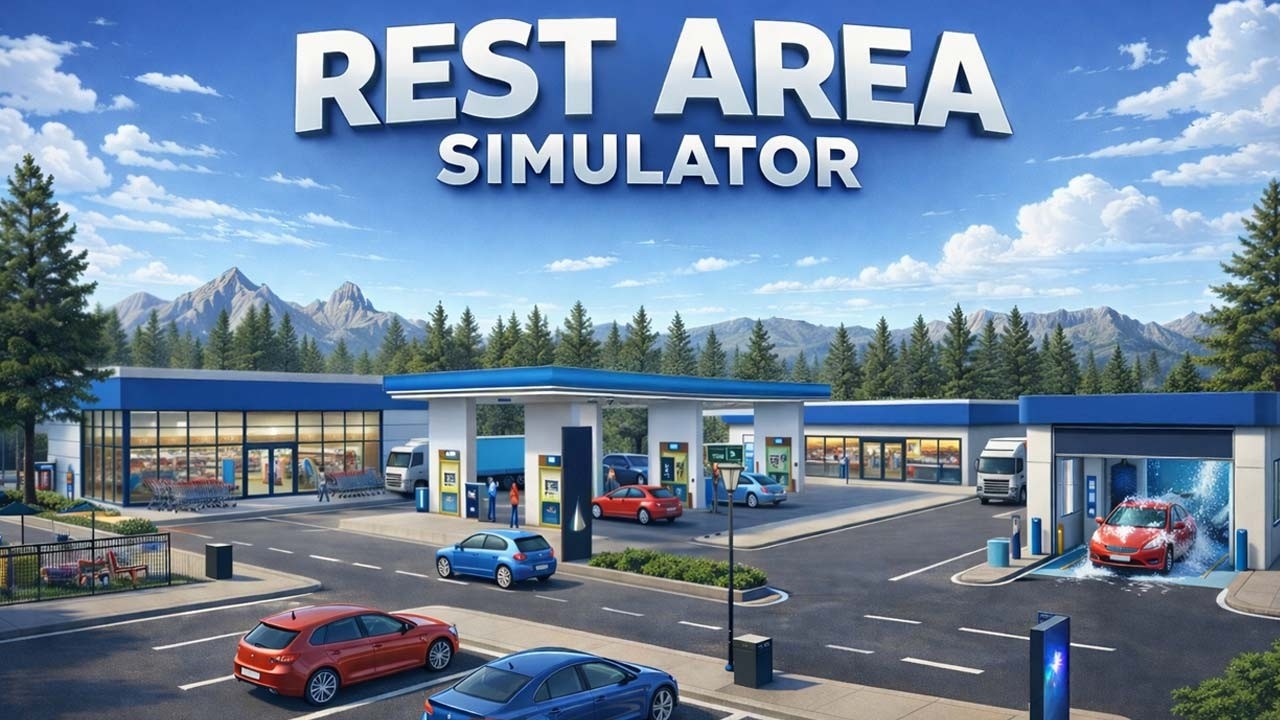
Rest Area Simulator – Co-op Roadside Management Simulation Game
Manage fuel stations, retail shops, and dynamic services in a living roadside economy with co-op strategy systems
Rest Area Simulator is a first-person business simulation where players run a roadside service hub, expand multiple businesses, manage a dynamic economy, and respond to environmental and operational challenges alone or in co-op.
Build your roadside empire and see how far your management decisions can take you

Rest Area Simulator


Rest Area Simulator Focuses on Co-op Roadside Management and System-Driven Simulation Design A first-person business simulation built around interconnected services and dynamic economic systems
Rest Area Simulator is a co-op focused first-person business simulation developed by Oriseus Studios and published by PlayWay S.A., scheduled for release on April 24, 2026. Built around the structure of a roadside management sim, it tasks players with operating and expanding a multi-service rest area that includes fuel stations, retail spaces, and additional business units. The design emphasizes systemic interaction rather than isolated tasks, positioning it within the broader category of business expansion simulator experiences.
Co-op Management Gameplay Expands Operational Responsibility Across Multiple Systems Up to four players coordinate tasks across fuel, retail, and service infrastructure
At its core, Rest Area Simulator is structured around co-op management games 2026 design principles, supporting up to four players in shared operational roles. Each participant can manage different aspects of the facility, including fuel distribution, stock management, customer service, and facility maintenance. This shared responsibility model transforms the game into a coordinated business simulation where efficiency depends on communication and task distribution rather than isolated progression. The system is designed to scale complexity as additional businesses are unlocked, increasing the need for structured cooperation.
Dynamic Economy Simulation Shapes Pricing, Profitability, and Resource Planning Market fluctuations and supply behavior directly influence business performance
The game’s dynamic economy simulation is one of its defining systems. Prices for goods and services adjust based on supply levels, purchasing behavior, and in-game economic conditions. This creates a continuous feedback loop where inventory decisions affect profitability over time. Players must manage stock levels carefully, as bulk purchasing or overextension can alter margins and long-term sustainability. This structure aligns the game with economy simulation games that emphasize reactive systems rather than fixed pricing models.
Multi-Business Expansion Introduces Layered Progression and Resource Management Gas stations, supermarkets, and car washes operate within a shared economic ecosystem
Progression in Rest Area Simulator is built around expansion into multiple business types. Starting with a gas station and convenience store, players can unlock additional operations such as supermarkets and automated car washes. Each business functions within a shared financial system, requiring players to balance investment across different revenue streams. This structure positions the game as a business expansion simulator where growth is tied to operational efficiency and long-term planning rather than linear level progression.
Environmental Systems and Weather Events Influence Operational Stability Changing conditions affect customer flow, infrastructure, and service demand
Environmental simulation plays a functional role in gameplay. Weather conditions such as storms, fog, and clear skies directly influence customer traffic and facility performance. Severe conditions can disrupt power systems, requiring investment in backup infrastructure to maintain operations. These environmental factors create variability in demand and introduce planning challenges that must be managed alongside economic systems. Time-of-day cycles further structure daily activity, dividing operations into predictable but strategically important phases.
Optional Risk Systems Introduce High-Variance Economic Decisions Illicit mechanics create trade-offs between short-term profit and long-term stability
Rest Area Simulator includes optional high-risk systems that allow players to manipulate certain operational variables for increased profit. These mechanics introduce potential advantages but also carry consequences such as inspections, penalties, and reputation loss. This creates a structured risk-reward layer within the broader management framework. The system is designed to operate alongside standard business operations rather than replace them, adding complexity to financial decision-making.
Early Prologue Reception Establishes Baseline for Full Release Systems March 2026 Prologue testing informed early player expectations for core mechanics
A free-to-play Prologue released on March 17, 2026 provided early access to core systems including fuel management, retail operations, and environmental interaction. Player feedback from this version has been used as a reference point for the upcoming full release. The Prologue highlighted interest in cooperative play and dynamic pricing systems, establishing the foundation for expanded business mechanics and additional service types planned for the April 24, 2026 launch.
Final Verdict A structured co-op business simulation built on interconnected systems and dynamic economic behavior
Rest Area Simulator presents a systems-driven approach to first-person business simulation, combining cooperative management, multi-business expansion, and dynamic economic modeling into a unified framework. Its design emphasizes interdependence between operational systems rather than isolated gameplay loops, requiring players to manage resources, infrastructure, and customer flow simultaneously. With its April 24, 2026 release approaching, the title positions itself within co-op management simulation and economy-driven sandbox design, supported by early Prologue feedback that validates its core structural direction.
The VoxOdyssey Project Mission Statement for Feature games
I highlight what makes each game unique by examining gameplay mechanics, design choices, and storytelling. By analyzing systems, level design, and play styles, and referencing official media and assets, I aim to provide accurate, informative, and trustworthy insights. While I strive for accuracy, some details may change or be updated over time. Players can use this information to understand each title’s features and mechanics and make their own judgments.
Rest Area Simulator Screenshots Show Co-op Management and Business Expansion Systems Fuel stations, retail management, and dynamic economy gameplay in action


Rest Area Simulator Trailer – Co-op Management and Dynamic Economy Gameplay
Take control of a growing roadside service hub, manage fuel stations, shops, and upgrades while reacting to shifting demand and events. Watch how co-op coordination and business expansion shape every moment in the trailer below.