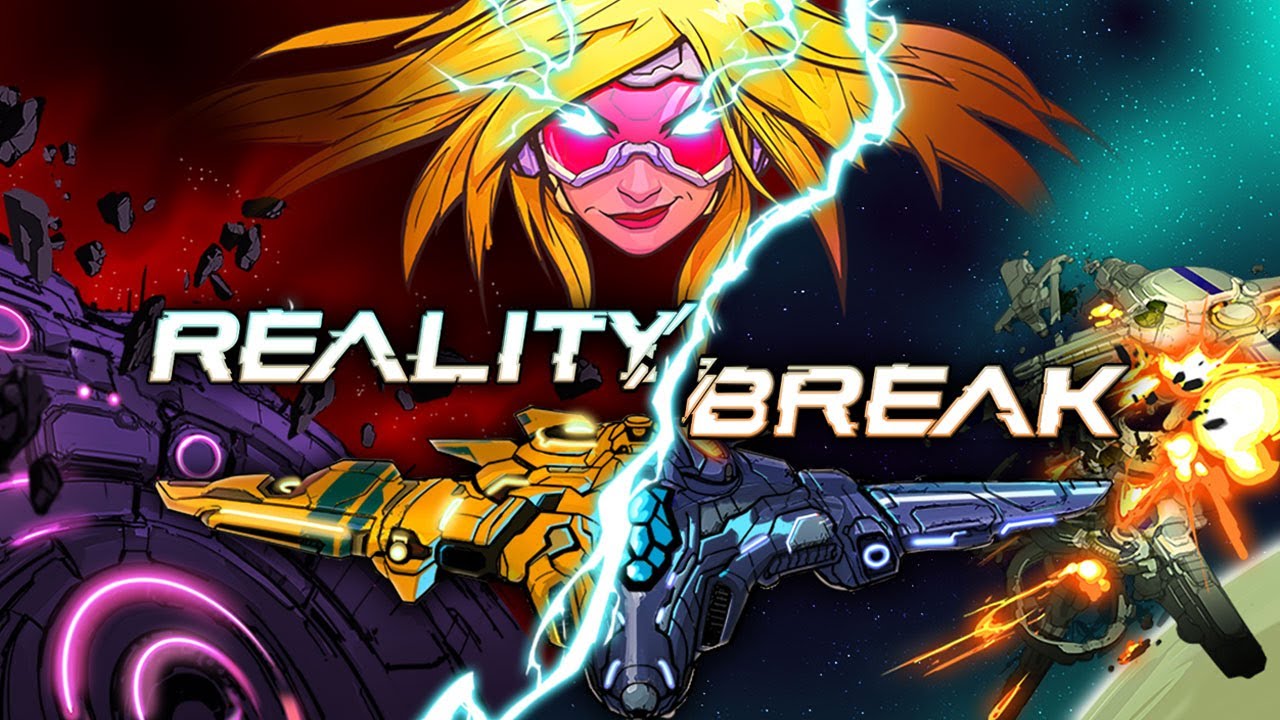
Reality Break – Sci-Fi ARPG Roguelite with Rewrite Systems
Explore timeline resets, loot progression, and ship combat in a space-based action RPG roguelite
Reality Break by Element Games, LLC is a PC sci-fi ARPG roguelite on Steam where players reshape gameplay through the Rewrite mechanic, manage timeline resets, earn Reality Points, and build ships through evolving loot and combat systems.
Rewrite reality, rebuild your ship, and discover what changes next

Reality Break


Reality Break establishes a timeline-based ARPG roguelite structure built on player-controlled rule changes A PC Steam sci-fi experience where progression systems evolve through Rewrite mechanics
Reality Break is a sci-fi Action RPG roguelite developed and published by Element Games, LLC. Released on PC via Steam in February 2025, it places players in control of a mercenary pilot navigating unstable timelines where every run can reshape core gameplay systems. Instead of relying on traditional ARPG progression, where character strength increases through static leveling, the game is built around the Rewrite mechanic, which allows direct alteration of game rules such as loot behavior, mission structure, combat scaling, and long-term progression systems.
Rewrite mechanic guide: how Reality Break changes the rules during active gameplay A system where mission structure, loot, and difficulty can be adjusted in real time
The Rewrite system is the central mechanic that defines how Reality Break functions moment to moment. Instead of acting as a simple upgrade menu, it behaves like a rule-editing layer over the entire game. Players can extend mission timers during pressure situations, alter enemy scaling to adjust difficulty, and modify loot rarity outcomes while progressing through a run. These adjustments do not remain isolated, since each change feeds into other systems such as Codex progression and Fate Affix generation.
This creates a structure where gameplay decisions carry forward across multiple systems. Increasing loot quality affects how quickly Codex sets are completed, while adjusting difficulty impacts reward scaling and combat pacing. The result is a progression loop where experimentation replaces repetition, and each run behaves differently depending on how deeply the system is modified.
Timeline resets and Reality Points create long-term progression across multiple runs Each reset expands access to deeper system manipulation
Progression in Reality Break is built around timeline resets, which function as structured restarts rather than failure states. At the end of each timeline, players receive Reality Points that can be spent on permanent upgrades. These upgrades carry across future runs and unlock additional layers of the Rewrite system, allowing deeper control over gameplay conditions.
Unlike traditional roguelite structures where resets simply restart difficulty curves, Reality Break uses resets as expansion points. Each cycle adds new possibilities to future timelines rather than removing progress. This design ensures that long-term growth is measured through system access rather than raw character power alone.
Loot systems, Fate Affixes, and Codex progression define build diversity Equipment evolves through interaction rather than simple replacement
Loot in Reality Break is not limited to basic stat upgrades. Items can contain Fate Affixes, which introduce conditional effects that change how equipment behaves during specific situations. These modifiers can shift combat outcomes by introducing effects that activate under certain conditions, such as enhancing ship systems or altering ability responses during encounters.
The Codex system adds another layer of progression by rewarding collection-based set bonuses. Instead of focusing only on individual item strength, players build around grouped equipment types that scale as upgrades are applied. Combined with Rewrite mechanics, this allows equipment to remain relevant across multiple timelines rather than becoming obsolete after short-term upgrades.
Ship customization and combat systems shape how each run plays out Loadouts, drones, and upgrades directly influence space combat behavior
Ship customization plays a major role in how Reality Break structures combat. Players can modify ship loadouts, install drone systems, and expand equipment slots to adjust how they engage in battle. These systems interact directly with progression mechanics, meaning that combat performance is tied to both equipment choices and system-level modifications.
Combat follows a top-down space shooter format with Action RPG pacing. Enemy encounters involve managing positioning, weapon timing, and ability usage while navigating increasingly complex battles across timelines. Difficulty can be adjusted through Rewrite, allowing players to scale risk in exchange for improved rewards.
Analysis system and long-term item evolution Equipment continues to develop beyond initial acquisition
The Analysis system adds a delayed progression layer by revealing item properties over time. Instead of immediately understanding every aspect of a piece of equipment, players gradually uncover its full potential through continued use and progression. This encourages long-term engagement with gear rather than immediate replacement.
When combined with Codex progression and Fate Affixes, the Analysis system reinforces a structure where items evolve alongside the player’s understanding of the game systems. This creates a layered progression model where equipment remains relevant across multiple timelines.
Design structure and solo development approach System interconnection replaces large-scale content design
Reality Break was developed as a solo project by Element Games, LLC, and this development context strongly influences its design philosophy. Instead of focusing on large volumes of scripted content, the game relies on interconnected systems that generate variation through interaction.
Systems such as Rewrite, Reality Points, Codex progression, Analysis, and ship customization are designed to interact continuously. This reduces dependence on handcrafted content while increasing the importance of understanding how each system influences the others across multiple timelines.
Final verdict A systems-driven sci-fi roguelite built on player-controlled progression
Reality Break succeeds in creating a progression model where system control is more important than traditional stat growth. The Rewrite mechanic allows players to reshape how combat, loot, and missions function across multiple timelines, while Reality Points and Codex progression provide long-term structure that expands over time.
Its strongest aspect is the way systems connect. Loot, ship customization, Fate Affixes, Analysis, and timeline resets are not separate features but parts of a single evolving structure. Each decision influences future runs, creating a loop based on experimentation rather than repetition.
Overall, Reality Break stands as a sci-fi Action RPG roguelite that focuses on rewriting its own rules as the primary form of progression. It presents a structured but flexible system where players gradually gain control over how the game behaves across repeated timelines.
The VoxOdyssey Project Mission Statement for Feature games
I highlight what makes each game unique by examining gameplay mechanics, design choices, and storytelling. By analyzing systems, level design, and play styles, and referencing official media and assets, I aim to provide accurate, informative, and trustworthy insights. While I strive for accuracy, some details may change or be updated over time. Players can use this information to understand each title’s features and mechanics and make their own judgments.
Reality Break gameplay screenshots showing space combat and timeline systems Rewrite mechanics, ship battles, and roguelite progression across fractured realities


Reality Break trailer showing space combat, Rewrite mechanics, and timeline progression
Watch Reality Break gameplay in action as ship combat, loot systems, and timeline resets unfold across shifting realities. The video below shows how Rewrite mechanics and roguelite progression systems connect during active play.