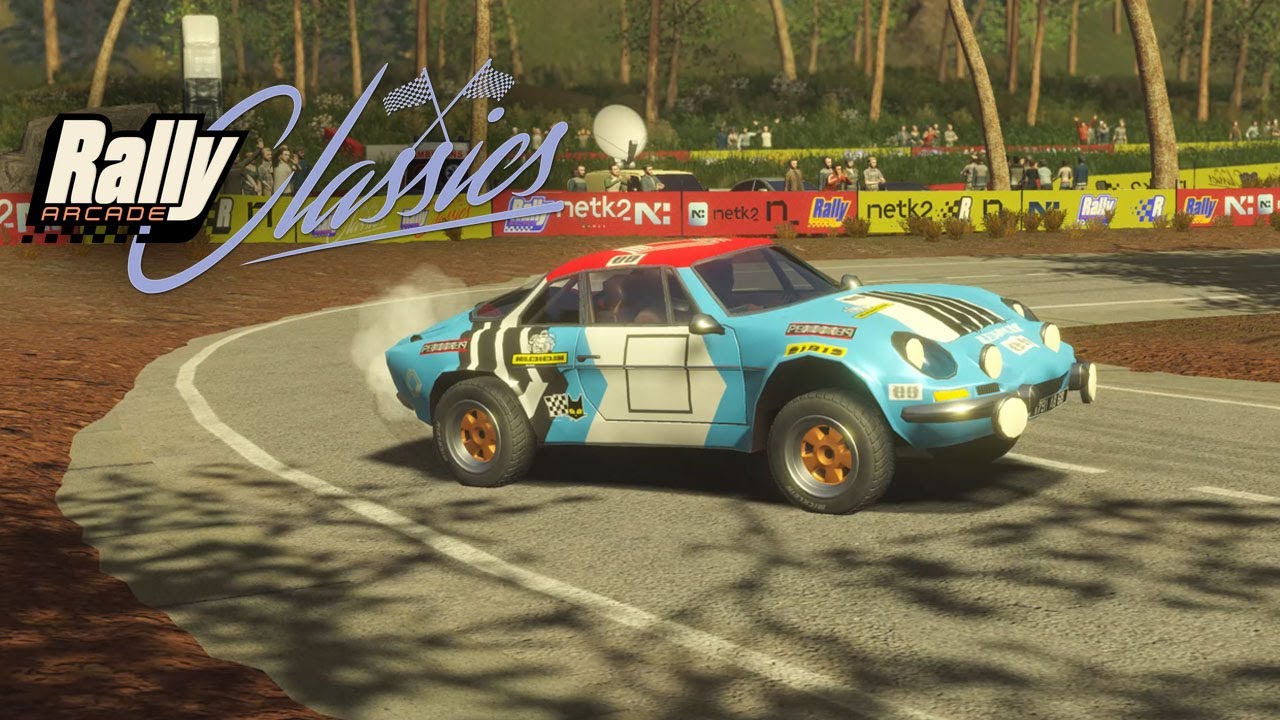
Rally Arcade Classics – Arcade Rally Racing Review and Vehicle Progression Guide
Compete in structured rally events across dynamic terrain, weather systems, and multi-decade car classes
Rally Arcade Classics is an arcade rally racing game featuring structured progression across license tiers, Tour Mode career stages, and competitive weekly events. Players race across dynamic surfaces with vehicles spanning multiple decades and drivetrain systems.
Master every corner, adapt to every surface, and push every rally stage to its limit

Rally Arcade Classics


Arcade rally racing built around structured progression and controlled driving systems License tiers, Tour Mode, and weekly events define the core loop
Rally Arcade Classics is a 2024 arcade rally racing game developed and published by NETK2GAMES for PC via Steam. It focuses on structured racing systems built around repeatable performance rather than open-ended exploration or simulation-heavy driving. The design sits firmly within modern arcade rally racing games on PC where progression is measured through consistency across events and time-based challenges.
The structure of the game is built around multiple interconnected modes. License Mode introduces controlled driving tests, Tour Mode forms the main progression path, Arcade and Rally modes provide shorter competitive formats, Chrono Mode allows custom time trials, and Weekly Events deliver standardized global competition. Each mode contributes to a single progression ecosystem rather than functioning as isolated experiences.
Across 48 tracks, the game emphasizes repetition and familiarity. Courses are designed to reinforce braking discipline, corner entry timing, and surface awareness, rather than relying on procedural variation or unpredictable track generation.
Progression built on licenses, career tests, and long form Tour advancement A 360-stage structure spread across multiple countries and race types
License Mode functions as an entry and progression gate. It is structured around driving evaluations that include time trials, head-to-head races, drift control segments, and standard race challenges. Progression depends on meeting performance thresholds consistently rather than completing isolated events.
Tour Mode acts as the central career structure. It spans 360 individual tests across four countries, forming a continuous progression path. Instead of segmented championships, it tracks long-term performance across multiple race formats and gradually increases difficulty through tighter control requirements and more demanding layouts.
Arcade Mode and Rally Mode provide alternative pacing. Arcade Mode focuses on direct competition against 14 AI drivers in short races, while Rally Mode compresses competition into shorter, repeatable events with varied difficulty and vehicle groupings. Chrono Mode supports experimentation through configurable time trials.
Cars, drivetrains, and how surface grip changes handling behavior FWD, RWD, and AWD respond differently across tarmac, gravel, dirt, and snow
The vehicle roster includes 44 cars distributed across four decades from the 1970s to the 2000s. Each era influences handling characteristics such as stability, acceleration response, and cornering behavior. These differences shape how vehicles perform across different race conditions.
Vehicles are also divided by drivetrain type. Front wheel drive cars prioritize stability but tend to understeer under acceleration. Rear wheel drive cars are more responsive to throttle input but require careful control to manage oversteer, especially on low grip surfaces. All wheel drive cars provide balanced traction and stability but reduce the sharp rotational behavior seen in RWD setups.
Surface type has a direct impact on handling. Tarmac offers consistent grip and predictable braking. Gravel and dirt introduce reduced traction that increases sliding and requires earlier correction. Snow significantly reduces stability and extends braking distance, affecting all drivetrain types in different ways.
Weather, timing, and track conditions shape every race Grip levels and visibility shift during dynamic event conditions
Weather and time of day systems affect more than visual presentation. Rain reduces traction and increases braking distance, making vehicle control less predictable. These effects are most noticeable in rear wheel drive vehicles, where throttle input must be carefully managed.
Lighting conditions influence visibility and track readability. Lower visibility increases reliance on track memory and driving discipline, particularly in sections with tight corners or rapid elevation changes. These systems reinforce adaptation rather than memorization.
The combination of surface, weather, and vehicle type ensures that each race feels slightly different even on familiar tracks, without altering the underlying course design.
How each mode fits into the overall racing structure Short races, time trials, and global events work as one system
Arcade Mode focuses on short competitive races against AI opponents where positioning and overtaking decisions matter more than endurance. Rally Mode offers compact race formats with varied difficulty levels and vehicle categories.
Weekly Events provide synchronized global competition where all players race under identical conditions. This ensures leaderboard rankings are based purely on performance rather than setup advantages. Chrono Mode allows fully customizable time trials for technique refinement.
These systems work together to create a loop centered on repetition, consistency, and incremental improvement rather than narrative progression.
Final verdict A structured arcade rally system focused on progression, physics, and repeatable skill
Rally Arcade Classics delivers a structured arcade rally racing experience built around progression systems, vehicle classification, and surface based handling mechanics. Its design emphasizes consistency across multiple modes rather than a single linear campaign.
The interaction between License Mode, 360-stage Tour progression, Arcade and Rally formats, and Weekly Events creates a unified structure where each system contributes to long-term advancement. Vehicle handling differences and environmental conditions add variation without changing the core structure of the game.
Overall, Rally Arcade Classics is positioned as a systems-driven arcade rally game designed for structured replayability, controlled competition, and progressive skill development across varied racing conditions.
The VoxOdyssey Project Mission Statement for Feature games
I highlight what makes each game unique by examining gameplay mechanics, design choices, and storytelling. By analyzing systems, level design, and play styles, and referencing official media and assets, I aim to provide accurate, informative, and trustworthy insights. While I strive for accuracy, some details may change or be updated over time. Players can use this information to understand each title’s features and mechanics and make their own judgments.
Rally Arcade Classics gameplay screenshots Arcade rally racing, dynamic weather tracks, and structured vehicle progression


Rally Arcade Classics trailer – arcade rally racing, dynamic weather, and structured progression
Watch Rally Arcade Classics in action across high speed rally stages, drifting gravel corners, and weekly competitive events. The video below shows real gameplay across multiple cars, tracks, and weather conditions.