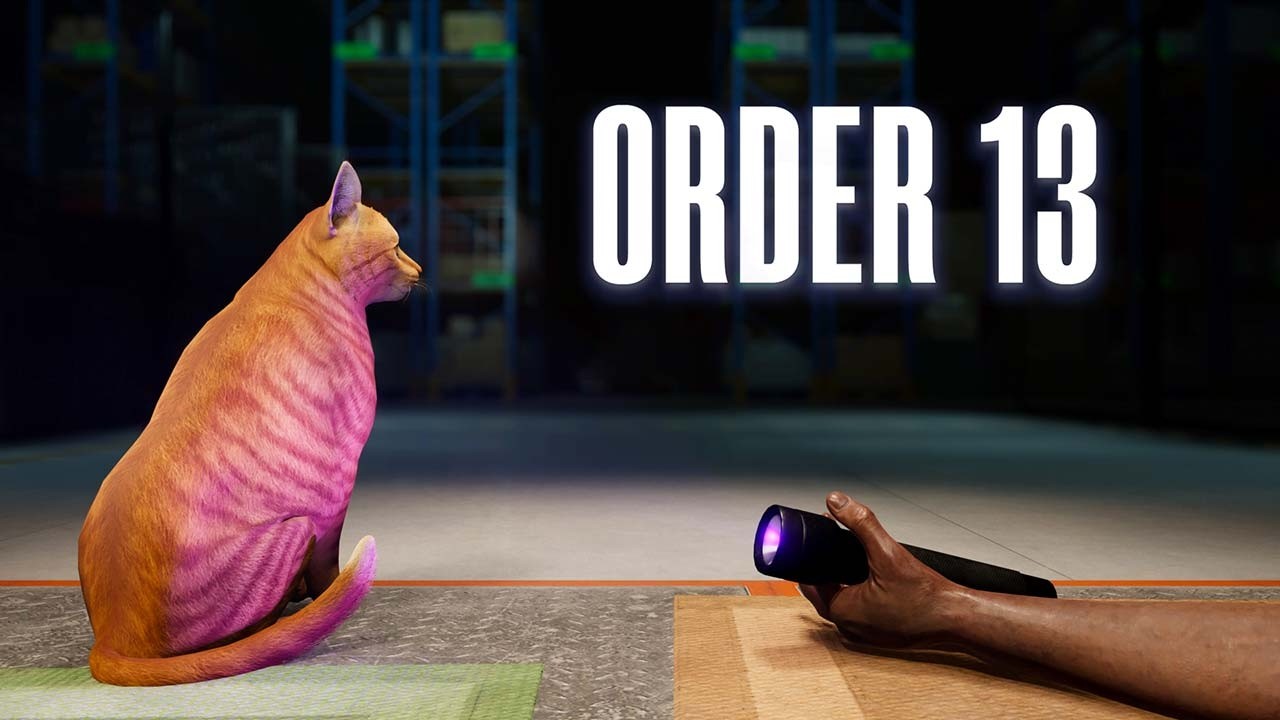
Order 13 – Psychological Horror Warehouse Simulator
Retrieve orders, pack shipments, and survive the night in a dark fulfillment center where something moves in the shadows
Order 13 is a first-person survival horror simulation set in a remote warehouse. Collect items, prepare shipments, and explore expanding storage areas while managing tools, avoiding danger, and protecting your only companion—your cat.
Clock’s ticking and the warehouse isn’t empty—scroll down and see what your next shift has in store.

Order 13


Warehouse Fulfillment Gameplay Loop Retrieve Inventory, Pack Orders, and Survive the Night Shift
Order 13 centers its gameplay around a familiar task structure: processing warehouse orders during a late-night shift. At the start of each cycle, players review incoming requests and head into the storage area to locate the required items. The warehouse is organized into shelves, bins, and long aisles that must be navigated efficiently to keep shipments moving. Once items are collected, they are returned to a packing station where orders are boxed and prepared for dispatch. This routine forms the core gameplay loop, but the environment surrounding these tasks introduces an increasing sense of risk. Darkness, distant sounds, and unexplained activity gradually turn routine logistics work into a tense survival scenario where efficiency and awareness are equally important.
First-Person Warehouse Exploration Navigating Storage Aisles With Limited Tools and Visibility
Exploration in Order 13 takes place from a first-person perspective, placing players directly inside the warehouse environment. Lighting is minimal, requiring careful use of a flashlight while moving through shelving corridors and storage racks. Early sections introduce the basic layout of the facility, but later shifts unlock additional areas that expand the environment significantly. New storage zones introduce unfamiliar layouts and longer travel distances between objectives. This gradual expansion transforms the warehouse into a complex navigation challenge where route planning becomes essential. Players must balance speed with caution, avoiding unnecessary delays while remaining aware of their surroundings.
Procedural Warehouse Layouts Dynamic Facility Structures That Change Between Runs
Order 13 incorporates procedural generation to maintain unpredictability between attempts. When a run ends, the next shift begins in a reconfigured warehouse layout. Storage aisles, item placements, and environmental conditions may appear in different positions, forcing players to reassess the environment each time they enter the facility. This system prevents players from relying entirely on memorization and instead emphasizes adaptability. Each new configuration becomes a logistical puzzle where efficient routing and quick observation determine how quickly orders can be completed. By combining procedural structure with a task-driven gameplay loop, the game encourages repeated play while preserving a consistent sense of tension.
Shift Progression and Economic Systems Upgrade Tools and Improve Efficiency Through Completed Orders
Progression within Order 13 is closely tied to job performance during each shift. Successfully completing shipments generates income that can be used to purchase upgrades and equipment improvements. These tools may enhance navigation, increase packing efficiency, or provide additional security during warehouse exploration. As shifts become more demanding and deeper areas of the facility unlock, improved equipment becomes essential for maintaining productivity. This upgrade system mirrors the operational logic of a real fulfillment environment where efficiency and investment go hand in hand. Players gradually build a toolkit that allows them to handle more complex tasks while adapting to the evolving challenges of the warehouse.
Environmental Storytelling and Mystery Exploring the Hidden Context Behind the Warehouse
Rather than relying on traditional narrative delivery, Order 13 communicates its story through environmental observation. As players venture deeper into the facility, they encounter areas that suggest the warehouse holds secrets beyond routine logistics operations. Storage corridors, maintenance areas, and overlooked sections of the building provide subtle hints about the history and purpose of the location. These details gradually build a broader narrative context without interrupting gameplay. Exploration therefore serves two purposes: completing orders and uncovering fragments of a larger mystery. This method encourages players to pay close attention to the environment while performing their duties.
Companionship as a Gameplay Element Caring for the Cat That Shares Your Isolation
A distinctive feature of Order 13 is the presence of the player’s cat, which functions as both a companion and an additional responsibility. In an otherwise empty warehouse, the animal represents the only consistent presence within the environment. Maintaining its wellbeing becomes an ongoing priority alongside fulfilling shipment orders. Income earned during shifts can be used to improve conditions that help keep the cat safe. This system adds emotional context to the gameplay loop by introducing a protective element to the player’s objectives. Instead of focusing solely on survival, players must also ensure that their companion remains unharmed while navigating the dangers of the facility.
Atmosphere and Psychological Horror Design Isolation, Darkness, and Sound Build Sustained Tension
The horror elements in Order 13 rely heavily on atmosphere rather than constant confrontation. The warehouse environment is vast and largely silent, punctuated only by distant sounds or subtle environmental cues. Long aisles and stacked shelving restrict visibility, making it difficult to predict what may appear around the next corner. Lighting is intentionally sparse, reinforcing the vulnerability associated with working alone in a large industrial facility. By allowing tension to emerge from the environment itself, the game creates a slow and persistent sense of unease. Players are encouraged to remain alert throughout each shift as the atmosphere evolves and the warehouse grows increasingly unpredictable.
Position Within Indie Horror Development A Simulation-Driven Approach to Modern Psychological Horror
Order 13 reflects a broader trend within independent horror development that reimagines everyday work environments as sources of tension. Instead of relying on combat or traditional survival mechanics, the game places emphasis on occupational tasks such as retrieving inventory and processing shipments. By situating these responsibilities inside an unpredictable and threatening environment, the game transforms familiar logistics work into a survival challenge. This design philosophy aligns with a growing segment of indie horror titles that explore offices, stores, and industrial facilities as narrative spaces. Within this context, Order 13 demonstrates how routine systems can become compelling gameplay foundations when combined with atmospheric design and procedural structure.
Technical Performance and System Requirements Accessible Hardware Needs for Windows PC Players
Order 13 is built for Windows-based systems and maintains relatively modest hardware requirements. The minimum configuration includes a Ryzen 3 2200G or Intel i5-7400 processor paired with 8 GB of memory and graphics hardware comparable to an AMD RX 570 or Nvidia GTX 1060. Recommended systems increase performance with processors such as the Ryzen 7 2700X or Intel i7-9700K alongside 12 GB of RAM and a GPU similar to an Nvidia RTX 2060. Despite its atmospheric lighting and environmental effects, the game occupies only about 5 GB of storage. These specifications allow a wide range of PC configurations to run the game smoothly while preserving the intended visual atmosphere of the warehouse environment.
Replayability and Strategic Adaptation Procedural Runs Encourage Efficiency and Experimentation
Replayability in Order 13 stems from the interaction between procedural warehouse layouts and the shift-based task system. Because each new attempt introduces a different facility structure, players must continually adapt their strategy for locating items and returning them to the packing station. Over time, improved equipment and familiarity with warehouse logic allow players to refine their approach to each shift. The process becomes one of incremental mastery, where better route planning and situational awareness lead to more consistent performance. This evolving structure encourages repeated engagement while maintaining the central tension of surviving another shift in the warehouse.
Final Verdict A Workplace Simulation Reimagined as Psychological Survival Horror
Order 13 delivers an unusual interpretation of the survival horror genre by framing warehouse logistics as the central gameplay system. The act of retrieving inventory, preparing shipments, and navigating storage aisles becomes progressively tense as the environment reveals its unpredictable nature. Procedural warehouse layouts prevent routine from becoming predictable, while the upgrade system rewards efficient task completion. Environmental storytelling introduces a layer of mystery that unfolds naturally through exploration, encouraging players to investigate areas beyond the immediate objectives of each shift. The inclusion of the player’s cat adds an emotional dimension rarely seen in simulation-driven horror titles, transforming survival into a shared responsibility rather than an isolated challenge. Taken together, these elements create a distinctive experience that blends simulation mechanics with psychological tension. Order 13 ultimately stands out within the indie horror space by demonstrating how ordinary workplace systems can support a suspenseful and strategically engaging gameplay structure.
The VoxOdyssey Project Mission Statement for Feature games
I highlight what makes each game unique by examining gameplay mechanics, design choices, and storytelling. By analyzing systems, level design, and play styles, and referencing official media and assets, I aim to provide accurate, informative, and trustworthy insights. While I strive for accuracy, some details may change or be updated over time. Players can use this information to understand each title’s features and mechanics and make their own judgments.
Order 13 – Psychological Horror Warehouse Environments Screenshots Highlight Warehouse Layouts, Item Retrieval, and Dark Atmospheric Exploration


Official Trailer – Step Inside the Dark Warehouse of Order 13
Click to watch the trailer and experience night-shift survival, tense warehouse navigation, and protecting your companion cat firsthand.