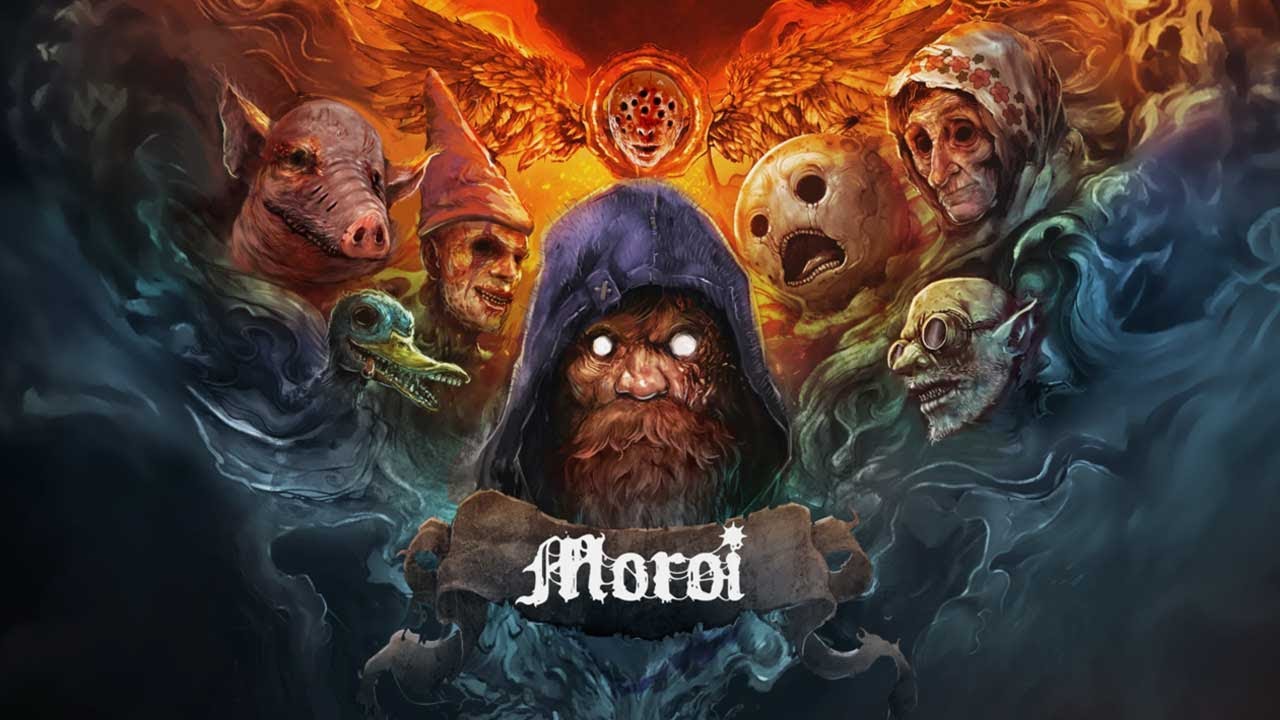
Moroi – Dark Fantasy Action-Adventure in the Cosmic Engine
Isometric singleplayer action-adventure blending hack and slash combat, puzzles, and atmospheric horror
Moroi is a dark fantasy action-adventure set inside the Cosmic Engine, where players descend through the shifting Spire, engage in violent hack and slash combat, and solve grotesque biological puzzles while uncovering a fragmented narrative shaped by multiple endings and replay value.
Descend deeper into the Spire and uncover what the Cosmic Engine is hiding beneath the surface

Moroi


A Systems-Driven Dark Fantasy Action-Adventure Framework Inside the Cosmic Engine Hack and Slash Combat, Biological Puzzles, and Isometric Survival Systems Intersect
Moroi is a dark fantasy action-adventure developed by Violet Saint and published by Good Shepherd Entertainment, structured around an isometric singleplayer framework set within the shifting Cosmic Engine. The game combines hack and slash combat systems, environmental puzzle logic, and fragmented narrative progression across a descent-based structure known as the Spire. Each layer of the Engine operates as a self-contained systemic environment where combat encounters, puzzle interactions, and narrative fragments interconnect to shape progression. As a modern indie action title, Moroi positions itself within a design space where atmospheric worldbuilding and mechanical violence operate as parallel systems rather than separate layers of gameplay.
From Isometric Combat to Violent Hack and Slash Encounter Loops Weapon Timing, Gore Feedback, and Spatial Control Define Combat Structure
Combat in Moroi is structured around a hack and slash system built for real-time action engagement from an isometric perspective. Encounters are designed around violent interaction cycles where positioning, timing, and weapon selection determine survival outcomes. The Chainsword functions as a rapid crowd-control tool, while the Power Hammer introduces slower, high-impact strike windows that require precise timing during boss phases. A modular cannon arm system extends combat into ranged engagement layers, altering pacing within confined arenas. Visual feedback includes pronounced gore effects that reinforce the violent tone of encounters without altering mechanical readability. Enemy encounters scale through spatial density rather than numerical abstraction, reinforcing direct engagement with environmental hazards.
Atmospheric Story Rich Design Through Fragmented Environmental Narrative The Cosmic Engine Structures Identity, Memory Loss, and Vampire-Adjacent Themes
Narrative progression in Moroi is delivered through fragmented environmental storytelling embedded within the Cosmic Engine’s architecture. The structure presents a story rich framework where dialogue fragments, visual cues, and character encounters gradually reconstruct the protagonist’s lost identity. The Spire functions as a vertical narrative axis, with each layer revealing additional context tied to the protagonist’s conviction and the Engine’s logic. The overall presentation is highly atmospheric, relying on shifting spatial design and unstable architecture to communicate tone. Recurring blood-based mechanics and transformation motifs introduce subtle vampire-adjacent thematic elements without anchoring the narrative to traditional vampire mythology.
Biological Puzzle Systems and Environmental Interaction Loops Blood Consumption, Regurgitation Mechanics, and Viscera-Based Progression Gates
Puzzle design in Moroi is built around biological interaction systems embedded within the Cosmic Engine’s environment. Progression frequently relies on environmental triggers that require the player to consume blood, force regurgitation, or dig through viscera to activate organic mechanisms. These systems function as spatial progression gates rather than standalone logic puzzles, integrating directly into the traversal structure of the Spire. Each interaction cycle alters environmental accessibility, reinforcing the connection between bodily mechanics and world progression. Later sections introduce multi-stage puzzle sequences where repeated biological inputs are required to stabilize pathways within unstable organic architecture.
Replay Value and Singleplayer Progression Architecture Multiple Endings, Branching Encounters, and Run-Based Narrative Variation
Moroi is structured as a singleplayer experience with layered replay value built around branching narrative outcomes and systemic variation across playthroughs. Multiple endings are determined by environmental interaction patterns and narrative discovery sequences rather than linear progression choices. Each descent through the Spire can reveal altered character behavior, additional dialogue fragments, and modified encounter conditions. This structure reinforces iterative exploration of the Cosmic Engine, where replay sessions function as reinterpretations of the same underlying systems rather than repeated linear runs. Progression is therefore defined by accumulation of knowledge rather than simple mechanical advancement.
Performance Structure and Technical Framework DirectX 12 Systems, 1080p Scaling, and RTX-Level Rendering Targets
Moroi operates on a DirectX 12 rendering framework designed to support dynamic lighting, organic environmental geometry, and shifting spatial layouts within the Cosmic Engine. The PC release targets a minimum configuration of Windows 10 64-bit, with Windows 11 recommended for higher performance stability. Hardware scaling places entry-level performance around GTX 1080 or Radeon RX 580-class GPUs, while recommended performance targets align with RTX 3080 or Radeon RX 6800 XT systems for stable 60fps output at 1080p. Storage requirements remain fixed at 11 GB. The rendering pipeline prioritizes environmental density and atmospheric lighting over high-frequency visual effects, ensuring that systemic readability is maintained during combat and puzzle sequences.
Final Verdict A Systems-Driven Dark Fantasy Action Framework Built on Combat, Puzzles, and Atmospheric Structure
Moroi functions as a tightly integrated dark fantasy action-adventure system where isometric hack and slash combat, biological puzzle mechanics, and fragmented narrative progression operate within a unified Cosmic Engine structure. The Spire-based progression model ensures that environmental instability directly influences both combat encounters and puzzle navigation, while weapon diversity introduces mechanical variation across violent encounter design. Atmospheric presentation reinforces narrative ambiguity through environmental storytelling rather than direct exposition, resulting in a story rich framework built on interpretation rather than linear disclosure. Replay value emerges through multiple endings and systemic variation across runs, supported by singleplayer design constraints that prioritize exploration of mechanical depth over repetition. As an indie action-adventure release, Moroi occupies a distinct position within the dark fantasy genre by merging violent combat systems, atmospheric environmental design, and biological puzzle logic into a cohesive structural framework that prioritizes systemic interaction over traditional narrative delivery.
The VoxOdyssey Project Mission Statement for Feature games
I highlight what makes each game unique by examining gameplay mechanics, design choices, and storytelling. By analyzing systems, level design, and play styles, and referencing official media and assets, I aim to provide accurate, informative, and trustworthy insights. While I strive for accuracy, some details may change or be updated over time. Players can use this information to understand each title’s features and mechanics and make their own judgments.
Moroi Gameplay Screenshots of Isometric Dark Fantasy Systems Combat, puzzles, and Cosmic Engine exploration across the Spire


Moroi Gameplay Trailer – Dark Fantasy Action Combat Inside the Cosmic Engine
Step into the shifting Spire and watch Moroi unfold in motion, from violent hack and slash combat to grotesque puzzle systems and atmospheric exploration. View the trailer below to see the Cosmic Engine in action.