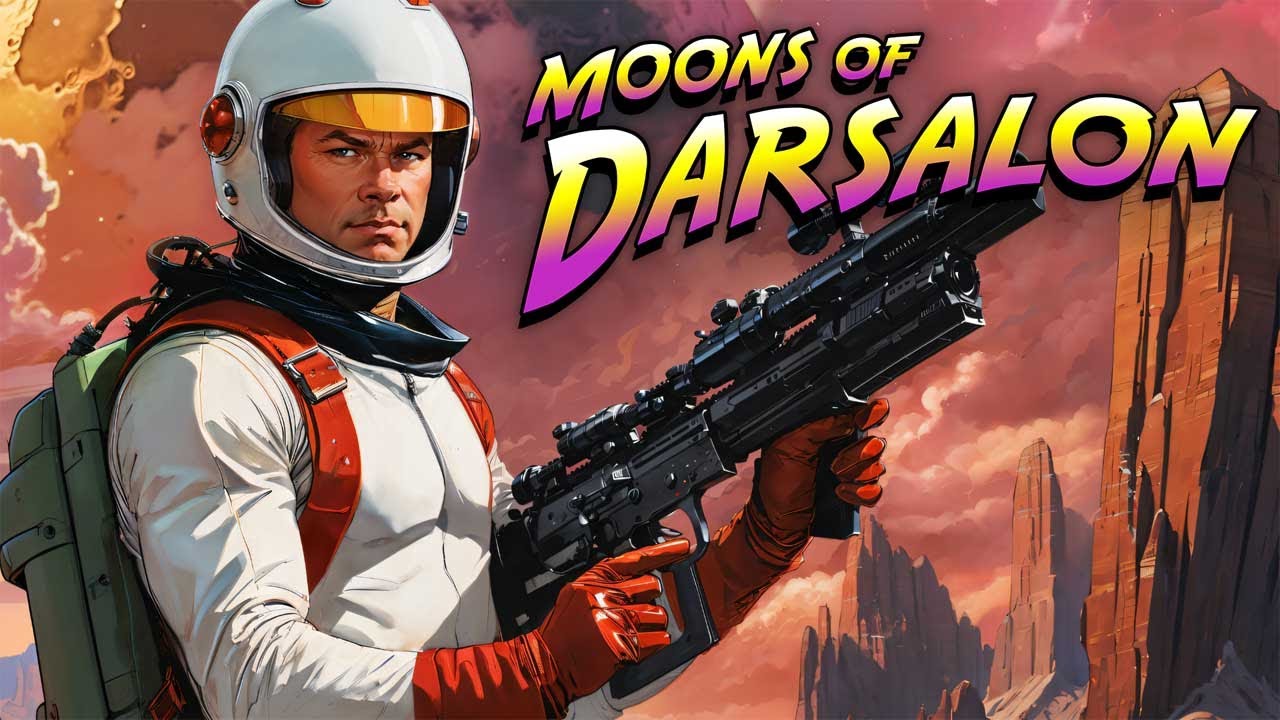
Moons of Darsalon – Physics Driven Retro Rescue Platformer Review
Rescue stranded Darsanauts across hostile alien moons in a physics based platformer with escort mechanics
Moons of Darsalon is a retro inspired rescue platformer where players guide Darsanauts through dangerous alien terrain using terrain tools, jetpacks, and tactical combat while managing survival across unpredictable physics based environments.
Survive the moons, rebuild the path, and discover what happens when rescue becomes strategy

Moons Of Darsalon


Moons of Darsalon blends retro platforming with physics driven rescue gameplay A side scrolling survival rescue experience focused on escorting Darsanauts through hostile alien terrain
Moons of Darsalon is a retro inspired rescue platformer developed by Dr Kucho Games and released first on PC Steam in 2023, followed by a console rollout in early 2025 across Nintendo Switch, PlayStation 4, PlayStation 5, Xbox One, and Xbox Series X and S. The Moons of Darsalon release date structure is important when reading the game’s design because the PC version established the core physics systems first, while the later console versions focused on adapting controls and performance across multiple platforms without changing the underlying gameplay loop.
At its core, Moons of Darsalon gameplay is built around escorting groups of stranded Darsanauts across hostile alien moons. The player is placed in a constant rescue scenario where survival depends on movement, terrain control, and managing threats in real time. Unlike traditional platformers, progression is not just about reaching the end of a level but ensuring that enough Darsanauts survive the journey to reach extraction points.
The overall structure fits within the broader category of retro 2D space exploration platformer design, but it pushes into physics driven gameplay systems that influence how every stage unfolds. The result is a game that sits between classic platforming logic and simulation based environmental interaction, where each decision can reshape the path forward in unexpected ways.
Every mission revolves around controlling chaos rather than eliminating it Escort mechanics, terrain tools, and survival pressure define the gameplay loop
The main gameplay loop in Moons of Darsalon revolves around managing movement and survival simultaneously. Players use tools such as a jetpack, laser weapon, torch, and most importantly the ground maker gun to reshape terrain. This tool allows the creation or removal of surfaces, which directly affects how both enemies and Darsanauts move through each environment.
Unlike fixed route platformers, this side scrolling platformer with destructible environments relies on dynamic path creation. Each level becomes a flexible space where solutions are not predefined. The player must constantly evaluate whether to fight, build a path, or redirect companions to safer ground depending on the situation unfolding in real time.
The design also shares conceptual similarities with games like Lemmings and Abe’s Oddysee, particularly in how indirect control over groups shapes progression. However, Moons of Darsalon expands this idea using physics simulation and real time environmental changes, making each escort sequence less predictable and more reactive to player behavior.
Darsanauts are the most unpredictable system in every rescue mission AI behavior creates tension between control, movement, and survival outcomes
A defining feature of Moons of Darsalon gameplay is the behavior of the Darsanauts themselves. These companions are not passive followers but active entities governed by advanced platformer AI systems. They respond to terrain changes, hazards, and lighting conditions while attempting to follow the player through complex environments.
The moons of darsalon voice commands npc guide system allows limited coordination of these groups, but it does not remove the unpredictability of their movement. In practice, Darsanauts may hesitate, cluster, or reroute when terrain becomes unstable or heavily modified. This creates situations where the player must quickly adapt by reshaping terrain or repositioning themselves to maintain group cohesion.
This balance between control and autonomy is central to the experience. It ensures that no rescue mission plays out in exactly the same way twice, especially when combined with environmental hazards and enemy pressure that constantly shift the flow of movement across each level.
Physics systems define how every surface and path behaves Terrain deformation and environmental simulation drive strategic decision making
The physics driven retro rescue platformer identity of Moons of Darsalon is most visible in how terrain behaves during gameplay. Ground deformation allows players to dig, build, or collapse sections of the environment, which directly influences movement routes for both enemies and Darsanauts.
Liquid simulation and unstable ground mechanics add additional complexity to navigation. These systems can alter safe paths unexpectedly, forcing players to adjust their strategy mid mission. As a result, Moons of Darsalon gameplay often feels like a continuous problem solving process rather than a fixed sequence of platforming challenges.
This approach turns each level into a reactive system where environmental conditions and player actions constantly influence each other. It also reinforces the identity of Moons of Darsalon as a retro inspired rescue platformer that prioritizes simulation over strict linear design.
Combat and traversal are part of the same survival system Movement tools and weapons overlap in real time decision making
Combat in Moons of Darsalon is not separated from traversal or rescue mechanics. Instead, it is integrated directly into movement and survival systems. The laser weapon provides direct combat capability, but success often depends more on positioning and terrain control than raw firepower.
The jetpack adds vertical mobility but is limited by fuel, which forces careful usage during long rescue missions. Combined with terrain shaping tools, this creates a layered movement system where survival depends on how efficiently the player can switch between combat, navigation, and escort management.
Visual style combines retro inspiration with modern rendering systems C64 and Amiga influences shaped through CRT filtering and pixel rendering
The visual presentation of Moons of Darsalon is inspired by Commodore 64 and Amiga era aesthetics while using modern rendering techniques to support physics and lighting systems. The result is a retro styled surface layer that still allows dynamic environmental interaction.
Lighting changes and contrast shifts are not just visual effects but also gameplay tools. Visibility directly affects escort reliability, especially in darker environments where Darsanauts can become harder to track during movement. The CRT scanline filter and pixel constrained rendering further reinforce the retro identity while impacting readability during fast sequences.
Progression expands tools, but also increases complexity Each new unlock changes how rescue strategies develop over time
Progression in Moons of Darsalon is built around gradual expansion of available tools and systems. Early stages focus on basic rescue mechanics, while later sections introduce more complex interactions between physics systems, enemy behavior, and companion AI.
Optional objectives and increasing environmental pressure add replay value, especially for players searching for moons of darsalon walkthrough all levels or darsanauts rescue mission tips and tricks. Each run can develop differently depending on how terrain is shaped and how companions respond to changing conditions.
Final verdict A systems driven rescue platformer built on physics, AI behavior, and adaptive problem solving
Moons of Darsalon delivers a focused retro inspired rescue platformer experience where physics driven gameplay and escort mechanics define every major decision. The combination of terrain manipulation, AI controlled Darsanauts, and real time combat creates a structure that constantly shifts under player input.
The game’s strength lies in how Moons of Darsalon gameplay systems interact. The ground maker gun, jetpack movement, and companion behavior are all connected, producing emergent situations that feel different across repeated runs. This is true across all versions, including moons of darsalon pc steam and the later console releases on moons of darsalon switch, moons of darsalon ps5, and moons of darsalon xbox platforms.
At the same time, the unpredictability of AI movement and physics interactions can create moments of friction, especially during high pressure rescue sequences where precision is harder to maintain. This is part of the trade off between systemic depth and control consistency that defines the overall experience.
Overall, Moons of Darsalon stands as a retro 2D space exploration platformer that prioritizes adaptation over memorization. It is best suited for players who enjoy physics driven gameplay, group escort mechanics, and reactive problem solving within evolving environmental systems rather than strictly linear platform challenges.
The VoxOdyssey Project Mission Statement for Feature games
I highlight what makes each game unique by examining gameplay mechanics, design choices, and storytelling. By analyzing systems, level design, and play styles, and referencing official media and assets, I aim to provide accurate, informative, and trustworthy insights. While I strive for accuracy, some details may change or be updated over time. Players can use this information to understand each title’s features and mechanics and make their own judgments.
Moons of Darsalon gameplay screenshots Physics based rescue missions, terrain tools, and Darsanaut escort gameplay


Moons of Darsalon trailer – physics driven rescue missions and Darsanaut escort gameplay
Watch Moons of Darsalon in action as you guide Darsanauts through hostile alien moons using jetpacks, weapons, and terrain shaping tools. The video below shows real gameplay moments where survival depends on movement, timing, and rescue decisions.