Mini City: Mayhem Review – Time-Pressured City Building Strategy
Build, connect, and expand a thriving city through puzzle-driven planning and rapid decision-making
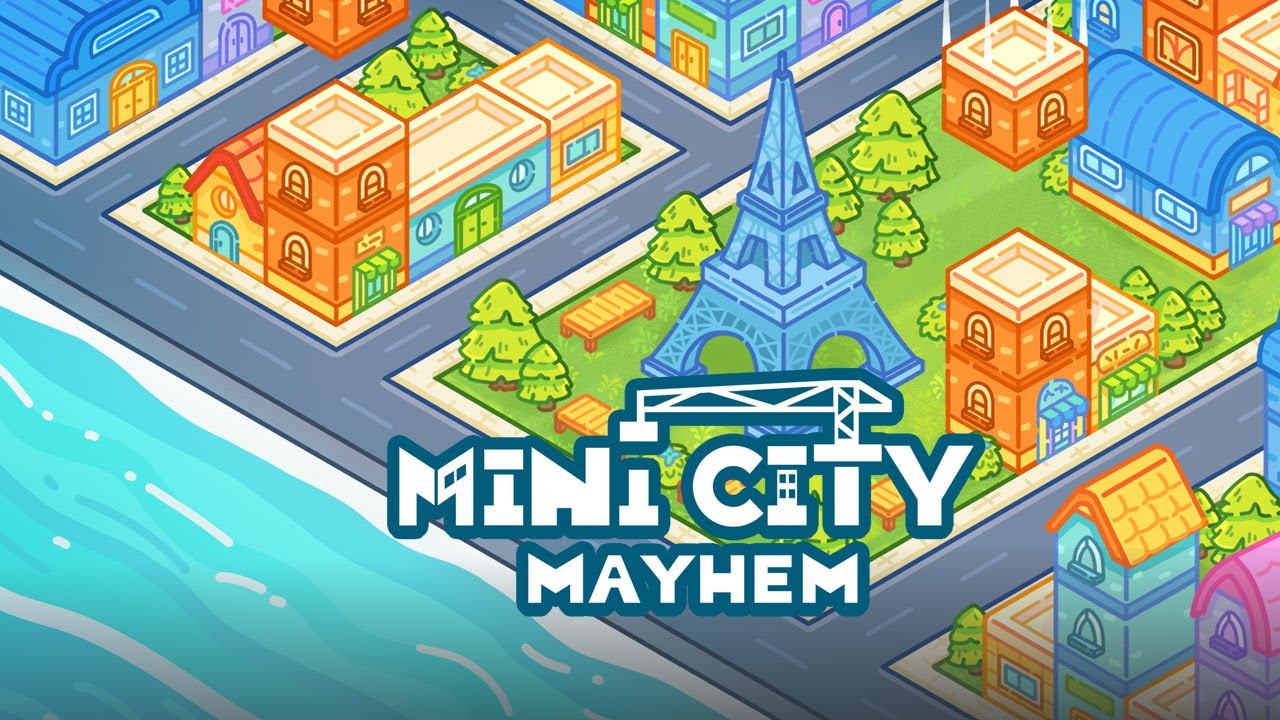
Mini City: Mayhem is a city-building strategy game that combines time management, spatial planning, and puzzle mechanics. Develop efficient road networks, place buildings strategically, and guide a growing city across multiple modes including Mayhem, Zen, Sandbox, Square Stack, and Crane.
Ready to beat the clock and turn a small town into a bustling metropolis?

Mini City: Mayhem


Mini City: Mayhem is a time-based city builder focused on fast planning Every decision shapes how quickly and effectively a city develops over time
Mini City: Mayhem, developed by Rogue Duck Interactive and cukuto and published alongside Gamersky Games, is a compact city-building strategy game designed around short, structured play sessions. Instead of long-running simulation systems with layered economic management, it focuses on immediate decisions about where and how to place buildings, how to connect roads, and how to make use of limited space as efficiently as possible.
The core structure sits between a strategy framework and a puzzle system. Each building occupies a defined space on a grid, and every placement influences what can be built next. This means the player is not only constructing a city but also solving a continuous layout problem where every tile has long-term consequences. Roads are equally important, acting as the connective layer that determines whether a city expands smoothly or becomes constrained early.
This design creates a time pressured city builder strategy game where planning and reaction happen at the same time. In faster modes, decisions must be made quickly without full certainty about future layouts, while still maintaining a functional structure that can continue to grow. The result is a system where spatial awareness and adaptation matter more than long-term economic forecasting.
Although the mechanics are simple to understand, the interaction between space, timing, and connectivity creates a layered decision space. Each new building reduces available options, gradually shifting the city from open planning into constrained optimization. This progression is consistent across all modes, but the pace at which it happens varies significantly.
Building a city becomes a structured puzzle under constant constraints Road placement and space management determine long-term success
Every structure in Mini City: Mayhem fits into a minimalist grid based urban development game system. This grid structure ensures that placement is always precise, removing ambiguity and turning each decision into a clear spatial problem. Choosing where to place a building is not just about filling space but about preserving future flexibility for expansion.
Roads play a central role in shaping the city’s functionality. They determine how buildings connect and whether expansion paths remain open. A well-placed road network allows smooth scaling, while inefficient layouts can quickly restrict further development. This creates a steady feedback loop where early decisions influence the entire structure of the city later in the session.
The game combines Strategy, City Builder, Time Management, Real Time Tactics, and Management systems, but keeps them lightweight and readable. Instead of tracking complex economic chains, it focuses on spatial efficiency and placement logic. The challenge comes from working within constraints rather than managing multiple overlapping systems.
As the city expands, the available space becomes increasingly valuable. What begins as an open layout gradually transforms into a tightly packed structure where every remaining tile has strategic importance. This shift in density is one of the core drivers of difficulty across all gameplay modes.
Multiple modes reshape pacing while keeping the same core systems intact Each mode changes how pressure and creativity interact
Mayhem mode defines the core experience through constant time pressure. In this mode, city building becomes a rapid decision-making process where there is little time to plan extended layouts. Instead, players must adapt continuously as new buildings appear and space becomes increasingly limited. This creates a strong Time Attack structure where efficiency and speed are essential.
Zen mode removes time pressure entirely, shifting the experience toward slower planning and layout refinement. Without a timer, the same mechanics become more deliberate, allowing careful consideration of placement and structure. This mode highlights the underlying design as a cozy sandbox city layouts planning experience, where experimentation is more important than speed.
Sandbox mode expands this freedom further by removing most structural constraints. It allows unrestricted building and experimentation with different city shapes and configurations. The underlying systems remain the same, but the absence of pressure transforms the experience into open-ended simulation-style construction.
Challenge modes such as Square Stack and Crane isolate specific mechanics from the main structure. Square Stack focuses on fitting shapes efficiently into limited space, while Crane emphasizes precision placement and controlled construction under stricter conditions. These modes extend replayability by testing individual aspects of the core system in different ways.
Across all modes, the minimalist grid based urban development game structure remains consistent. The difference lies in pacing and constraints rather than mechanics, ensuring that each mode feels distinct while using the same foundational rules.
City design is influenced by real-world inspiration and recognizable landmarks Each map provides a different spatial layout without changing core rules
Mini City: Mayhem does not rely on narrative progression, but it uses environmental design to give each map identity. Locations inspired by cities such as Pisa, Istanbul, and New York provide distinct structural layouts that influence how cities are built and expanded.
Landmarks such as the Torre di Pisa, Galata Kulesi, and the Statue of Liberty are integrated into these environments. They serve as visual anchors that define each map’s identity without changing the underlying gameplay systems. This ensures that the focus remains on construction and planning rather than narrative context.
As cities grow, the importance of layout efficiency becomes more visible than environmental decoration. While each map has a distinct appearance, success is determined by how effectively space is used and how well the road network supports expansion.
Technical design focuses on accessibility and lightweight performance Simple controls keep attention on planning and placement
Released on 17 February 2025, Mini City: Mayhem is available on PC via Steam with support for macOS and Linux/SteamOS. The macOS version includes optimization for Apple Silicon systems, including M1, M2, and M3 hardware, ensuring stable performance across modern devices.
The control scheme is built around mouse-only interaction, which keeps input simple and focused on placement precision. This design choice supports the game’s emphasis on quick decisions and reduces complexity in how players interact with the system.
Performance requirements remain lightweight, allowing the game to run smoothly across a wide range of hardware. This reinforces the design philosophy of accessibility, ensuring that attention stays on planning and spatial decisions rather than technical limitations.
Final verdict A compact city builder built around space, timing, and structured planning
Mini City: Mayhem focuses on turning city building into a structured system of placement and timing. Instead of long-form simulation mechanics, it reduces the genre into clear, readable decisions about space, connectivity, and expansion.
Each mode adjusts pacing without changing the underlying mechanics, allowing the same systems to support both fast-paced and relaxed playstyles. This consistency across modes is central to the game’s design identity.
As a minimalist grid based urban development game that blends strategy, time management, and puzzle-like construction systems, it delivers a focused experience built around efficient planning rather than complexity. The result is a coherent system where every decision contributes directly to how a city evolves over time.
The VoxOdyssey Project Mission Statement for Feature games
I highlight what makes each game unique by examining gameplay mechanics, design choices, and storytelling. By analyzing systems, level design, and play styles, and referencing official media and assets, I aim to provide accurate, informative, and trustworthy insights. While I strive for accuracy, some details may change or be updated over time. Players can use this information to understand each title’s features and mechanics and make their own judgments.
Mini City: Mayhem screenshots show compact city building and grid-based planning Time-pressured placement, road networks, and evolving urban layouts across multiple modes


Mini City: Mayhem Trailer – Fast City Building and Grid-Based Strategy in Motion
Watch Mini City: Mayhem in action as compact cities grow through rapid placement, road planning, and time-pressured decisions. The trailer highlights different modes, shifting layouts, and evolving urban designs. View more in the video below to see how each city takes shape.