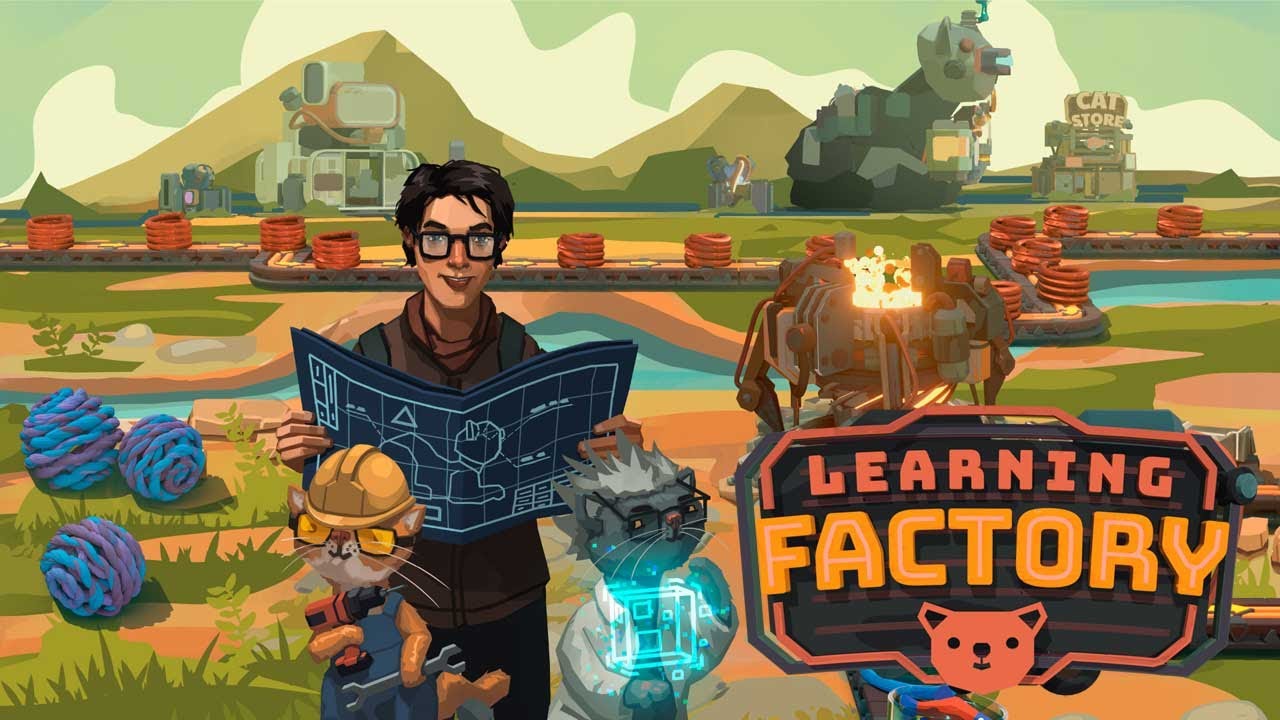
Learning Factory Review – Mars Automation Sandbox with Cat Production Systems
Automation gameplay on Mars featuring layered logistics, research systems, and factory scaling
Luden.io’s factory simulation places players on Mars to rebuild an abandoned production system designed for feline consumers. The experience focuses on automation, logistics planning, research progression, and expanding industrial networks across layered environments.
Design, automate, and optimize production systems toward a functioning Catopia

Learning Factory


A factory that only works when every system connects Why coordination matters more than speed in Learning Factory
Learning Factory is a factory automation simulation developed and published by Luden.io. Set on Mars, the Learning Factory game places players in charge of rebuilding an abandoned industrial system designed for feline consumers. The structure focuses on production planning, logistics management, and scalable automation, positioning it within modern automation games PC players use for systems-based strategy rather than action-driven gameplay.
Across the Learning Factory Steam version, progression is built around expanding production capacity through increasingly complex supply chains. The Learning Factory gameplay loop is defined by continuous optimization, where factory networks evolve gradually as output increases and new production layers are unlocked.
Within the broader factory simulation sandbox genre, Learning Factory stands out for its emphasis on structured logistics over scripted progression. The Mars environment acts as a controlled industrial space where throughput, routing efficiency, and spatial planning determine success rather than combat or survival systems.
When transport layers start to matter more than buildings How multi-layer logistics reshape factory design
The Learning Factory multi layer transport guide structure introduces surface, underground, and aerial routing systems that all operate together. Each layer adds new logistical possibilities, requiring players to balance throughput and avoid congestion across multiple pathways.
As factories expand, Learning Factory underground and aerial routing tips become increasingly relevant, since inefficient layouts quickly lead to bottlenecks. Players are encouraged to continuously rework production networks as new systems are introduced and factory scale increases.
Progression is also tied to data systems inspired by machine learning games concepts. In the Learning Factory how to use machine learning data loop, production output and sales activity at factory stores generate structured data used to unlock new technologies and upgrades.
Small decisions quietly shape massive factory networks Balancing resources, flow, and expansion over time
The Mars cat production simulator strategy structure requires careful balancing of input resources, processing chains, and output demand. Each placement decision affects later efficiency, making early factory layout choices increasingly important as the system scales.
Learning Factory gameplay progression moves away from manual control as automation takes over. The focus shifts toward improving efficiency, reducing bottlenecks, and refining production flow across interconnected systems.
The relaxed factory building game with cats framing places it in a low-pressure simulation category. There are no combat mechanics or external threats, allowing the entire experience to focus on optimization and system design.
A slow path toward building Catopia How research turns early systems into large-scale automation
Learning Factory how to build Catopia progression is tied to long-term research and factory expansion. As production increases, new technologies unlock additional automation tools that allow larger and more efficient factory layouts.
Data driven progression automation games PC systems are reflected in how performance feeds directly into research advancement. This creates a feedback loop where efficiency improvements unlock further optimization opportunities.
The Learning Factory Mars cat game theme reinforces the idea of feline-focused production, but the core experience remains grounded in logistics planning and factory scaling rather than narrative events.
Final verdict A structured automation sandbox focused on long-term optimization
Learning Factory is a factory simulation sandbox that emphasizes system-based progression over scripted storytelling. Its combination of automation games PC mechanics, layered logistics, and research-driven upgrades creates a consistent optimization-focused experience.
The strongest aspect of the Learning Factory gameplay loop is its focus on spatial planning and throughput management. Multi-layer transport systems and scalable production chains ensure that progression is tied directly to efficiency and system design.
Overall, Learning Factory Steam availability places it within the automation genre as a structured factory simulation centered on logistics mastery, production scaling, and iterative system refinement on Mars.
The VoxOdyssey Project Mission Statement for Feature games
I highlight what makes each game unique by examining gameplay mechanics, design choices, and storytelling. By analyzing systems, level design, and play styles, and referencing official media and assets, I aim to provide accurate, informative, and trustworthy insights. While I strive for accuracy, some details may change or be updated over time. Players can use this information to understand each title’s features and mechanics and make their own judgments.
Learning Factory gameplay screenshots Mars factory automation, multi-layer logistics, research systems, and production scaling


Learning Factory trailer – Mars automation, factory building, and logistics optimization systems
Watch Learning Factory gameplay in action as players build and scale automated production lines on Mars. The video below shows logistics networks, multi-layer transport systems, and research-driven factory expansion.