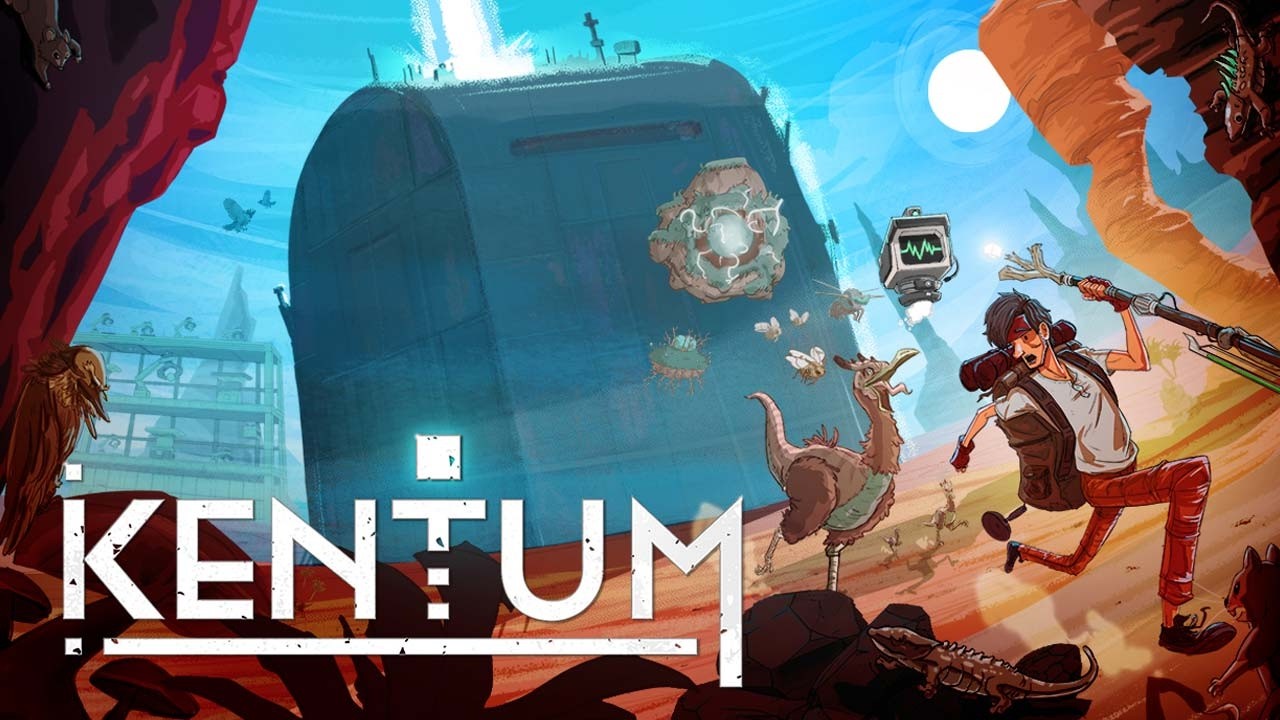
Kentum – Survival Metroidvania on a Post-Apocalyptic Earth
A 2D sci-fi survival platformer by Tlön Industries featuring crafting, automation, and cloning
Kentum, developed by Tlön Industries and published by indienova and V Publishing, is a single-player sci-fi survival metroidvania set in the year 10,000. Explore evolving biomes, build automated systems, manage food production, and use a death-and-reclone mechanic to rebuild civilization.
Learn more about Kentum’s survival systems, biome exploration, automation design, and cloning mechanics below

Kentum


Kentum by Tlön Industries – Survival Metroidvania Systems and Civilization Rebuilding Crafting, Automation, and Cloning on a Post-Apocalyptic Future Earth
Kentum, developed by Tlön Industries and published by indienova and V Publishing, is structured around survival systems rather than linear action set pieces. Set in the year 10,000, the game places players in control of Kent, a repeatedly cloned human tasked with rebuilding civilization on a transformed Earth. The design merges side-scrolling exploration with resource management, base building, and automation. Instead of separating platforming from survival mechanics, Kentum integrates them into a unified progression loop where biome exploration directly fuels machine construction and long-term sustainability.
World Design and Biome Exploration Seasonal Systems, Environmental Scanning, and Resource Classification
The world of Kentum functions as both setting and system. Each biome introduces distinct flora, fauna, and climate patterns that affect survival planning. Players are encouraged to scan and catalogue plants, animals, and minerals, reinforcing a knowledge-driven progression structure. Seasonal variation alters food availability and environmental risks, requiring preparation rather than reactive play. Exploration is not cosmetic; it is the primary method of expanding crafting options and unlocking automation pathways. This structure strengthens Kentum’s identity as a survival metroidvania where movement and information gathering carry equal importance.
Crafting Systems and Automation Progression From Manual Resource Conversion to Factory-Scale Production
Crafting in Kentum begins with direct material conversion. Bone and wood become fuel sources, scrap transforms into metal components, and simple tools support early survival. Over time, these isolated actions evolve into interconnected production chains. Automated machines process resources while players explore distant regions, creating a layered economy within the home base. This shift from manual crafting to automated output defines the long-term progression arc. Automation is not presented as optional endgame content but as the intended path toward rebuilding civilization. The system encourages efficiency, layout optimization, and strategic resource routing rather than repetitive gathering alone.
Cloning Mechanic and Risk Structure Death, Continuity, and Iterative Advancement
Kentum’s death-and-reclone mechanic reframes failure. When Kent dies—whether from environmental hazards, hunger mismanagement, or hostile wildlife—he returns through cloning without erasing structural progress. Base expansions, crafted machines, and automated systems remain intact. This continuity reduces punitive reset pressure while preserving survival stakes. Players must still manage food production, farming systems, and defensive positioning to avoid repeated setbacks. The cloning loop supports experimentation, allowing players to test traversal routes or resource strategies without collapsing long-term advancement. Within the broader survival platformer genre, this approach distinguishes Kentum through persistence rather than permadeath.
Traversal and Platforming Integration Hoverboards, Grappling Hooks, and Vertical Access Design
As a 2D side-scrolling survival platformer, Kentum integrates traversal tools into environmental progression. Movement upgrades such as hoverboards, grappling hooks, and gliding equipment open previously inaccessible regions. These tools are not isolated power-ups but structural keys that reshape exploration routes. Vertical ruins, dense jungles, and unstable terrain demand precise movement layered over survival awareness. Because automation continues operating during expeditions, traversal becomes a strategic decision tied to production efficiency. The metroidvania framework is therefore grounded in mechanical interdependence rather than combat gating alone.
Food Systems, Farming, and Sustainable Growth Cooking, Vivariums, and Long-Term Resource Stability
Survival in Kentum extends beyond crafting tools. Hunger management requires cooking, hunting, and agricultural planning. Players can establish farms and vivariums to stabilize food supplies across seasonal shifts. Recipes improve efficiency, while diversified cultivation reduces vulnerability to environmental fluctuation. This agricultural layer supports the broader rebuilding theme by shifting the player from reactive scavenging to controlled production. In SEO terms, Kentum operates as both a crafting survival game and a civilization rebuilding game, with food systems forming a critical link between exploration and automation.
Narrative Tone and Environmental Identity Dark Comedy Framing a Solitary Reconstruction Effort
Although Kentum incorporates humor, the tone remains grounded in systemic progression. Kent’s dry commentary contrasts with the scale of his task, introducing restrained dark comedy without undermining the post-apocalyptic setting. The future Earth is neither uniformly bleak nor idyllic; it is altered, biologically diverse, and shaped by long ecological absence. Story elements are conveyed through exploration, environmental detail, and mechanical growth rather than cinematic interruption. This approach reinforces the game’s identity as a single-player sci-fi survival adventure built on interaction rather than exposition.
Genre Positioning Within Survival and Metroidvania Design Automation-Focused Progression in a 2D Exploration Framework
Kentum occupies a focused niche within indie survival games. It combines biome exploration, crafting and exploration systems, machine building mechanics, and structured platform traversal. Unlike combat-centric metroidvania titles, its progression is anchored in production capacity and ecological understanding. Automation serves as the central advancement metric, while cloning ensures continuity. This integration positions Kentum as a survival metroidvania defined by system cohesion. Developed by Tlön Industries with publishing support from indienova and V Publishing, the project reflects a deliberate synthesis of survival simulation and platforming adventure design.
Long-Term Progression and Replay Structure Optimization, Expansion, and Mechanical Mastery
Replay value in Kentum emerges from refinement rather than branching narrative paths. Players revisit biomes with improved traversal tools, redesign automated layouts for efficiency, and experiment with farming configurations to maximize output. Each system interlocks with the others, encouraging iterative improvement. As production chains scale and exploration expands, the rebuilding objective becomes measurable through infrastructure rather than abstract scoring. This structure supports sustained engagement and reinforces Kentum’s core identity as a survival-driven, automation-centered metroidvania set on a strange future Earth.
Final Verdict Kentum as a Cohesive Survival Metroidvania Experience
Kentum, developed by Tlön Industries and published by indienova and V Publishing, represents a deliberate integration of survival systems, crafting, automation, and cloning within a 2D side-scrolling metroidvania framework. Its biome exploration, resource management, and platforming traversal coalesce into a unified gameplay loop where mechanical mastery directly fuels civilization rebuilding. The death-and-reclone system reduces punitive resets while maintaining meaningful survival stakes, and the automation mechanics reward strategic planning and efficiency. Visually distinct biomes, clear environmental cues, and a restrained dark comedy tone reinforce both thematic identity and player clarity. Overall, Kentum exemplifies a systems-driven approach to single-player sci-fi survival adventures, balancing exploration, mechanical depth, and replayable progression into a coherent and engaging experience.
The VoxOdyssey Project Mission Statement for Feature games
I highlight what makes each game unique by examining gameplay mechanics, design choices, and storytelling. By analyzing systems, level design, and play styles, and referencing official media and assets, I aim to provide accurate, informative, and trustworthy insights. While I strive for accuracy, some details may change or be updated over time. Players can use this information to understand each title’s features and mechanics and make their own judgments.
Gameplay Systems and Interactive Screen Showcase Cooperative Mechanics, Environmental Challenges, and Precision-Driven Action


Kentum – Survival Systems and Biome Exploration Trailer
Watch the trailer below to see Kent’s exploration, crafting, and automation in action. Get a glimpse of biome traversal, resource management, and the cloning system—experience a taste of Kentum’s survival metroidvania loop before diving in.