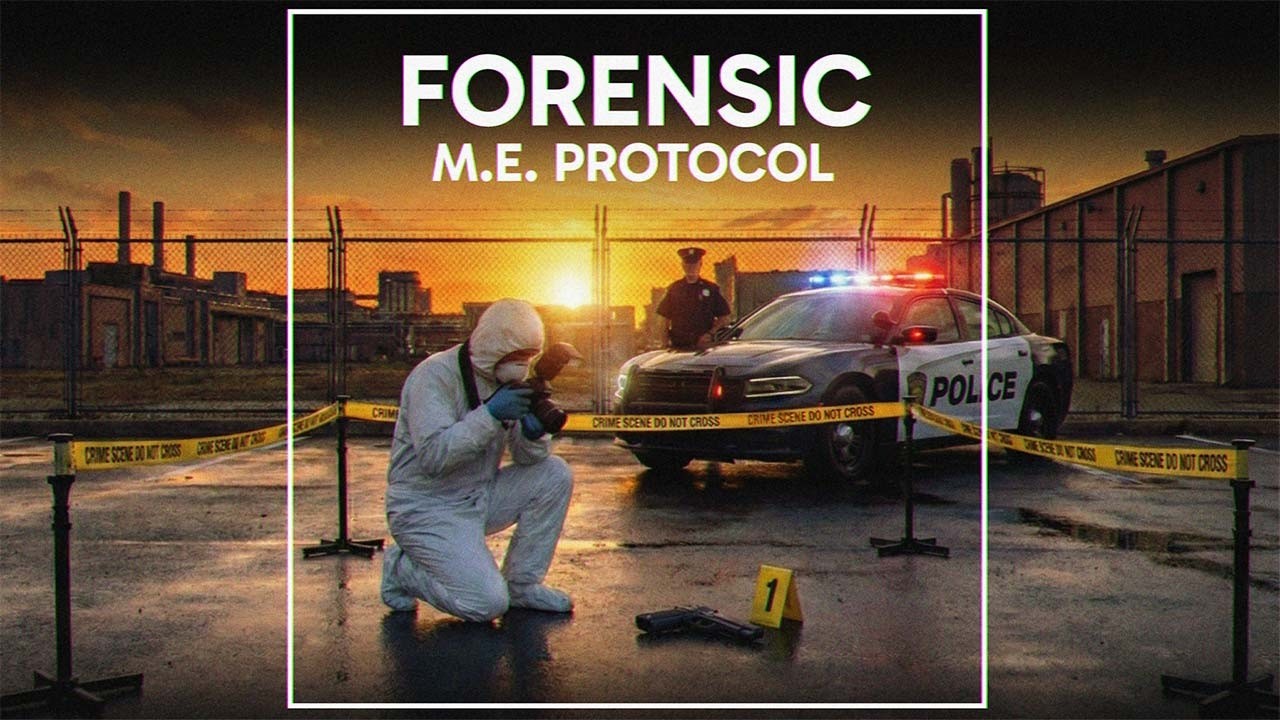
FORENSIC – M.E. Protocol: Crime Scene Investigation Simulator
Realistic first-person forensic investigation game with nine crime cases, evidence analysis, drones, and chemical testing
FORENSIC – M.E. Protocol is a forensic simulation focused on crime scene investigation and logic across nine cases. Players analyze evidence, use drones and chemical testing, and reconstruct events in a dark atmospheric singleplayer detective experience without combat or timers.
Step inside the crime scene and uncover what science reveals

FORENSIC - M.E. Protocol


A forensic investigation simulator where every crime scene behaves like a structured logic puzzle grounded in science Evidence-driven gameplay replaces action systems with methodical observation and analytical reasoning
FORENSIC – M.E. Protocol is a Simulation and Investigation title developed by k148 Game Studio and published by JanduSoft. It is structured as a forensic crime scene investigation simulator built around nine standalone criminal cases, each designed as a self-contained analytical scenario. Rather than operating as a linear narrative adventure, the game functions as a modular system of investigative environments where players examine crime scenes, interpret physical evidence, and reconstruct sequences of events using structured reasoning. This positions the title within a specific subset of realistic detective simulation games on PC that emphasize procedural logic, environmental reading, and science-based deduction systems over action-driven gameplay loops or cinematic scripting.
Investigations unfold slowly through tools that mimic real forensic workflows rather than traditional game mechanics Drones, chemical testing, and environmental scanning form a layered evidence interpretation system
The core gameplay structure in FORENSIC – M.E. Protocol is built around first-person Investigation systems where crime scenes are presented as interactive 3D environments designed for layered analysis. Players use drones, robotic inspection tools, and chemical analysis systems to examine areas that would otherwise remain inaccessible in a standard point & click detective framework. These tools extend investigative reach while reinforcing a simulation-oriented design philosophy that prioritizes procedural realism. Environmental scanning allows identification of key evidence, while chemical testing provides additional contextual validation for forensic conclusions. Each investigative layer feeds into a structured reasoning loop where players must correlate clues, reconstruct timelines, and evaluate inconsistencies to reach logical outcomes.
Nine independent cases create a structured anthology of crime stories with different forensic challenges Each investigation introduces unique environments, evidence layouts, and narrative reconstruction paths
The game is organized around nine independent criminal cases, each functioning as a separate investigative module with its own environmental structure, suspect distribution, and evidence hierarchy. These cases cover a range of criminal contexts including kidnappings, conspiracies, and crimes of passion, all framed within a dark and atmospheric presentation style consistent with modern crime investigation simulators. Each scenario is designed to stand alone, meaning there is no dependency on a central narrative arc or character progression system. Instead, progression is case-based and driven entirely by the player’s ability to interpret environmental clues and reconstruct events accurately. This anthology structure supports replayability while maintaining focus on analytical discovery rather than scripted storytelling.
A grounded atmospheric design that prioritizes realism over spectacle while still maintaining narrative tension Environmental storytelling replaces cinematic exaggeration with detail-driven crime scene interpretation
FORENSIC – M.E. Protocol adopts a dark atmospheric presentation style consistent with realistic crime simulation design principles. Environments are constructed to communicate narrative context through spatial detail, object placement, and forensic evidence rather than overt cinematic sequences or scripted visual escalation. According to official developer disclosures, the game includes depictions of deceased individuals and visible blood while avoiding dismemberment or extreme gore. This restraint ensures that the focus remains on procedural analysis rather than shock-based presentation. The emotional tone is therefore derived from investigative discovery, where meaning emerges gradually through observation and evidence interpretation rather than explicit narrative exposition.
Progression is entirely knowledge-based with no combat, timers, or traditional upgrade systems Success depends on interpretation accuracy, not mechanical progression or unlock systems
Progression in FORENSIC – M.E. Protocol is structured around knowledge acquisition rather than traditional gameplay systems such as skill trees, equipment upgrades, or combat mechanics. Each completed case represents a resolved analytical structure where success is determined by the accuracy of logical reconstruction and completeness of evidence interpretation. The absence of timers or failure pressure systems allows players to engage with investigations at a deliberate pace, reinforcing a methodical approach to problem-solving. Replayability is supported through alternative investigative sequencing and deeper engagement with environmental clues rather than branching narrative outcomes or randomized procedural generation.
Designed for clarity and stable performance so forensic analysis remains the central focus at all times Optimized PC simulation structure prioritizes readability of evidence and investigative tools
The technical structure of FORENSIC – M.E. Protocol is optimized for accessible PC hardware configurations, with system requirements based around mid-range quad-core processors and older generation GPU architecture. This ensures that environmental readability, evidence clarity, and investigative tool responsiveness remain consistent throughout gameplay. Visual design prioritizes functional clarity over high-end graphical fidelity, supporting the core investigative loop where players must identify and interpret environmental details accurately. The game’s compatibility with both Windows and Mac OS platforms further reinforces its positioning within the indie simulation and detective game market, where accessibility and system stability are prioritized over graphical intensity.
Final verdict A focused forensic investigation simulator built around logic, patience, and structured crime scene analysis
FORENSIC – M.E. Protocol delivers a structured Simulation and Investigation experience centered on forensic methodology, environmental analysis, and logic-driven crime reconstruction across nine standalone cases. Its core systems emphasize first-person evidence gathering, drone-assisted exploration, chemical testing, and layered environmental interpretation as the foundation of progression. The absence of combat mechanics, timers, or action-based interruptions reinforces a consistent analytical pacing model where success depends entirely on observation and reasoning. Within the broader ecosystem of immersive sim and detective simulation games, the title occupies a niche focused on procedural realism, offering a deliberate, systems-driven approach to crime scene investigation gameplay that prioritizes accuracy, structure, and methodical decision-making.
The VoxOdyssey Project Mission Statement for Feature games
I highlight what makes each game unique by examining gameplay mechanics, design choices, and storytelling. By analyzing systems, level design, and play styles, and referencing official media and assets, I aim to provide accurate, informative, and trustworthy insights. While I strive for accuracy, some details may change or be updated over time. Players can use this information to understand each title’s features and mechanics and make their own judgments.
FORENSIC – M.E. Protocol screenshots show first-person crime scene investigation gameplay Evidence collection, drones, and forensic analysis across dark investigative environments


FORENSIC – M.E. Protocol Trailer – Crime Scene Investigation and Forensic Simulation Gameplay
Watch FORENSIC – M.E. Protocol in action as crime scenes are examined through first-person investigation, evidence analysis, and forensic tools. The trailer below shows drones, chemical testing, and case reconstruction across multiple dark investigations.