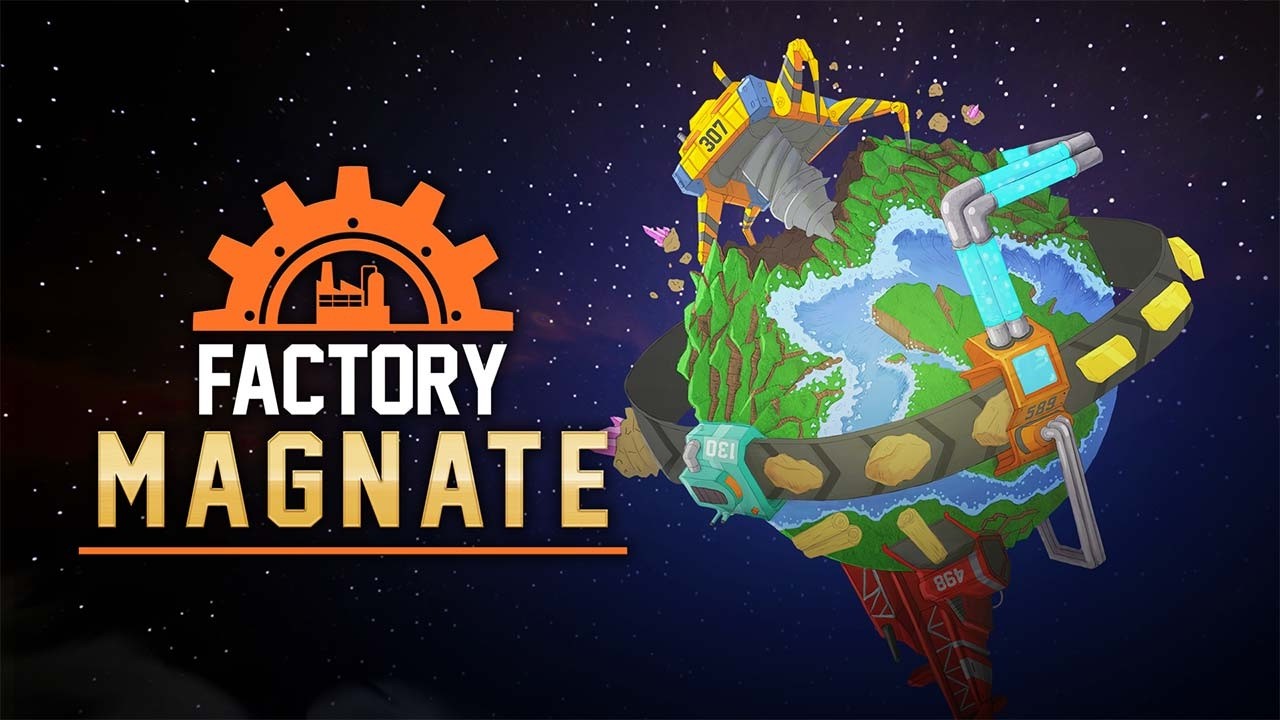
Factory Magnate – Casual Automation and Factory Building Simulation
Build automated production chains, manage resources, and progress from Operator to Magnate across procedural maps
Factory Magnate is a relaxed automation and base building simulation focused on designing efficient production lines, unlocking machines, and completing structured objectives across procedurally generated maps with a clear endgame progression.
Can a small starter factory grow into a full Magnate-level production empire?

Factory Magnate


Starting Small and Watching the Factory Take Shape Feels Surprisingly Satisfying A casual automation simulation focused on production chains, machines, and structured progression
Factory Magnate (2026), developed by Rising Tail and published by indie.io, positions itself as a structured automation and factory building simulation designed around clarity and accessibility. Instead of overwhelming systems or high-complexity engineering puzzles, the game introduces production mechanics in a controlled progression loop. Players begin with simple extraction and processing setups before gradually unlocking more advanced machines and production tiers. The experience is shaped around building efficient systems step by step, where each new layer of automation expands the factory in a predictable and readable way. The emphasis is on understanding flow—how resources move, transform, and scale—rather than managing abstract complexity. Procedural maps ensure that each factory run begins in a different spatial layout, influencing how players approach expansion and organization from the start.
It Feels Good When a Messy Setup Slowly Turns Into a Working System Each milestone unlocks new machines and production capabilities without overwhelming the player
Progression in Factory Magnate is structured around defined objectives that guide the player through its systems. Rather than offering an open-ended sandbox with unclear goals, the game uses a sequence of production tasks that gradually increase in complexity. Early objectives focus on establishing basic resource extraction and simple processing loops, while later stages introduce more layered manufacturing chains and specialized machines. This structured approach ensures that players always understand what their next step is, reducing the uncertainty often found in deeper automation simulations. The progression path ultimately leads toward a final industrial milestone where the player transitions from early operator-level management into a fully scaled production environment, reinforcing a clear sense of growth across the entire experience.
Layout Mistakes Become Obvious Only After the Factory Starts Growing Spatial planning and machine placement directly influence production flow and bottlenecks
One of the core systems in Factory Magnate revolves around spatial organization and factory layout design. Because production depends on how machines are placed and how resources travel between them, even small inefficiencies in layout can have noticeable effects on output. Placing machines too far apart can slow production chains, while overly dense setups may create routing issues that reduce overall efficiency. Procedural maps add another layer of challenge by ensuring that each new factory space has different constraints, forcing players to adapt their layouts rather than repeating the same optimized structure. This creates a consistent loop of evaluation and adjustment where efficiency is shaped by both planning and adaptation to new environments.
The Moment Machines Start Feeding Into Each Other Is Where Things Click Production chains evolve from simple setups into multi-step manufacturing networks
As the factory expands, production shifts from isolated machines into interconnected systems where multiple inputs and outputs must be balanced. Early gameplay involves straightforward transformations of raw resources, but later systems introduce layered dependencies where one machine’s output becomes another’s essential input. This creates a structured automation loop that rewards careful planning of production chains. The game maintains readability by limiting system overload, ensuring that each new machine type is introduced in a way that builds on existing knowledge rather than replacing it. Over time, the factory becomes a network of interdependent processes where efficiency depends on how well these chains are aligned and maintained.
Keeping Resources Moving Smoothly Is What Makes or Breaks Progress Materials move through defined chains that determine how quickly the factory scales
Resource management in Factory Magnate is tightly connected to production efficiency and factory growth. Materials extracted from the environment are processed through multiple stages, each requiring specific machines that contribute to the overall output chain. Maintaining balance between input and output rates becomes increasingly important as production scales up, since bottlenecks in one part of the system can slow down the entire factory. The game encourages players to observe these flows and adjust machine placement or production priorities accordingly. This creates a consistent feedback loop where small adjustments to resource routing can lead to noticeable improvements in overall factory performance.
There’s No Story Getting in the Way, Just You and the Factory Systems Advancement is defined by mechanical expansion and rank-based industrial growth
Factory Magnate does not rely on narrative elements or external storytelling frameworks to guide progression. Instead, advancement is entirely driven by system expansion and production capability. Players move through defined industrial stages, gradually increasing the scale and complexity of their factory operations. This includes unlocking new machines, expanding production chains, and improving overall efficiency across procedural environments. The absence of narrative direction keeps the focus on mechanical interaction, allowing the factory systems themselves to define progression. Each new tier of production represents a measurable step forward in industrial capability, reinforcing a clear and structured sense of growth.
Every New Map Changes How You End Up Building Your Factory Each layout introduces new spatial constraints that influence design decisions
Replayability in Factory Magnate is strongly supported by its procedural map system. Every new run presents a different spatial arrangement of resources and buildable areas, which directly impacts how factories are designed and expanded. These variations encourage players to rethink their production strategies rather than relying on fixed layouts. While the core mechanics remain consistent, the changing environments introduce enough variation to make each factory development cycle feel distinct. This system supports experimentation within a controlled framework, ensuring that players can refine their approach over time while still adapting to new spatial challenges in each playthrough.
A Clean Interface Makes Even Big Factories Manageable The system remains readable even as production networks expand significantly
The interface design in Factory Magnate is built to maintain clarity as the factory expands in size and complexity. Early gameplay presents simple management screens focused on basic production and resource tracking, while later stages introduce more detailed views of production chains, machine status, and output efficiency. Despite this increase in system depth, the interface remains structured to prioritize readability. This ensures that even large-scale factories remain manageable without overwhelming the player with unnecessary complexity. The gradual scaling of interface detail mirrors the progression of the factory itself, supporting long-term engagement without sacrificing usability.
Final Verdict A structured automation simulation where clarity, progression, and factory design define the experience
Factory Magnate delivers a focused automation and base building simulation built around controlled progression and readable system design. By emphasizing structured objectives, procedural map variation, and clearly defined production chains, it creates an accessible entry point into the automation genre without relying on excessive complexity. The game’s strength lies in how its systems connect: resource flow influences production efficiency, layout decisions shape performance, and progression steadily expands the scale of industrial output. With its combination of machine-based automation, incremental unlocking, and consistent mechanical feedback loops, Factory Magnate positions itself as a streamlined simulation experience centered on building, optimizing, and scaling a functional factory from the ground up.
The VoxOdyssey Project Mission Statement for Feature games
I highlight what makes each game unique by examining gameplay mechanics, design choices, and storytelling. By analyzing systems, level design, and play styles, and referencing official media and assets, I aim to provide accurate, informative, and trustworthy insights. While I strive for accuracy, some details may change or be updated over time. Players can use this information to understand each title’s features and mechanics and make their own judgments.
Factory Magnate Screenshots Show a Growing Automated Factory in Motion Machines, resources, and production chains shaping every factory run


Factory Magnate Trailer – Automated Production, Expanding Factories, and System Growth
Watch Factory Magnate in motion as machines connect, resources flow, and factories expand across procedural maps. See how production chains form, layouts evolve, and systems scale, then view the full trailer below for more gameplay detail.