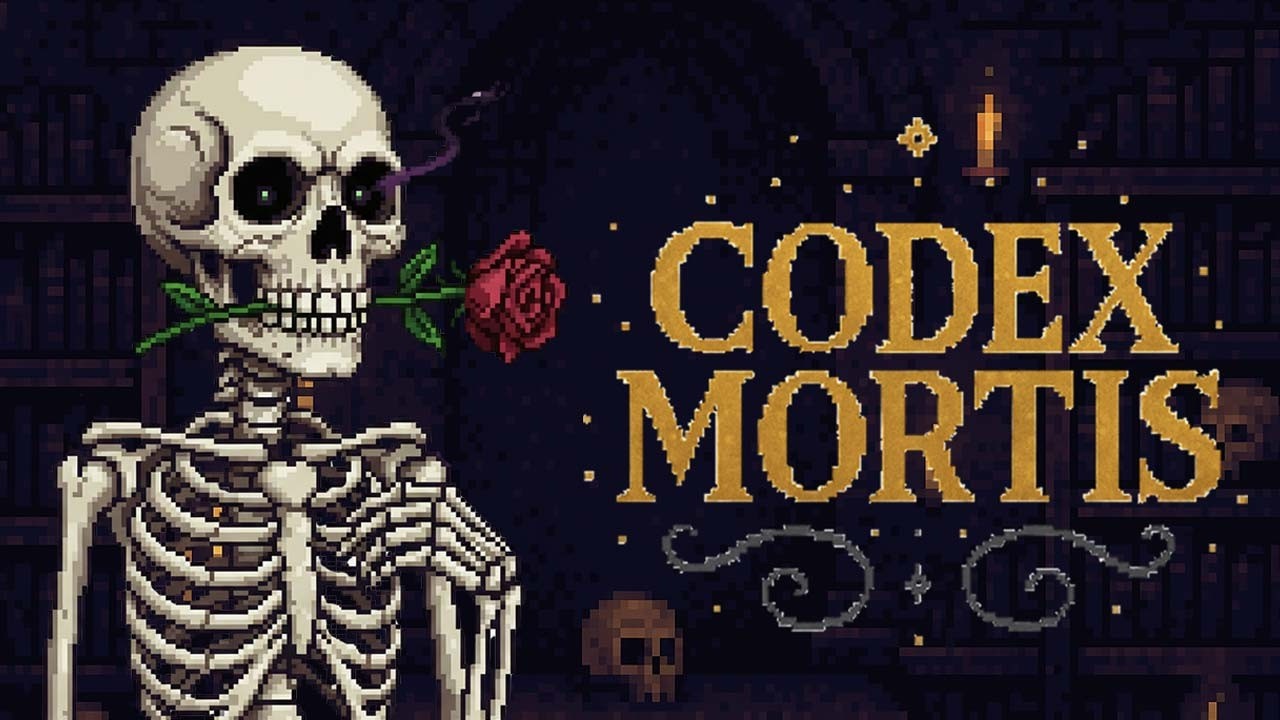
Codex Mortis – Necromantic Bullet Hell Survival Roguelike
Build spell synergies, command undead forces, and survive chaotic arenas in this AI-developed action roguelite
Codex Mortis is a survival bullet hell roguelike now available on Steam Early Access, featuring necromancy-based combat, deep build crafting, local co-op, and a fully AI-developed game pipeline.
Experiment with dark magic builds, unleash chaos, and discover how long your strategy can survive

CODEX MORTIS


Necromantic Survival and Bullet Hell Mechanics in Codex Mortis Undead Summoning, Spell Synergies, and Tactical Build Crafting Across Eight Levels
Codex Mortis structures gameplay around survival bullet hell mechanics with roguelike progression. Players assemble necromancers, select spells from five schools of magic, and plan builds to survive increasingly chaotic arenas. Each run demands tactical adaptation and strategic synergy, emphasizing both offense and defense in densely populated combat zones.
Procedural Levels and Environmental Interaction in Codex Mortis Dynamic Combat Arenas, Spell Combos, and Necromantic Challenges Across Eight Early Access Levels
Levels in Codex Mortis are procedurally generated, ensuring unique challenges for each run. Enemies, spell interactions, and battlefield hazards react dynamically, requiring players to experiment with necromancy, Blood Magic, and summoning synergies to overcome evolving threats and maximize survival. Environmental features influence tactical choices, creating opportunities for chain reactions and strategic corpse detonations.
Squad Composition and Spell Systems in Codex Mortis Necromancer Builds, Spell Combos, and Tactical Decision-Making in a Bullet Hell Roguelike
Players optimize squad composition from dozens of abilities across five magic schools. Tactical deployment, spell synergies, and resource management define progression. Procedural generation and level-specific objectives ensure every run tests adaptability and strategic foresight. Experimenting with combinations such as Necromancy plus Blood Magic or Curses plus Summoning generates emergent effects that are both visually impressive and tactically rewarding.
Co-op Gameplay and Strategic Synergy Local Co-Op Necromancer Builds and Collaborative Survival in Bullet Hell Arenas
Codex Mortis allows two-player local co-op, where collaborative strategy and spell coordination amplify the tactical depth. Players can combine abilities to create chain reactions or defensive zones, experimenting with complementary builds. Coordinated timing of summons, Blood Magic sacrifices, and strategic corpse detonations introduces emergent cooperative gameplay, increasing replayability and tactical variety.
Replayability and Progression Systems Procedural Levels, Spell Upgrades, and Tactical Variation Across Every Run
Replayability is a core design feature in Codex Mortis. Procedurally generated levels, coupled with unlockable spells, artifacts, and hero units, ensure that no two runs are alike. Players experiment with new combinations of abilities, adjusting builds to level objectives and enemy compositions. Progression systems allow upgrades to damage, cooldown, health, and speed, creating meaningful choice loops for repeated playthroughs.
Emergent Gameplay and Tactical Adaptation Dynamic Enemy Waves, Spell Reactions, and Adaptive Necromantic Strategies
Codex Mortis emphasizes emergent gameplay where environmental hazards, enemy waves, and player abilities interact unpredictably. Tactical adaptation is required for surviving sudden spikes in enemy density or mastering unique level objectives. Build planning before each run is essential, with success depending on foresight, synergy experimentation, and rapid response to evolving combat scenarios.
Narrative Through Mechanics and Necromantic Strategy Undead Command, Spellcraft Mastery, and Emergent Storytelling in Chaotic Bullet Hell Arenas
Codex Mortis conveys narrative through player-driven mechanics. Decisions on spell selection, corpse detonation, and army management shape each run’s unfolding story. Procedural encounters ensure emergent challenges, while necromantic strategy creates a coherent dark fantasy tone across all levels. Each choice contributes to the atmosphere and reinforces the survival challenge without relying on traditional dialogue or cutscenes.
Technical Architecture and Platform Support TypeScript PixiJS ECS Engine, Steam Deck Verified, and Performance in AI-Developed Bullet Hell Gameplay
Codex Mortis runs on Windows and SteamOS/Linux, leveraging a custom ECS engine built with TypeScript and PixiJS for high-density bullet hell performance. Official Steam Deck Verified support ensures optimized handheld gameplay, while procedural systems and AI-driven content maintain stable performance throughout Early Access. The architecture allows rapid iteration of new spells and levels without compromising frame rate or responsiveness.
AI-Assisted Development Insights Vibe Coding vs Vibe Engineering and the Pipeline Behind 100% AI-Generated Gameplay
Codex Mortis represents a practical implementation of 100% AI-developed game design. Initial rapid prototyping through “vibe coding” evolved into structured “vibe engineering,” where AI-generated systems were integrated with architectural constraints. This process demonstrates how AI-assisted development can produce robust gameplay systems, stable procedural generation, and scalable bullet hell mechanics while maintaining creative flexibility.
Genre Positioning and AI-Development Significance AI-Developed Necromantic Survival Bullet Hell, Action Roguelite, and Indie Steam Early Access 2026
Codex Mortis positions itself as a reference-level necromantic survival bullet hell and action roguelite, showcasing the capabilities of AI-assisted game development. With eight procedural levels, deep spell synergies, and local co-op play, it represents both a playable title and a study in 100% AI-generated game design for indie developers.
Final Verdict A Procedural Necromantic Bullet Hell Combining Strategy, Spell Synergies, and AI-Driven Design
Codex Mortis delivers a highly structured, procedural survival bullet hell experience built around necromancy, spell synergies, and tactical squad planning. Available now on Steam Early Access 2026 and Steam Deck Verified, it offers replayability, co-op engagement, and a clear demonstration of 100% AI-developed game systems executed with precision and depth.
The VoxOdyssey Project Mission Statement for Feature games
I highlight what makes each game unique by examining gameplay mechanics, design choices, and storytelling. By analyzing systems, level design, and play styles, and referencing official media and assets, I aim to provide accurate, informative, and trustworthy insights. While I strive for accuracy, some details may change or be updated over time. Players can use this information to understand each title’s features and mechanics and make their own judgments.
Codex Mortis – AI Bullet Hell, Necromancy Systems, and Tactical Build-Crafting Screenshots show spell synergies, 100% AI assets, squad management, and bullet hell chaos


Codex Mortis Trailer – Necromantic Bullet Hell, AI-Driven Spell Synergies, and Squad Tactics
Ready to raise some hell? Watch your skeleton squad turn the battlefield into a bone-shattering disco of doom. Check out the 100% AI-developed chaos and tactical corpse explosions in the trailer below!