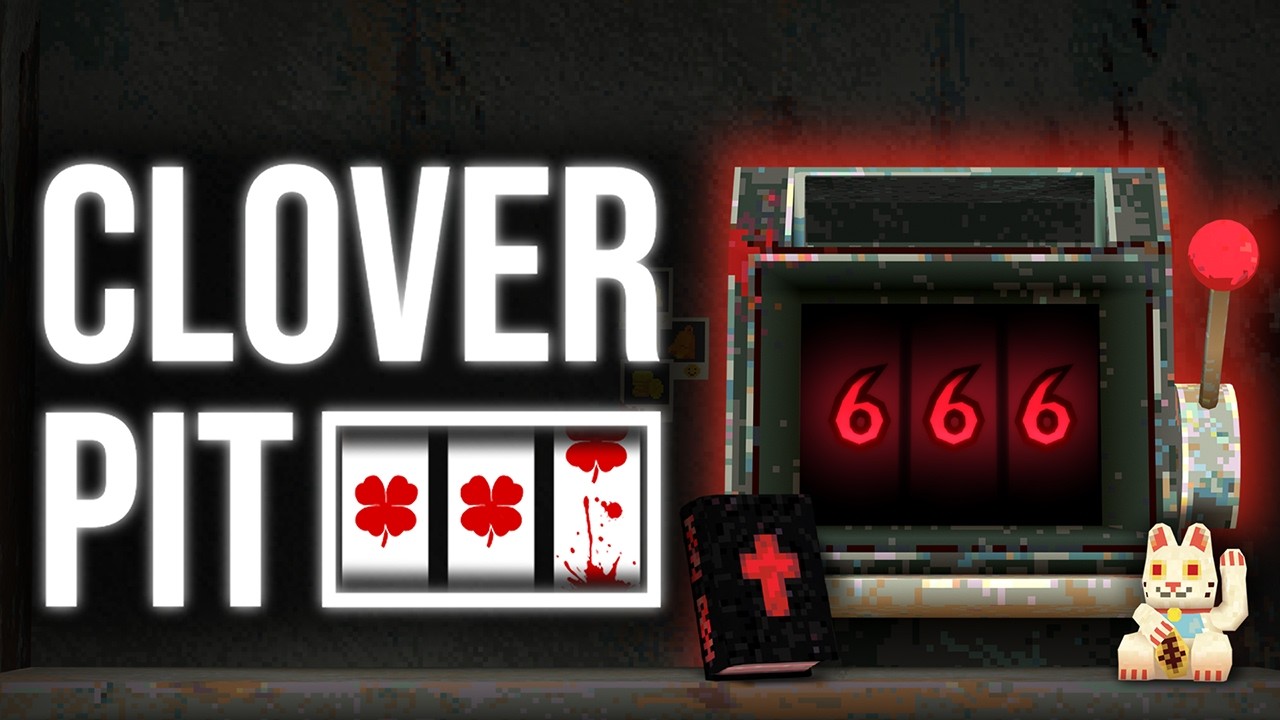
CloverPit – Roguelite Slot Machine Survival Horror
Manipulate a deadly slot machine, manage rising debt, and survive a psychological horror roguelite inside a locked cell
CloverPit is an indie roguelite survival game where players spin a slot machine to generate coins, build item synergies, and repay escalating debt inside a grim first-person cell. Strategy, probability control, and resource management determine whether each run ends in escape or collapse.
Pull the lever, test your luck, and see how long you can outsmart the machine

CloverPit


CloverPit Turns a Slot Machine Into a Survival Roguelite System Debt cycles, probability control, and psychological pressure define the core experience
CloverPit is a roguelite survival horror game developed by Panik Arcade and published by Future Friends Games. Built around a single confined environment, the experience places the player inside a locked cell with only a slot machine and a debt terminal as interactive systems. The core objective is consistent across runs: generate enough in-game currency through slot spins to repay escalating debt requirements before each cycle ends. The structure removes traditional exploration and instead focuses entirely on system manipulation, probability control, and resource management within a tightly controlled loop.
From Random Spins to Controlled Systems How item synergies transform probability into strategy
Early progression in CloverPit presents the slot machine as an unpredictable system driven by chance-based outcomes. Each spin produces coins, multipliers, or conditional effects depending on symbol alignment. As runs develop, items and modifiers begin to alter the underlying probabilities. These upgrades introduce layered interactions that allow symbols to trigger secondary effects, chain payouts, or modify future outcomes. The result is a gradual shift from reactive gameplay toward structured optimization, where players learn to engineer favorable results through accumulated system knowledge rather than relying on randomness alone.
Pressure, Silence, and Mechanical Feedback How sound and pacing reinforce survival tension
The sensory design of CloverPit emphasizes mechanical repetition and environmental restraint. The slot machine produces a consistent rhythmic clatter during spins, followed by a brief mechanical pause as results resolve. This pause becomes a critical tension point, especially when debt thresholds are close to completion. The surrounding cell remains visually static, placing full attention on the machine and the debt terminal. When failure occurs, the absence of reward feedback creates a noticeable drop in audio activity, reinforcing the consequences of risk-based decisions within the roguelite structure.
The Debt Terminal as a Constant Pressure Mechanic First-person framing intensifies resource management decisions
The debt terminal functions as the central pressure system within CloverPit. Displayed prominently within the confined room, it tracks required payments at the end of each round. The first-person perspective ensures that the player remains physically oriented toward this system throughout gameplay. As debt values increase, the visual prominence of the terminal reinforces the urgency of each decision. This framing transforms resource management into a spatial experience, where proximity to failure is constantly visible and cannot be ignored during strategic planning.
Item Synergies and the “Break the Machine” Moment When layered modifiers turn probability into predictable output
A defining structural element of CloverPit is the emergence of item synergies that significantly alter slot machine behavior. Certain combinations of modifiers interact to create cascading reward chains, where a single spin can trigger multiple dependent outcomes. These moments often represent a turning point in a run, where the system transitions from unstable probability to repeatable output patterns. Players begin to identify configurations that consistently generate surplus currency, effectively shifting the game from survival pressure into controlled exploitation of its mechanical systems.
How CloverPit Differs From Other Roguelite Systems A confined first-person structure versus abstract card-based design
Compared to other probability-driven roguelites, CloverPit emphasizes physical confinement and direct spatial framing. While games such as Balatro present mechanics through abstract interfaces, CloverPit situates its systems within a tangible 3D environment. The player remains fixed inside a single room, interacting with machines rather than navigating menus or external maps. This design choice alters the psychological tone of play, as mechanical decisions occur within an enclosed space where failure is visually and spatially immediate rather than abstracted through interface elements.
Risk Escalation and Run-Based Progression How meta-progression expands long-term strategic depth
CloverPit structures its long-term progression through roguelite systems that unlock new items, modifiers, and run variations. Each completed or failed run contributes to expanded system complexity in future attempts. Seeded runs allow controlled experimentation with specific configurations, enabling deeper analysis of item interactions. This structure supports repeated engagement by encouraging optimization across multiple iterations, where knowledge of system behavior becomes as important as immediate in-run decisions.
Final Verdict A tightly designed roguelite focused on controlled probability and psychological pressure
CloverPit establishes a focused interpretation of roguelite design built around a single mechanical system: a slot machine governed by modifiable probability rules. Developed by Panik Arcade and published by Future Friends Games, the game replaces traditional exploration and combat systems with a structured loop of debt repayment, resource management, and item synergy optimization. The confined first-person environment reinforces constant pressure, while the evolving interaction between modifiers and outcomes creates a layered strategic framework. As runs progress, the experience shifts from survival under uncertainty to deliberate system manipulation, where understanding mechanical interactions becomes the primary path to success. The result is a roguelite structure that prioritizes controlled experimentation, resource efficiency, and mechanical mastery within a psychologically constrained environment.
The VoxOdyssey Project Mission Statement for Feature games
I highlight what makes each game unique by examining gameplay mechanics, design choices, and storytelling. By analyzing systems, level design, and play styles, and referencing official media and assets, I aim to provide accurate, informative, and trustworthy insights. While I strive for accuracy, some details may change or be updated over time. Players can use this information to understand each title’s features and mechanics and make their own judgments.
CloverPit Gameplay Screenshots from Roguelite Slot Machine Runs Debt cycles, item synergies, and first-person survival inside a locked cell


CloverPit Gameplay Trailer – Roguelite Slot Machine Horror in Motion
Step into a confined cell where every spin matters. This trailer shows CloverPit’s slot machine survival loop, item synergies, and rising debt pressure. Watch how each run unfolds, then explore more in the video below.