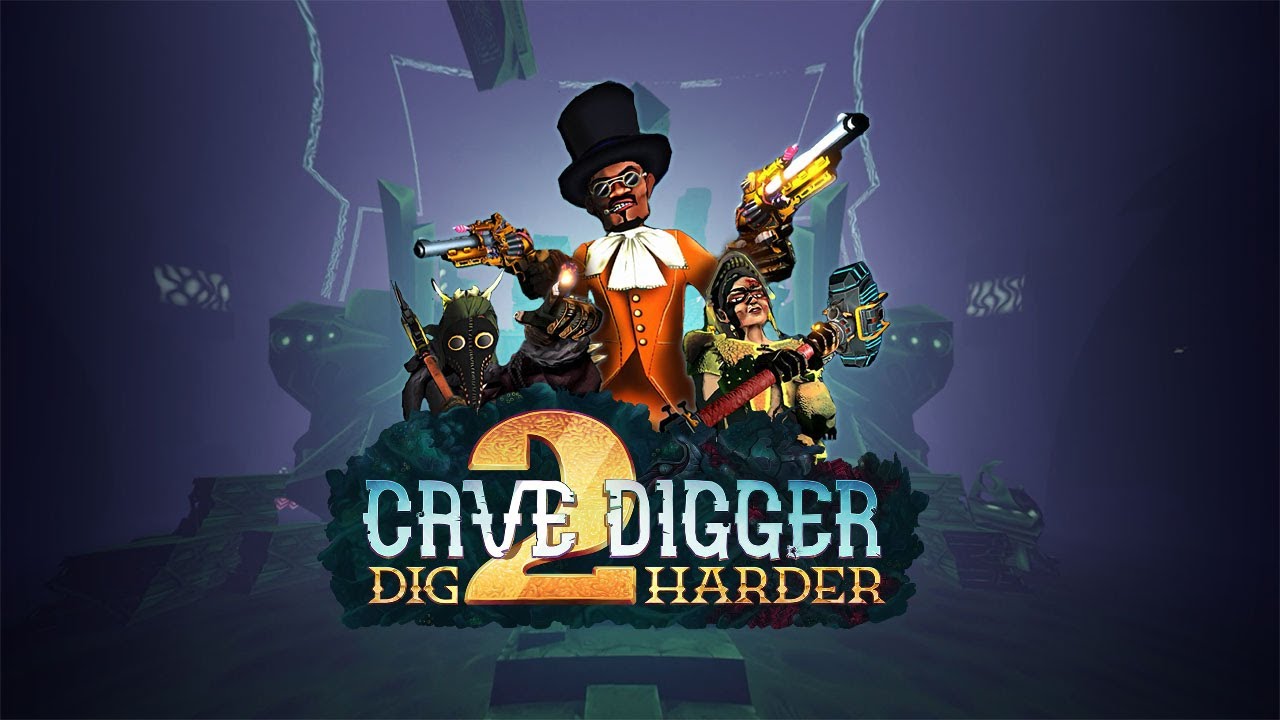
Cave Digger 2: Dig Harder VR Co-Op Mining Adventure
Explore procedural caves, uncover hidden mysteries, and mine for loot in a Weird West VR world
Cave Digger 2: Dig Harder is a first-person VR action-adventure featuring cooperative mining, procedural cave exploration, loot progression, and a mystery-driven story set across Western, dieselpunk, and Lovecraftian-inspired environments.
Grab your pickaxe and see what secrets lie beneath the frontier

Cave Digger 2 Dig Harder


A structured VR co-op mining system built around repeatable cave runs, resource extraction loops, and shared progression cycles Gameplay focuses on digging, upgrading tools, and coordinating cooperative mining expeditions across procedural environments
Cave Digger 2: Dig Harder is a VR Action-Adventure developed and published by VRKiwi, built around repeatable mining expeditions where players enter cave systems, collect resources, and return to surface hubs to upgrade equipment. The overall structure is designed around short-to-medium gameplay loops, making it suitable for co-op focused VR sessions where progression is tied directly to how efficiently each run is completed.
The game uses a Unity-based development framework commonly found in VR titles, supporting stable performance across both PCVR and standalone headsets. This allows the core gameplay loop to remain consistent across different platforms, with visual and performance scaling helping maintain smooth movement and interaction during mining, traversal, and combat encounters with environmental hazards.
Interaction is built around VR-standard input systems, meaning tool usage such as pickaxe swings, explosive placement, and object handling feels consistent across supported headsets. The control scheme prioritizes simple physical actions, making it easy to learn while still requiring timing and positioning when working through tougher cave sections or shared co-op objectives.
Multiplayer supports up to four players in cooperative sessions, with crossplay between VR and non-VR platforms. In practice, this creates flexible group play where players naturally split tasks such as digging, carrying resources, and managing threats, especially during longer mining runs where efficiency becomes more important than exploration.
Progression built around upgrades, resource collection, and repeat mining runs Long-term progress comes from improving tools and increasing expedition efficiency over time
Progression is based on a simple but effective loop where resources collected during expeditions are exchanged for currency and used to upgrade tools and equipment. These upgrades gradually improve mining speed, carrying capacity, and overall efficiency, encouraging players to repeat runs in order to push deeper into more valuable areas.
The system avoids complex skill trees and instead focuses on steady improvement through repeated play. Inventory management is partly automated, helping players focus more on movement, digging, and co-op coordination rather than constant item sorting. This keeps the pace steady during longer sessions.
Overall, progression is designed to support repetition rather than experimentation. Players improve by refining how they run each expedition, learning which tools work best and how to maximise returns from each cave run.
Procedural caves designed for replayability and easy navigation in VR Layouts change between runs while still keeping structure clear and readable
The cave system is procedurally generated using modular layouts, meaning each run feels slightly different while still following familiar structural patterns. This helps maintain readability in VR, where clear navigation and spatial awareness are important for comfort and movement.
Over longer play sessions, some repetition in cave shapes and layouts becomes noticeable due to the limited pool of environmental building blocks. However, this trade-off helps keep performance stable and ensures the game runs smoothly across different VR platforms.
The result is a system that prioritises consistent gameplay flow and VR comfort over fully unpredictable environments, making each expedition feel structured even when layouts change.
Co-op gameplay built around shared mining roles and flexible teamwork Players naturally coordinate tasks during expeditions without fixed class systems
Co-op gameplay supports up to four players working together in shared mining expeditions. Instead of fixed roles, players naturally divide responsibilities such as digging tunnels, transporting resources, and handling hazards as they appear during each run.
Crossplay support allows VR and non-VR players to join the same sessions, which helps keep multiplayer active and accessible. This flexible structure makes it easy for groups to adjust their approach depending on team size and experience level.
The overall co-op experience is shaped more by coordination and timing than strict systems, encouraging communication and shared decision-making during deeper cave runs.
Weird West setting built around mining towns, underground caves, and environmental storytelling Story elements are delivered through exploration and collectible narrative fragments
The game is set in a Weird West inspired frontier world that blends mining culture, industrial equipment, and light supernatural themes. Most of the experience takes place underground, while surface hubs act as places to upgrade gear and prepare for the next expedition.
Storytelling is mostly environmental, supported by collectible comic pages that reveal parts of the world’s background. Instead of cutscenes or heavy narrative sequences, the story unfolds gradually through exploration and discovery during regular gameplay.
This approach keeps the focus on the mining loop while still giving context to the world and its setting.
Technical limits shaped by procedural repetition, collision edge cases, and multiplayer synchronization Design choices prioritise smooth VR performance and stable co-op sessions over maximum complexity
Some procedural cave layouts can produce occasional collision issues where generated structures do not perfectly align, which can affect movement in tight or fast-paced situations.
In multiplayer sessions, especially with heavy use of explosives or multiple players interacting with the same environment, short delays in synchronization can sometimes appear. These moments are typically brief and resolve as the session continues.
Over time, repetition in cave layouts becomes more noticeable due to the limited variety of generated assets. This is a common trade-off in VR games that prioritise performance stability and consistent frame rates across different hardware setups.
Final verdict A structured VR mining co-op focused on repeatable cave runs, steady progression, and accessible multiplayer gameplay
Cave Digger 2: Dig Harder delivers a VR co-op mining experience built around simple but effective gameplay loops. Players repeatedly enter caves, collect resources, upgrade tools, and improve efficiency over time, creating a progression system based on repetition rather than complexity.
Its strengths lie in accessible co-op design, stable VR performance, and clear gameplay structure that works well for short or extended sessions. While procedural variety and long-term depth are limited by design, the core loop remains consistent and easy to understand.
Overall, the game stands as a straightforward VR mining and co-op experience where progression, teamwork, and repeatable expeditions form the foundation of long-term engagement.
The VoxOdyssey Project Mission Statement for Feature games
I highlight what makes each game unique by examining gameplay mechanics, design choices, and storytelling. By analyzing systems, level design, and play styles, and referencing official media and assets, I aim to provide accurate, informative, and trustworthy insights. While I strive for accuracy, some details may change or be updated over time. Players can use this information to understand each title’s features and mechanics and make their own judgments.
Cave Digger 2: Dig Harder screenshots show VR co-op mining gameplay in action Exploring caves, collecting resources, and upgrading tools in procedural underground worlds


Cave Digger 2: Dig Harder Trailer – VR Mining, Co-Op Adventures, and Hidden Secrets
See Cave Digger 2: Dig Harder in motion as mining expeditions, cooperative gameplay, strange discoveries, and underground dangers unfold. The trailer below offers a closer look at the Weird West world, progression systems, and the mysteries waiting beneath the surface.