The Executive – Movie Studio Simulator & Hollywood Tycoon Game
Film production management and economy strategy simulation spanning 1970s Hollywood to modern studio empires
The Executive is a sandbox Hollywood tycoon game focused on film production management, franchise building, and studio expansion. Players control budgets, casting, distribution, and long-term studio growth across decades of evolving cinema economics.
Build your studio, greenlight films, and scale your Hollywood empire

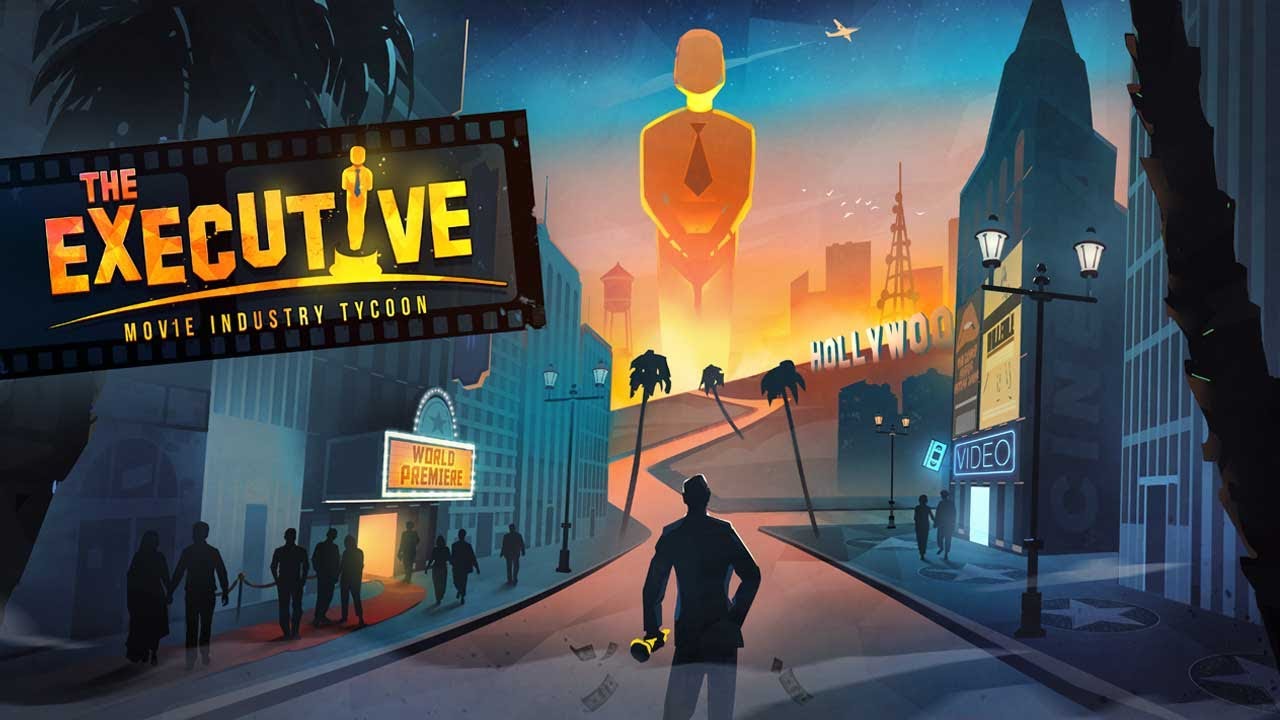
The Executive - Movie Industry Tycoon


A Hollywood studio simulation where production quotas shape every strategic decision cycle Film production management, franchise scaling, and economic pressure define studio survival
The Executive: Movie Industry Tycoon is a Management and Simulation title developed by Aniki Games and published by Goblinz Publishing alongside Maple Whispering Limited. It operates as a sandbox Hollywood tycoon game where players oversee a growing film studio from its early-stage formation in the 1970s through to modern multi-franchise entertainment empires. The structure is built around economy strategy systems that simulate production risk, capital allocation, and long-term intellectual property development rather than linear narrative progression. Each decision is tied to financial and creative constraints that shape studio stability over multiple decades of simulated industry evolution.
Film production systems built on casting, budgets, and theatrical distribution logic Every project functions as a controlled economic simulation of Hollywood filmmaking
At its core, the game implements a detailed film production management loop where genre selection, script development, casting decisions, and budget allocation interact as interconnected variables. A low-budget horror production aimed at niche audiences may require careful balancing of production costs and talent quality to avoid negative ROI decay once theatrical release begins. In contrast, large-scale blockbuster productions depend heavily on P&A (Print and Advertising) investment, release window optimization, and distribution agreements to secure wide market penetration. These systems reflect a structured economy simulation where each film operates as a discrete financial model subject to risk, timing, and audience demand fluctuations.
Franchise expansion introduces long-term Capitalism-driven studio strategy systems Sequels, spin-offs, and audience fatigue mechanics regulate intellectual property growth
Franchise development is a central pillar of long-term studio growth, transforming successful films into scalable intellectual property networks. Sequels, prequels, and spin-offs generate recurring revenue streams but also introduce diminishing returns through audience fatigue mechanics that reduce profitability when overexploited. Strategic pacing becomes essential, as poorly timed releases can weaken brand equity and reduce future earning potential. This system introduces Capitalism-based decision pressure where short-term revenue optimization must be balanced against long-term franchise sustainability, reinforcing the game’s emphasis on structured economic simulation over purely creative production.
Distribution, marketing, and back catalog systems shape studio-wide financial ecosystems Theatrical windows and licensing deals define long-term revenue structure
Beyond production, the game models distribution systems that govern how films reach audiences and generate revenue over time. Players negotiate theatrical release timing, manage marketing budgets, and evaluate distributor partnerships to optimize box office performance. Home entertainment licensing and back catalog monetization extend revenue cycles beyond initial release, creating layered income structures based on historical performance. These systems simulate opportunity cost management and ROI scaling across multiple revenue channels, reinforcing the economic depth of the studio simulation framework. Strategic use of distribution windows becomes critical when competing against rival studio outputs within the same simulated market cycle.
Studio scaling introduces infrastructure growth and late-game production complexity Building upgrades, research systems, and staffing expansion define industrial progression
As the studio expands, players invest in infrastructure upgrades, talent acquisition, and research systems that unlock advanced production capabilities. This includes improved office facilities, enhanced casting networks, and technology upgrades that influence production efficiency and output quality. Late-game simulation introduces simultaneous multi-project management, requiring oversight of overlapping production pipelines, marketing campaigns, and distribution schedules. The increasing complexity reflects a scaling economy simulation where operational efficiency becomes as important as creative decision-making, particularly during high-output studio phases in later decades of gameplay progression.
Interface design prioritizes 2D isometric clarity and management efficiency Point & Click systems support large-scale studio data organization
The user interface is built around a 2D isometric-inspired management layout designed for high-density information processing. Point & Click navigation structures allow players to transition between screenplay development, casting sheets, financial dashboards, and distribution tools without excessive workflow friction. While the system maintains strong readability during early studio phases, complexity increases significantly as multiple productions operate simultaneously. This creates a layered UX environment where information scaling becomes a key challenge in late-game management, particularly when balancing franchise networks and overlapping release schedules.
Final verdict A structured Hollywood tycoon game focused on economic simulation and franchise strategy depth
The Executive: Movie Industry Tycoon functions as a focused Management and Simulation experience centered on film production management, economy strategy systems, and long-term studio growth. Its design prioritizes structured economic modeling over narrative framing, using franchise expansion, distribution timing, and production budgeting as core gameplay pillars. The combination of sandbox progression, capital allocation systems, and multi-decade industry simulation positions it within a niche subset of Hollywood tycoon games that emphasize operational depth over cinematic abstraction. Within the broader simulation genre, it aligns most closely with systems-driven strategy titles that prioritize economic causality, modular decision-making, and scalable organizational management across extended gameplay timelines.
The VoxOdyssey Project Mission Statement for Feature games
I highlight what makes each game unique by examining gameplay mechanics, design choices, and storytelling. By analyzing systems, level design, and play styles, and referencing official media and assets, I aim to provide accurate, informative, and trustworthy insights. While I strive for accuracy, some details may change or be updated over time. Players can use this information to understand each title’s features and mechanics and make their own judgments.
The Executive screenshots show Hollywood studio management and film production systems Casting, budgets, franchises, and distribution planning across a simulation timeline


The Executive Trailer – Hollywood Studio Simulation and Film Production Management Gameplay
Watch The Executive in action as players build a Hollywood studio, manage casting decisions, control budgets, and plan film releases across a growing entertainment empire. The trailer below shows franchise systems, distribution strategy, and production management in motion.

Stay connected with The Executive - Movie Industry Tycoon