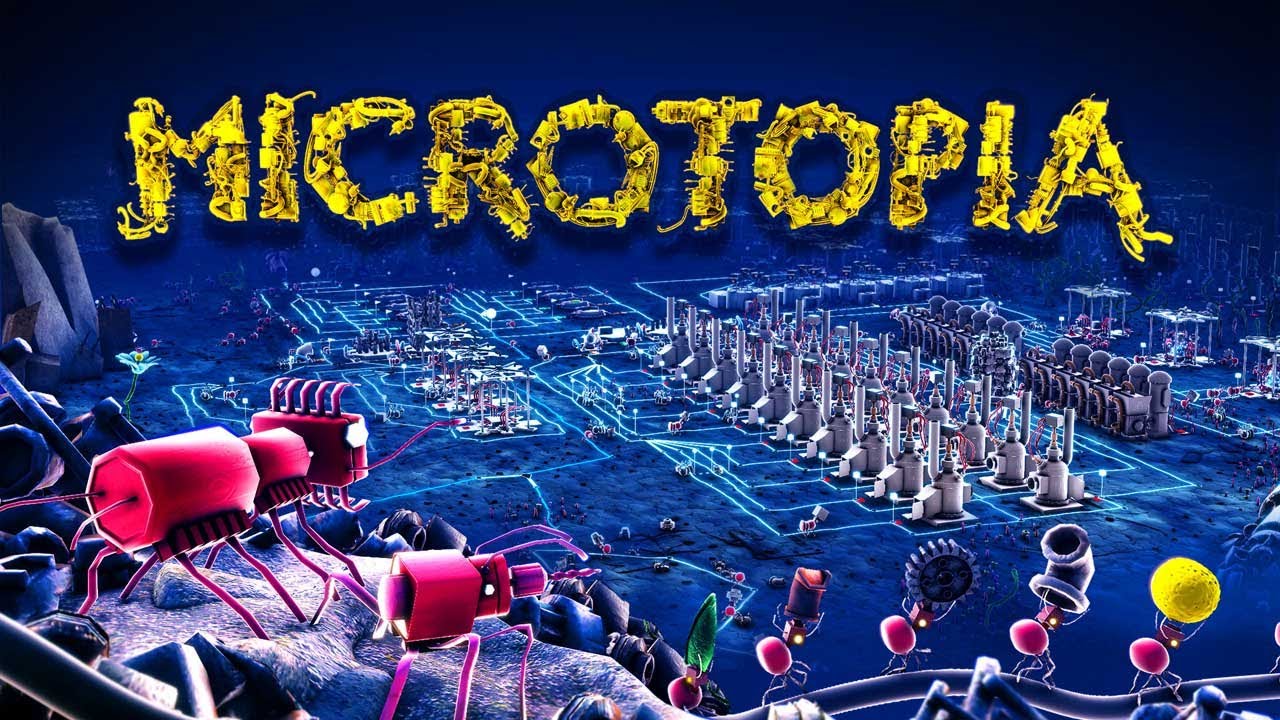
Microtopia – Robot Ant Colony Automation Strategy Review
Robot ant colony simulation focused on logistics, automation systems, and expanding resource networks across shifting environments
Microtopia is a 2025 PC automation strategy game where players manage a robot ant colony built around pheromone routing, logic wire networks, and resource chains like Copper Scrap, Polymer, and Silicon. Developed by Cordyceps Collective and published by Goblinz Publishing and Gamera Games, it focuses on scaling production systems while adapting to environmental and logistical constraints.
Start small, build your colony, and see how quickly one bad route can reshape everything

Microtopia


Microtopia builds automation around a robot ant colony system A logistics-first strategy game focused on routing, production, and survival pressure
Microtopia is a 2025 PC automation strategy game developed by Cordyceps Collective and published by Goblinz Publishing and Gamera Games. The game centers on managing a robot ant colony operating inside a fragmented electronic waste environment where every decision affects long-term system stability.
Instead of traditional base building, progression is driven by infrastructure design. Copper Scrap, Polymer, and Silicon form the backbone of production chains, and each must be routed through increasingly complex systems that connect collection, processing, and storage into a single continuous flow.
Early colony setup focuses on basic resource flow Small routing decisions quickly shape long-term efficiency
The early game begins with limited worker capacity and simple collection paths. At this stage, Copper Scrap and Polymer are gathered and transported back to a central hub, where initial processing systems are established.
Even at this scale, layout decisions matter. Tight terrain in the electronic waste environment forces overlapping paths, and once those routes are established, they tend to persist into later stages of the colony.
Scaling the colony introduces system-wide pressure Copper Scrap, Polymer, and Silicon begin competing for shared logistics space
As production expands, Microtopia shifts from simple routing into full logistics management. Once multiple materials operate simultaneously, the system begins to show strain at shared junction points and storage hubs.
When the colony grows beyond several hundred units, inefficiencies are no longer isolated. A single overloaded Copper Scrap route can slow Polymer processing and delay Silicon output across unrelated zones.
How pheromone routing changes colony behavior Paths become living traffic systems rather than fixed routes
Microtopia pheromone routing logic uses a grid-based placement system where players draw paths directly onto the map. These paths act as behavioral guidance rather than strict commands.
In practice, this means ants constantly evaluate overlapping routes. When Copper Scrap and Polymer share intersections, traffic density increases, and movement begins to slow as units cluster around high-use nodes.
Logic networks add a second layer of control Sensors and wire connections automate routing decisions across the grid
The logic system is built around sensors, storage detectors, and diverter gates placed on a dedicated grid overlay. These components are connected using wire links that transmit signals across production zones.
In practical use, this allows overflow management. When a Silicon storage hub fills, a sensor triggers a wire-connected diverter that reroutes incoming resources to secondary Polymer processing lines.
However, performance depends heavily on placement. If signal distance becomes too large, timing gaps appear between detection and execution, causing ants to follow outdated routes temporarily.
Worker castes change how the colony uses space Flying and digging units reshape logistics routes across terrain
Microtopia worker castes, flying ants, digger variants introduce structural differences in movement rather than simple upgrades. Each caste interacts with terrain in a distinct way.
Digger units allow Copper Scrap and Polymer to be moved through underground routes, reducing pressure on surface-level congestion. Flying ants bypass terrain entirely and travel directly to distant Silicon deposits.
The limitation is energy management through Sugar Analogue consumption. Without properly placed refueling points, flying units stall mid-route, disrupting supply chains.
Colony survival depends on worker lifespan management Decay and replacement cycles create continuous production pressure
A key structural mechanic in Microtopia is the finite lifespan of robot ants. Units gradually decay and eventually expire, making workforce maintenance an ongoing requirement rather than a passive system.
If Copper Scrap, Polymer, or Sugar Analogue supply chains slow down, the Queen’s production rate drops. This leads to delayed replacements and visible population decline across active logistics routes.
Unlike instant failure systems, breakdown happens gradually. Entire sections of the colony lose efficiency as expired workers are not replaced at the same rate they disappear.
Final verdict A systems-driven automation strategy game built on fragile logistics at scale
Microtopia is a robot ant colony automation strategy game where success depends on designing systems that remain stable under increasing scale. Its core loop revolves around routing Copper Scrap, Polymer, and Silicon through interconnected production networks.
Developed by Cordyceps Collective and published by Goblinz Publishing and Gamera Games, it stands out in the automation strategy genre through its combination of pheromone routing, logic networks, caste-based movement systems, and worker lifespan decay.
The defining design feature is how quickly early decisions compound into long-term constraints. Once the colony reaches mid to late scale, every routing decision becomes part of a larger dependency chain.
Overall, Microtopia delivers a structured automation experience where logistics design, system stability, and survival pressure are tightly linked across the entire colony lifecycle.
The VoxOdyssey Project Mission Statement for Feature games
I highlight what makes each game unique by examining gameplay mechanics, design choices, and storytelling. By analyzing systems, level design, and play styles, and referencing official media and assets, I aim to provide accurate, informative, and trustworthy insights. While I strive for accuracy, some details may change or be updated over time. Players can use this information to understand each title’s features and mechanics and make their own judgments.
Microtopia gameplay screenshots showing robot ant colony automation systems Pheromone routing, logistics chains, and expanding resource networks


Microtopia trailer – robot ant colony automation and logistics gameplay
Watch Microtopia in action as a robot ant colony expands across scrap-filled terrain. See pheromone routing, resource transport, and logic-based automation systems working together as the colony scales. The video below shows how each system connects under pressure as production grows.