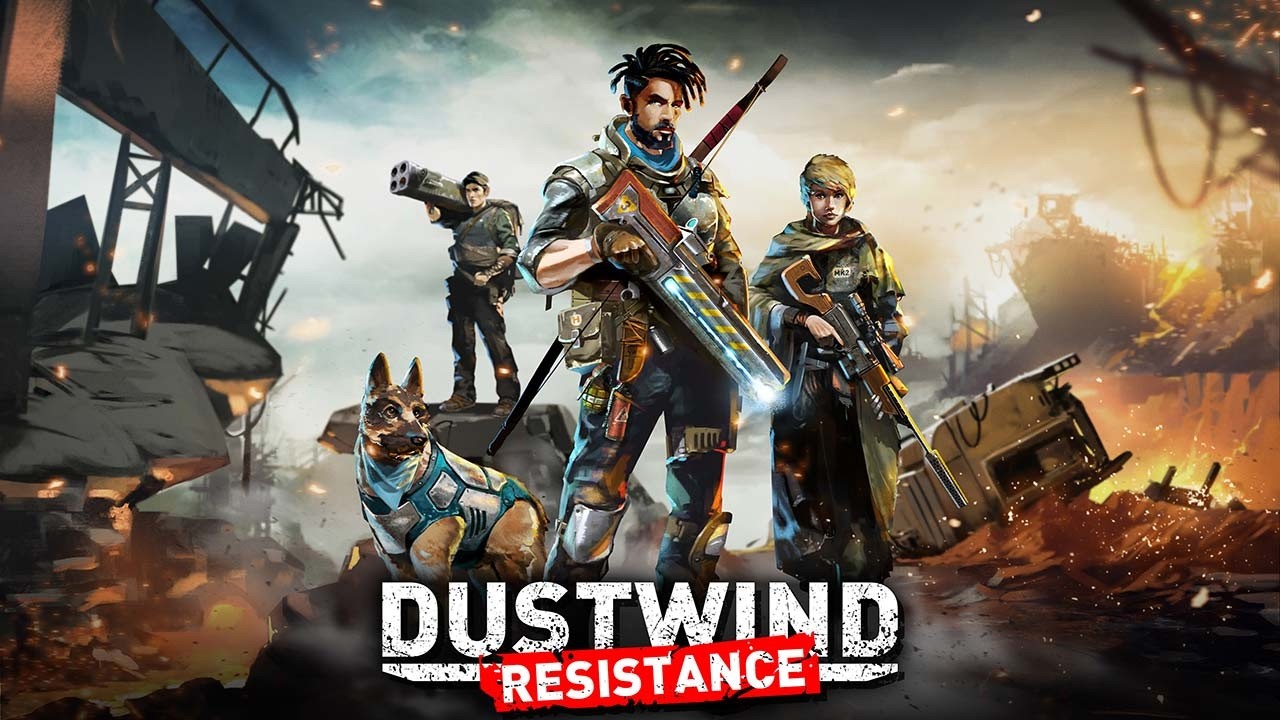
Dustwind: Resistance – Real-Time Tactical Squad Combat in a Post-Apocalyptic War
Lead a resistance squad in RTwP tactical combat, balancing stealth, firepower, and survival strategy
Dustwind: Resistance is a single-player real-time tactics experience set in a post-apocalyptic world, where squad management, tactical pause control, and resource pressure define each mission. Command a resistance unit through structured encounters focused on survival, positioning, and combat efficiency.
When every decision counts, can your squad hold the line against the raider advance?

Dustwind Resistance


Holding the line in Dustwind: Resistance feels like controlled chaos rather than pure action A real-time with pause tactical structure built around squad survival and decision pressure
Dustwind: Resistance (2026), developed and published by Z-Software GmbH, is a single-player real-time tactics experience set in a post-apocalyptic environment where structured encounters define progression. Instead of open exploration or abstract strategy layers, the design focuses on mission-based deployments where the player-character leads a resistance squad through tightly framed combat scenarios. Each engagement is built around positioning, resource control, and timing, with the tactical pause system acting as the core mechanism for maintaining situational control. The overall structure aligns with tactical RPG design principles while incorporating action RPG responsiveness in moment-to-moment combat execution. The experience is shaped around survival pressure rather than power fantasy, where small positioning errors can cascade into mission failure if not corrected through careful command input and tactical reassessment.
You quickly realize every pause is there for a reason, not convenience RTwP combat creates deliberate pacing where movement, accuracy, and timing are constantly evaluated
The real-time with pause (RTwP) combat system in Dustwind: Resistance is not a passive planning layer but an active requirement for survival. Combat situations frequently escalate into multi-angle threats where enemy positioning forces rapid reassessment of squad behavior. Jake, the former farmer turned resistance leader, serves as the primary controllable unit on the field, often positioned between direct engagement and support coordination. His actions must be balanced against Diesel, the squad’s highly versatile companion unit. Diesel operates as more than a combat pet, functioning as a mechanical Swiss-army style support unit capable of detecting environmental hazards such as mines, interacting with tactical objects, and assisting allies through item-based support actions. This dual-control structure creates constant decision layering, where player attention is split between frontline survival and utility management under pressure.
Shooting on the move sounds simple until the hit chance drops and things go wrong fast Combat reliability is shaped by hit chance penalties, visibility constraints, and reactive enemy design
One of the defining mechanical pressures in Dustwind: Resistance comes from its handling of accuracy and movement interaction. Firing while repositioning introduces a noticeable hit chance penalty, reinforcing a stop-and-execute rhythm rather than continuous mobile firing. This system encourages deliberate positioning before engagement, especially in open environments where exposure directly impacts survival outcomes. Enemy units, particularly snipers, introduce additional tension through indirect visual signaling rather than explicit targeting markers. A faint red aura may indicate threat presence, requiring immediate player interpretation and rapid defensive repositioning. This design choice increases tactical friction by reducing certainty, forcing reliance on environmental reading and reaction timing rather than guaranteed information.
Diesel ends up being the most useful squadmate when things start falling apart Inventory handling, hazard detection, and support actions converge into a single companion system
Diesel’s role extends significantly into tactical logistics, functioning as both a combat participant and a field utility system. Beyond direct engagement, the companion can interact with environmental threats, assist in disarming or detecting traps, and support the squad through item-based actions when resources are limited. This creates a layered dependency where survival is not only determined by direct combat efficiency but also by how effectively Diesel is integrated into moment-to-moment decision-making. The presence of this system reduces downtime between engagements, as utility functions are distributed across the squad rather than isolated in static menu interactions, reinforcing the game’s emphasis on real-time tactical continuity.
The armored car becomes less of a vehicle and more of a moving storage strategy Inventory flow and battlefield logistics are shaped by limited carry capacity and vehicle storage use
Resource management in Dustwind: Resistance is closely tied to spatial logistics through the use of an armored vehicle that functions as a mobile storage unit. On-foot squad members face strict inventory limitations, which forces frequent transfer of weapons, ammunition, and salvaged materials into the vehicle during mission progression. This creates a cyclical rhythm of scavenging and consolidation, particularly in dense combat environments such as ruined settlements and contested wasteland routes. The armored car becomes a strategic anchor point, allowing sustained field operations without immediate return to base systems. However, its presence also introduces vulnerability, as leaving it undefended can result in loss of critical resources and reduced operational capacity mid-mission.
Missions feel like connected tactical puzzles rather than open-world wandering Progression is defined by controlled objectives and escalating battlefield complexity
The campaign structure is built around linear mission progression, where each scenario introduces new tactical constraints rather than open-ended exploration. Encounters are designed as discrete engagements that escalate in complexity through enemy density, environmental hazards, and objective layering. Early missions focus on controlled skirmishes and basic positioning, while later scenarios introduce multi-front engagements requiring simultaneous management of stealth, suppression, and defensive fallback strategies. Squad composition, including specialized roles such as Amanda in long-range support and Diego in heavy frontline engagement, contributes to tactical variation without altering the underlying mission structure. This ensures that progression remains readable while still increasing mechanical demand over time.
There’s always more than one way to handle a fight, but none of them are easy Multiple engagement styles coexist within a single reactive combat system
Combat flexibility in Dustwind: Resistance is defined by the coexistence of stealth approaches, direct confrontation, and environmental manipulation. Players can choose between silent eliminations using melee tools, structured ambush setups using traps and turrets, or direct ranged engagements supported by squad coordination. These approaches are not isolated systems but interconnected layers within the same tactical framework, where enemy awareness and positioning influence the effectiveness of each method. The inclusion of deployable structures further expands defensive options, allowing temporary control of battlefield zones during high-pressure encounters. This system reinforces the game’s identity as a tactical RPG hybrid with action-oriented execution.
Every new map forces you to rethink what “good positioning” actually means Map variation directly affects positioning, engagement flow, and resource distribution
Environmental structure in Dustwind: Resistance is shaped by procedural layout variation, which alters how each mission space functions tactically. Resource placement, cover distribution, and traversal routes differ across deployments, requiring continuous adjustment of strategy rather than reliance on fixed optimal paths. This system reinforces adaptive planning, as previously successful formations may lose effectiveness in differently structured environments. Terrain design plays an active role in shaping engagement flow, ensuring that positioning decisions remain context-dependent throughout the campaign. The result is a consistent requirement for spatial awareness and iterative tactical refinement across missions.
Once everything clicks, the system feels less like commands and more like control A structured tactical RPG built on RTwP control, squad dependency, and survival-driven mission design
Dustwind: Resistance presents a focused interpretation of real-time tactics within a post-apocalyptic framework, emphasizing controlled engagement rather than unrestricted action. Its RTwP combat system, squad-based structure, and layered resource management create a consistent loop of planning and execution where every decision carries measurable consequences. The integration of utility-driven companion mechanics, particularly through Diesel, adds functional depth to survival scenarios, while inventory and vehicle systems introduce logistical considerations that extend beyond direct combat. Mission-based progression ensures a clear structural rhythm, supported by procedural environments that maintain variability across encounters. As a tactical RPG with action RPG elements and isometric presentation, it prioritizes clarity of systems, deliberate pacing, and methodical engagement design over narrative expansion or open-world freedom.
The VoxOdyssey Project Mission Statement for Feature games
I highlight what makes each game unique by examining gameplay mechanics, design choices, and storytelling. By analyzing systems, level design, and play styles, and referencing official media and assets, I aim to provide accurate, informative, and trustworthy insights. While I strive for accuracy, some details may change or be updated over time. Players can use this information to understand each title’s features and mechanics and make their own judgments.
Dustwind: Resistance Screenshots Show Squad Combat Across a Broken Wasteland RTwP tactics, Diesel support, and armored car logistics in action


Dustwind: Resistance Trailer – Squad Tactics, RTwP Combat, and Wasteland Survival
Watch Dustwind: Resistance in action as squad positioning, real-time with pause commands, and Diesel’s support shape every encounter. See how tactical decisions unfold under pressure, then view the full trailer below for more gameplay detail.