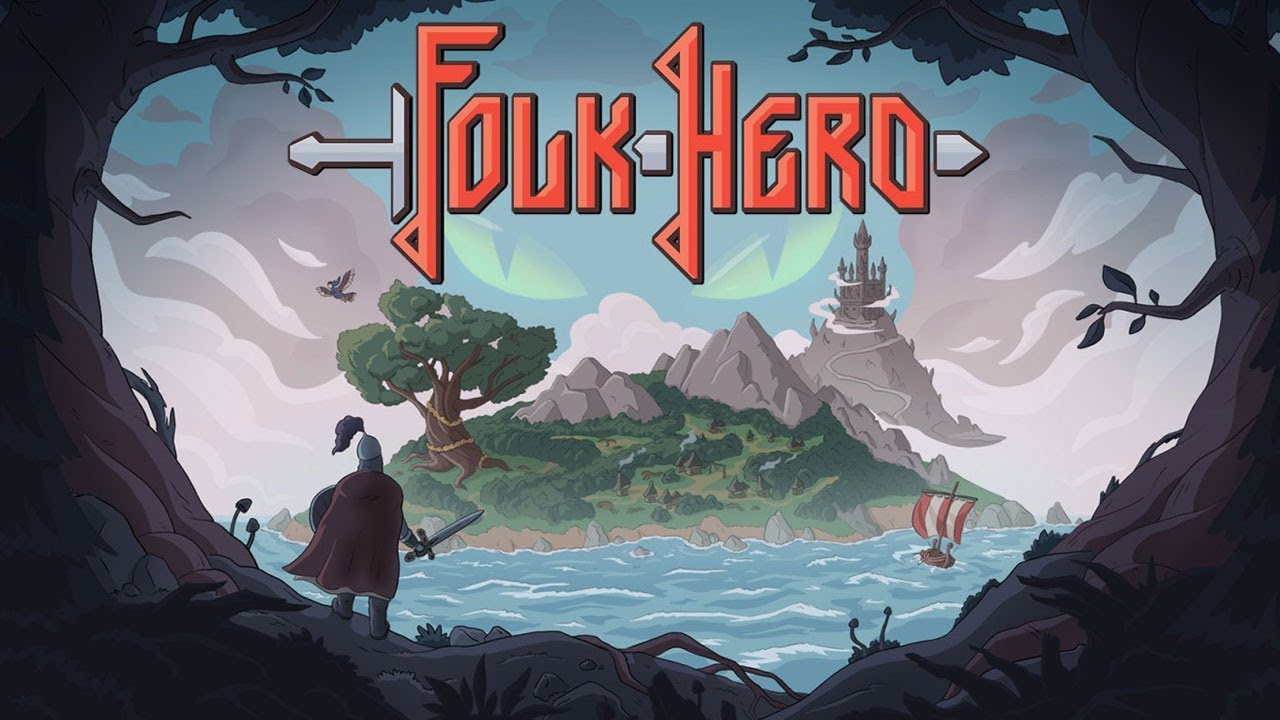
Folk Hero PC & Switch Review – Slavic Roguelite Action Combat Guide
In-depth look at Folk Hero on Steam and Nintendo Switch, focusing on Slavic mythology, roguelite combat systems, and rune-based progression
Folk Hero is a roguelite action game by Chudo-Yudo Games featuring Slavic mythology, isometric combat, procedural island exploration, and permanent death systems. Players fight mythological creatures while building rune-based weapon setups across PC and Nintendo Switch versions.
Enter Buyan Island and uncover how far a single run can take a fallen hero before death reshapes everything

Folk Hero


Folk Hero’s identity is built around controlled risk rather than spectacle Slavic mythology frames a system-first roguelite structure
Folk Hero is a roguelite action game developed by Chudo-Yudo Games and distributed on PC via Steam, with a later Nintendo Switch release published by Smart Space Solutions. Its structure is built around repeated expeditions into Buyan Island, where progression is shaped through permadeath, rune systems, and procedural environments rather than scripted narrative flow.
The core design direction prioritises mechanical consistency. Combat encounters are constructed around timing windows, positional control, and resource management rather than sustained offensive pressure. This positions the game closer to methodical action systems than fast arcade-style roguelites.
Class structure defines early pacing, not long-term identity Recruit, Rogue, and Archer set different combat entry conditions
Character selection begins with three baseline classes: Recruit, Rogue, and Archer. Each class modifies how early encounters are approached rather than locking the player into rigid roles. The Recruit stabilises early survival through balanced attributes, the Rogue shifts emphasis toward mobility and short engagement cycles, and the Archer restructures combat around distance control and spacing discipline.
These distinctions matter most in early progression where resource scarcity defines encounter outcomes. Over time, class identity becomes secondary to equipment synergy and rune interactions, which increasingly dictate survivability and damage efficiency across later biomes.
Rune systems determine how combat evolves across each run Build variation emerges from interaction, not stat scaling
Weapons define baseline combat tempo, while artifacts adjust passive survivability and encounter efficiency. The defining layer is the rune system, which modifies weapon behaviour rather than acting as a direct numerical upgrade path.
Freeze effects can interrupt enemy aggression patterns, particularly in clustered encounters where Leshy-type enemies pressure spacing. Sustain-oriented effects introduce recovery loops during extended engagements, while area-impact modifiers reshape crowd control potential in dense combat zones. These systems interact to produce builds that feel structurally different rather than statistically larger.
Combat flow is shaped by restraint and spacing control Encounters reward discipline over aggression
Combat in Folk Hero avoids constant offensive pressure. Instead, it relies on defined engagement cycles where blocking, dodging, and parrying interrupt enemy rhythm. This structure encourages observation before commitment, particularly when facing multi-enemy compositions that overlap attack timing.
Environmental layout reinforces this pacing. Tight corridors and segmented arenas limit movement options, forcing decisions to be made within constrained spatial conditions. Friendly fire mechanics add further complexity by allowing enemy groups to disrupt each other’s positioning.
Procedural design maintains familiarity without repetition Buyan Island changes layout but not identity
Each expedition through Buyan Island restructures traversal paths while preserving biome identity. Forests, swamps, wastelands, and fortress environments remain visually and mechanically distinct, but their internal composition shifts between runs.
Permanent death functions as a reset condition for individual characters while long-term progression persists through earned resources. This creates a loop where failure contributes to future capability rather than resetting overall advancement.
Performance and platform behaviour differ mainly in input experience PC precision versus Switch portability defines usage patterns
Across both PC and Nintendo Switch, Folk Hero maintains consistent mechanical performance due to its lightweight pixel-based presentation and low system requirements. On PC, keyboard and mouse input allows for precise directional control during tightly spaced combat encounters, particularly when multiple enemy types converge.
On Nintendo Switch, the experience shifts toward portability and controller-driven input. Analog movement supports smooth combat flow, while interface scaling introduces slightly denser menu navigation. Combat responsiveness remains stable across both platforms, with differences primarily emerging in management and navigation rather than core gameplay systems.
Final verdict A structured roguelite focused on systems rather than narrative escalation
Folk Hero builds its identity through interconnected systems rather than narrative or cinematic framing. Its reliance on class structure, rune interaction, procedural generation, and permadeath mechanics creates a loop centered on adaptation across repeated runs.
The design does not attempt to redefine the genre but instead refines a familiar roguelite framework through a Slavic mythology setting and methodical combat pacing. Its consistency lies in how systems interact rather than in any single standout mechanic.
Overall, Folk Hero functions as a measured action roguelite where success is determined by understanding build interactions, managing encounter spacing, and adapting to procedural variation across multiple attempts.
The VoxOdyssey Project Mission Statement for Feature games
I highlight what makes each game unique by examining gameplay mechanics, design choices, and storytelling. By analyzing systems, level design, and play styles, and referencing official media and assets, I aim to provide accurate, informative, and trustworthy insights. While I strive for accuracy, some details may change or be updated over time. Players can use this information to understand each title’s features and mechanics and make their own judgments.
Folk Hero gameplay screenshots Combat builds, Buyan exploration, and Slavic myth encounters


Folk Hero trailer – rune builds, mythical creatures, and battles across Buyan Island
See Folk Hero in action as weapons, runes, and artifacts collide against creatures drawn from Slavic folklore. The trailer below offers a closer look at combat flow, biome variety, and the challenges waiting beyond the shores of Buyan Island.