The Backrooms 1998 Review: Found Footage Survival Horror Systems and 1.0 Release
First-person Linear Survival Horror with Microphone Detection, Stealth Systems, and Analog Environment Design
The Backrooms 1998 is a found footage survival horror game on Steam built around stealth navigation, audio-based threat detection, and escape-room progression. Its design combines Early Access refinement with a full 1.0 release structure focused on atmospheric exploration and resource-driven survival systems.
Step inside the corridors where silence is a mechanic, not a choice

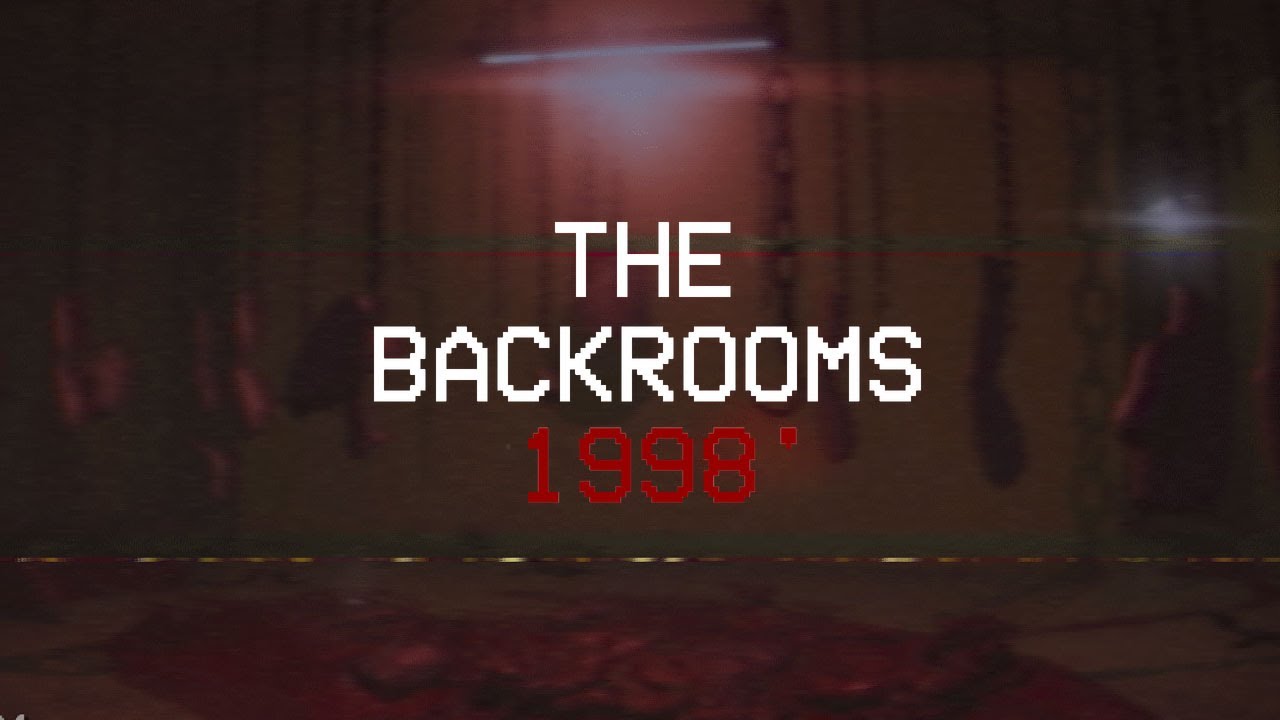
The Backrooms 1998 - Found Footage Survival Horror Game


The Backrooms 1998 establishes survival horror through analog liminal architecture and audio-dependent threat modeling All systems converge on spatial uncertainty, stealth discipline, and structured escape progression
The Backrooms 1998 is a found footage survival horror title developed by Steelkrill Studio, positioned within the broader ecosystem of indie survival horror PC games 2025 that adapt internet-origin horror concepts into structured interactive systems. The design draws directly from the Backrooms mythos, a liminal space framework defined by repetitive architectural patterns, spatial ambiguity, and environmental disorientation as its primary tension model. Within this structure, the game operates as a first-person survival framework that prioritizes linear progression, environmental navigation, and audio-sensitive stealth mechanics over traditional combat or systemic expansion systems. From a genre taxonomy standpoint, it aligns most closely with Action-Adventure and Simulation-adjacent survival horror design, while deliberately excluding structural dependencies commonly associated with RPG progression systems, RTS macro-management layers, CRPG branching decision trees, Fantasy worldbuilding frameworks, Steampunk industrial systems, Flight traversal mechanics, Nature-based open exploration structures, and Base Building survival economies. The absence of these systems is not incidental but structural, reinforcing a tightly constrained design philosophy centered on perceptual limitation and controlled player vulnerability.
Microphone detection mechanics redefine survival through real-world audio integration and behavioral risk modeling Sound becomes a systemic input that directly governs enemy awareness and encounter escalation
A defining technical component of The Backrooms 1998 is its implementation of microphone detection mechanics in horror games, where external audio input is interpreted as a live gameplay variable influencing enemy behavior systems. This design places the game within a Simulation-driven subset of survival horror, where real-world conditions extend directly into in-game logic. Player-generated noise, including speech, breathing, movement artifacts, and environmental interaction sounds, is processed as a continuous detection vector that shapes threat response intensity. In contrast to RTS or CRPG systems that rely on layered abstraction, statistical character scaling, or turn-based tactical resolution, this structure compresses interaction into immediate behavioral feedback loops. Survival is therefore governed by auditory discipline rather than combat proficiency or strategic optimization. This aligns with established analog horror game design analysis frameworks, where tension is derived from indirect system feedback, perceptual instability, and incomplete informational clarity rather than explicit confrontation mechanics or scripted encounter resolution.
Progression systems rely on escape-room logic, environmental memory, and constrained resource economies Navigation mastery replaces traditional leveling or skill-based advancement structures
Progression in The Backrooms 1998 is structured around environmental comprehension rather than character development systems typical of RPG or Strategy genres. Inventory management serves as a constraint-based system regulating access to survival-critical tools such as illumination devices, medical supplies, and navigation aids. This creates a Simulation-oriented survival loop in which each resource carries immediate mechanical significance rather than abstract statistical value. Advancement is achieved through spatial literacy, route memorization, and controlled traversal of repetitive architectural layouts, reinforcing a design model aligned with Story Rich and Atmospheric linear survival structures. The escape-room framework further reinforces this model by requiring environmental interpretation under uncertainty, where success depends on recognizing subtle variations in otherwise identical corridor systems. Unlike open-world Nature exploration titles, Base Building survival sandboxes, or Steampunk Fantasy traversal systems, progression is strictly Linear, with tightly gated environmental transitions defining the pacing of player advancement.
Narrative structure is embedded in environmental repetition and analog audiovisual degradation systems Storytelling emerges through spatial pattern recognition rather than explicit exposition
Narrative construction in The Backrooms 1998 is entirely environmental, relying on spatial repetition, constrained audio design, and minimal contextual cues rather than scripted dialogue or branching narrative frameworks common in RPG or Third Person cinematic systems. The 1998 setting reinforces an analog horror structure consistent with found footage horror game on Steam design conventions, where degraded lighting, VHS-style distortion, and restricted visibility simulate archival reconstruction aesthetics. Meaning is communicated through environmental variance within repetitive architectural spaces, where deviation from established spatial patterns functions as narrative signaling. This aligns with established analog horror game design analysis methodologies, where absence, incompleteness, and perceptual inconsistency operate as primary storytelling mechanisms. Rather than delivering exposition through traditional narrative channels, the game constructs meaning through environmental inference and systemic ambiguity, reinforcing its position within modern liminal horror design practices.
Early Access development and 1.0 transition define final system stabilization and mechanical balancing structure Patch iteration consolidates audio behavior, environmental consistency, and survival tuning into a unified release state
The Backrooms 1998 underwent a multi-phase Early Access development cycle shaped by iterative refinement, player feedback integration, and systemic balancing adjustments, reflecting common development patterns within indie survival horror PC games 2025 pipelines. This extended phase allowed core systems such as microphone detection mechanics, environmental pacing logic, and stealth behavior calibration to evolve incrementally under real player conditions. The full 1.0 release on 20 February 2025 marks the completion of this iterative cycle, transitioning the title from experimental system tuning into a finalized mechanical framework. This transition is further documented through The Backrooms 1998 full release patch notes changes, which formalize adjustments to audio sensitivity thresholds, environmental consistency behavior, and survival difficulty balancing. From a systems analysis perspective, the final release stabilizes the interaction between Simulation-based audio modeling, Linear progression architecture, and Atmospheric environmental design, ensuring consistent mechanical governance across all gameplay layers rather than variable Early Access tuning states.
Final verdict A constrained survival horror system defined by audio-reactive stealth, linear environmental design, and analog horror structure
The Backrooms 1998 presents a deliberately constrained survival horror architecture built around linear progression systems, microphone detection mechanics in horror games, and analog audiovisual design principles rooted in liminal space theory. Its core design identity is defined by restriction rather than expansion, systematically excluding RPG progression systems, RTS management structures, CRPG branching frameworks, Fantasy worldbuilding mechanics, Steampunk industrial layering, Flight traversal systems, Nature-based open-world exploration, and Base Building survival economies in favor of a tightly controlled Simulation-driven survival model. The resulting structure emphasizes spatial repetition, auditory vulnerability, and escape-room logic as primary engagement drivers, replacing traditional combat systems or strategic macro-management with perceptual uncertainty and environmental inference. Within the broader context of indie survival horror PC games 2025, the title occupies a clearly defined analytical niche focused on atmospheric minimalism, systemic audio dependency, and structured environmental ambiguity. Its design demonstrates how constrained input systems and repetitive architectural logic can function as primary tension engines within modern survival horror frameworks, reinforcing its position within contemporary analog horror game design analysis discourse as a mechanically coherent interpretation of internet-origin liminal fiction.
The VoxOdyssey Project Mission Statement for Feature games
I highlight what makes each game unique by examining gameplay mechanics, design choices, and storytelling. By analyzing systems, level design, and play styles, and referencing official media and assets, I aim to provide accurate, informative, and trustworthy insights. While I strive for accuracy, some details may change or be updated over time. Players can use this information to understand each title’s features and mechanics and make their own judgments.
The Backrooms 1998 screenshots highlight first-person survival horror and analog liminal spaces Stealth corridors, flashlight navigation, and audio-driven escape-room progression systems


The Backrooms 1998 Trailer – Found Footage Survival Horror and Liminal Escape Systems
Watch The Backrooms 1998 gameplay as you navigate endless liminal corridors, manage stealth movement, and react to microphone-driven threats. The trailer below shows how audio, exploration, and escape-room objectives shape survival in the Backrooms.

Stay connected with The Backrooms 1998 - Found Footage Survival Horror Game