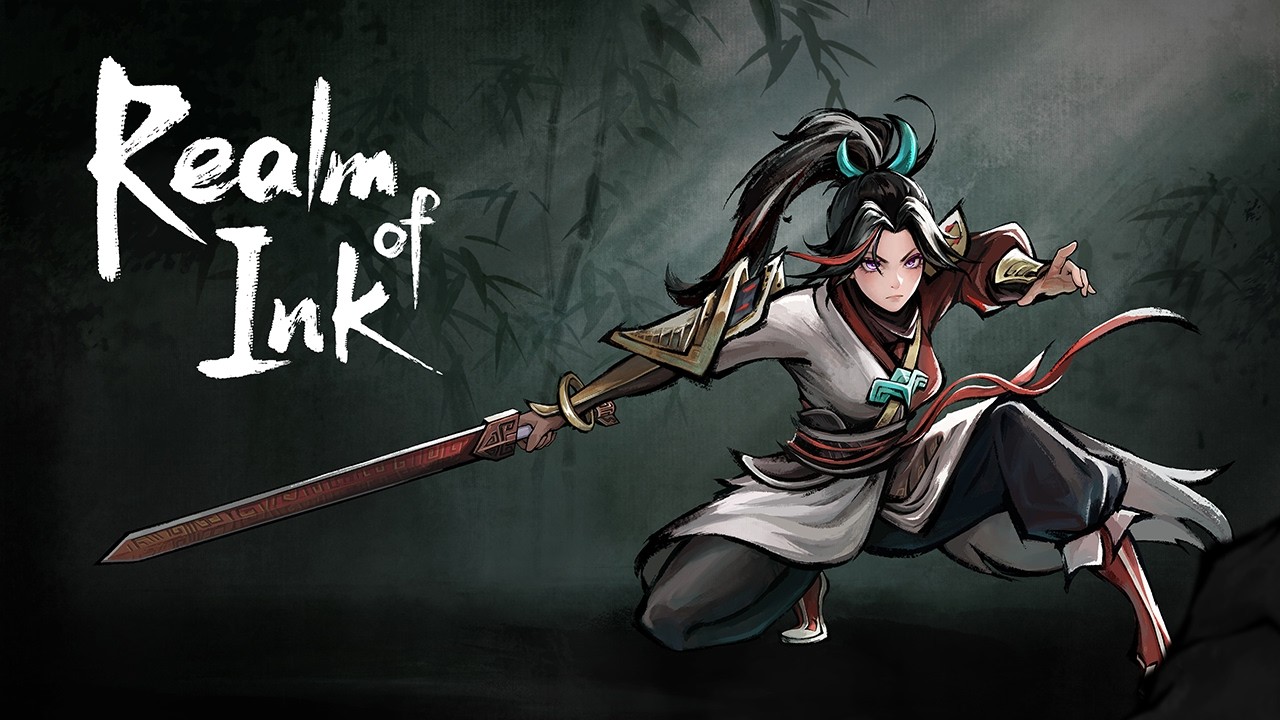
Realm of Ink Review: Action Roguelike Combat and Ink-Wash Xianxia Systems
Stylized isometric action roguelite with martial arts combat, Ink Gems, Momo transformations, and procedural Xianxia-inspired biomes
Realm of Ink is a singleplayer action roguelike built around martial arts combat, procedural progression, and ink-wash fantasy design. Players control Red through four evolving biomes, mastering weapon forms, Ink Gems, artifacts, and companion transformations while adapting to escalating enemy pressure and biome-specific hazards.
Enter the ink-drawn realm and see how every fight rewrites your path

Realm of Ink


Realm of Ink redefines action roguelike structure through ink-wash combat systems and procedural Xianxia design Each encounter functions as a kinetic puzzle where movement, timing, and build synergy determine survival
Realm of Ink is a singleplayer Action Roguelike and Action RPG developed within the indie Hack and Slash ecosystem, structured around isometric combat, procedural generation, and ink-wash inspired visual design. The experience follows the swordswoman Red through four distinct biomes, each shaped by escalating environmental pressure and enemy density. Rather than functioning as a linear narrative adventure, the structure operates as a Roguelite system where progression is defined by repeated runs, build refinement, and mechanical adaptation. Within the broader landscape of new Roguelite games, the title aligns with design philosophies centered on modular combat systems, high replayability, and Xianxia-inspired worldbuilding rooted in traditional Chinese ink wash style video games aesthetics.
Combat unfolds as a timing-critical loop of animation control, dash cancellation, and weapon form switching Every input carries kinetic weight, shaping positioning, survivability, and offensive routing under pressure
Combat execution in Realm of Ink gameplay is defined by tightly bound input responsiveness and animation-driven control states. Attack strings are structured around cancel windows that allow directional dash interruption, creating a flow where positioning is constantly recalculated mid-combat. Weapon forms introduce distinct kinetic profiles, where heavy martial arts strikes generate brief hit-stop frames that reinforce impact feedback, while lighter configurations reduce recovery time to maintain mobility continuity. Enemy encounters are designed around layered telegraphs, requiring real-time parsing of movement cues under heavy visual saturation from ink diffusion effects. This produces a combat environment where success depends on animation tracking accuracy, spatial awareness, and precise timing under compressed reaction windows, aligning the game with high-intensity isometric action roguelike design standards.
Ink Gems, artifacts, and Momo transformations create a multi-layered build system driven by synergy rather than static upgrades Each run evolves through unpredictable system interactions that reshape combat identity in real time
Progression systems in Realm of Ink are structured around Ink Gems, artifacts, and Momo transformations and ink gems system integration, forming a tri-layer build architecture that defines each run. Ink Gems alter combat behavior at a mechanical level, modifying movement paths, attack patterns, and ability routing rather than simply increasing statistical output. Artifacts introduce conditional triggers that activate under combat states, enabling chained effects that escalate into multi-target interactions when aligned with compatible Ink Gem configurations. Momo, functioning as a companion system, introduces transformation states that shift combat support behavior between offensive assistance and reactive utility roles. When synergy alignment occurs across all three systems, combat transitions from isolated engagements into cascading interaction loops where ability activation propagates across enemy clusters, significantly altering encounter pacing and battlefield control dynamics.
Enemy encounters and biome transitions enforce escalating spatial pressure and visual parsing complexity Each region introduces distinct threat behaviors that reshape movement logic and decision timing
The four biome structure in Realm of Ink gameplay establishes a progressive escalation of environmental constraints and enemy behavior density. Forest regions maintain moderate spacing, allowing foundational movement rhythm to stabilize, while the Monkey Kingdom introduces vertical disruption and staggered attack vectors that break positional predictability. Aquatic environments alter traversal timing through movement resistance, requiring recalibration of dash recovery cycles under pressure. The Mausoleum biome compresses encounter spaces into narrow corridors filled with layered traps and converging enemy formations, forcing high-frequency decision-making under reduced reaction windows. Enemy types such as Peony Fairy and Mirror Sprite introduce layered telegraph systems, where projectile patterns and delayed area detonations require pre-emptive movement rather than reactive dodging, particularly under heavy ink-wash visual saturation that reduces immediate clarity of attack origins.
Endgame systems test mechanical mastery through Trial Valleys and Endless Challenge scaling pressure Performance is measured through execution consistency, build efficiency, and adaptation under procedural variance
Endgame structure in Realm of Ink is divided between Trial Valleys and Endless Challenge modes, both designed to evaluate mastery of the underlying Action Roguelike systems. Trial Valleys function as controlled high-difficulty environments where consistent input timing, animation control, and build synergy are tested against fixed but intensified encounter patterns. Endless Challenge mode introduces progressive scaling pressure where enemy density and attack frequency increase over time, shifting success criteria toward sustained execution efficiency and adaptive build optimization. While strong synergy alignment between Ink Gems, artifacts, and companion transformations can produce high survivability thresholds, variability in procedural distribution introduces runs where optimal build paths are delayed or fragmented, directly affecting performance consistency across extended sessions.
Final verdict A mechanically dense action roguelite defined by ink-wash aesthetics, systemic synergy, and high execution demands
Realm of Ink establishes itself as a structurally complex entry within modern Action Roguelike games and Hack and Slash RPG design, combining isometric combat execution with procedural roguelite progression and Xianxia-inspired environmental framing. Its core strength lies in the integration of animation-driven combat feel, layered Ink Gem and artifact systems, and companion-based transformation mechanics that collectively define run-to-run variability. The design consistently prioritizes kinetic responsiveness, spatial control, and timing precision under escalating biome pressure, particularly across its four-region structure. Limitations emerge primarily through RNG-dependent synergy alignment, where inconsistent artifact distribution can interrupt intended build trajectories. Within the broader landscape of new Roguelite games, the title occupies a position focused on systemic depth and mechanical interaction density rather than narrative linearity, resulting in an Action RPG experience centered on mastery, adaptation, and procedural combat evolution.
The VoxOdyssey Project Mission Statement for Feature games
I highlight what makes each game unique by examining gameplay mechanics, design choices, and storytelling. By analyzing systems, level design, and play styles, and referencing official media and assets, I aim to provide accurate, informative, and trustworthy insights. While I strive for accuracy, some details may change or be updated over time. Players can use this information to understand each title’s features and mechanics and make their own judgments.
Realm of Ink gameplay screenshots show isometric action roguelike combat and ink-wash environments Martial arts battles, Ink Gems systems, and procedural Xianxia biome encounters


Realm of Ink Trailer – Action Roguelike Combat, Ink-Wash Worlds, and Boss Encounters
Watch Realm of Ink gameplay as fast-paced isometric combat unfolds across ink-wash biomes, weapon forms shift in real time, and Ink Gems reshape each run. The trailer below highlights boss fights, procedural encounters, and evolving build systems.