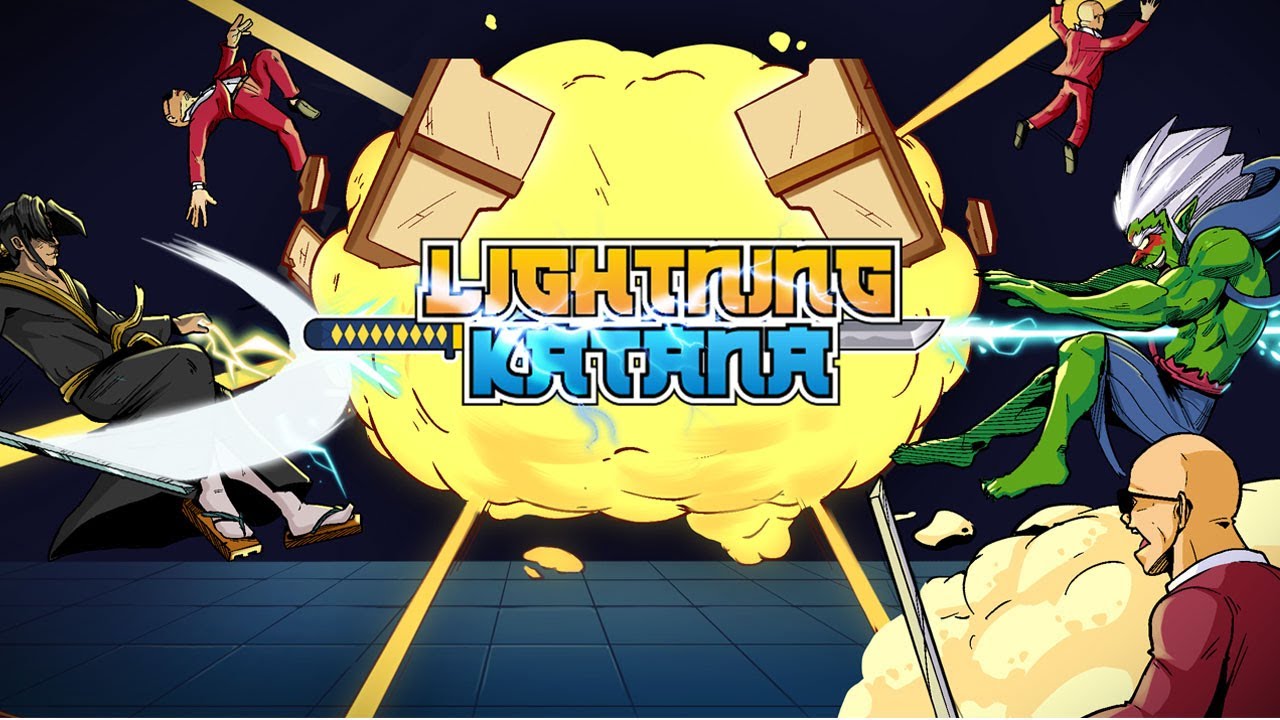
Lightning Katana Review: Fast-Paced FPS Hack and Slash Analysis
Boomer Shooter FPS with Parry Combat, Swordplay Mechanics, and Arcade Scoring Systems in Neo-Nippon
Lightning Katana is a fast-paced FPS and hack and slash hybrid set in a stylized Neo-Nippon underworld. Built around parry-driven combat, swordplay, and arcade-style scoring, it emphasizes precision movement, ranked performance, and linear level progression with intense enemy encounters.
Master lightning-fast parries and push deeper into the Neo-Nippon underworld challenge

Lightning Katana


Lightning Katana builds a Fast-Paced FPS Hack and Slash framework where parry timing, movement flow, and arcade scoring systems define every encounter Combat rhythm emerges from continuous aggression, precision defense, and momentum-driven survival across Neo-Nippon industrial zones
Lightning Katana is a Fast-Paced FPS and Hack and Slash hybrid set in a Neo-Nippon underworld shaped by industrial decay and Yakuza-controlled districts. The core structure focuses on close-range swordplay, lightning-based ranged attacks, and reactive combat systems that prioritize timing and positioning over static defense. Encounters are designed around sustained pressure, where survival depends on maintaining movement flow and responding to enemy attack patterns in real time.
The game combines Boomer Shooter pacing with melee-focused execution systems, creating a hybrid FPS structure where combat rarely pauses. Swordplay operates as a primary engagement tool rather than a secondary option, integrating directly into offensive loops alongside projectile attacks. This dual-layer combat approach reinforces a design identity built around constant engagement rather than controlled pacing or cover-based tactics.
Environmental structure is built around linear Neo-Nippon industrial zones, including corridors, facility interiors, and faction-controlled combat spaces. These areas are tightly constructed to support encounter density and directional flow, ensuring that traversal and combat remain interconnected. The absence of exploration-driven systems keeps focus on mechanical execution within confined, purpose-built arenas.
Parry systems and lightning abilities form a unified combat loop where defense directly fuels offensive momentum Successful timing restores control, maintains survival pressure, and enables chained eliminations across layered encounters
At the center of Lightning Katana’s mechanical design is a parry-based system that converts defensive timing into active survivability. Instead of relying on passive regeneration or cover mechanics, survival is tied to precise input execution. This creates a loop where successful defense immediately transitions into offensive opportunity, reinforcing aggressive play patterns as the dominant strategy.
Movement systems reinforce this structure through constant repositioning, dodge rolls, and directional resets that prevent static engagement. Enemy encounters are designed to pressure space continuously, requiring adaptation and spatial awareness rather than memorized attack sequences. Lightning-based abilities and temporary power gains from defeated empowered enemies further expand offensive options without disrupting the core rhythm of combat.
The Neo-Nippon setting supports this mechanical identity through faction-driven environmental framing. Yakuza groups such as Ryujin Ichizoku define encounter themes and spatial tone, while industrial architecture reinforces restricted movement lanes and structured combat arenas. Narrative elements exist as contextual framing for progression rather than branching systems or exploratory storytelling.
Arcade scoring, ranked performance, and currency systems structure progression through execution quality and replay refinement Schmunny rewards and Gauntlet Mode challenges reinforce mastery-based advancement across fixed level structures
Progression is governed by Arcade-style scoring systems that evaluate combat efficiency, speed, and execution consistency. Rank tiers such as S, SS, and P reflect performance thresholds tied to kill chaining and stylistic combat flow. This structure prioritizes mastery over completion, encouraging repeated engagement with fixed levels to improve execution quality.
Currency systems such as Schmunny function as progression gates for unlocking subsequent stages. This creates a structured advancement path where performance directly translates into access rather than randomized reward systems. Gauntlet Mode introduces an additional challenge layer where Bones are earned through structured trials and used for cosmetic or hub-based unlocks, separating functional progression from visual customization systems.
Replay design is built around repetition of hand-crafted levels rather than procedural variation. Each stage introduces defined mechanical constraints and encounter configurations that encourage optimization of movement routes and combat sequences. This reinforces a loop centered on refinement, consistency, and improved ranking outcomes.
Neo-Nippon industrial environments shape structured combat arenas focused on traversal control and encounter pacing Level design prioritizes mechanical clarity over exploration, crafting tightly directed engagement spaces
Level design in Lightning Katana follows a linear structure built around Neo-Nippon industrial environments, including containment facilities, corridors, and faction-controlled interiors. These spaces are designed to support structured combat encounters rather than open exploration, ensuring that gameplay remains tightly focused on encounter execution and movement efficiency.
The absence of RPG systems, crafting mechanics, or survival economies reinforces a focused design philosophy centered entirely on combat execution. Progression is tied directly to performance outcomes rather than resource accumulation or character development systems, maintaining mechanical consistency across all stages.
Visually, the experience aligns with Stylized 3D FPS design principles commonly found in modern indie Boomer Shooter interpretations. While influenced by Retro and Old School shooter readability conventions, the presentation prioritizes clarity, speed, and combat legibility over simulation detail or realism-focused rendering.
Narrative framing built around Dogsuke, Yakuza factions, and Neo-Nippon conflict structures reinforces combat-driven progression Story elements emerge through environmental context and faction presence rather than scripted exposition
Narrative structure is centered on a revenge-driven framework involving the protagonist and the loss of Dogsuke. This motivation anchors progression through Neo-Nippon environments controlled by Yakuza factions, including Ryujin Ichizoku. Story elements are delivered through contextual framing rather than branching dialogue systems or cinematic sequences.
Environmental storytelling plays a primary role in conveying world structure, with industrial design, faction presence, and spatial layout communicating narrative context. This approach aligns with Old School FPS design logic where environmental inference replaces direct exposition, allowing story meaning to emerge through traversal and encounter structure.
The result is a progression system where narrative function supports mechanical flow rather than interrupting it. This ensures continuity between combat, environment, and thematic framing across the entire experience.
Final verdict Lightning Katana delivers a structured Fast-Paced FPS Hack and Slash experience built on parry mechanics, arcade scoring, and linear mastery-driven progression
Lightning Katana presents a tightly structured hybrid of FPS combat and Hack and Slash swordplay centered on precision timing and continuous movement. Its combat system is defined by parry-driven survival mechanics, dodge-based mobility, and lightning-infused offensive options that collectively form a high-intensity engagement loop.
Across its Neo-Nippon industrial environments, the game maintains a consistent focus on linear level design and performance-based progression. Ranked scoring systems and currency-based unlocks reinforce replay-driven mastery rather than exploratory advancement, aligning the experience with Arcade-style action design principles.
The final structure is a PvE Singleplayer experience built around repetition, optimization, and execution refinement. Lightning Katana ultimately functions as a Fast-Paced FPS Hack and Slash hybrid where combat rhythm, environmental structure, and scoring systems converge into a unified system of continuous mechanical pressure and player skill expression.
The VoxOdyssey Project Mission Statement for Feature games
I highlight what makes each game unique by examining gameplay mechanics, design choices, and storytelling. By analyzing systems, level design, and play styles, and referencing official media and assets, I aim to provide accurate, informative, and trustworthy insights. While I strive for accuracy, some details may change or be updated over time. Players can use this information to understand each title’s features and mechanics and make their own judgments.
Lightning Katana screenshots show fast-paced FPS combat in Neo-Nippon industrial zones Parry timing, swordplay, and arcade scoring in linear level encounters


NODE Trailer – Timeline Puzzle Platformer Inside a Cold War Nuclear Facility
Watch NODE: The Last Favor of the Antarii as it demonstrates timeline-based puzzle execution, dual-mode gameplay, and exploration through a decaying nuclear complex. The trailer below showcases how planning, navigation, and environmental storytelling shape each encounter and puzzle solution.