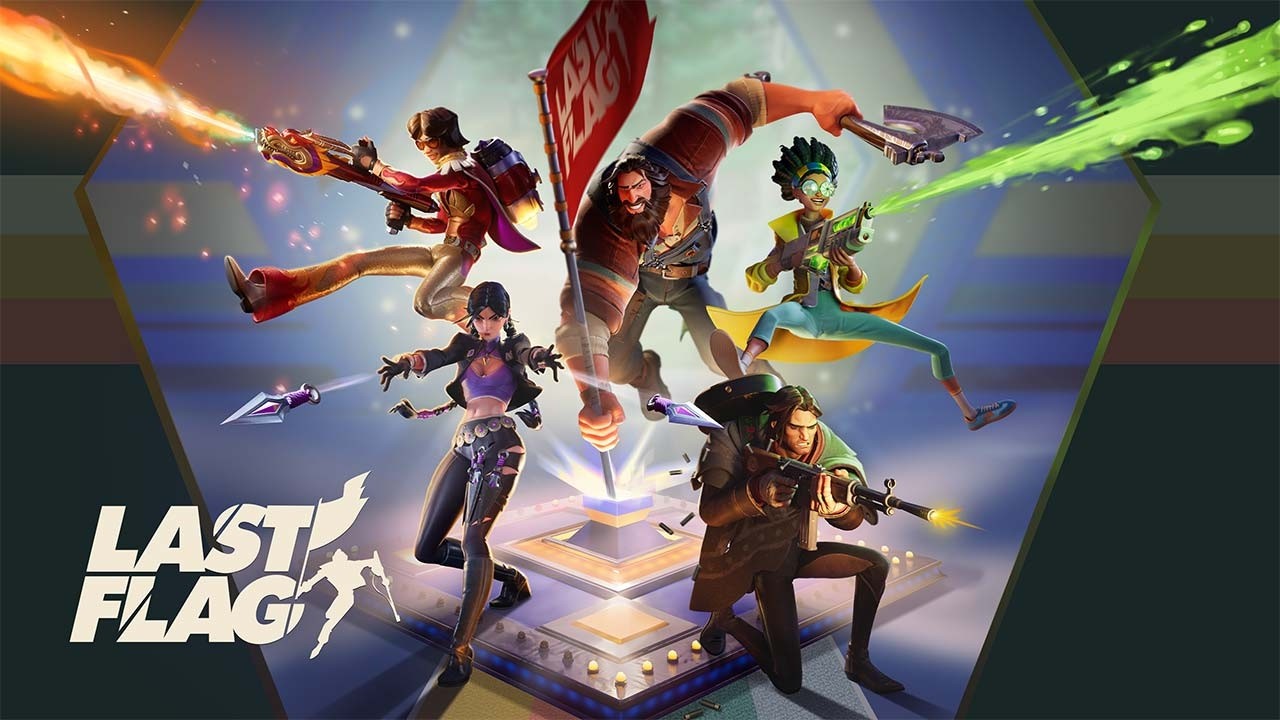
Last Flag – 5v5 Capture the Flag Hero Shooter
Compete in a fast-paced third-person team shooter with hidden objectives, ability-driven combat, and stylized arenas
Last Flag by Night Street Games is a competitive multiplayer hero shooter where teams hide, hunt, and defend objectives across dynamic arenas using unique contestants, abilities, and in-match upgrades.
Hide smart, hunt fast, and see if your team can hold the flag under pressure

Last Flag


Last Flag Turns Capture the Flag Into a Competitive Team System Hidden objectives, ability-driven combat, and structured PvP shape every match
Last Flag is a multiplayer third-person hero shooter developed and published by Night Street Games, released on April 14, 2026 for PC. The game is built entirely around a 5v5 Capture the Flag structure, reworking the traditional format into a system focused on concealment, search, and defense. Rather than treating Capture the Flag as a secondary mode, Last Flag positions it as the central mechanic, supported by contestant abilities, in-match upgrades, and controlled arena design. The result is a competitive framework where success depends on coordination, map awareness, and the ability to manage incomplete information under pressure.
Strategic Flag Concealment Redefines the Opening Phase Every match begins with a decision that shapes the entire round
Each match in Last Flag begins with a timed concealment phase in which teams hide their flag within the environment. This system introduces a strategic layer before combat begins, requiring players to evaluate terrain, visibility, and access routes. Once the match transitions into active play, teams must locate the opposing flag while defending their own hidden position. This structure creates an asymmetrical flow of information, where players rely on observation, movement patterns, and environmental familiarity rather than fixed objectives. The approach shifts the focus from constant engagement to controlled exploration and calculated confrontation.
Contestant Ability Synergy and MOBA-Lite Progression Nine contestants, evolving abilities, and real-time upgrades influence team performance
At launch, Last Flag features nine contestants, each designed with a distinct set of weapons and abilities that define their role within a team. These characters operate within a hero shooter framework but incorporate MOBA-lite mechanics through an in-match currency system. Players earn currency by contributing to objectives and interacting with environmental targets such as Cashbots, introducing a secondary layer of decision-making. Upgrades can be purchased during a match, allowing abilities to evolve in response to changing conditions. This system encourages coordination, as the effectiveness of each contestant increases when abilities are combined with those of teammates.
Arena Design Across Three Distinct Maps Canyon, snowfield, and temple environments shape how matches unfold
Last Flag launched with three maps: Copper Falls, Snowfield, and Twin Temples. Each arena presents a different structural approach to movement and concealment. Copper Falls emphasizes verticality and layered traversal within a canyon setting, creating opportunities for concealed flag placement and contested chokepoints. Snowfield offers a more open layout, where visibility and positioning play a larger role in both offense and defense. Twin Temples introduces a dense environment with interconnected pathways, supporting close-range encounters and multiple navigation routes. These variations ensure that the core gameplay loop adapts to different spatial conditions without altering its fundamental rules.
Match Flow Built on Phases and Defensive Pressure Capture the flag, then survive the countdown
The structure of each match is defined by three phases: concealment, active engagement, and final defense. When a team captures the opposing flag, the game transitions into a timed defense scenario. During this period, the capturing team must hold their position against sustained pressure from opponents attempting to recover the objective. This creates a concentrated moment of high-intensity play, where positioning, ability timing, and resource management determine the outcome. The cyclical nature of these phases ensures that each match follows a consistent rhythm while allowing for variation through player decisions.
Technical Performance and PC Requirements Defined hardware targets and a compact installation footprint
Last Flag’s technical requirements are aligned with mid-range PC hardware. Minimum specifications include an Intel Core i5-6600K or AMD Ryzen 5 1600 processor, paired with 12 GB of RAM and a graphics card such as an NVIDIA GeForce GTX 1660, AMD Radeon RX 580, or Intel Arc A380 with at least 6 GB of VRAM. Recommended configurations increase performance targets to an Intel Core i5-12400F or AMD Ryzen 5 5600, alongside GPUs like the RTX 3060 or RX 6600. Storage requirements are set at 7 GB, with an actual install size of approximately 4.36 GB. The game supports controller input on PC and relies on stable network connectivity for consistent multiplayer performance. Update 1.0.1, released shortly after launch, addressed server stability and resolved issues on Copper Falls.
A Focused Position Within Competitive Multiplayer Shooters A single-mode design that prioritizes depth over variety
Within the current multiplayer landscape, Last Flag occupies a defined niche by focusing exclusively on Capture the Flag as its core system. While many team-based shooters distribute gameplay across multiple modes, this title concentrates on refining one objective format. The integration of hidden objectives, ability-driven interaction, and phased match progression creates a structure that emphasizes coordination and spatial reasoning. This approach aligns the game with competitive objective-based shooters while maintaining a distinct identity built on concealment mechanics and controlled information flow.
Final Verdict A structured and methodical reinterpretation of Capture the Flag in a hero shooter format
Last Flag establishes itself as a focused competitive experience by building an entire system around Capture the Flag. Its concealment phase introduces a strategic layer that reshapes how matches begin, while the combination of contestant abilities and in-match upgrades adds depth to team interaction. The inclusion of three distinct maps at launch provides variation without fragmenting the core design, and the defined match phases ensure consistent pacing across sessions. Technical requirements remain accessible, and early updates demonstrate active post-launch support. As a third-person hero shooter centered on a single objective structure, Last Flag emphasizes coordination, adaptability, and spatial awareness, offering a measured and system-driven approach to multiplayer competition.
The VoxOdyssey Project Mission Statement for Feature games
I highlight what makes each game unique by examining gameplay mechanics, design choices, and storytelling. By analyzing systems, level design, and play styles, and referencing official media and assets, I aim to provide accurate, informative, and trustworthy insights. While I strive for accuracy, some details may change or be updated over time. Players can use this information to understand each title’s features and mechanics and make their own judgments.
Last Flag Gameplay Screenshots from 5v5 Capture the Flag Matches Hidden flags, hero abilities, and tactical team fights across stylized arenas


Last Flag Gameplay Trailer – 5v5 Capture the Flag Hero Shooter Action
Watch the chaos unfold in Last Flag as teams hide, hunt, and battle for control of the flag. See contestants use abilities, upgrade mid-match, and fight across stylized arenas. View more in the trailer below.