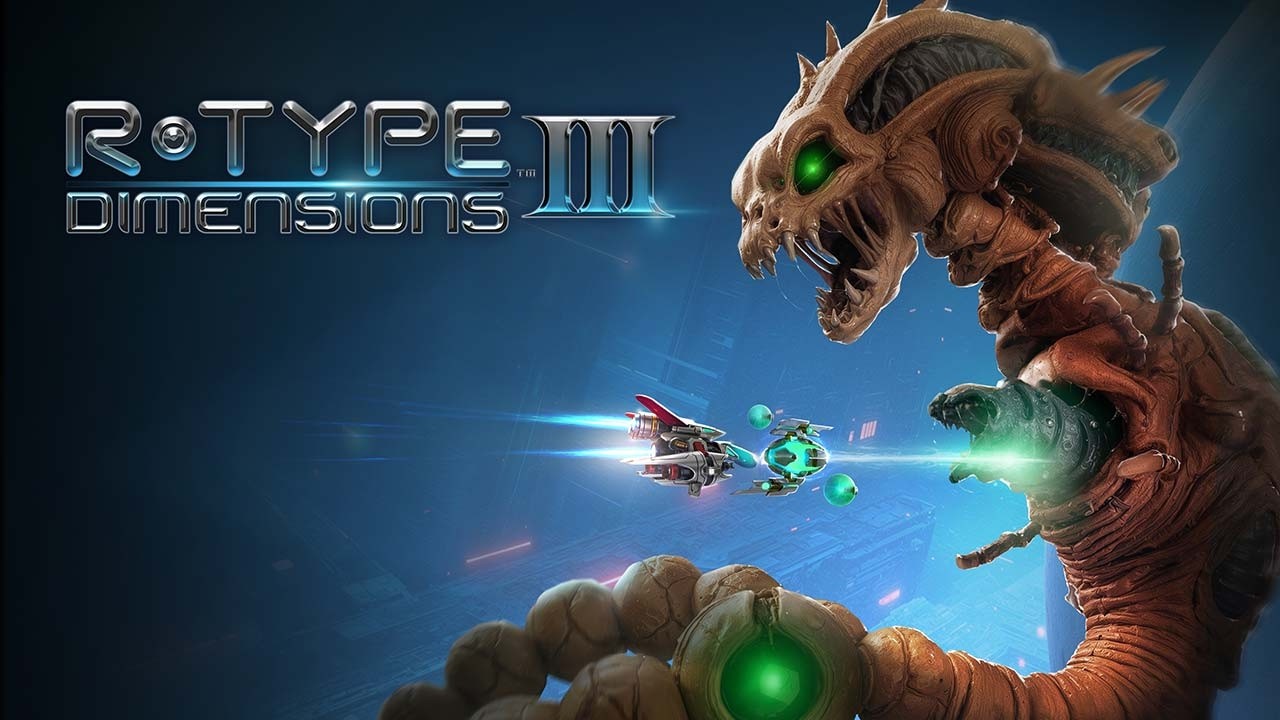
R-Type Dimensions III – 2.5D SNES Sci-Fi Shoot ’Em Up Remake
Side-scrolling sci-fi shooter with co-op gameplay, retro pixel toggle, and modern 2.5D visuals
R-Type Dimensions III modernizes the SNES classic R-Type III: The Third Lightning, preserving its side-scrolling shooter structure, tactical Force weapon system, and old-school challenge while introducing rebuilt 2.5D visuals, co-op play, and enhanced presentation across modern platforms.
Push through the Bydo invasion and survive the last line of deep space defense

R-Type Dimensions III


A reconstructed 16-bit sci-fi shooter where survival depends on precision and positioning Every stage escalation reflects the escalating pressure of the Bydo invasion across space
R-Type Dimensions III positions itself as a high-fidelity modernization of the 1993 Super Nintendo classic R-Type III: The Third Lightning, developed by KRITZELKRATZ 3000 and published by ININ Games alongside Tozai Games, Inc. Rather than reinterpreting the core design, the project preserves the original 16-bit Shoot ’Em Up structure while rebuilding its presentation through a modern 2.5D rendering pipeline. This approach situates the game within a broader preservation strategy for retro sci-fi Side Scroller titles, where mechanical authenticity is prioritized over systemic redesign. When examined through an archival lens, the release functions as both a playable restoration and a technical reinterpretation of one of the most mechanically disciplined entries in the R-Type lineage. The focus remains firmly on maintaining the pacing, collision clarity, and weapon-based strategy that defined the original SNES experience, while adapting its visual output for contemporary hardware standards across PC and modern consoles. From a design analysis standpoint, the transition to modern rendering is structured to preserve hitbox readability and projectile timing consistency, ensuring that the shift from Pixel Graphics to 3D reconstruction does not alter the underlying gameplay logic or spatial rhythm of encounters.
Movement discipline defines survival more than firepower in this modern 2.5D reconstruction Precision dodging and Force pod positioning remain central to every encounter
The core gameplay structure retains the deliberate pacing associated with classic Action Shooter design, where movement is constrained by environmental pressure and enemy formation patterns. R-Type III’s signature mechanics, including the Force system and charge beam weapon, remain intact and are preserved in R-Type Dimensions III with careful attention to responsiveness and input clarity. Our analysis of control mapping implementations suggests that the modernized version prioritizes low-latency input translation to preserve the original feel of the SNES-era design while adapting to contemporary Controller support standards. The Cyclone, Shadow, and Round Force configurations continue to function as distinct tactical systems, each altering projectile spread, defensive coverage, and spatial control in ways that reinforce route planning over improvisation. Unlike modernized Action or Sci-fi Shooters that emphasize rapid reflex exchanges, this structure maintains an Old School challenge philosophy rooted in memorization and disciplined execution across Linear progression stages. Enemy formations are designed around predictable yet demanding pattern cycles, reinforcing the importance of spatial anticipation rather than reactive movement, which remains a defining trait of the franchise’s design identity.
A visual bridge between Pixel Graphics and reconstructed 2.5D space Classic SNES presentation can be compared instantly with modern rendering systems
A defining feature of R-Type Dimensions III is its dual-presentation system, which allows real-time switching between original Pixel Graphics and modernized 3D visual reconstruction. From an expertise standpoint, this is not simply a cosmetic enhancement but a preservation mechanism that exposes the underlying asset structure of the 1993 release. Comparing both modes highlights how the original 16-bit rendering constraints shaped enemy readability, background layering, and projectile visibility. The modern 2.5D pipeline expands spatial depth and environmental density while attempting to preserve the same gameplay legibility that defined the Side Scroller format. This duality is particularly significant within Retro Shooter preservation studies, as it allows direct observation of how design intent translates across hardware generations without altering core mechanics. The result is a hybrid presentation that reinforces both historical authenticity and contemporary accessibility across Sci-fi Shooter audiences. Lighting systems and environmental effects are calibrated to enhance depth perception while maintaining clarity during high-intensity projectile sequences, ensuring that visual enhancement does not compromise mechanical precision.
The Bydo invasion escalates through biomechanical worlds and hostile space environments Each stage reinforces the pressure of survival under sustained alien assault
Structurally, the game’s narrative framework remains minimal, consistent with traditional Shoot ’Em Up design, where environmental storytelling carries greater weight than explicit exposition. The Bydo Empire functions as a persistent biomechanical threat, shaping stage design through organic corruption, industrial decay, and hostile spatial distortion. Each environment is constructed to reinforce Sci-fi thematic continuity, with level layouts emphasizing constrained movement paths and predictable enemy escalation patterns rather than open exploration. This design choice aligns the title closely with historical genre benchmarks such as Gradius and Darius, where spatial control and pattern recognition define progression. The emphasis on atmospheric density over narrative dialogue reinforces the series’ long-standing identity as a mechanically driven Action Shooter experience. Background layering, parallax movement, and enemy spawning sequences are structured to maintain constant pressure escalation, ensuring that each stage transition feels like an incremental intensification of spatial conflict rather than a tonal shift.
Co-op structure and replay systems expand the strategic depth of this retro revival Survival becomes a shared responsibility across coordinated spacecraft movement
The inclusion of Local Co-Op introduces a secondary layer of tactical coordination, altering enemy engagement dynamics through shared screen pressure and synchronized positioning. From a systems analysis perspective, co-operative play increases spatial complexity without modifying the underlying Linear progression design. This ensures that the original structure remains intact while expanding replay value through shared risk management. Additional gameplay modes, including Infinite Mode and Advanced Mode, adjust difficulty scaling without altering fundamental mechanics, supporting both accessibility and high-skill optimization approaches. Controller support has also been refined to accommodate precision input demands typical of Shoot ’Em Up design, ensuring consistent responsiveness during high-density projectile sequences. These adjustments reflect an attempt to balance Old School challenge expectations with modern usability standards across multiple platform ecosystems. Input buffering and movement responsiveness are tuned to preserve frame-accurate navigation patterns required for advanced route execution and scoring consistency.
Final verdict A preservation-focused Sci-fi Shoot ’Em Up that modernizes presentation without compromising 16-bit design intent
R-Type Dimensions III functions primarily as a technical restoration of R-Type III: The Third Lightning, rebuilt through a modern 2.5D framework while retaining the mechanical identity of the original Super Nintendo release. Its value lies in its adherence to established Shoot ’Em Up principles, where precision movement, Force weapon management, and environmental pattern recognition remain central to progression. The project demonstrates strong alignment with preservation-focused development practices, particularly in its dual-visual system that enables direct comparison between Pixel Graphics and reconstructed 3D presentation. While it does not radically redefine the genre, it reinforces the historical significance of 16-bit Sci-fi Shooter design within a contemporary hardware context. As an archival reconstruction and playable modernization, it maintains a consistent focus on accuracy, mechanical clarity, and genre integrity across both solo and Local Co-Op configurations, positioning it as a reference-grade restoration of a foundational Side Scroller title. Across its systems, the game prioritizes structured difficulty escalation, ensuring that mastery emerges from repetition and spatial learning rather than statistical progression or external reward loops.
The VoxOdyssey Project Mission Statement for Feature games
I highlight what makes each game unique by examining gameplay mechanics, design choices, and storytelling. By analyzing systems, level design, and play styles, and referencing official media and assets, I aim to provide accurate, informative, and trustworthy insights. While I strive for accuracy, some details may change or be updated over time. Players can use this information to understand each title’s features and mechanics and make their own judgments.
R-Type Dimensions III Screenshots Show Intense 2.5D Sci-Fi Shooter Combat Side-scrolling action, Bydo invasion stages, and precision-based survival gameplay


R-Type Dimensions III Trailer – 2.5D Sci-Fi Shoot ’Em Up Action and Bydo Warfare
Watch R-Type Dimensions III as classic side-scrolling shooter combat is rebuilt in 2.5D with intense Bydo battles, Force pod tactics, and modern visuals. See the action in motion below and explore the full gameplay trailer.