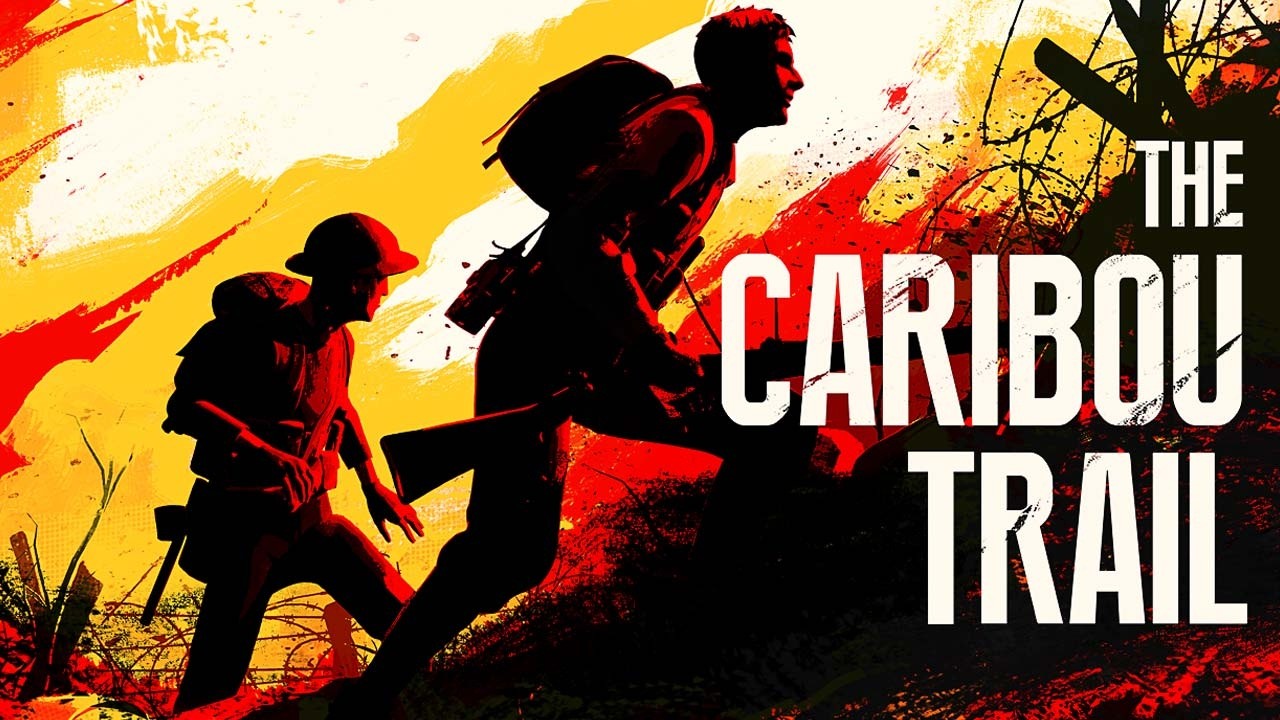
The Caribou Trail – WWI Narrative Horror Set During Gallipoli
First-person trench exploration, psychological horror, and historical survival storytelling inspired by Gallipoli
The Caribou Trail is a story-rich World War I narrative adventure focused on survival, trench exploration, and emotional endurance during the Gallipoli campaign through the eyes of Newfoundland soldiers.
The trenches remember everything, and some stories refuse to stay buried

The Caribou Trail


The trenches rarely ask for heroism, only endurance through another impossible night Every crawl through mud, every whispered story, and every quiet moment carries equal emotional weight
The Caribou Trail positions itself within a growing category of narrative-first World War I games that reject conventional military power fantasies in favor of emotional survival and historical atmosphere. Developed by Unreliable Narrators and Manavoid Entertainment, and published alongside Indie Asylum, the project focuses on the Gallipoli campaign through the perspective of young Newfoundland volunteers tied to the historical legacy of the Royal Newfoundland Regiment. Creative Director Francis Rufiange and co-founders Chris and Kevin Chancey frame the experience around memory, folklore, and psychological erosion rather than spectacle-driven combat systems. This approach immediately separates the title from mainstream war shooters built around score loops, competitive pacing, or tactical dominance. Instead, the game functions more like an atmospheric interactive fiction experience shaped through first-person exploration, environmental storytelling, and restrained narrative pacing. The result feels less concerned with recreating battlefield heroics and more interested in examining how exhaustion, fear, and uncertainty slowly reshape ordinary people trapped inside a collapsing wartime environment.
Movement through Gallipoli feels intentionally heavy, as if the trenches themselves resist every step The game slows the pace of interaction to reinforce physical exhaustion and emotional vulnerability
One of the most distinctive aspects of The Caribou Trail is the way its movement systems deliberately resist the responsiveness associated with traditional action-adventure design. Traversal across trench lines, dugouts, and no man’s land carries noticeable physical weight, with deliberate input translation that favors inertia over precision. Rather than functioning as friction for difficulty’s sake, this pacing creates a form of spatial tension that aligns directly with the game’s historical and psychological themes. Crawling through mud or cutting barbed wire becomes uncomfortable by design, reinforcing the vulnerability of soldiers operating under constant pressure. The first-person perspective intensifies this effect by limiting environmental visibility and compressing spatial awareness inside narrow trenches and smoke-filled corridors. Unlike many linear war games where movement exists primarily to connect combat encounters, movement here becomes the emotional core of the experience. Even quieter stretches of environmental exploration carry anxiety because the game’s pacing constantly reminds the player that danger often arrives through anticipation rather than direct confrontation.
The absence of cluttered interface markers forces the battlefield to be read through instinct and atmosphere Silence, distant gunfire, and dim lantern light replace traditional HUD guidance systems
The Caribou Trail adopts an intentionally restrained interface philosophy that supports immersion without overwhelming the screen with mechanical telemetry. Traditional shooter elements such as floating quest markers, oversized crosshairs, or persistent combat indicators are largely absent, allowing environmental details and sound design to guide navigation naturally. This minimalist presentation reinforces the uncertainty embedded within the game’s psychological horror framework. During trench exploration sequences, visibility is often shaped by fog, darkness, and shifting light sources rather than objective markers or waypoint systems. As a result, players rely heavily on spatial awareness, environmental audio, and subtle visual cues to interpret safe movement paths. This design choice aligns closely with modern atmospheric walking simulator principles while still maintaining enough structure to preserve narrative pacing. The effect is especially powerful during campfire scenes and nighttime patrols, where the lack of interface clutter allows conversations, folklore, and ambient trench sounds to dominate the player’s attention rather than traditional gameplay notifications.
Psychological horror emerges from uncertainty rather than scripted spectacle or supernatural excess Folklore and exhaustion slowly blur the line between memory, fear, and reality
Rather than relying on aggressive jump scares or overt supernatural imagery, The Caribou Trail builds tension through environmental ambiguity and emotional deterioration. Ghost stories shared between soldiers gradually evolve into interpretive frameworks for understanding trauma, isolation, and fear inside the trenches. Lonnie’s fascination with folklore introduces a layer of uncertainty that reshapes otherwise ordinary environments into spaces filled with paranoia and unstable perception. Shadows stretching across trench walls or distant footsteps echoing through abandoned corridors are presented with careful restraint, allowing the atmosphere to remain grounded in psychological interpretation rather than literal horror fantasy. This measured approach gives the game a stronger narrative identity than many modern horror titles that depend heavily on spectacle-driven escalation. The horror systems function best when integrated into quieter moments, where exhaustion and silence create enough uncertainty for imagination to become more dangerous than visible threats. That balance between historical realism and emotional unease gives the game its strongest atmospheric qualities.
Stylized visuals and dense environmental effects transform Gallipoli into a fragmented memory space Lighting, smoke, and archival-inspired textures shape the game’s emotional identity as much as its narrative
Visually, The Caribou Trail avoids the hyper-clean realism associated with modern military shooters in favor of a stylized 3D presentation inspired by archival wartime photography. Muted color palettes, softened textures, and heavy environmental fog create the impression of memory reconstruction rather than direct historical simulation. Technically, this atmosphere appears heavily dependent on volumetric lighting systems, particle layering, and dense environmental effects, which explains the relatively demanding hardware requirements attached to the project. The recommendation for RTX 3070-class hardware and 16 GB of RAM suggests that lighting diffusion, smoke density, and cinematic resource streaming are integral to the intended presentation rather than optional visual enhancements. Importantly, these effects are not simply cosmetic. Visibility obstruction, environmental haze, and shifting shadows directly influence pacing and emotional tone during exploration sequences. When the technical systems maintain stability, the visual presentation succeeds in transforming trenches and campsites into spaces shaped by memory distortion, fatigue, and emotional decay rather than tactical readability.
Friendship becomes the game’s true survival mechanic long after gunfire fades into the background Small rituals, bad jokes, and shared meals carry more weight than traditional progression systems
At the center of The Caribou Trail is a story-rich relational framework built around Fisher, Gordon, and Lonnie, three characters whose personalities shape the emotional structure of the campaign. Gordon uses humor as a defense mechanism against mounting stress, while Lonnie retreats into superstition and folklore to process the chaos around him. Fisher acts as the emotional midpoint between these opposing responses, grounding the narrative as conditions deteriorate. Importantly, the game treats downtime not as filler between missions but as the foundation of its narrative progression. Campfire conversations, improvised cooking sequences, and moments of exhausted silence become the emotional equivalents of progression rewards. There are no traditional score counters, unlock systems, or combat rankings interrupting these quieter interactions. This design gives the experience a distinctly human rhythm that aligns more closely with narrative adventure and interactive fiction traditions than conventional war games. The emotional impact comes not from battlefield victories, but from watching fragile routines struggle to survive under relentless pressure.
Final verdict A haunting World War I narrative that treats survival as an emotional condition rather than a combat objective
The Caribou Trail stands apart within the modern landscape of World War I games by refusing to romanticize combat or reduce historical trauma into mechanical spectacle. Through its restrained first-person exploration systems, minimalist interface philosophy, stylized archival-inspired visuals, and psychologically grounded narrative structure, the game creates an experience focused on endurance, perception, and emotional survival. The deliberate pacing, weighted movement systems, and atmospheric environmental design reinforce the sense that Gallipoli is not merely a battlefield but a collapsing psychological space shaped by exhaustion and uncertainty. Creative Director Francis Rufiange, alongside Unreliable Narrators, Manavoid Entertainment, and Indie Asylum, uses interactive fiction frameworks and historical inspiration tied to the Royal Newfoundland Regiment to build a narrative experience that feels intimate rather than monumental. Its strongest moments emerge not through combat encounters, but through silence, ritual, and the fragile connections formed between soldiers attempting to preserve fragments of humanity inside one of World War I’s harshest campaigns.
The VoxOdyssey Project Mission Statement for Feature games
I highlight what makes each game unique by examining gameplay mechanics, design choices, and storytelling. By analyzing systems, level design, and play styles, and referencing official media and assets, I aim to provide accurate, informative, and trustworthy insights. While I strive for accuracy, some details may change or be updated over time. Players can use this information to understand each title’s features and mechanics and make their own judgments.
The Caribou Trail Screenshots Capture Gallipoli’s Psychological Tension First-person trench exploration, wartime atmosphere, and emotional survival moments


The Caribou Trail Trailer – First-Person WWI Trench Survival and Psychological Horror Experience
Watch The Caribou Trail as Gallipoli unfolds through tense trench movement, emotional survival systems, and atmospheric storytelling. Explore how friendship and fear shape every moment, then view the full trailer below.