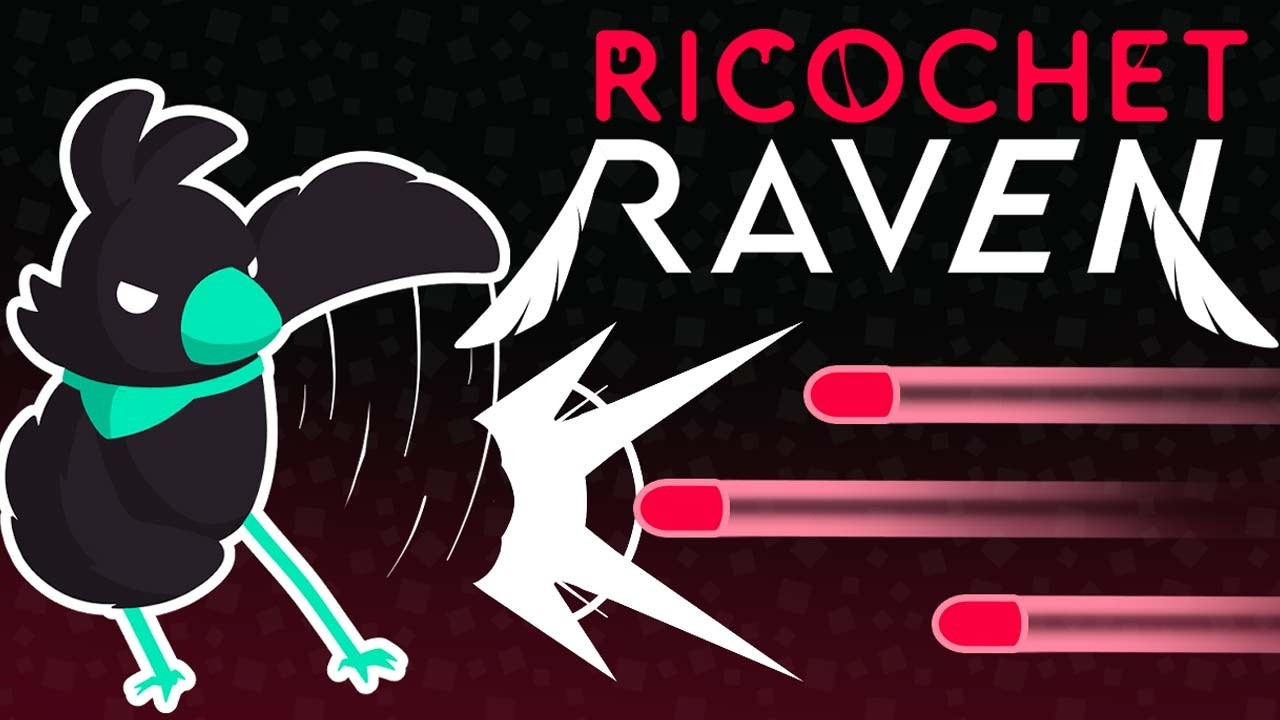
Ricochet Raven – Parry-Only Action Roguelike Side-Scrolling Combat
Deflect every attack, chain movement through precision timing, and survive fast-paced projectile-driven encounters
Ricochet Raven is an indie action roguelike focused on parry-only combat, where players redirect enemy projectiles, build upgrades with feathers, and adapt to procedurally shifting side-scrolling encounters.
Turn defense into offense and see how long you can control the chaos

Ricochet Raven


Ricochet Raven Centers Its Identity on Parry-Only Action Roguelike Design A side-scrolling system where projectile deflection replaces traditional combat input
Ricochet Raven is an indie early access action roguelike developed and published by Kaosrio. Built around a strict parry-only combat system, the game removes direct attacks entirely and instead asks players to redirect enemy projectiles to survive and progress. Structured as a fast-paced side-scrolling experience, it blends reactive timing, procedural encounters, and upgrade-driven runs into a tightly focused mechanical loop. Rather than layering multiple combat systems, Ricochet Raven narrows its design to a single interaction rule and explores how far that constraint can be pushed across evolving encounters.
Projectile Deflection Drives Every Combat Outcome Enemies become both threat and resource through redirected attacks
Combat in Ricochet Raven is defined entirely by projectile deflection. Enemies fire continuously, and survival depends on precise timing to parry incoming attacks and send them back across the screen. This creates a reactive loop where defense and offense are inseparable. Community observations consistently point to the importance of timing windows, with many players describing early encounters as demanding strict input accuracy before patterns become readable. As projectile density increases, the system shifts toward a bullet hell-adjacent structure, where positioning and timing must be managed simultaneously under pressure.
Movement and Combat Merge Into a Single Flow System Kinetic traversal emerges directly from successful defensive actions
Movement in Ricochet Raven is not a separate layer but an extension of combat itself. Successful deflections can be chained into dash jumps, allowing players to move across the environment while maintaining momentum. This creates a kinetic reflection system where positioning is constantly reshaped by defensive success. Players frequently note that early runs feel restrictive until this flow is understood, after which traversal begins to feel more fluid. The result is a side-scrolling action structure where platforming, survival, and attack all operate through the same input logic.
Upgrade Feathers Introduce Build Diversity Within Fixed Rules Modular enhancements reshape deflection behavior and movement potential
Progression is handled through collectible upgrade feathers that modify how deflection behaves. These upgrades affect projectile speed, chaining potential, and movement interactions, gradually expanding the range of possible playstyles. Within community discussions, certain upgrade types are already emerging as preferred options for sustained runs, particularly those that enhance mobility or increase chaining consistency. This creates a lightweight build system where players adapt their approach within a fixed mechanical framework rather than switching between entirely different combat styles.
Procedural Structure Reinforces Replayability Through Variation Run-based progression shifts enemy patterns while preserving core mechanics
Ricochet Raven uses a procedural structure to vary enemy placement and encounter pacing across runs. While the core parry system remains unchanged, each attempt introduces different configurations that require adaptation. Early player feedback highlights that this variation prevents simple memorization, instead encouraging pattern recognition under changing conditions. The inclusion of planned boss encounters and environmental shifts further segments progression, reinforcing the roguelike loop without altering the central rule set.
Visual Clarity Supports High-Speed Projectile Interaction Readable effects prioritize timing awareness during dense encounters
Gameplay footage and user impressions indicate that visual feedback is designed for clarity over detail. Parry windows are communicated through high-contrast flashes and distinct effects that remain visible even during crowded projectile sequences. This approach supports readability in fast-paced scenarios, where multiple threats must be tracked at once. Players often describe this clarity as essential to maintaining control as encounters escalate, especially in later stages where projectile volume increases significantly.
Low-Spec Performance Aligns With Precision-Based Gameplay Needs Stable frame pacing supports timing consistency across hardware setups
Ricochet Raven’s low system requirements, including support for integrated graphics, point toward a design focused on consistent performance rather than visual scale. This technical profile aligns with player observations that input responsiveness is central to the experience. For a parry-driven system, stable frame pacing directly influences perceived control, and early feedback suggests that the game maintains a consistent feel even on lower-end hardware. This accessibility broadens its reach while preserving the precision required for its core mechanics.
A High-Precision Experience Geared Toward Reflex-Focused Players Demanding execution defines its appeal within the action roguelike space
Player discussion consistently frames Ricochet Raven as a high-difficulty, skill-based parry roguelike side-scroller. The absence of direct attacks and reliance on timing precision create an experience that rewards repetition and mastery rather than immediate progression. This positions the game toward players who prefer controlled, reflex-driven systems, while those seeking passive progression or automated combat loops may find the structure demanding. The learning curve is frequently described as steep, with early runs focused more on understanding timing than advancing through content.
Final Verdict A focused parry-driven roguelike built on precision, constraint, and repeatable mastery
Ricochet Raven defines itself through limitation, removing traditional combat systems and replacing them with a single, tightly controlled interaction model. Its parry-only design, combined with procedural variation and upgrade-driven progression, creates a gameplay loop centered on timing, positioning, and adaptation. Community feedback highlights both its demanding learning curve and its consistency once mastered, reinforcing its identity as a precision-focused action roguelike. Within its niche, it stands as a clear example of constraint-based design executed through reactive projectile systems and structured replayability.
The VoxOdyssey Project Mission Statement for Feature games
I highlight what makes each game unique by examining gameplay mechanics, design choices, and storytelling. By analyzing systems, level design, and play styles, and referencing official media and assets, I aim to provide accurate, informative, and trustworthy insights. While I strive for accuracy, some details may change or be updated over time. Players can use this information to understand each title’s features and mechanics and make their own judgments.
Ricochet Raven Gameplay Screenshots Showing Parry Combat and Movement Flow Projectile deflection, side-scrolling action, and fast-paced encounter sequences


Ricochet Raven Gameplay Trailer – Parry Combat and Fast-Paced Action
Watch projectiles turn into your weapons as you chain deflections, dash through danger, and keep the flow alive. See how every move depends on timing and control, then dive deeper into the action in the trailer below.