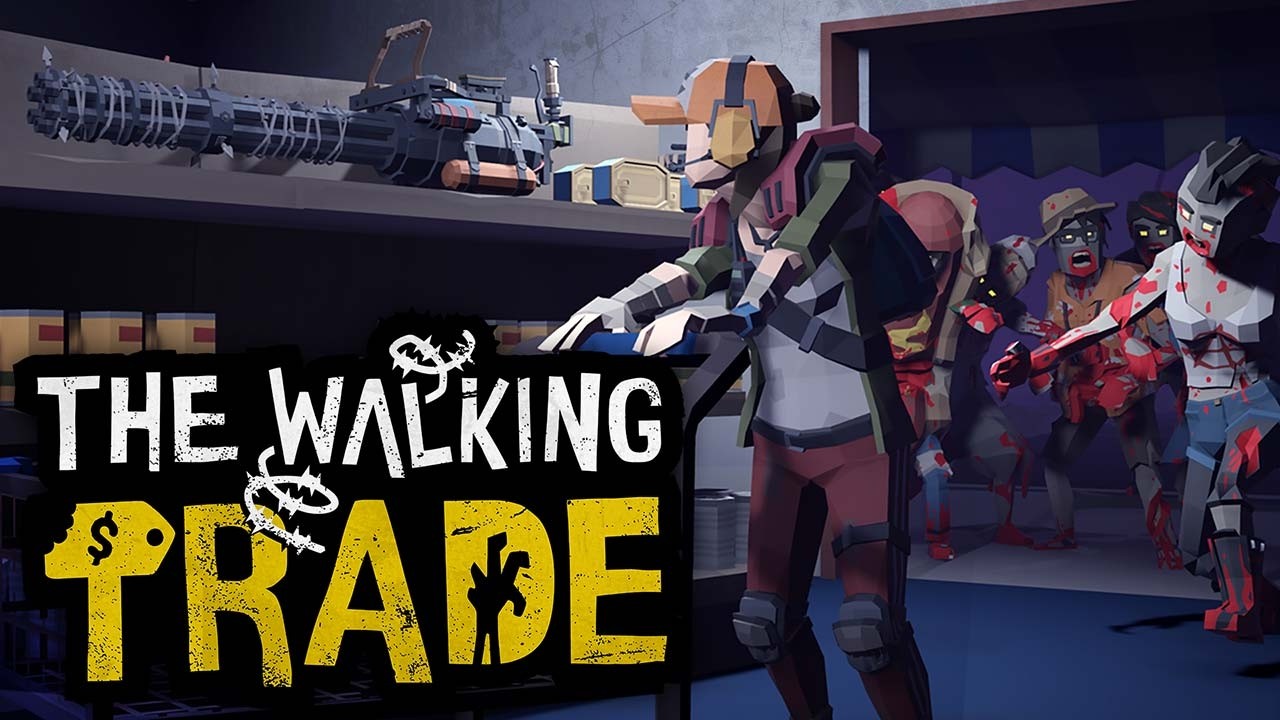
The Walking Trade – Zombie Shop Management and Survival Simulation
Manage a survivor-run store, balance trade and defense, and shape your fate in a post-apocalyptic economy
The Walking Trade is a zombie shop management game where players run a store, manage staff, craft supplies, and defend against raids while navigating a reputation system that impacts survival and long-term outcomes.
Will your shop save the survivors or profit from the chaos below?

The Walking Trade


Run a Shop When Survival and Profit Pull in Different Directions A zombie shop management game where trading, crafting, and defense shape every decision
The Walking Trade, developed by Microwave Games and published by PlayWay S.A., reframes the zombie survival simulation into a systems-driven management experience. Instead of navigating the apocalypse as a lone scavenger, the player operates a functional shop at the center of a fragile economy. Every item stocked, every price set, and every staff assignment contributes to a loop where commerce and survival are tightly connected. The structure leans heavily on simulation logic, requiring players to maintain operational flow while preparing for unpredictable threats that can disrupt even the most efficient setup.
Keep the Shop Running Before Everything Starts to Fall Apart Day-to-night pressure shifts turn routine shopkeeping into a constant balancing act
The game’s rhythm is defined by a clear tension between its retail phase and its defensive phase. During quieter periods, players focus on stocking shelves, adjusting prices, and managing customer flow. As time progresses, that routine begins to tighten. Dusk transitions introduce a subtle shift where efficiency starts to matter more than expansion. If staff are misallocated or shelves are poorly positioned, transaction times slow, and the shop becomes vulnerable just as raids begin to escalate. This timing-based pressure is where the game’s systems reveal their weight, turning small inefficiencies into larger operational risks.
A Smart Layout Can Backfire When Zombies Get In Shop layout strategy directly affects both sales performance and defensive stability
One of the more revealing aspects of The Walking Trade is how spatial design decisions play out over time. A layout optimized for customer access—placing high-demand goods near entry points—can initially improve sales flow. However, this same setup often creates a structural weakness during raids. When zombies breach early barricades, these high-value zones are exposed first, leading to rapid inventory loss. Players who adapt tend to shift critical stock deeper into the store, sacrificing short-term efficiency for long-term resilience. This interaction between layout and survival is not explicitly guided, but emerges naturally from the system design.
Managing People Gets Complicated When Things Go Wrong Balancing scavenging, retail, and defense roles becomes increasingly demanding over time
Managing staff in The Walking Trade evolves from a simple assignment task into a continuous logistical challenge. Early on, assigning survivors to fixed roles appears sufficient. As pressure increases, particularly during consecutive raids, this static approach begins to break down. Guards require rotation to remain effective, clerks slow down under strain, and sending too many survivors out scavenging can leave the shop underprepared at critical moments. The friction lies in timing—pulling staff back too early limits resource gain, while delaying their return can expose the shop during peak vulnerability. This balancing act becomes one of the defining challenges of the experience.
Everything Depends on What You Bring Back to the Store Resource flow connects external scavenging directly to internal shop performance
Crafting systems extend beyond simple item creation by acting as the backbone of the shop’s economy. Materials gathered through scavenging are transformed into weapons, tools, and upgrades that influence both defense and profitability. The dependency chain is clear: without consistent supply runs, crafting stalls; without crafting, the shop cannot evolve. This creates a feedback loop where external exploration must be carefully timed against internal demand. Players who overextend into scavenging often find themselves short-handed during raids, while those who remain too focused on the shop risk stagnation.
Your Choices Shape the Kind of Shop You Become Every pricing decision feeds into a wider system that determines the shop’s long-term fate
The reputation system introduces a structured narrative layer built around ethical decision-making. Pricing goods aggressively can yield immediate profit but gradually shifts how the shop is perceived. Alternatively, maintaining fair prices and supporting the community influences different types of visitors and opportunities. Over time, these decisions define whether the shop becomes a reliable hub or a purely opportunistic operation. The system does not rely on scripted story beats; instead, it tracks behavior and reflects it back through evolving interactions, creating distinct outcomes tied directly to player choice.
There’s More Going On Beyond Your Storefront Locations like Drop Dead Docks introduce contract-based trading and resource planning
The addition of external locations extends the gameplay loop beyond the shop itself. Drop Dead Docks functions as a contract hub, where bulk orders can be fulfilled for specialized rewards. This system encourages forward planning, as meeting large-scale demands requires coordinated inventory management and consistent supply chains. Meanwhile, areas such as Meadowspring Farms introduce agricultural resources that tie directly into future systems, reinforcing the interconnected nature of the game’s economy. These locations are not side activities; they are structural extensions of the core management loop.
Planning Ahead Might Save You Later The 2026 roadmap introduces new layers that will reshape how space and resources are managed
The confirmed 2026 roadmap outlines expansions that build directly on existing systems. The Rooftop Farming update introduces vertical resource production, with access tied to a warehouse ladder system. This seemingly simple addition is likely to impact internal movement patterns, as staff will need clear pathways between floors. Preparing for this shift—by avoiding congestion near central storage areas—may reduce inefficiencies once the system is active. Later in the year, the Into the Bunker update adds a high-risk exploration layer, where a depleting gas mask limits time spent underground. This mechanic reinforces careful planning, requiring players to prioritize high-value targets and efficient routes.
When Things Escalate, the Game Makes You Feel It The transition from management to defense is reinforced through clear visual changes
The interface design supports the game’s dual structure. During standard operation, menus emphasize control—pricing, inventory, and staff assignments are presented with clarity, allowing for precise adjustments. When raids begin, the visual focus shifts. The interface reduces complexity, highlighting immediate threats and defensive positions. This transition is not purely aesthetic; it reinforces the change in player priority from optimization to reaction. The result is a system that communicates urgency without overwhelming the player with unnecessary detail during critical moments.
Final Verdict A system-driven simulation where every decision carries weight across survival, economy, and outcome
The Walking Trade establishes a distinct identity within the zombie defense management and simulation space by focusing on interconnected systems rather than isolated features. Its strength lies in how those systems interact—shop layout influences combat outcomes, staffing decisions affect economic flow, and ethical choices shape long-term progression. The experience is defined by these overlaps, where small decisions compound into larger consequences. Supported by a structured 2026 roadmap and expanding gameplay layers, the game maintains a clear focus on player-driven outcomes, offering a technically grounded simulation built on balance, adaptation, and sustained operational control.
The VoxOdyssey Project Mission Statement for Feature games
I highlight what makes each game unique by examining gameplay mechanics, design choices, and storytelling. By analyzing systems, level design, and play styles, and referencing official media and assets, I aim to provide accurate, informative, and trustworthy insights. While I strive for accuracy, some details may change or be updated over time. Players can use this information to understand each title’s features and mechanics and make their own judgments.
The Walking Trade Screenshots Show Shop Management in a Zombie Outbreak Shelves, crafting, and barricades shaping every survival run


The Walking Trade Trailer – Shop Survival, Zombie Raids, and System-Driven Chaos
Watch The Walking Trade in action as a survivor-run shop manages trading, crafting, and defense under constant zombie pressure. See how layouts shift, raids unfold, and decisions change each run, then view the full trailer below for more gameplay detail.