Scriptorium: Master of Manuscripts – Medieval Art Sandbox Simulation
Historically inspired manuscript workshop game featuring pigment mixing, medieval illustration, and creative sandbox systems
Scriptorium: Master of Manuscripts is a cozy medieval manuscript simulation game where players illustrate illuminated books, mix pigments, manage commissions, and customize a historical workshop using more than 2,000 hand-drawn decorative assets.
Some manuscripts preserved history—others hid strange creatures in the margins

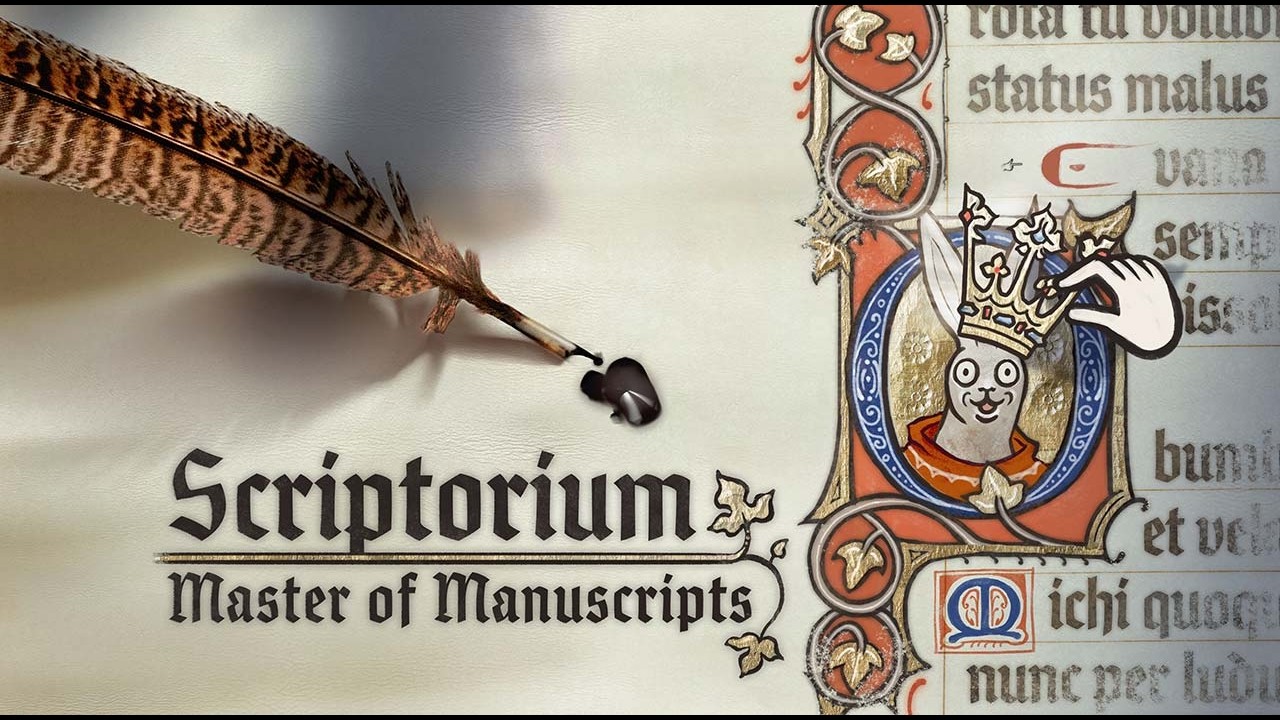
Scriptorium: Master of Manuscripts


The workshop begins in a simple state before the manuscripts start taking over every surface New commissions slowly introduce more complex medieval illustration ideas
Scriptorium: Master of Manuscripts released on April 16, 2026 as a medieval manuscript simulation developed by Yaza Games and published by Mythwright. Built as a cozy medieval art sandbox and historical illustration game, it focuses on illuminated manuscript creation, workshop management, pigment mixing, and decorative page design. Players take control of a scriptorium where commissions arrive regularly, each requiring illustrated manuscripts built from a large library of medieval-inspired assets. Instead of combat or strategy systems, progression is driven by creativity, customization, and the gradual expansion of artistic tools. The game launched on Steam as a singleplayer experience and quickly established a strong reception, holding an “Overwhelmingly Positive” rating with around 98% positive feedback across more than 700 user reviews. It stands out within the 2026 indie simulation space for its focus on historical illustration and relaxed design structure rather than traditional resource pressure or failure states.
Pigment mixing feels simple at first but gradually changes how every manuscript comes together New materials open unexpected combinations that shift the visual style of each page
A core system in Scriptorium is its pigment mixing mechanic, which supports its identity as a historically accurate illuminated manuscript simulator. Players combine natural materials such as flowers, minerals, and gold to discover new pigments that expand their creative palette. Twelve base materials form the foundation of this system, encouraging experimentation without introducing unnecessary complexity. Rather than functioning as a survival or resource management mechanic, pigment discovery serves the broader goal of artistic exploration. Each unlocked color subtly changes how manuscripts are designed, encouraging players to revisit older design styles with expanded visual options. This system reinforces the game’s medieval inspiration, since real manuscript creation relied heavily on handcrafted pigments derived from natural and mineral sources. The result is a mechanic that supports both historical authenticity and relaxed creative progression.
Medieval humor appears naturally through strange creatures and unusual page decorations The marginalia often feels more expressive than the main illustration itself
The visual identity of Scriptorium is rooted in authentic medieval manuscript traditions, particularly the eccentric and humorous elements found in marginalia. Decorative creatures, exaggerated figures, and symbolic illustrations appear throughout manuscript pages, reflecting real historical practices rather than modern reinterpretations. The game’s asset library includes more than 2,000 hand-drawn elements, ranging from illuminated initials and ornamental borders to grotesque figures and stylized animals. These elements allow players to construct manuscripts that feel both historically grounded and creatively expressive. The tone balances scholarly inspiration with playful absurdity, making the medieval art sandbox feel both educational and lightly humorous without breaking its historical foundation. This combination helps the game stand apart from more generic cozy simulation titles.
The manuscript editor becomes more flexible the longer it is used Experimentation often leads to unexpected and unusually detailed page layouts
The manuscript creation system is built around a flexible drag-and-drop editor that allows full control over decorative placement, layering, and composition. Players can construct pages using borders, illustrations, lettering, creatures, and ornamental designs without strict template limitations. This approach supports both historically accurate manuscript layouts and more experimental designs inspired by medieval marginalia. Over time, the system encourages increasingly complex compositions as new assets are unlocked through commissions and workshop progression. The absence of restrictive design rules allows Scriptorium to function as both a medieval manuscript creator and a design-focused sandbox. Players can approach it as a casual creative tool or as a structured simulation of illuminated manuscript production depending on their preferred play style.
Story commissions quietly connect the workshop to a larger political backdrop Each manuscript feels tied to events beyond the scriptorium itself
Although Scriptorium is primarily a sandbox-focused experience, it includes a narrative structure centered on a troubled royal marriage and the protagonist’s uncle. Story progression unfolds through commissioned manuscripts that reflect political tension, social expectations, and aristocratic relationships. Characters such as Christine the Poet reference historical literary figures, reinforcing the game’s connection to medieval intellectual culture. Rather than using cinematic storytelling, the narrative develops through client requests and manuscript themes, allowing the workshop itself to act as the primary storytelling medium. This approach keeps the focus on illustration and creative production while still providing a sense of context and continuity across commissions. The result is a subtle narrative layer that supports rather than interrupts the core creative loop.
The sandbox mode becomes more open the less structure the player relies on Without commissions the manuscript editor becomes entirely experimental
The sandbox mode in Scriptorium removes progression constraints and allows unrestricted access to the manuscript editor. This creates an open creative environment where players can experiment freely with medieval illustration styles, grotesque imagery, ornamental layouts, and pigment combinations. Without commission requirements, the focus shifts entirely to visual experimentation and design expression. The large asset library supports this approach by offering a wide range of medieval-inspired elements that can be combined in unconventional ways. This structure makes the game function not only as a simulation but also as a creative design tool for players interested in historical illustration or decorative composition. The flexibility of the sandbox mode reinforces replayability by encouraging continuous experimentation without predefined objectives.
The workshop atmosphere stays calm even as manuscripts become more detailed Small creative choices gradually define the overall tone of the space
Visually, Scriptorium uses a stylized 2D presentation built around parchment textures, decorative illustrations, and illuminated manuscript aesthetics. The interface remains readable even as manuscripts become increasingly complex, supporting long creative sessions without visual fatigue. The overall tone remains calm and relaxed, aligning with its identity as a cozy medieval simulation game. Despite the complexity of its asset library, the game prioritizes accessibility and ease of interaction, making it suitable for casual players as well as those interested in design and illustration systems. The atmosphere is supported by its gentle pacing and lack of punitive mechanics, allowing players to focus entirely on creative expression rather than efficiency or optimization.
Technical performance stays accessible while supporting large-scale creative freedom Most complexity comes from design choices rather than hardware demands
From a technical standpoint, Scriptorium is designed to remain accessible on mid-range PC hardware. Minimum requirements include Windows 10, an Intel i3-4370 processor, 8 GB RAM, and GTX 750 Ti-level graphics support. Recommended specifications increase to Windows 11, an Intel i7-8750H or Ryzen 5-2600 processor, 16 GB RAM, and a GTX 1070 or Radeon RX 580 equivalent. The game’s performance focus is centered on interface responsiveness and asset handling rather than intensive rendering or physics simulation. This ensures that even with thousands of decorative elements available, the experience remains stable and usable during extended creative sessions.
Final verdict Scriptorium works best when creativity takes priority over precision
Scriptorium: Master of Manuscripts succeeds as a medieval manuscript simulation by focusing entirely on creative illustration, workshop progression, and historical design inspiration. Its combination of pigment mixing, large-scale decorative asset libraries, flexible manuscript editing, and subtle narrative structure creates a cohesive experience centered on artistic expression. The game avoids traditional simulation pressure in favor of relaxed experimentation, making it accessible while still offering depth for players interested in historical illustration systems. As a 2026 release, it occupies a distinct position within the cozy simulation genre by transforming illuminated manuscript creation into a fully interactive sandbox. Its strength lies in its consistency of theme, where every system supports the broader idea of medieval artistic production.
The VoxOdyssey Project Mission Statement for Feature games
I highlight what makes each game unique by examining gameplay mechanics, design choices, and storytelling. By analyzing systems, level design, and play styles, and referencing official media and assets, I aim to provide accurate, informative, and trustworthy insights. While I strive for accuracy, some details may change or be updated over time. Players can use this information to understand each title’s features and mechanics and make their own judgments.
Scriptorium Screenshots Show Medieval Manuscript Creation Inside a Cozy Workshop Pigment mixing, illuminated pages, and detailed medieval illustration tools in use


Scriptorium Trailer – Medieval Manuscript Workshop with Pigment Mixing and Illustration Systems
Watch Scriptorium: Master of Manuscripts in motion as illuminated pages come to life, pigments are mixed, and medieval workshop commissions unfold. See how each manuscript is built through creative illustration, then continue below to view the full trailer.

Stay connected with Scriptorium: Master of Manuscripts