

Deep Space Directive – Early Access Colony Sim Strategy
Indie automation-driven colony sim combining resource management, base building, singleplayer economy systems, and hex grid strategy in Early Access
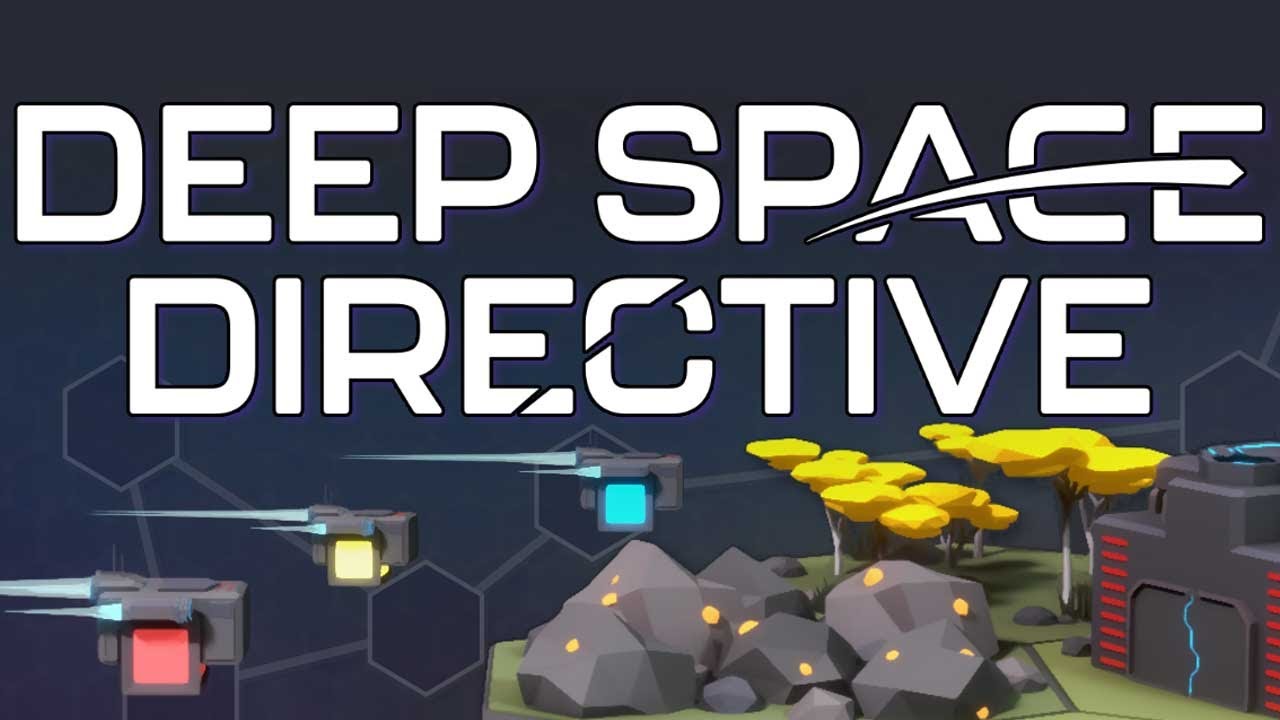
Deep Space Directive is an Early Access colony sim focused on automation, resource management, and base building across a hex grid. Players expand industrial networks, balance economy systems, and optimize logistics in a singleplayer strategy environment.
Every hex tells a story of efficiency, expansion, and collapse waiting to happen

Deep Space Directive


The colony rarely collapses from sudden failure, but from small inefficiencies compounding across every hex tile Resource flows, shuttle timing, and building spacing slowly decide whether expansion stabilizes or stalls entirely
Deep Space Directive positions itself within the modern Colony Sim and Automation genre as an Early Access Systems-driven Strategy experience built around Resource Management, Base Building, and long-term Economy scaling. Developed by One Wheel Studio, the structure prioritizes singleplayer progression where efficiency is measured through logistics stability rather than narrative direction. In practice, early builds already show a clear reliance on UI-driven feedback systems, particularly color-coded resource flow warnings that shift across green, amber, and red states when transport latency begins affecting production chains. These indicators are not cosmetic; they function as real-time Management signals for when Building clusters begin exceeding their logistical capacity across the Hex Grid. The result is a City Builder framework where Automation health is readable at a glance, but only fully understood when multiple systems begin interacting under load.
The Hex Grid is less a map and more a logistics equation constantly being recalculated in real time Every Building placement changes transport efficiency, drone paths, and production stability across the entire Economy
At its core, the Hex Grid Base Building structure defines how every system interacts. Players construct layered industrial networks where Mining, Refinement, and Distribution form interconnected Automation chains rather than isolated functions. In practice, layout efficiency quickly reveals itself as the primary constraint on progress, especially when mid-game tech tree tiers unlock deeper production chains and expanded Resource Management options. Early Mining nodes evolve into more complex extraction systems, while refined Building upgrades introduce higher output factories and storage depots designed for sustained Economy throughput. As expansion continues, long-range shuttle routing becomes a defining factor, with transport hubs managing pickup and delivery cycles across distant sectors. When these routes become overloaded, visible queue buildup appears in logistics overlays, forcing redesigns of City Builder layouts to restore Automation balance. Even Casual pacing phases transition into structured Optimization once these systems begin interacting at scale.
When resource lines turn red, it rarely means shortage — it means the logistics network has outgrown its own design Shuttle congestion and depot overload often reveal inefficiencies before production actually fails
Resource Management in Deep Space Directive operates through a layered Economy of fuel, ore, food, and water, each tied to distinct Management systems within the colony. Fuel stabilizes operational infrastructure, while food and water regulate population scaling and Building expansion. UI overlays play a critical role here, especially the power grid distribution view that highlights energy flow across connected structures. When imbalance occurs, flickering nodes indicate instability long before system failure. Mid-to-late game complexity introduces multi-channel drone pads, high-capacity storage depots, and express transport lanes designed to stabilize Automation throughput under heavy production loads. Market systems further deepen the Economy layer, where rapid bulk selling can depress prices, forcing a more deliberate buy-low sell-high rhythm across production cycles. This creates a Resource Management loop where timing, not just output, determines profitability across the singleplayer Strategy framework.
Deep Mines become the quiet turning point where exhausted land stops being a limit and becomes a long-term system Automation reroutes extraction instead of forcing relocation, reshaping late-game Base Building priorities
A notable structural shift appears once Deep Mine upgrades enter the tech tree tiers, allowing exhausted Hex Grid tiles to remain productive through automated rerouting systems. This changes Base Building logic significantly, as expansion is no longer strictly outward but increasingly focused on retrofitting existing infrastructure. Resource Management becomes more about optimization than acquisition, particularly when drone networks begin balancing extraction and refinement across multiple clustered zones. Shuttle systems also evolve into higher-capacity logistics chains, with express transport lanes reducing latency between remote extraction sites and central processing hubs. When these systems are not balanced correctly, congestion becomes visible through delayed delivery indicators and depot saturation warnings. These signals function as early-stage feedback for Management inefficiency, often appearing before production shortages actually manifest. As a result, the game’s Strategy layer becomes heavily dependent on reading Automation pressure rather than reacting to collapse.
Defense is not a separate system but another layer of the same production network under stress Energy stability, shuttle routing, and Building density all determine whether a colony survives sustained pressure
Combat in Deep Space Directive integrates directly into Colony Sim systems rather than existing as an isolated mode. Enemy waves apply pressure across Resource Management and Automation networks, forcing Defensive Strategy decisions to be embedded within Base Building layouts. Stationary defensive structures provide stable coverage zones, while mobile units introduce flexible response options at reduced efficiency, creating Management trade-offs that scale with colony size. Energy distribution becomes especially critical during sustained encounters, where unstable power grids can cascade into production failures across multiple Hex Grid sectors. UI overlays highlight these risks through grid-wide energy mapping, showing where supply chains weaken under combat stress. When shuttle logistics are stretched too thin, defensive systems often become the first point of failure, reinforcing the need for redundant Building placement and distributed Automation design across the entire colony structure.
Tech tree tiers reshape everything, not by adding features, but by rewriting how the colony thinks about space Each unlock changes Building logic, transport density, and long-term Economy planning
Progression in Deep Space Directive is structured through tech tree tiers that progressively expand Automation depth and Resource Management complexity. Early systems focus on basic extraction and refinement, while later tiers introduce advanced production chains, deeper Mining infrastructure, and expanded logistics frameworks. Replayability emerges from how differently each Economy unfolds depending on initial Building placement and shuttle routing efficiency. No two singleplayer runs resolve logistics in the same way, as terrain distribution and resource clustering reshape City Builder planning from the outset. Even small inefficiencies in early Automation design tend to compound over time, influencing late-game output stability and expansion potential. The result is a Strategy loop where long-term success depends less on reaction and more on structural foresight across the Hex Grid.
Final verdict A systems-heavy Colony Sim where Automation, Economy, and Logistics define success more than expansion itself
Deep Space Directive presents a tightly structured Early Access Colony Sim experience centered on Resource Management, Base Building, and Automation-driven Economy design. Its Hex Grid foundation ensures that every Building placement carries long-term consequences for logistics stability, while shuttle routing, drone networks, and storage systems form the backbone of its Management complexity. The introduction of UI-based transport and energy overlays gives players a clear but demanding view of system health, making inefficiencies visible before they collapse production chains. As a Strategy experience, it sits firmly between City Builder design and industrial Automation simulation, with enough depth in its Economy systems to reward careful planning without overwhelming its singleplayer structure. The overall result is a Colony Sim that prioritizes long-term Optimization over immediate expansion, where success is measured by how well interconnected systems hold together under pressure rather than how quickly the colony grows.
The VoxOdyssey Project Mission Statement for Feature games
I highlight what makes each game unique by examining gameplay mechanics, design choices, and storytelling. By analyzing systems, level design, and play styles, and referencing official media and assets, I aim to provide accurate, informative, and trustworthy insights. While I strive for accuracy, some details may change or be updated over time. Players can use this information to understand each title’s features and mechanics and make their own judgments.
Deep Space Directive Screenshots Show Hex Grid Colony Automation Systems Resource management, base building layouts, and shuttle-driven logistics networks


Deep Space Directive Trailer – Colony Sim Automation, Hex Grid Expansion, and Logistics Strategy
Watch Deep Space Directive in action as colony systems scale across a Hex Grid. See Resource Management, Base Building, shuttle logistics, and Economy automation come together, then view the full trailer below.

Stay connected with Deep Space Directive


