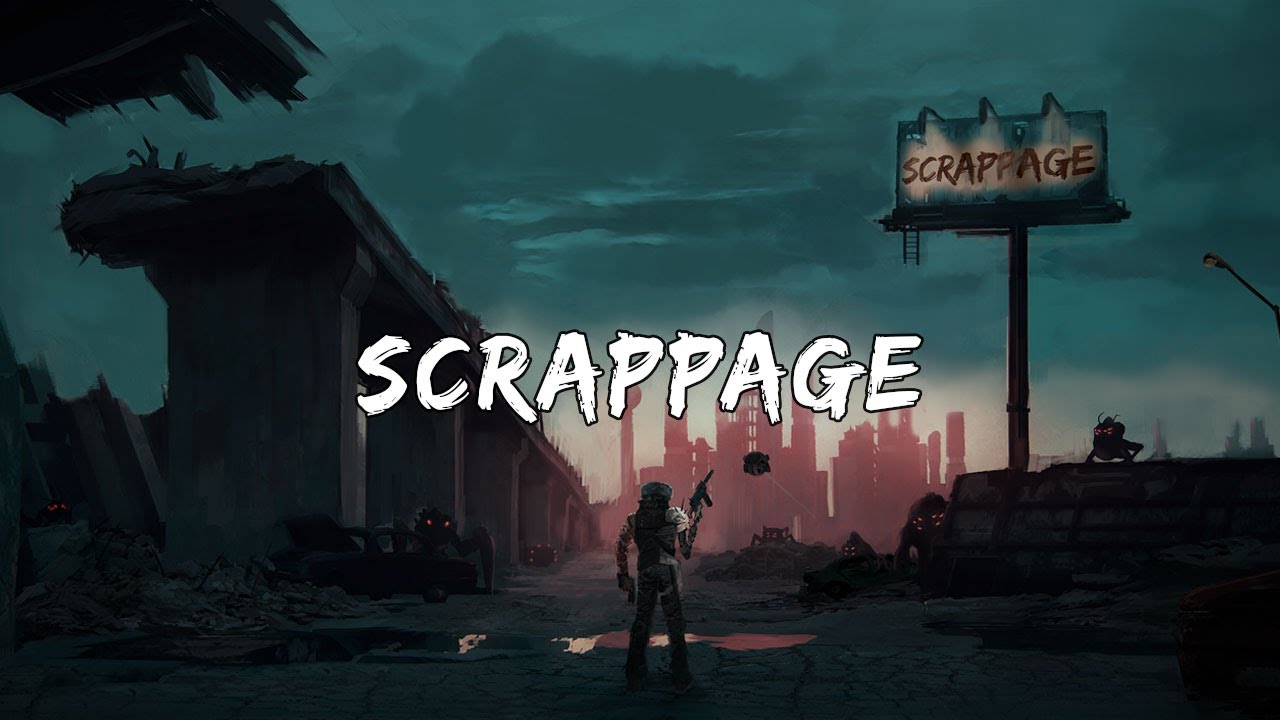
Scrappage – Post-Apocalyptic Roguelite Twin Stick Shooter
Procedural bullet hell action with cybernetic upgrades, local co-op, and relentless survival combat
Scrappage is a fast-paced action roguelike where players battle through procedural wastelands, collect body-part upgrades, unlock powerful weapons, and survive escalating enemy hordes in a dystopian world shaped by cybernetic warfare.
Every upgrade changes the fight—but one mistake sends everything back to the beginning

Scrappage


A run rarely unfolds the way it started once the first upgrade changes how survival works What feels controlled quickly shifts into reactive movement, timing, and constant repositioning
Scrappage released on February 25, 2023 as an indie Action Roguelike developed and published by Geekspree. Built around procedural progression, Bullet Hell combat, and cybernetic body modification systems, the game combines fast-paced Twin Stick Shooter mechanics with a Post-apocalyptic setting shaped by industrial collapse, mutant outbreaks, and mechanical warfare. Players move through randomized combat arenas filled with hostile creatures while collecting scrap, unlocking upgrades, and constructing increasingly specialized combat builds through harvested body parts and weapons. Rather than focusing on cinematic storytelling or scripted campaign structure, Scrappage is designed almost entirely around replayability, survival pressure, and escalating enemy density. The game launched on Steam with support for both solo play and Local Co-Op, positioning itself among modern indie Top-Down Shooters that prioritize mechanical experimentation over narrative spectacle. Its compact structure and lightweight technical requirements also helped establish it as an accessible PC Roguelite for players interested in shorter, repeatable combat sessions built around procedural systems and long-term Meta-progression.
Builds rarely stay stable once body parts start stacking into unexpected combinations Every upgrade shifts combat rhythm, sometimes improving control and sometimes increasing chaos
One of Scrappage’s defining systems is its approach to Character Customization through biomechanical upgrades and modular progression. Defeated bosses reward players with prosthetic body parts that function as both active abilities and combat modifiers, gradually transforming the player character into an increasingly aggressive survival machine. Instead of limiting progression to weapon rarity or simple stat increases, the game ties advancement directly to physical enhancement, reinforcing its Dystopian atmosphere through gameplay systems rather than exposition. More than 100 items and upgrades can appear throughout repeated runs, creating substantial variation between combat styles. Some upgrades favor mobility and projectile evasion while others support defensive scaling, close-range aggression, or sustained area damage. Combined with more than 20 weapons and three playable characters, the progression structure encourages experimentation without forcing players into a single dominant build strategy. The result is a Loot system that consistently alters the pacing and tone of each run, making repeated attempts feel mechanically distinct even within familiar environments.
Enemy patterns start simple but scale into overlapping pressure that fills every angle of movement Later encounters demand constant awareness as multiple threats converge at once
Combat in Scrappage draws heavily from traditional Bullet Hell design while maintaining the movement flexibility expected from modern Twin Stick Shooters. The independent aiming system allows players to fire in multiple directions while repositioning constantly through dense enemy encounters. As runs progress, projectile saturation becomes increasingly aggressive, especially during boss fights where survival depends on precise movement and rapid environmental awareness. More than 40 enemy types appear throughout the game, including mutants, zombies, robots, and alien-inspired creatures that attack through different movement patterns and combat behaviors. Certain enemies overwhelm the player through projectile volume while others rely on swarm tactics or direct pressure designed to limit movement options. This variety prevents encounters from becoming repetitive and reinforces the game’s emphasis on adaptation. Since the game embraces strict Perma Death structure, even small positioning mistakes can immediately end a successful run. That tension becomes central to the experience, particularly during later stages where combat arenas become crowded with overlapping attack patterns and increasingly hostile enemy combinations.
The world feels broken long before the player even understands what caused it Every environment reinforces collapse through detail rather than exposition
The environmental design combines Post-apocalyptic destruction with strong Cyberpunk influences built around industrial decay, cybernetic enhancement, and collapsed infrastructure. Scrappage avoids lengthy exposition and instead communicates most of its worldbuilding through environmental presentation, enemy design, and progression systems. Factories, ruined industrial corridors, mechanical debris, and contaminated wastelands create a setting where survival appears temporary even during successful runs. The body-part upgrade system reinforces this atmosphere naturally by presenting physical modification as a necessary survival tool rather than optional customization. Mechanically altered enemies and cybernetic prosthetics become extensions of the same broken world, giving the game stronger thematic consistency than many smaller-scale indie Roguelites. Visually, the game uses stylized 3D environments with realistic graphics influences that maintain readability even during chaotic combat encounters. Explosions, lighting effects, and environmental destruction all contribute to a world that feels unstable without sacrificing gameplay clarity. The synth-heavy soundtrack further strengthens the atmosphere through electronic compositions that escalate alongside enemy density, creating a rhythmic connection between the environment and combat pacing.
No two runs stay consistent once procedural layouts begin reshaping enemy flow and upgrade paths Adaptation becomes more important than memorization as difficulty scales upward
Procedural Generation forms the foundation of Scrappage’s replay structure. Runs move through nine different environmental themes with randomized layouts, enemy placement, and upgrade opportunities that shift between sessions. While the visual identity of each area remains recognizable, the combat flow changes constantly depending on enemy combinations, available upgrades, and weapon selection. This unpredictability is essential to the game’s identity as a Roguelite because it prevents players from relying entirely on memorization. Instead, successful runs depend on adapting quickly to changing combat conditions and build opportunities. The game’s Meta-progression systems support this loop by allowing experience earned during failed runs to unlock permanent upgrades that persist across future attempts. These persistent enhancements gradually improve survivability and build flexibility while still preserving the high-risk structure created by Perma Death mechanics. This balance between punishment and progression gives Scrappage a steady sense of forward momentum even during unsuccessful runs.
Co-op sessions change the entire rhythm once two players start splitting enemy pressure across the same space Moments of coordination often decide whether a run stabilizes or collapses
Local Co-Op and Local Multiplayer functionality significantly expand the game’s replay value by introducing cooperative combat sessions built around shared survival. Enemy encounters shift noticeably when multiple players divide enemy attention and coordinate movement across increasingly crowded arenas. Boss fights in particular become more dynamic because players can alternate positioning responsibilities while creating safer opportunities for recovery and sustained damage. Full Controller Support is implemented throughout the experience, allowing movement and aiming systems to remain responsive during both solo and cooperative play. This accessibility contributes heavily to the game’s appeal as a couch-friendly indie Twin Stick Shooter while also supporting Steam Remote Play Together functionality. Technical optimization further strengthens the experience by allowing Scrappage to run efficiently on lower-end PC hardware without sacrificing combat responsiveness or enemy density. Its lightweight requirements and controller-focused gameplay structure additionally make it a strong fit for portable play sessions on Steam Deck hardware, particularly for players looking for shorter procedural runs without extensive setup or loading times.
Final verdict Scrappage holds its strongest value in how systems interact rather than in any single feature
Scrappage succeeds as a mechanically focused Action Roguelike by combining procedural combat design, cybernetic Character Customization, and aggressive Bullet Hell pacing into a cohesive replay-driven structure. Its strongest qualities come from the way its systems reinforce one another. Body-part upgrades support the Post-apocalyptic setting, Procedural Generation strengthens replayability, and Perma Death mechanics maintain tension across every encounter. The inclusion of more than 20 weapons, over 100 upgrades, three playable characters, and Local Co-Op functionality gives the game broader variety than its compact presentation initially suggests. Rather than relying on cinematic storytelling or scripted spectacle, Scrappage builds its identity entirely through combat experimentation, modular progression, and escalating survival pressure. Within the indie Roguelite space, it occupies a distinct position as a fast-paced Top-Down Shooter that prioritizes replay structure, mechanical flexibility, and cooperative chaos over narrative complexity or large-scale production design.
The VoxOdyssey Project Mission Statement for Feature games
I highlight what makes each game unique by examining gameplay mechanics, design choices, and storytelling. By analyzing systems, level design, and play styles, and referencing official media and assets, I aim to provide accurate, informative, and trustworthy insights. While I strive for accuracy, some details may change or be updated over time. Players can use this information to understand each title’s features and mechanics and make their own judgments.
Scrappage Screenshots Show Procedural Roguelite Combat Across Industrial Wastelands Cybernetic upgrades, bullet hell firefights, and hostile enemy encounters in motion


Scriptorium Trailer – Medieval Manuscript Workshop with Pigment Mixing and Illustration Systems
Watch Scriptorium: Master of Manuscripts in motion as illuminated pages come to life, pigments are mixed, and medieval workshop commissions unfold. See how each manuscript is built through creative illustration, then continue below to view the full trailer.