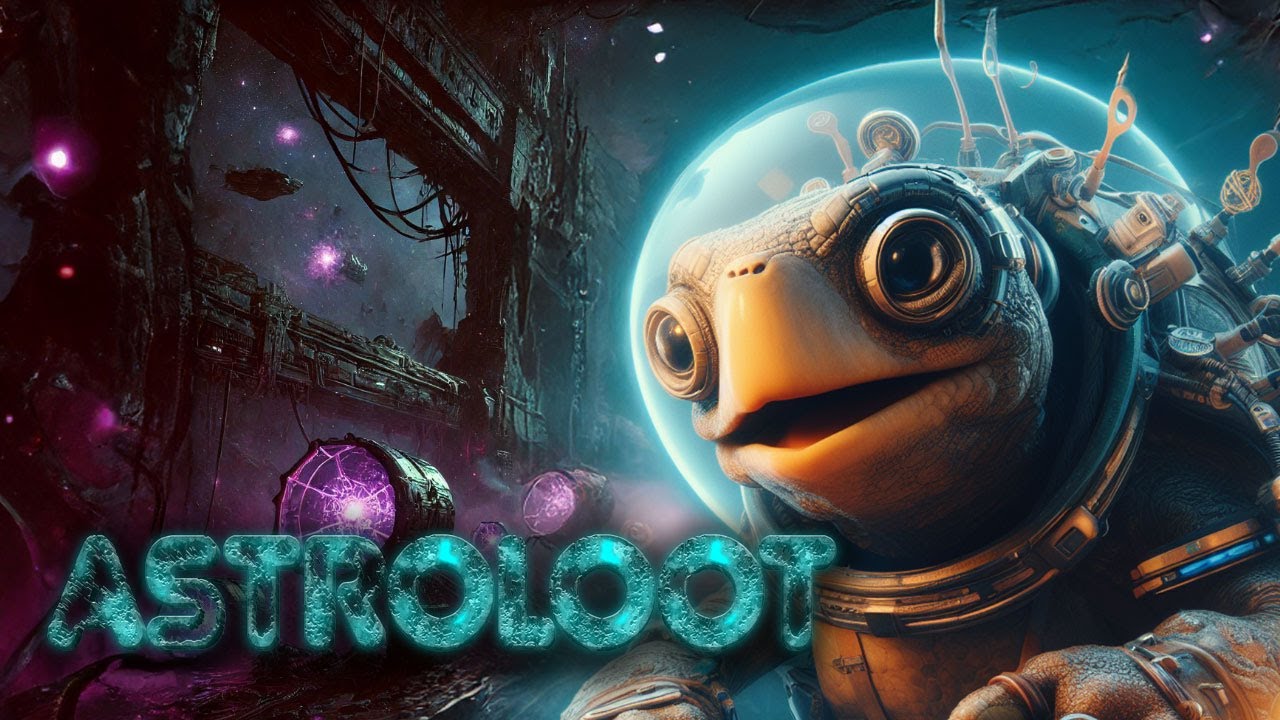
Astroloot – Sci-Fi Action RPG Bullet Heaven Arena Shooter
Top-down sci-fi bullet heaven ARPG with deterministic crafting, ship builds, and deep progression systems
Astroloot is a sci-fi action RPG bullet heaven arena shooter on PC, blending automated combat with deep ARPG systems, deterministic crafting via the Wheel of Fortune, and extensive ship customization across evolving progression tiers and endgame systems.
Every run is a build experiment where ships, loot, and systems reshape how survival unfolds

SAstroloot


Astroloot begins as a controlled sci-fi sector where survival slowly turns into structured ARPG build planning Early encounters feel simple, but progression steadily pushes players toward deeper optimisation and loot strategy
Astroloot is a sci-fi action RPG bullet heaven arena shooter developed and published by Andreas Hager Gaming, released in Early Access on PC (Steam) in March 2025. As of Version 0.7.11 in May 2026, it operates within a hybrid design space combining bullet heaven survival combat, top-down 2D shooter structure, and action RPG progression systems. The game positions itself as a deterministic crafting RPG with layered ship customization, loot progression, and PvE arena shooter encounters rather than a purely arcade survival loop. Across its Early Access development cycle, it has maintained a consistent focus on system expansion rather than structural redesign, reinforcing its identity as a long-form indie RPG built around scalable mechanics rather than short-run replay cycles. The emphasis on long-term build planning and controlled progression gives it a distinct identity within the broader sci-fi action RPG and bullet heaven genre space.
Combat starts as bullet heaven survival but gradually becomes a build-driven ARPG system Ship choices and modifiers slowly reshape how each encounter plays out over time
Core gameplay in Astroloot is structured around top-down arena shooter combat where players pilot ships through escalating waves of enemies in a sci-fi space environment. The bullet heaven framework relies on continuous movement, projectile avoidance, and passive or semi-automated offensive systems typical of action RPG hybrids. Three base ship archetypes—Leviathan, Hyperion, and Chronos—establish initial playstyle direction before deeper systems intervene. As progression advances, modifier-heavy equipment and socket-based upgrades reshape combat behavior, transforming encounters from survival-oriented navigation into structured optimisation of damage scaling, durability, and mobility systems. This shift is gradual rather than abrupt, allowing players to naturally adapt from reactive survival gameplay into deliberate ARPG-style build refinement. Over time, combat becomes less about moment-to-moment evasion and more about how effectively a build has been constructed.
Crafting feels controlled and predictable instead of random, thanks to the Wheel of Fortune system Nine dice types shape gear outcomes across Eternal, Ancient, and Elder progression tiers
Astroloot’s deterministic crafting system is built around the Wheel of Fortune interface, removing traditional randomised loot gambling in favour of preview-based outcomes. Crafting relies on nine distinct dice types: Blank, Plasma, Solar, Slot, Infinity, Jinx, Lunar, Void, and Astral. Each type influences specific modification paths, allowing players to control item outcomes before committing resources. Equipment progresses through three main tiers: Eternal (T1), Ancient (T2), and Elder (T3), with final optimisation depending on efficient resource allocation rather than chance. Items can contain up to six modifier slots and six sockets, creating layered build structures where crafting decisions directly influence combat performance. This system places Astroloot closer to structured ARPG design than typical bullet heaven progression models. The result is a crafting loop focused on planning, consistency, and long-term optimisation rather than repeated randomness.
Progression expands heavily in Version 0.7.x with meaningful endgame structure added Octron’s Marble Machine gives long-term direction beyond the initial campaign experience
Progression in Astroloot extends beyond standard run-based advancement through its large passive skill tree exceeding 1,000 nodes, combined with long-term equipment development and endgame systems introduced during Version 0.7.x updates. The addition of Octron’s Marble Machine introduces a structured endgame loop that supports continued optimisation after baseline campaign completion. This system integrates with existing ship builds, crafting outcomes, and modifier stacking to create a sustained progression path rather than a finite completion state. Players are encouraged to revisit earlier systems with higher-tier gear and refined builds, ensuring earlier content remains relevant throughout progression. The design reinforces Astroloot’s position as a long-term indie action RPG where build refinement and system mastery remain central even after major milestones are reached.
Each run feels like a small experiment in ship builds, loot, and survival efficiency Over time, repetition turns into structured optimisation rather than simple replaying
The structure of Astroloot encourages repeated engagement through build experimentation rather than linear campaign completion. Each run through its sci-fi sectors functions as a controlled environment for testing equipment combinations, crafting outcomes, and passive skill interactions. Loot acquisition remains central to progression, but its function is tied to optimisation rather than collection alone. As systems compound, players refine ship performance through iterative adjustments across modifiers, sockets, and crafting results. This creates a replay loop defined by incremental system mastery rather than purely difficulty escalation. What begins as straightforward survival gameplay gradually becomes a structured approach to understanding how layered systems interact under pressure.
Endgame systems keep progression going long after the main structure is understood Octron’s Marble Machine and Elder-tier gear loops support long-term optimisation goals
Astroloot’s endgame design focuses on extending system interaction rather than introducing separate gameplay modes. Octron’s Marble Machine functions as a structured progression layer that interacts with existing crafting, loot tiers, and passive systems. Combined with Elder-tier equipment optimisation and deterministic crafting outcomes, the endgame loop emphasises sustained refinement over content replacement. Players continue improving builds through incremental gains rather than chasing entirely new systems. This reinforces the game’s identity as a sci-fi action RPG bullet heaven where long-term progression is defined by system depth rather than narrative completion or content volume. The structure ensures that optimisation remains relevant even after extensive playtime.
Final verdict Astroloot is a systems-focused bullet heaven ARPG built around deterministic progression and long-term build planning
Astroloot stands as a structured interpretation of the sci-fi action RPG bullet heaven genre, combining automated arena shooter combat with deterministic crafting, extensive ship customisation, and long-term progression systems. Its reliance on the Wheel of Fortune crafting model, nine-dice system, and multi-tier item progression establishes a clear separation from probability-driven loot design. Version 0.7.11 consolidates its Early Access identity through expanded endgame systems such as Octron’s Marble Machine and a large passive skill tree exceeding 1,000 nodes. While its foundation remains rooted in bullet heaven combat, its long-term design direction is closer to ARPG theorycrafting and system optimisation. The result is a PC indie Early Access title that prioritises mechanical structure, deterministic progression, and build experimentation over traditional arcade survival pacing.
The VoxOdyssey Project Mission Statement for Feature games
I highlight what makes each game unique by examining gameplay mechanics, design choices, and storytelling. By analyzing systems, level design, and play styles, and referencing official media and assets, I aim to provide accurate, informative, and trustworthy insights. While I strive for accuracy, some details may change or be updated over time. Players can use this information to understand each title’s features and mechanics and make their own judgments.
Astroloot Screenshots Show Sci-Fi Bullet Heaven Combat and Ship Progression Systems Top-down arena shooter battles, deterministic crafting, and ARPG ship customization in action


Astroloot Trailer – Sci-Fi Bullet Heaven Combat with ARPG Ship Builds and Deterministic Crafting
Watch Astroloot in motion as top-down space combat unfolds across hostile sectors, ships evolve through ARPG builds, and deterministic crafting shapes every upgrade. See how each run becomes a shifting mix of loot, systems, and survival, then continue below to view the full trailer.