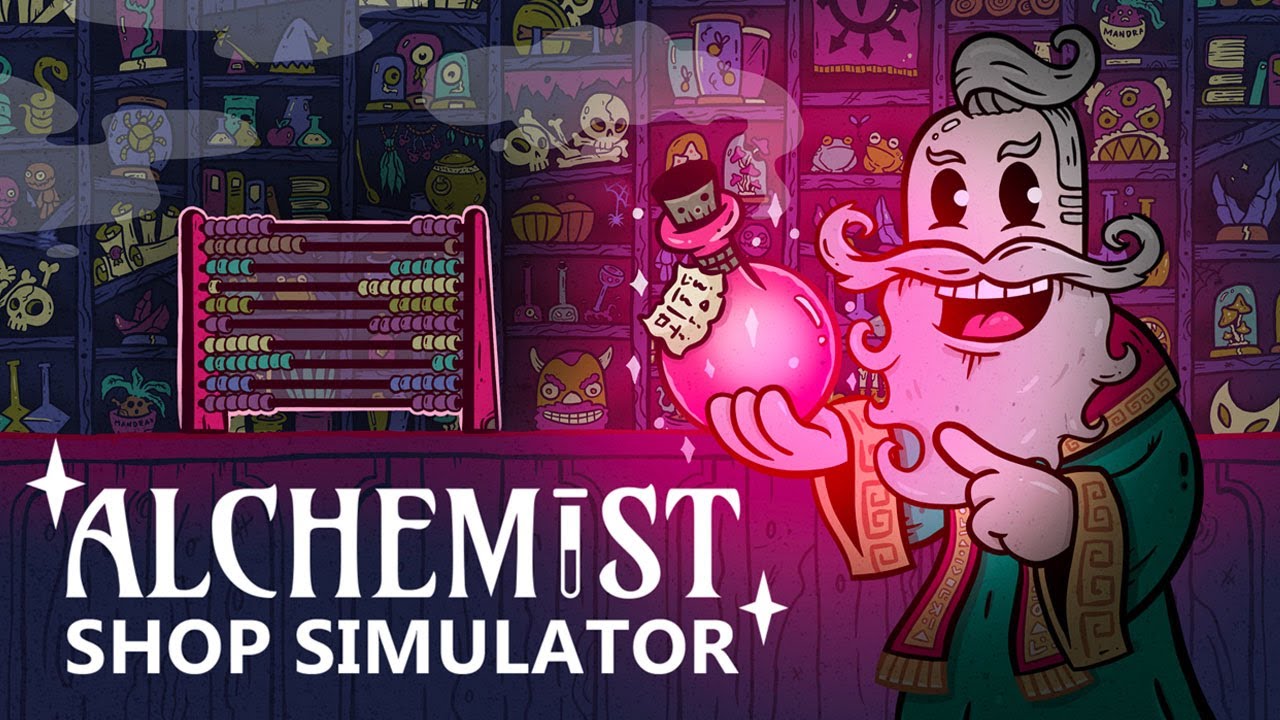
Alchemist Shop Simulator – Fantasy Potion Brewing Management Game
First-person fantasy shop simulator featuring potion crafting, farming, trading, and medieval business systems
Alchemist Shop Simulator is a first-person fantasy management game where players brew potions, manage a medieval magic shop, grow ingredients, complete Order Board requests, and expand their business through the Knowledge Tree progression system.
Every potion starts small—but every successful shopkeeper builds an empire

Alchemist Shop Simulator


Running a magic shop sounds relaxing until five customers need potions at the same time Alchemist Shop Simulator quickly turns small business management into organized chaos
Alchemist Shop Simulator received its full 1.0 release on Steam for PC on March 11, 2025 following an earlier Early Access period. Developed and published by Kool2Play, the game combines fantasy shopkeeping, potion brewing, farming systems, and first-person business management into a single progression-focused experience. Instead of treating alchemy as a background crafting mechanic, the game builds its entire structure around maintaining a profitable medieval magic store. Players spend their time brewing potions, organizing inventory, managing prices, fulfilling Order Board requests, and expanding their shop through the Knowledge Tree progression system. The result blends elements commonly found in indie business simulators for PC with the slower pacing of relaxing medieval farming and crafting games.
The deeper the potion system gets, the harder it becomes to stop experimenting The Alchemist’s Handbook slowly fills with recipes that reshape the entire business
Potion brewing functions as the core mechanic driving progression throughout Alchemist Shop Simulator. Ingredients contain different magical properties that influence the final outcome of every recipe, encouraging experimentation instead of simple repetition. Brewing itself involves grinding ingredients, preparing liquids, heating mixtures in the cauldron, and carefully managing production before potions can be sold or submitted through customer requests. Newly discovered formulas are stored inside the Alchemist’s Handbook, while broader progression is tied directly to the Knowledge Tree. This system unlocks advanced brewing options, improved efficiency, farming upgrades, and expanded commercial tools over time. Compared to many new potion brewing simulators on Steam, the game maintains stronger interaction with the actual production process rather than reducing crafting to passive automation from the beginning.
Customers may love magic, but they still know when something costs too much The abacus system makes every sale feel strangely personal
Shop management mechanics remain just as important as potion crafting. Every transaction is processed manually using the game’s abacus system, giving routine sales a more tactile quality than many medieval retail management games currently available on PC. Pricing decisions have immediate consequences. If products are listed too high, customers simply refuse to make the purchase, forcing players to balance profit margins against affordability. Inventory placement and shelf organization also influence the rhythm of daily operations as customer traffic increases and stock management becomes more demanding. The constant cycle of brewing, selling, restocking, and reorganizing creates a management structure that feels active without becoming unnecessarily overwhelming.
The garden starts as extra income before becoming essential to survival Growing ingredients eventually saves more money than buying them ever could
Ingredient cultivation adds another layer to the game’s interconnected economy. Players can grow herbs, mushrooms, and magical plants in a backyard garden used to support potion production. While merchants continue supplying materials throughout the game, relying entirely on purchased ingredients quickly becomes expensive once advanced recipes enter circulation. Rare seeds obtained from traveling suppliers gradually unlock access to more specialized brewing combinations and higher-value products. This farming structure gives the game additional relevance among players searching for relaxing medieval farming and crafting games with long-term progression systems. Importantly, the garden never feels disconnected from the rest of the experience. Farming directly supports brewing, and brewing directly supports commercial expansion.
The Order Board quietly becomes the most important wall outside the shop Those handwritten requests often pay better than ordinary shelf sales
The Order Board introduces specialized customer contracts that expand the gameplay loop beyond ordinary shopkeeping. These requests typically require players to create specific potions designed around unusual magical conditions or customer problems. Because orders often demand advanced brewing outcomes, the system naturally pushes players toward experimenting with ingredients and unlocking additional Knowledge Tree upgrades. Higher-value contracts also provide stronger economic rewards than routine storefront sales, making the Order Board an important part of long-term progression. The mechanic helps structure the game by constantly introducing targeted objectives instead of leaving players entirely dependent on passive customer traffic.
Progress starts slowly before the shop suddenly feels twice as complicated The Knowledge Tree rewards patience more than speed
Progression inside Alchemist Shop Simulator is intentionally gradual. The Knowledge Tree controls access to brewing improvements, expanded farming systems, inventory upgrades, and additional commercial functions. Players searching for Alchemist Shop Simulator Knowledge Tree best unlocks will likely focus on efficiency upgrades tied to ingredient processing and brewing speed because these unlocks significantly reduce downtime during larger production sessions. The pacing avoids dramatic spikes in complexity and instead builds steadily through incremental improvements. This slower structure gives the game a more approachable rhythm than many management simulators that overwhelm players with multiple systems immediately after the opening hours.
Automation only appears after the game knows you understand the hard work first Routine Brewing changes the pace once the business starts growing faster than expected
One of the game’s more important late-stage upgrades is Routine Brewing, an unlockable Knowledge Tree feature that introduces limited automation into potion production. Players looking for how to automate potion brewing in Alchemist Shop Simulator eventually reach this mechanic after spending significant time crafting recipes manually. Once unlocked, Routine Brewing streamlines portions of the brewing process and shifts attention toward larger operational concerns like inventory management, farming output, and fulfilling multiple customer orders simultaneously. The gradual transition from manual production to semi-automated efficiency gives the business progression stronger long-term structure and prevents repetitive tasks from becoming overly exhausting during extended sessions.
Even the strangest customers somehow fit naturally into this fantasy world The humor keeps the management systems from ever feeling too dry
Tonally, the game leans into playful fantasy humor built around exaggerated magical problems, eccentric customers, and self-aware medieval parody. Certain potion descriptions and dialogue exchanges include touches of dark humor without changing the broader relaxing atmosphere of the experience. This balance helps position the title among funny fantasy simulation games with dark humor while still maintaining accessibility for players more interested in casual management gameplay. Visually, the game uses stylized interiors, colorful potion effects, decorative furniture, and compact fantasy environments to reinforce its lighter tone. The first-person perspective also strengthens immersion by keeping players physically connected to brewing stations, shelves, crops, and customer interactions throughout the entire progression loop.
Final verdict Alchemist Shop Simulator becomes far more engaging once every system starts supporting the others
Alchemist Shop Simulator succeeds because its mechanics consistently reinforce the same central idea: growing a fantasy business through direct interaction, experimentation, and gradual efficiency. Potion brewing, farming, shop management, pricing systems, and Order Board contracts all feed into a unified progression structure instead of functioning as isolated activities. The combination of tactile mechanics like the abacus, structured advancement through the Knowledge Tree, and eventual automation via Routine Brewing gives the game a stronger identity than many smaller indie management titles currently available on Steam. Combined with stylized fantasy presentation, first-person interaction systems, and carefully paced progression, the game establishes a clear place among the best fantasy shop management games 2026 and modern potion brewing simulators focused on long-term replayability and business optimization.
The VoxOdyssey Project Mission Statement for Feature games
I highlight what makes each game unique by examining gameplay mechanics, design choices, and storytelling. By analyzing systems, level design, and play styles, and referencing official media and assets, I aim to provide accurate, informative, and trustworthy insights. While I strive for accuracy, some details may change or be updated over time. Players can use this information to understand each title’s features and mechanics and make their own judgments.
Alchemist Shop Simulator Screenshots Show Potion Brewing and Shop Management Gameplay First-person alchemy, Order Board requests, and medieval fantasy store systems


Alchemist Shop Simulator Trailer – Potion Crafting, Shop Management, and Fantasy Business Gameplay
Watch Alchemist Shop Simulator in action as potion brewing, ingredient farming, and Order Board requests shape your growing medieval shop. See the Knowledge Tree progression and then continue below to view the full trailer.