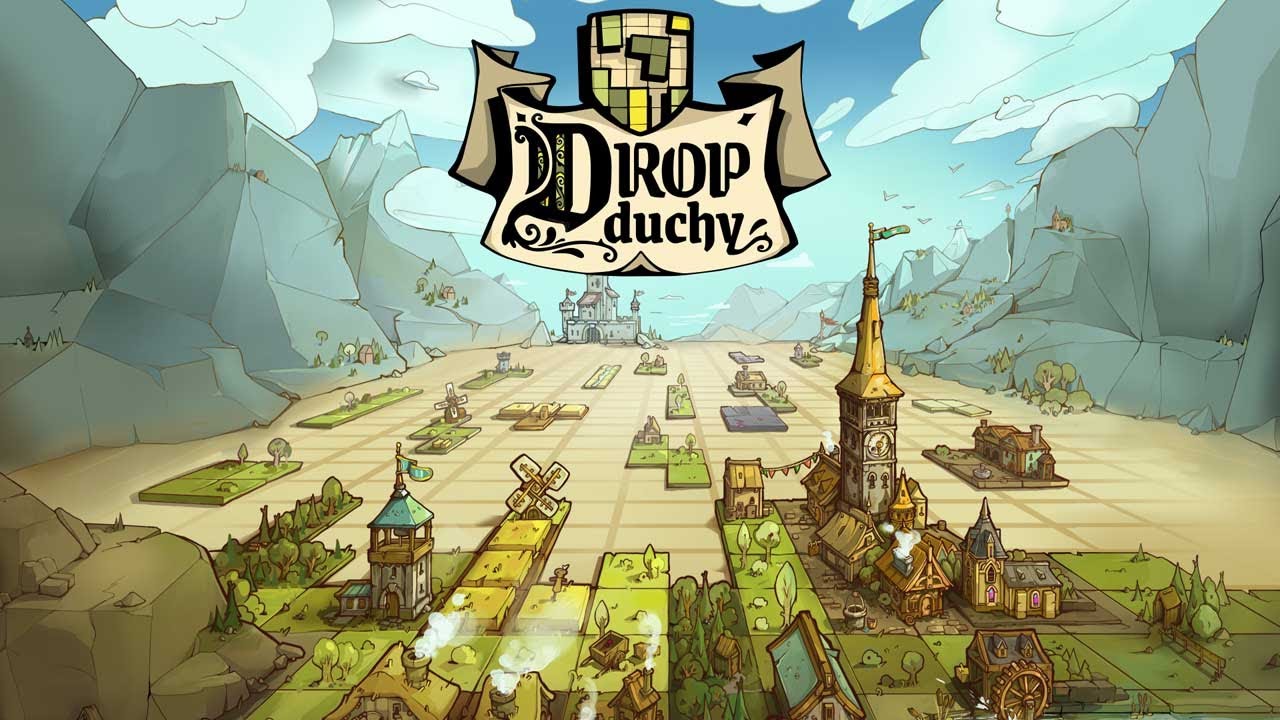
Drop Duchy – Roguelite Puzzle Strategy with Deckbuilding Systems
Tile-placement roguelite strategy game blending faction warfare, deckbuilding, and procedural maps
Drop Duchy is a roguelite puzzle strategy game where tile placement, deckbuilding, and faction systems shape each run. Players construct a medieval domain, manage resources through adjacency mechanics, and engage in tactical combat across procedurally generated maps.
Build your duchy, master the board, and discover how every tile changes the outcome

Drop Duchy


A Systems-Driven Roguelite Puzzle Strategy Framework Built on Tile Logic Deckbuilding, Faction Design, and Procedural Strategy Intersect Across Each Run
Drop Duchy is a roguelite puzzle strategy game developed by Sleepy Mill Studio and published by The Arcade Crew, structured around a hybrid system that merges tile-placement logic, deckbuilding mechanics, and faction-based progression. Each run operates as a self-contained strategic simulation where spatial decisions determine economic growth, military strength, and long-term survivability. The game positions itself within the modern indie strategy landscape alongside roguelite deckbuilder titles and tile-based tactical systems, where procedural generation ensures that no two strategic runs unfold under identical conditions.
From Tile Placement to Strategic Simulation Architecture Adjacency Systems Transform Spatial Decisions into Economic Outcomes
At its core, Drop Duchy is built on a deterministic relationship between tile placement and systemic output. Each structure placed on the grid contributes to resource generation, unit recruitment, or defensive scaling depending on adjacency rules and environmental context. Forests, rivers, and plains are not decorative elements but functional modifiers that alter production efficiency and strategic value. This creates a layered decision structure where early placements influence long-term economic curves, and inefficient spatial planning can compound into mid-run failure states. The design aligns with broader roguelite puzzle strategy systems where optimization shifts from short-term scoring to long-term survival architecture.
Deckbuilding as a Persistent System Modifier Layer Over 120 Cards Shape Economy, Combat, and Structural Progression
The deckbuilding system in Drop Duchy functions as a persistent modifier framework rather than a standalone combat mechanic. With over 120 cards in the complete content set, including expansions introduced through The Tribe and The North DLCs, the system continuously reshapes how structures, units, and resources behave across runs. Cards influence economic scaling, unlock new structural interactions, and modify combat outcomes in ways that extend beyond individual encounters. The Tribe expansion emphasizes environmental synergy through cairn-based placement mechanics and exploration-based bonuses, while The North introduces aggressive scaling tools, resource raiding mechanics, and enhanced combat volatility. This layered structure positions the game within the evolving category of roguelite deckbuilders with spatial constraint systems.
Faction Asymmetry and Multi-Path Strategic Identity Five Playable Factions Define Distinct Macro Strategy Models
Drop Duchy features five playable factions: The Duchy, The Republic, The Order, The Tribe, and The North. Each faction introduces a structurally distinct strategic model that alters pacing, resource efficiency, and combat behavior. The Tribe emphasizes environmental clustering and terrain synergy, rewarding controlled expansion through optimized placement. The North introduces a more aggressive system where units can be deployed individually rather than as a consolidated army, combined with a fury-based scaling mechanic that increases combat output under sustained pressure. The Duchy, Republic, and Order provide baseline archetypes focused on economic stability, balanced expansion, and defensive structuring, ensuring that strategic diversity is maintained across both early and late progression stages.
Progression Systems, Trial Constraints, and Ascension Scaling Layered Difficulty Architecture Extends Long-Term Replay Stability
Progression in Drop Duchy is divided between mission-based unlock systems and long-term meta progression. Over 100 faction-linked missions gradually expand available cards, structural upgrades, and systemic modifiers, creating a structured onboarding curve into deeper mechanics. Trial modes introduce constraint-based scenarios where resource limitations, survival restrictions, or altered rulesets force adaptation rather than optimization, functioning as system stress tests for advanced play. Ascension Mode operates as a scalable difficulty framework that modifies core economic and combat parameters across successive tiers. Instead of relying solely on enemy stat increases, it adjusts resource availability, encounter density, and structural tolerance for inefficiency, effectively extending long-term replayability by preventing mid-game stagnation through controlled systemic pressure.
System Readability, Visual Clarity, and Interface Structure Charming Art Direction Supports High-Density Strategic Information
The presentation layer of Drop Duchy is designed to maintain clarity under high systemic complexity. The visual style uses a restrained medieval-inspired aesthetic with readable terrain differentiation and clear structural silhouettes that support rapid interpretation of adjacency outcomes. Interface elements prioritize functional readability, with resource tracking, card effects, and unit states presented in a way that reduces cognitive overhead during high-pressure decision phases. The charming art direction contributes to usability rather than decorative excess, ensuring that spatial information remains legible even as systems scale in complexity across late-game Ascension runs.
System-Level Positioning Within the Indie Strategy Landscape A Hybrid Model Between Puzzle Logic and Roguelite Economy Simulation
Within the broader indie strategy genre, Drop Duchy occupies a hybrid position between roguelite deckbuilders, tile-placement puzzle systems, and procedural strategy simulations. Compared to vertical progression-focused titles like Slay the Spire, it distributes complexity horizontally through spatial constraints and environmental adjacency systems. In contrast to lane-based strategy games such as Monster Train, its core challenge emerges from map-wide optimization rather than isolated combat routes. This structural difference places it within a growing category of strategy hybrids where spatial reasoning, card-based systems, and procedural design intersect to produce long-form replayable experiences.
Final Verdict A Systems-First Roguelite Strategy Framework Built for Long-Term Strategic Iteration
Drop Duchy operates as a tightly integrated systems framework where tile placement, deckbuilding, faction identity, and procedural generation combine into a unified strategic model. The interaction between adjacency mechanics and economic scaling ensures that every placement decision carries long-term consequences, while faction asymmetry prevents convergence toward a single optimal strategy. DLC expansions extend systemic variety through additional cards and mechanical modifiers, and Ascension Mode provides a structured difficulty escalation that sustains long-term engagement by continuously recontextualizing established strategies. The result is a roguelite puzzle strategy system that prioritizes adaptive decision-making, spatial optimization, and layered progression over static solution paths, positioning it as a structurally complex entry within the modern indie strategy landscape.
The VoxOdyssey Project Mission Statement for Feature games
I highlight what makes each game unique by examining gameplay mechanics, design choices, and storytelling. By analyzing systems, level design, and play styles, and referencing official media and assets, I aim to provide accurate, informative, and trustworthy insights. While I strive for accuracy, some details may change or be updated over time. Players can use this information to understand each title’s features and mechanics and make their own judgments.
Drop Duchy Gameplay Screenshots of Tile-Based Strategy Systems Procedural maps, deckbuilding, and faction combat across each run


Drop Duchy Gameplay Trailer – Roguelite Puzzle Strategy with Deckbuilding and Factions
Explore tile-based strategy in motion as Drop Duchy blends procedural maps, deckbuilding systems, and faction combat. Watch the trailer below to see how each run evolves through placement, resources, and tactical decision-making.